NASA is recalibrating the launch plans for its ambitious Sun Radio Interferometer Space Experiment (SunRISE) mission, a constellation of six small satellites designed to provide an early warning system for solar storms. Originally slated to ascend into Earth orbit aboard a United Launch Alliance (ULA) Vulcan Centaur rocket, the mission has now been reassigned to a SpaceX Falcon Heavy. This significant change, confirmed by a recent NASA mission update, signals a strategic shift in NASA’s launch vehicle procurement and highlights ongoing considerations within the U.S. Space Force’s launch manifest.
Background: The SunRISE Mission and Its Crucial Objective
The SunRISE mission represents a significant leap forward in our ability to predict and mitigate the impact of space weather events. Solar storms, such as coronal mass ejections (CMEs) and solar flares, release vast amounts of energy and charged particles into space. When these phenomena are directed towards Earth, they can have profound consequences for our increasingly technology-dependent society. These storms can disrupt satellite operations by interfering with onboard electronics and sensitive instruments, leading to communication outages, navigation system failures, and even permanent damage. The energetic particles can also pose radiation hazards to astronauts in orbit and, in extreme cases, to passengers on high-altitude flights near the poles.
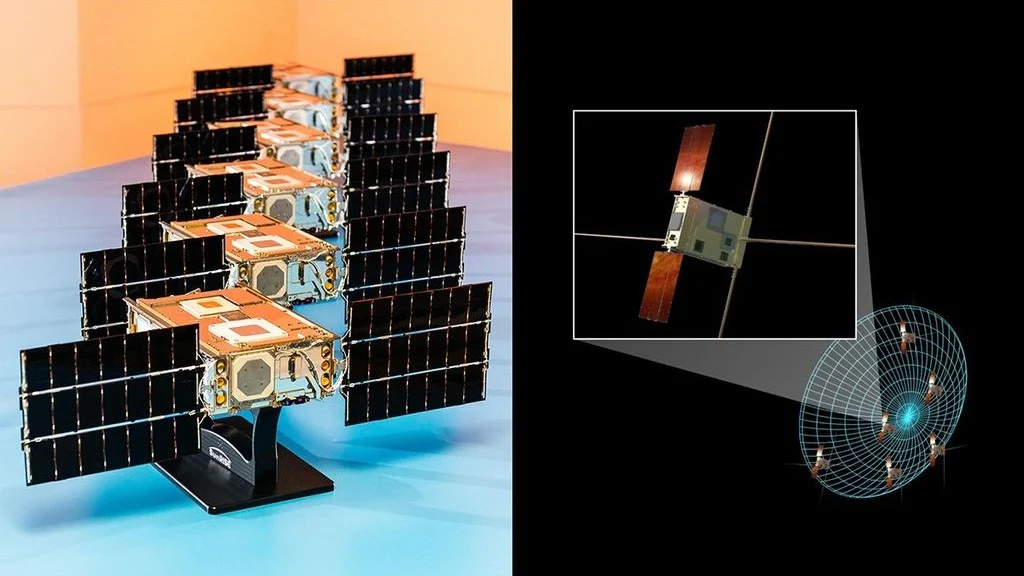
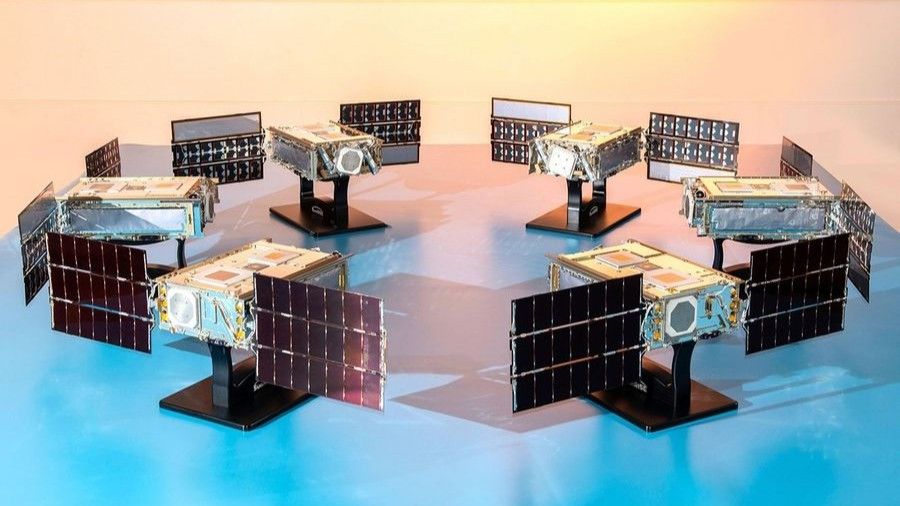
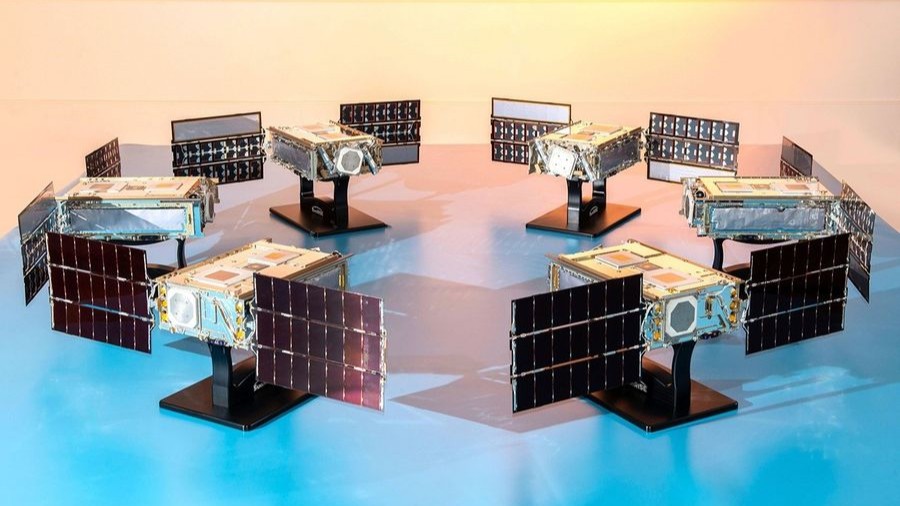
The SunRISE mission aims to address this challenge by acting as a sophisticated space weather forecasting tool. The six small satellites, each approximately the size of a mailbox, will be deployed into a precise orbit about 22,000 miles (35,000 kilometers) above Earth, positioned just beyond geostationary altitude. Once in orbit, they will unfurl antenna booms, extending to about 10 feet (2.5 meters) each, to form a giant, 10-mile (16-km) wide "X" formation. In this configuration, the satellites will function as a single, powerful radio telescope.
The scientific rationale behind this formation is rooted in the behavior of solar radio bursts. These bursts are often emitted by the same events that produce the more hazardous energetic particles of a solar storm. Crucially, radio bursts travel at the speed of light, reaching Earth significantly faster than the slower-moving charged particles. By detecting and analyzing these radio bursts, scientists can gain valuable advance warning of an impending solar storm, allowing for potential mitigation strategies to be implemented. This early detection window is critical for protecting vital space assets and terrestrial infrastructure.
The SunRISE mission is categorized as a heliophysics study under NASA’s Science Mission Directorate’s "missions of opportunity" umbrella and is part of the Explorers Program, managed by NASA’s Goddard Space Flight Center in Greenbelt, Maryland. The scientific leadership for the mission resides with scientists at the University of Michigan, with the overall management being handled by NASA’s Jet Propulsion Laboratory (JPL) in Southern California.
A Shift in Launch Providers: The ULA Vulcan Centaur and Its Challenges
The initial launch plan for SunRISE involved the United Launch Alliance’s (ULA) Vulcan Centaur rocket. Vulcan Centaur is ULA’s next-generation heavy-lift launch vehicle, designed to replace its Atlas V and Delta IV rockets and to compete in the increasingly diverse commercial launch market. It is a powerful rocket with the capability to deliver substantial payloads to various orbits.
However, the Vulcan Centaur program has encountered some technical hurdles, particularly concerning its solid rocket boosters (SRBs). During the rocket’s most recent launch, designated USSF-87, an anomaly occurred in one of the SRBs. This marked the second such incident in the rocket’s four launches to date. While the Vulcan Centaur successfully delivered its USSF-87 payload to orbit on that occasion, the recurrence of the booster issue prompted the U.S. Space Force (USSF) to temporarily pause national security launches utilizing the Vulcan rocket. This pause is intended to allow ULA to thoroughly investigate and address the root cause of the booster anomalies.
The U.S. Space Force plays a pivotal role in the launch manifest for missions like SunRISE, often participating in rideshare missions managed by its Space Systems Command (SSC). The Space Force’s decision to pause national security launches on Vulcan, coupled with its proactive approach to reassigning other launches between Vulcan and SpaceX’s Falcon 9, has created a dynamic environment for mission planning.
The SpaceX Falcon Heavy: A Proven Heavy-Lift Alternative
The reassignment of SunRISE to a SpaceX Falcon Heavy provides NASA with a robust and proven alternative for launching its mission. The Falcon Heavy is SpaceX’s flagship heavy-lift launch vehicle, known for its significant payload capacity and its history of successful missions, including those for national security payloads. It is a powerful rocket composed of three core Falcon 9 first stages, which can collectively lift up to approximately 58,860 pounds (26,700 kg) to a geostationary transfer orbit. Since its debut in 2018, the Falcon Heavy has undertaken 12 launches, four of which have successfully delivered national security payloads. Its most recent flight in April of this year successfully deployed the Viasat-3 F3 telecommunications satellite into orbit.
The Falcon Heavy’s proven reliability and substantial lift capability make it a suitable platform for the SunRISE mission, ensuring its successful deployment into its intended orbit. This shift underscores NASA’s flexibility and its ability to adapt launch strategies in response to evolving launch provider capabilities and potential delays.
Implications of the Launch Vehicle Change
The decision to switch launch vehicles for the SunRISE mission has several implications. Firstly, it highlights the inherent risks and complexities associated with space launches, where unforeseen technical issues can necessitate adjustments to mission timelines and launch providers. Secondly, it underscores the growing importance of rideshare missions and the strategic role of the U.S. Space Force in managing the national launch manifest. The fact that SunRISE is flying as part of a rideshare mission sponsored by the USSF’s Space Systems Command (SSC) likely influenced the decision. SSC has already demonstrated its willingness to shift launches between ULA’s Vulcan and SpaceX’s Falcon 9, suggesting that SunRISE may either be integrated into a different SSC rideshare mission utilizing a Falcon Heavy, or that another SSC mission has been moved off the Vulcan manifest entirely, creating an opening for SunRISE.
While the specific Falcon Heavy mission on which SunRISE will fly has not yet been publicly announced, its eventual launch will likely be sequenced around other upcoming Falcon Heavy missions. Notably, the Falcon Heavy’s next scheduled flight is to carry NASA’s Nancy Grace Roman Space Telescope, with a target launch date no earlier than August 30th. SunRISE is slated for launch later this year, but a more precise launch window has yet to be established.
Enhancing Space Weather Prediction Capabilities
Beyond the logistics of the launch, the SunRISE mission itself promises to significantly enhance our understanding of space weather. The data collected by the constellation of satellites will be used to refine and improve prediction models for incoming solar radio bursts and, by extension, for the associated solar storms. This advancement in predictive capabilities is crucial for developing more effective mitigation strategies.
Currently, while space weather forecasts are available, their accuracy and lead times can be improved. By providing a more detailed and localized understanding of the radio emissions preceding solar events, SunRISE will enable scientists to better forecast the intensity, direction, and timing of solar storms. This improved foresight will allow operators of critical infrastructure, such as satellite networks, power grids, and communication systems, to take proactive measures. These measures could include temporarily shutting down sensitive equipment, rerouting spacecraft, or adjusting operational parameters to minimize exposure to harmful radiation and electromagnetic interference.
The mission’s design as a distributed radio telescope, spread across a vast formation, is key to its success. This unique configuration allows for high-resolution imaging and precise tracking of solar radio bursts, providing scientists with unprecedented data to analyze the complex processes occurring on the Sun.
Broader Impact and Future Considerations
The shift in launch vehicle for the SunRISE mission is indicative of the dynamic nature of the space industry and the ongoing evolution of launch capabilities. Both ULA and SpaceX are vital players in the U.S. space launch ecosystem, and their respective successes and challenges directly impact NASA’s ability to execute its ambitious scientific and exploration objectives.
The success of the SunRISE mission will not only contribute to a deeper scientific understanding of the Sun but will also have tangible benefits for national security and economic stability by safeguarding our reliance on space-based technologies. As solar activity continues to increase with the Sun’s progression into a more active phase of its 11-year cycle, the importance of missions like SunRISE will only grow. The recent powerful solar storm in January, which was the strongest in over two decades, serves as a stark reminder of the potential impact of these celestial events.
NASA’s adaptability in reassigning the SunRISE mission to a SpaceX Falcon Heavy demonstrates its commitment to ensuring the timely and successful execution of its scientific endeavors. The mission’s ultimate success will depend on the reliable performance of the Falcon Heavy rocket and the intricate coordination of the six small satellites working in unison as a sophisticated radio telescope, all contributing to a more resilient and informed approach to the challenges posed by our dynamic Sun. The continued development and operational reliability of both ULA’s Vulcan Centaur and SpaceX’s Falcon Heavy will be critical for future NASA missions and for the broader advancement of space exploration and utilization.