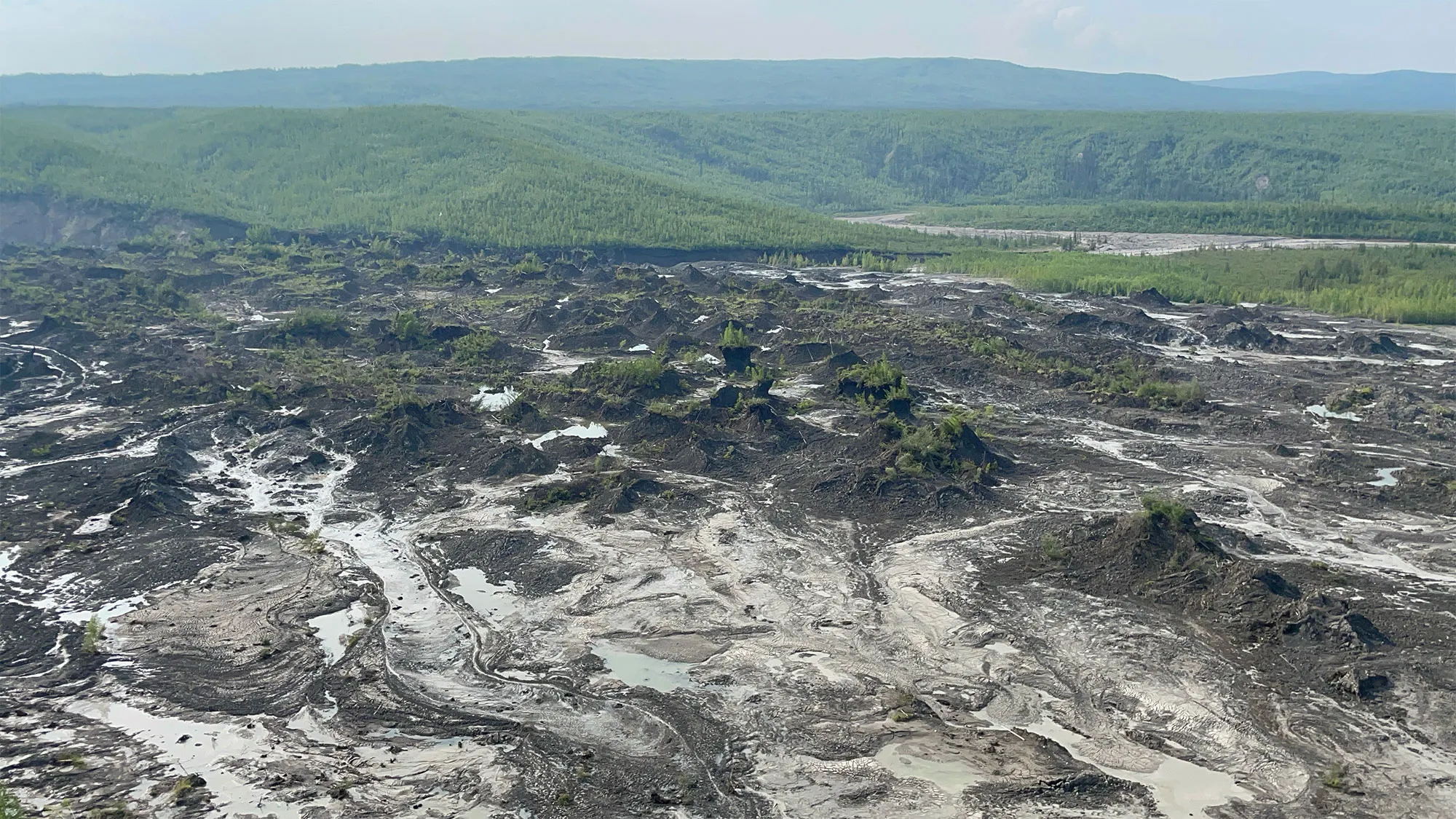
Nearly a decade ago, a routine aerial survey over the rugged expanse of Canada’s Northwest Territories revealed a geographical anomaly so immense it defied standard geological classification. A massive landslide had severed a natural drainage route, forcefully blocking a river and leaving a newly formed lake in its wake. While the sheer scale of the blockage was impressive, it was the mechanics of the slide itself that baffled aviation observers. What had occurred on that remote northern slope was not merely a new feature on the regional topography; it was an entirely novel phenomenon previously unrecorded in mainstream scientific literature—an event researchers have now formally categorized as a "permafrost detachment slide."
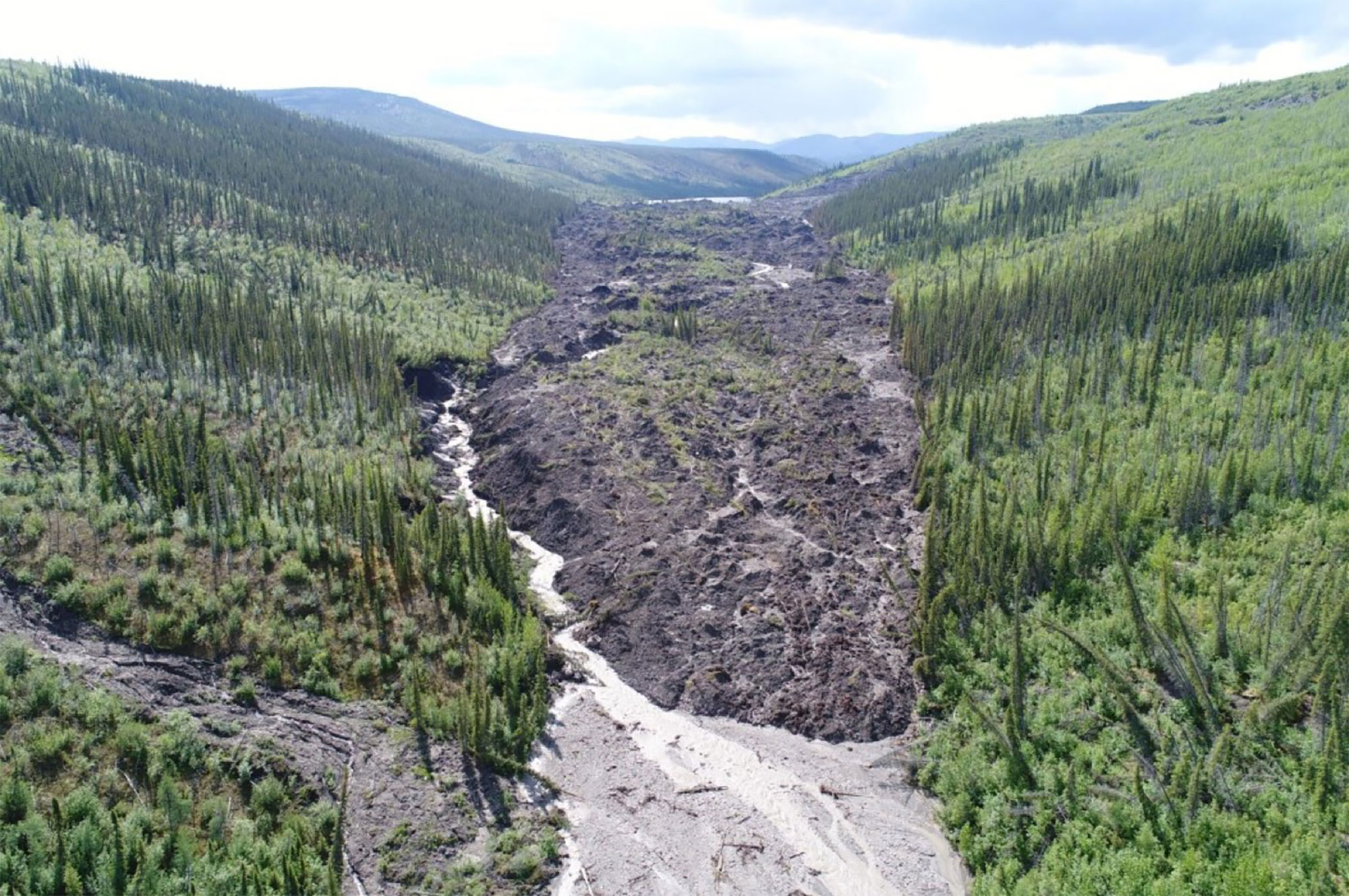
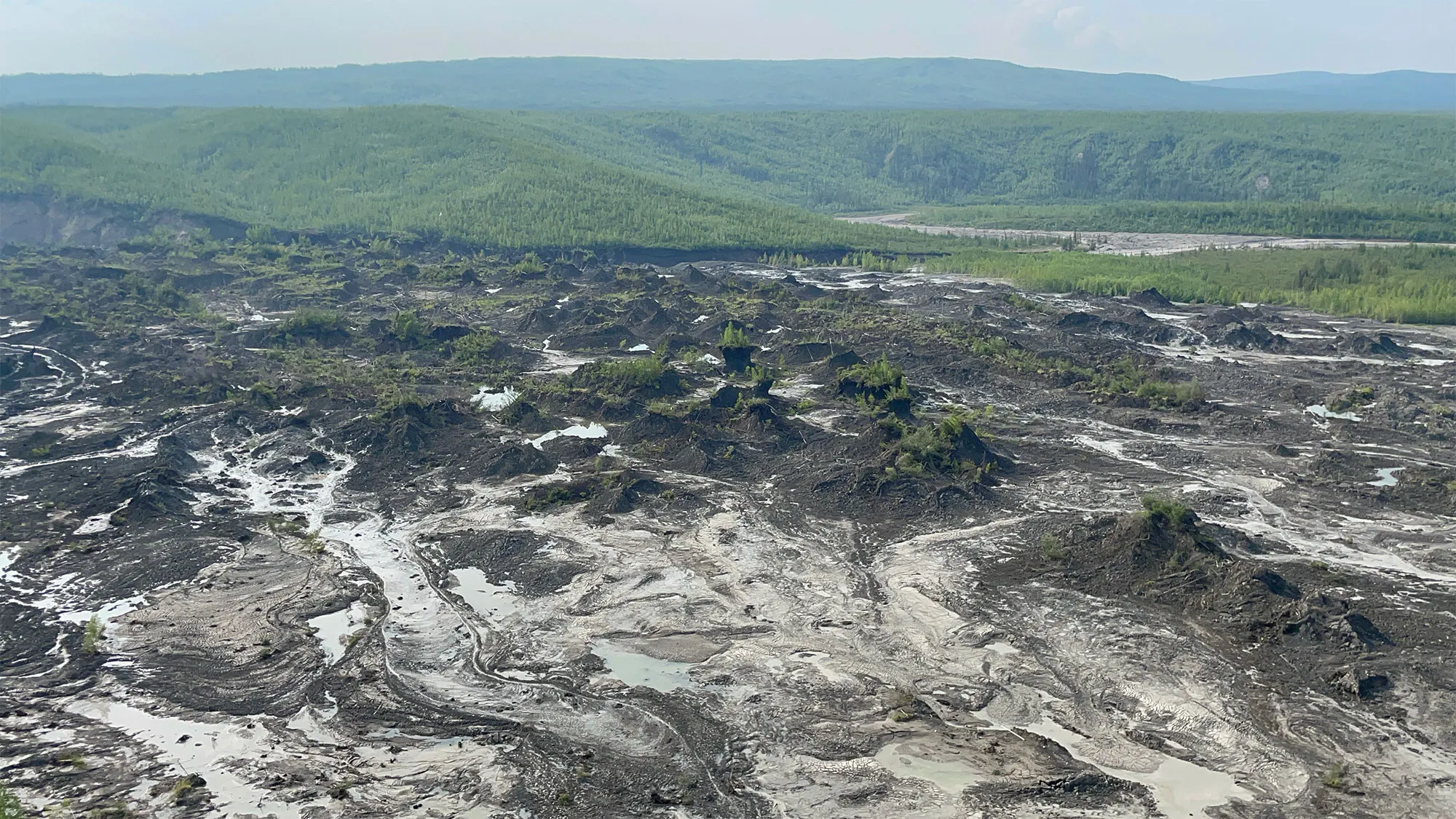
Published in a comprehensive study within a leading geophysical journal, a team of researchers has documented two monumental manifestations of this phenomenon in the region. The first of these colossal collapses stretched across three-quarters of a mile, while the second spanned an astonishing two miles. Combined, these twin geological failures displaced an estimated 30 million cubic yards of earth, rock, and ancient ice. Traditional landslides typically present as a chaotic torrent of rainwater, saturated mud, and loose rock cascading down a gradient. In stark contrast, permafrost detachments represent a catastrophic structural failure of frozen terrain triggered by deep-seated degradation. Most alarmingly, the chain of events that precipitated these modern collapses began three decades prior, culminating in rapid, catastrophic structural failures along the Johnson River in 2017 and the Redstone River in 2018 that unfolded over the course of mere hours or days.
Anatomy of an Unprecedented Geological Collapse
When scientific expeditions finally accessed the remote slide sites on the ground, they encountered a landscape utterly transformed. Embedded within the massive mounds of displaced debris were colossal chunks of frozen material measuring up to 650 feet in length.
"It’s a very dramatic manifestation of the changing climate," said Joseph Young, a geoscientist and lead author of the research paper, who conducted the analysis while affiliated with the University of Alberta. "They’ve only started happening in the last 10, 15 years, and it’s a very drastic and abrupt change in the landscape."
To understand the mechanics of these slides, scientists must first examine the nature of permafrost itself. Functioning as a major planetary wild card, permafrost is defined simply as ground—comprising a mixture of soil, rock, sand, ice, and preserved organic material—that remains continuously frozen at or below 0 degrees Celsius for two consecutive years or longer. Across the Northern Hemisphere, these fragile permafrost zones span an enormous territory, covering an area roughly two and a half times the total size of the continental United States.
However, this foundational component of the northern cryosphere is undergoing radical destabilization. Driven by amplified polar warming, the Arctic is heating up roughly four times faster than the global average. This rapid thermal shift has triggered widespread permafrost degradation, gouging massive thermokarst potholes across the landscape and releasing vast plumes of trapped greenhouse gases into the atmosphere.
While thermokarst depressions are increasingly common, permafrost detachment slides operate on an exponentially larger, more destructive scale. "I think it’s fascinating that we’re discovering a new type of thermokarst," noted David Olefeldt, a soil scientist at the University of Alberta who studies permafrost dynamics but was not directly involved in the recent study. "This is a type of land collapse due to permafrost thaw which hasn’t really been observed before."
A Thirty-Year Timeline of Destruction
The geological clock for the Johnson River and Redstone River slides began ticking long before the earth actually gave way. The primary catalyst for the disaster was an intense, region-wide wildfire that swept through the Northwest Territories in 1995.
The flames did more than merely scorch the timber; they fundamentally altered the thermal equilibrium of the ecosystem. By burning off the dense mats of surface vegetation and organic litter that normally served as an insulating shield, the fire exposed the underlying soil to the intense, unmitigated rays of the summer sun. Under normal conditions, this vegetative layer keeps the subterranean permafrost cool and stable during the warm months.
Without this protective barrier, heat slowly penetrated deeper into the ground year after year. "After about 20 years or so, that thermal signature from the burned forest can reach the base of permafrost," Young explained. "It’s slight, but it’s there."
Crucially, the ultimate collapse of the permafrost did not occur from the top down through gradual surface melting into a soup of mud. Instead, the failure progressed from the bottom up. As the deep base of the permafrost warmed—even by a fractional amount—stress and tension cracks began to propagate through the frozen strata. These fractures allowed relatively warm surface water to infiltrate deeper into the subsurface layers.
As the frozen mixture of ice, soil, and organic matter degraded from within, the slope began a slow, agonizing creep, moving downhill at rates of a few feet per year, eventually accelerating to roughly 80 feet annually before reaching a critical tipping point. At that stage, the entire formation detached catastrophically.
"This kind of movement can create its own release of energy because of friction and cracking on the bottom," observed Vladimir E. Romanovsky, a permafrost geophysicist and professor emeritus at the University of Alaska Fairbanks, who was independent of the research. Romanovsky noted that this behavior mirrors the dynamics of surging glaciers—vast sheets of ice that creep down mountain valleys before suddenly accelerating and advancing rapidly due to basal lubrication and internal stress.
The physical evidence recovered from the site confirmed this bottom-up failure mechanism. Had the ground degraded strictly from the surface downward, researchers would have found a landscape dominated by liquefied mud. Instead, the presence of massive, intact blocks of subterranean ice proved that the structural integrity of the slope had failed deep beneath the surface.
Ongoing Vulnerability and Cascading Landscape Risks
The danger did not end the moment the hillsides collapsed. The sheer volume of earth displaced by the initial slides left towering, vertical walls of exposed permafrost flanking the failure zones. These newly exposed faces were immediately subjected to solar radiation and ambient air temperatures, perpetuating a cycle of ongoing instability.
"Just because you have this large detachment failure, that doesn’t mean it’s over," Young cautioned. "Actually, it means you’ve opened up more potential for failure."
This cycle of continuous degradation highlights a broader, more alarming trend across high-latitude ecosystems. As permafrost thaws, previously locked-away organic matter becomes accessible to subterranean microbes. These microorganisms rapidly feast on the newly available carbon, expelling significant quantities of carbon dioxide and methane as metabolic byproducts. This process creates a perilous feedback loop: rising atmospheric temperatures thaw the permafrost, microbial activity releases greenhouse gases, and those emissions further accelerate global warming, driving even more thaw in a compounding cycle.
"That’s a major global concern," said Miriam Jones, a research geologist specializing in permafrost at the United States Geological Survey, who did not participate in the study. "It’s a feedback that many of us have been studying."
At the same time, the biological landscape of the North is shifting dramatically. Plant life is marching northward at rates of several miles per decade, a phenomenon widely documented as Arctic greening. While increased vegetation might initially suggest a thriving ecosystem, the reality is far more complex. In many northern zones, proliferating shrubs trap thick blankets of winter snow. This snow cover acts as an insulating layer, preventing the bitter winter chill from penetrating deep into the soil and accelerating permafrost decline beneath the surface.
Furthermore, a greener Arctic translates directly to an increased abundance of fuel for wildfires. These northern fires possess the capacity to burn through peat—ancient, carbon-dense organic soil that has accumulated over thousands of years. Such incidents frequently trigger "zombie fires," stubborn subterranean blazes that manage to smolder underground beneath winter snowpacks before reemerging during the spring thaw to release massive additional quantities of carbon into the atmosphere.
Broader Implications and Future Outlook
The emergence of permafrost detachment slides introduces a profound new variable into global climate models and regional risk assessments. Because these events are so massive and structurally distinct, scientists are only beginning to quantify the volume of greenhouse gases they ultimately release into the atmosphere.
"The short answer is: We don’t know how much, because we haven’t characterized and classified it," Young admitted. "But it could be quite severe, just because the size of these features."
Previous scientific literature has established that even much smaller instances of abrupt permafrost thaw are capable of generating substantial, highly concentrated carbon emissions. As global temperatures continue to climb and historical climate thresholds are crossed, researchers warn that the Arctic will likely yield further unforeseen geological hazards.
"I expect that we can see more of these types of surprises," Olefeldt concluded, "as we cross thresholds in other regions that have these vulnerabilities to collapse."
For northern infrastructure, indigenous communities, and global climate stability, the discovery of permafrost detachment slides serves as a stark reminder of the hidden instabilities lurking beneath the northern wilderness. As the planet warms, the silent transformation of the Arctic is no longer unfolding in slow motion—it is breaking away in massive, catastrophic shifts that demand urgent attention from the global scientific community.