The political discourse surrounding climate change in the United States has long been defined by a perceived tension between environmental preservation and economic health. This narrative, frequently championed by President Donald Trump, posits that aggressive climate action is a "financial disaster" that threatens the nation’s industrial backbone. Throughout his public addresses and policy implementations, Trump has consistently framed international climate agreements and domestic green initiatives as existential threats to the American economy. From the withdrawal from the Paris Climate Accord to the criticism of electric vehicle (EV) mandates, the argument remains the same: protecting the planet is a luxury the economy cannot afford. However, an emerging body of economic research and real-world data suggests that this framing is not only flawed but ignores the staggering costs of climate-related inaction that are already being felt by households across the country.
The Political Narrative of Economic Destruction
President Trump’s approach to climate policy is rooted in the assertion that environmental regulations act as a "green scam" designed to undermine American competitiveness. Upon withdrawing the United States from the Paris Agreement, the administration argued that the deal would cost the U.S. trillions of dollars while allowing other nations to continue polluting without similar financial burdens. This rhetoric extended to the domestic auto industry, where the administration characterized President Joe Biden’s efforts to transition to electric vehicles as a precursor to "economic destruction."
The administration’s strategy has been to frame environmentalism as a zero-sum game. In communications with world leaders, Trump has warned that failure to distance national policy from green initiatives would lead to state failure. This perspective is reflected in the systematic dismantling of environmental protections, a move justified through internal cost-benefit analyses that often minimize the long-term economic risks posed by a warming planet. By focusing exclusively on the immediate compliance costs for industries, such as the fossil fuel and automotive sectors, the administration’s calculations frequently omit the broader economic benefits of cleaner air, healthier populations, and more resilient infrastructure.
A Legacy of Industry-Funded Economic Projections
The narrative that climate action is prohibitively expensive did not emerge in a vacuum. It is the result of decades of coordinated efforts by the fossil fuel industry to influence public perception and policy. According to Gernot Wagner, a climate economist at Columbia Business School, the story that climate action hurts the economy is a deliberate construction. In the early 1990s, the American Petroleum Institute (API) began commissioning economic studies designed to make greenhouse gas regulations appear economically unfeasible.
One landmark industry-funded study from 1991 projected that a carbon tax of $200 per ton would cause the U.S. economy to shrink by 1.7 percent by 2020. Crucially, these projections almost entirely ignored the "cost of inaction"—the economic damage resulting from more frequent and severe natural disasters, agricultural disruptions, and public health crises. This methodological exclusion has remained a staple of anti-regulatory arguments for over thirty years, creating a persistent public perception that there is an inherent trade-off between the environment and the economy.
The Reality of Climate Costs: A Burden on the American Household
While political rhetoric focuses on the costs of regulation, the costs of climate change itself are already manifesting in the personal finances of American citizens. A September analysis from the Brookings Institution highlighted that the average American household now pays between $219 and $571 annually due to climate-related impacts. These costs are driven by rising insurance premiums, increased healthcare expenses related to wildfire smoke and heatwaves, and higher utility bills. In regions most vulnerable to extreme weather, these annual costs can exceed $1,000 per household.
The spring of 2024 served as a stark reminder of these risks. A record-breaking heatwave across the Western United States scorched landscapes in late March, leading to dire wildfire forecasts and threatening the snowpack essential for the region’s water supply. When these environmental systems fail, the economic repercussions are vast, affecting everything from agricultural yields to municipal water costs. By failing to account for these "negative externalities," the administration’s economic models present a distorted view of the nation’s fiscal health.
Methodological Shifts at the Environmental Protection Agency
Under the Trump administration, the Environmental Protection Agency (EPA) underwent significant changes in how it calculates the value of human life and the cost of pollution. For decades, the EPA utilized a metric known as the "Social Cost of Carbon," which estimates the economic damage caused by each ton of carbon dioxide emitted into the atmosphere. While the Biden administration had set this value at $190 per ton to reflect the true cost of floods, droughts, and health issues, the Trump administration moved to drastically reduce or eliminate this metric.
Furthermore, the administration revamped cost-benefit analysis practices to effectively treat the value of saving a human life as $0 in certain regulatory contexts. By omitting the health benefits of reduced air pollution—such as fewer asthma attacks and premature deaths—the EPA was able to justify the repeal of clean air rules. An investigation by The Associated Press into 20 such rule changes found that in 17 cases, the actual economic benefits of the regulations far outweighed the costs of compliance, sometimes by significant margins.
The Discrepancy in Fuel Efficiency Standards
A primary example of the administration’s economic framing occurred in February 2024, when the EPA rescinded fuel efficiency standards for vehicles. The agency promised that the move would save Americans $1.3 trillion in car payments by 2055. However, independent reviews of the EPA’s own regulatory impact analysis revealed a different story. A buried chart indicated that increased fuel purchases, vehicle repairs, and insurance costs would actually total $1.5 trillion over the same period, resulting in a net loss for consumers.
The administration’s projections also suffered from unrealistic assumptions regarding energy markets. The $1.3 trillion savings estimate was based on the assumption that gasoline prices would remain stable at approximately $3 per gallon for the next 30 years. This assumption was quickly undermined by geopolitical instability, including the conflict between the U.S., Israel, and Iran, which drove domestic gas prices above $4 a gallon. These fluctuations demonstrate the economic vulnerability inherent in a continued reliance on fossil fuels, a factor rarely accounted for in the administration’s "pro-growth" rhetoric.
Environmental Protection as an Economic Stimulus
Contrary to the narrative of "economic destruction," history suggests that environmental regulation can be a powerful driver of growth. The Clean Air Act of 1970 is frequently cited by economists as a success story. Research indicates that the U.S. Gross Domestic Product (GDP) was 1.5 percent higher in 2010 than it would have been without the legislation. The primary driver of this growth was improved public health; children exposed to less air pollution grew into more productive workers, creating a long-term boost to the national economy.
Furthermore, the transition to green technology represents a significant investment in the domestic economy. Gernot Wagner notes that when individuals or governments spend money on energy-efficient upgrades—such as heat pumps, induction stoves, and improved insulation—that capital flows into the economy, supporting jobs in manufacturing and installation. Wagner’s own experience renovating a Manhattan loft with energy-saving measures cost $1000,000, a sum that directly contributed to local economic activity while eventually reducing his utility bills by over 75 percent.
Global Implications and the Debt Crisis
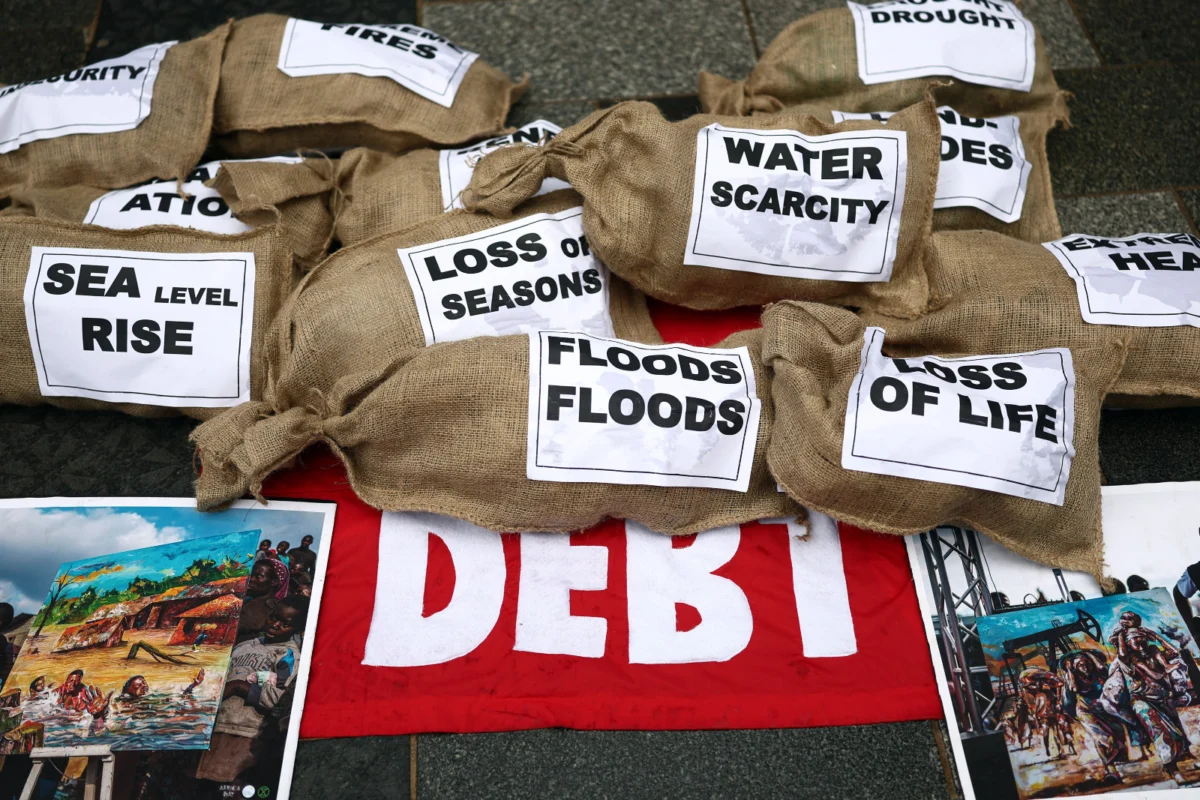
The debate over climate economics is not limited to the United States. Many developing nations in the Global South are currently facing a "climate debt" crisis, where they are forced to choose between servicing international debt and investing in climate adaptation. However, a study published in the European Journal of Political Economy, which analyzed data from 172 countries over several decades, found that there is no inherent trade-off between climate adaptation and fiscal stability.
Jorge M. Uribe, a professor at the Universitat Oberta de Catalunya and co-author of the study, argues that investing in better shelter, coastal protection, and resilient infrastructure can actually improve a country’s public finances in the long run. By preventing the catastrophic economic collapses that follow unmitigated natural disasters, countries can maintain more stable credit ratings and lower borrowing costs.
Public Perception and the "Forced Choice"
Despite the economic evidence, public opinion remains divided, often due to the way the issue is framed. Anthony Leiserowitz, director of the Yale Program on Climate Change Communication, points out that traditional polling often forces citizens to choose between "jobs" and "the environment." This "forced trade-off" framing ignores the reality that environmental protection often creates jobs.
Yale’s research shows that when the question is not framed as a zero-sum game, the majority of U.S. voters—approximately 59 percent—believe that protecting the environment improves economic growth and provides new jobs. Only 18 percent believe it hurts the economy. This suggests a growing disconnect between the administration’s rhetoric and the lived experience of the American electorate, who increasingly see the transition to a green economy as an opportunity rather than a threat.
Timeline of Key Economic and Environmental Shifts
- 1970: Passage of the Clean Air Act, which later showed a 1.5% boost to U.S. GDP by 2010.
- 1991: API-funded studies begin promoting the narrative that carbon taxes would shrink the economy.
- 2017: The U.S. announces withdrawal from the Paris Climate Agreement, citing "trillions" in potential costs.
- 2021: The Biden administration restores the Social Cost of Carbon to $190 per ton.
- 2024 (February): The EPA rescinds fuel efficiency standards, claiming $1.3 trillion in savings despite internal data suggesting a $1.5 trillion cost.
- 2024 (March): Record heatwaves in the Western U.S. highlight the immediate economic risks to water and agriculture.
- 2024 (September): Brookings Institution finds climate change costs the average household up to $571 annually.
Conclusion: Redefining the Economic Ledger
The persistent argument that the United States must choose between a healthy economy and a healthy planet is increasingly unsupported by modern economic analysis. The Trump administration’s reliance on skewed cost-benefit models and the omission of climate-related damages has created a policy environment that favors short-term industrial gains at the expense of long-term national stability. As extreme weather continues to impact the insurance, real estate, and healthcare sectors, the "cost of inaction" is becoming a dominant factor in the American economic landscape. Moving forward, the challenge for policymakers will be to integrate the true costs of carbon and the proven benefits of green investment into a more transparent and realistic economic ledger.