The Shifting Landscape of Reproductive Rights: Analyzing the Impact of Trump’s Executive Orders on Abortion Access
Donald Trump’s presidency was marked by a series of executive actions that profoundly impacted the landscape of reproductive rights in the United States. While no single executive order directly banned abortion nationwide, his administration implemented policies that systematically curtailed access to abortion services, particularly for low-income individuals and in developing nations. These actions, often framed as pro-life initiatives, were met with fierce opposition from reproductive rights advocates who argued they constituted an assault on fundamental healthcare and bodily autonomy. Understanding the nuances of these executive orders and their cascading effects is crucial to grasping the contemporary debates surrounding abortion access and the ongoing legal and political battles.
One of the most significant executive actions impacting abortion rights was President Trump’s reinstatement and expansion of the "global gag rule," formally known as the Mexico City Policy. This policy, which has been enacted and rescinded by various administrations, prohibits U.S. government funding to non-governmental organizations (NGOs) overseas that provide or promote abortion services, even if those services are funded by non-U.S. sources. Trump’s 2017 executive order, titled "Protecting American Taxpayer Funding of World Health Organizations," broadened the scope of this rule significantly. It applied not only to family planning funds but also to a wider range of global health initiatives, including those related to maternal and child health, HIV/AIDS, and tuberculosis. The stated intention was to ensure that U.S. taxpayer dollars were not used to support abortion. However, critics argued that this policy had devastating consequences, cutting off essential healthcare services for millions of women and girls in impoverished countries who relied on these organizations for contraception, family planning counseling, and safe abortion care where legal. The argument from opponents was that by withholding funding from organizations that also offered abortion services, the U.S. was indirectly forcing women to resort to unsafe, illegal abortions, thereby increasing maternal mortality and morbidity. The policy also created a chilling effect, forcing many organizations to choose between receiving vital U.S. funding and maintaining their ability to provide comprehensive reproductive health services, leading to the closure of clinics and a reduction in essential health programs.
Domestically, President Trump’s administration also took steps that indirectly impacted abortion access through its appointments and regulatory changes. While not a direct executive order solely focused on abortion, the appointment of conservative judges to federal courts, including the Supreme Court, was a cornerstone of his agenda. The eventual overturning of Roe v. Wade by the Supreme Court in June 2022, a landmark decision that had protected abortion rights nationwide for nearly 50 years, was a direct consequence of these judicial appointments. Trump often campaigned on his promise to appoint judges who would uphold conservative legal principles, and his nominees consistently demonstrated a willingness to reconsider or overturn established precedents, including those related to abortion. Beyond judicial appointments, Trump’s administration also pursued regulatory changes within federal agencies that aimed to restrict abortion access. For instance, the Department of Health and Human Services (HHS) took steps to weaken the Affordable Care Act’s (ACA) contraception mandate, which required most employers to cover contraception without co-pays. While this did not directly ban abortion, it made contraception less accessible for many women, potentially leading to unintended pregnancies and an increased demand for abortion services.
Furthermore, the Trump administration actively supported state-level efforts to restrict abortion. While states have always had the authority to regulate abortion, the federal administration’s rhetorical and political support emboldened conservative lawmakers to pursue increasingly restrictive legislation. This included measures such as bans on certain abortion procedures, mandatory waiting periods, and restrictions on abortion providers. The federal government also used its regulatory power to influence how federal funds could be used by recipients. For example, the Department of Justice, under the Trump administration, signaled its intent to enforce existing laws more strictly regarding the distribution of abortion-inducing drugs and to investigate potential violations of federal law related to abortion. These actions, while often framed as upholding existing legal frameworks, were perceived by reproductive rights organizations as a coordinated effort to dismantle abortion access piece by piece.
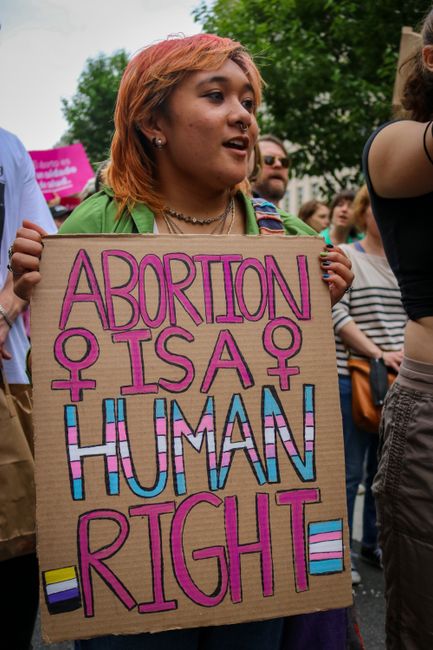
The impact of these executive orders and related policies extended beyond healthcare services. They fueled a deeply polarized political environment, intensifying the already fervent debate surrounding abortion. Pro-choice advocates decried the policies as a regression in women’s rights and a direct affront to reproductive freedom. They organized protests, lobbied lawmakers, and filed numerous legal challenges against the administration’s actions. Conversely, pro-life groups largely lauded these measures as a victory for their cause, celebrating the administration’s commitment to protecting unborn life. This polarization has had a lasting effect, contributing to the ongoing legal battles and legislative efforts to either expand or restrict abortion access in the post-Roe era. The executive orders enacted during Trump’s presidency created a ripple effect that continues to shape the reproductive rights landscape, influencing policy decisions at federal and state levels and shaping the discourse around healthcare, autonomy, and fundamental rights.
The economic implications of these policies also warrant consideration. For organizations operating in developing countries, the loss of U.S. funding due to the expanded global gag rule meant a significant reduction in their capacity to provide a wide range of essential health services. This impacted not only abortion-related services but also family planning, maternal care, and the prevention of sexually transmitted infections. The long-term consequences included potential increases in unintended pregnancies, higher rates of unsafe abortions, and greater strain on already overburdened healthcare systems. Domestically, the weakening of the ACA’s contraception mandate could lead to increased out-of-pocket costs for individuals seeking birth control, potentially making it unaffordable for some, which could, in turn, lead to an increase in unplanned pregnancies and subsequent demand for abortion. The financial burden on individuals and families struggling to access reproductive healthcare services is a significant, often overlooked, consequence of these policy shifts.
Furthermore, the Trump administration’s approach to reproductive rights also raised questions about the intersection of religious freedom and reproductive healthcare. While the administration often invoked religious freedom as a justification for certain policies, reproductive rights advocates argued that this was being used to impose the religious beliefs of a minority on the entire population, infringing upon the rights of individuals to make their own healthcare decisions. This tension between competing rights and values remains a central theme in the ongoing debate. The executive orders, therefore, were not simply administrative directives; they were deeply intertwined with broader cultural, political, and ethical considerations, contributing to a complex and evolving understanding of reproductive rights in the United States and globally. The legacy of these actions continues to be debated and challenged, with ongoing legal and political efforts to either solidify or reverse the changes initiated during his presidency. The impact on access to comprehensive reproductive healthcare remains a critical concern for millions, underscoring the far-reaching consequences of executive actions in shaping fundamental rights.
