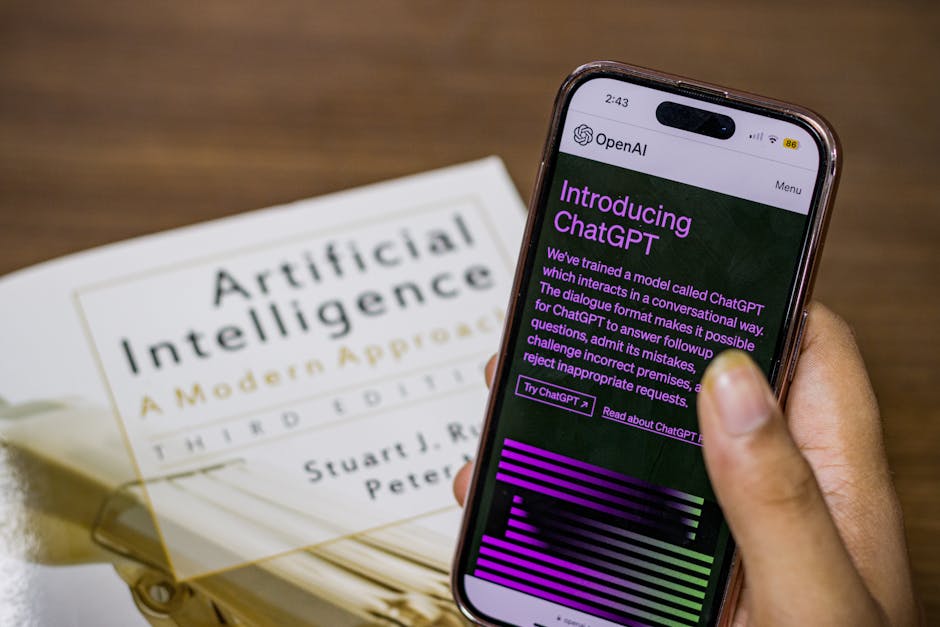
The Evolution of AI Tutors: Bridging the Gap Between Chatbot Engagement and Educational Efficacy Through Personalized Learning Paths
The emergence of Artificial Intelligence (AI) in education is not merely a technological advancement; it represents a fundamental shift in how knowledge is imparted and acquired. At the forefront of this revolution are AI tutors, a sophisticated evolution from rudimentary chatbots, designed to cultivate not just engagement but demonstrably improve educational efficacy. This transformation is driven by an increasing sophistication in AI’s ability to understand individual learner needs, leading to the creation of highly personalized learning paths. Unlike their predecessors, which often offered generic responses and superficial interactions, modern AI tutors leverage advanced natural language processing (NLP), machine learning (ML), and data analytics to create dynamic, adaptive educational experiences. The core of this evolution lies in the ability of AI tutors to move beyond simple question-answering and towards genuine pedagogical scaffolding, offering tailored explanations, targeted practice, and continuous feedback, all orchestrated around a learner’s unique progress and learning style. This intricate dance between engagement and efficacy, facilitated by personalization, is redefining the future of education, making learning more accessible, efficient, and ultimately, more effective for a diverse range of students.
The initial wave of AI in educational contexts was largely characterized by chatbot technology. These systems, while novel, primarily served as digital encyclopedias or basic conversational agents. Their limitations were stark: a lack of deep understanding of pedagogical principles, an inability to infer learner misconceptions, and a reliance on pre-programmed responses that failed to adapt to individual learning trajectories. The engagement they offered was often shallow, relying on novelty rather than sustained, meaningful interaction. Learners might find them useful for quick fact-checking or basic queries, but they lacked the capacity to guide a student through complex problem-solving, identify knowledge gaps, or provide the nuanced encouragement vital for academic growth. The efficacy of these early chatbots was therefore limited, often acting as a supplement rather than a transformative tool. The breakthrough came with the recognition that true educational value demanded more than just conversational fluency; it required an understanding of learning science and the ability to dynamically adjust the learning experience based on granular learner data.
The pivotal shift from chatbot engagement to educational efficacy is rooted in the concept of personalized learning paths. This approach acknowledges that every learner is unique, possessing different prior knowledge, learning paces, strengths, weaknesses, and preferred learning modalities. AI tutors are now equipped with advanced algorithms capable of analyzing a vast array of learner data points. This data can include quiz results, time spent on specific topics, the types of questions asked, error patterns, and even implicit signals of engagement or frustration. By processing this information in real-time, AI tutors can construct a dynamic learning pathway tailored to each individual. This pathway isn’t a static, pre-determined sequence; it’s a fluid roadmap that constantly re-evaluates and adjusts based on the learner’s ongoing performance. If a student struggles with a particular concept, the AI tutor can automatically provide supplementary explanations, offer simpler practice problems, or even suggest alternative learning resources that cater to their specific needs. Conversely, if a learner demonstrates mastery, the AI can accelerate their progression, presenting more challenging material to foster deeper understanding and prevent boredom.
This personalization extends to the very nature of the interaction. Instead of generic feedback, AI tutors can now offer highly specific insights into why an answer was incorrect, highlighting the exact misconception or skill deficit. For instance, in a mathematics context, an AI tutor might not just say "incorrect," but rather "It appears you’ve made a mistake in applying the order of operations. Remember that multiplication should be performed before addition." This level of diagnostic feedback is crucial for effective learning, as it allows students to self-correct and build a more robust understanding of the underlying principles. Furthermore, AI tutors can adapt their communication style. Some learners thrive on direct, concise instruction, while others benefit from more detailed, elaborative explanations or even motivational prompts. Advanced AI can infer these preferences and adjust its tone and delivery accordingly, fostering a more comfortable and productive learning environment. This nuanced interaction is a far cry from the repetitive, script-based conversations of earlier chatbots.
The underlying technology empowering this evolution is multifaceted. Natural Language Processing (NLP) has advanced to a point where AI tutors can not only understand the semantic meaning of student queries but also interpret the intent and even infer emotional states. This allows for more natural and intuitive conversations, reducing the frustration often associated with rigid, keyword-dependent chatbot interfaces. Machine Learning (ML) plays a crucial role in building predictive models that anticipate learner difficulties and identify optimal learning strategies. By continuously training on vast datasets of learner interactions and academic outcomes, these models become increasingly adept at predicting what a student needs next. Data analytics provides the framework for collecting, processing, and interpreting the rich stream of data generated by each learner. This data fuels the personalization engine, enabling the AI tutor to make informed decisions about content delivery, pacing, and intervention. Reinforcement learning, in particular, allows AI tutors to learn through trial and error, optimizing their pedagogical strategies over time to maximize learner success.
The impact of AI tutors on educational efficacy is becoming increasingly evident across various disciplines. In STEM fields, where problem-solving and conceptual understanding are paramount, AI tutors can provide immediate, step-by-step guidance through complex equations, simulations, and experimental designs. They can offer infinite practice opportunities, allowing students to hone their skills without the constraints of traditional classroom settings. In humanities, AI tutors can facilitate deeper engagement with texts, prompting critical thinking through Socratic questioning, analyzing essay structures, and providing feedback on argumentation. Language learning is another area where AI tutors excel, offering personalized practice in pronunciation, grammar, and vocabulary, adapting to the learner’s proficiency level and identifying specific areas for improvement. The ability of AI tutors to provide consistent, unbiased, and readily available support addresses a critical need for supplemental instruction, particularly in overcrowded classrooms or for students who require additional scaffolding outside of formal instruction hours.
Beyond academic content, AI tutors are also being designed to foster essential meta-cognitive skills. By prompting learners to reflect on their learning processes, identify their own strengths and weaknesses, and set learning goals, AI tutors can empower students to become more self-directed and independent learners. This is a crucial aspect of long-term educational success, equipping individuals with the skills to navigate an ever-changing knowledge landscape. The personalized feedback provided by AI tutors can also help students develop a more growth-oriented mindset, understanding that challenges are opportunities for learning rather than indicators of inherent limitations. This subtle but significant impact on learner psychology is a testament to the evolving sophistication of AI in educational settings.
However, the development and deployment of AI tutors are not without their challenges. Ensuring equitable access to this technology is paramount, as a digital divide could exacerbate existing educational inequalities. Furthermore, ethical considerations surrounding data privacy, algorithmic bias, and the potential for over-reliance on AI are critical areas that require ongoing attention and robust governance. The development of AI tutors must be guided by pedagogical experts to ensure that they align with sound educational principles and do not inadvertently promote superficial learning or stifle critical thinking. The human element in education, including the empathy, mentorship, and social interaction provided by human teachers, remains invaluable and should be seen as complementary to, rather than a replacement for, AI tutors. The ideal future likely involves a blended approach where AI tutors augment the capabilities of human educators, freeing up teachers to focus on higher-level tasks such as fostering creativity, critical discourse, and socio-emotional development.
The ongoing research and development in AI tutoring systems are focused on several key areas. One is the improvement of AI’s ability to understand and respond to nuanced emotional cues from learners. Detecting frustration, boredom, or confusion through subtle linguistic patterns or interactional behaviors can enable the AI to intervene proactively and adjust its approach to maintain engagement and optimize learning. Another area of focus is the development of AI tutors that can collaborate with human teachers, providing them with detailed insights into individual student progress and suggesting targeted interventions. This symbiotic relationship can empower educators with data-driven information to personalize their instruction more effectively. Finally, the development of more sophisticated AI models capable of generating novel learning content, designing complex adaptive assessments, and even simulating real-world problem-solving scenarios will further enhance the efficacy and engagement potential of AI tutors.
The journey from basic chatbots to sophisticated AI tutors represents a significant leap in educational technology. The core of this evolution lies in the ability to move beyond generic engagement and towards profound educational efficacy, driven by the power of personalized learning paths. By analyzing individual learner data, adapting content and delivery, and providing targeted, insightful feedback, these AI systems are transforming the learning experience. As AI technology continues to advance, and as we navigate the ethical and practical considerations, AI tutors are poised to become indispensable tools in creating a more effective, equitable, and engaging future for education, empowering learners to reach their full potential. The integration of advanced NLP, ML, and data analytics allows for a dynamic and responsive learning environment that was once the exclusive domain of highly skilled human educators, democratizing access to personalized academic support and fundamentally reshaping the landscape of knowledge acquisition for generations to come.
