While the Perseid meteor shower typically commands the lion’s share of attention during the summer months, the Earth’s journey through the cosmos presents a rich tapestry of lesser-known celestial events for dedicated stargazers. From mid-July through late August, our planet navigates through multiple streams of cometary and asteroidal debris, igniting a series of meteor showers that paint the Northern Hemisphere’s night skies with fleeting streaks of light. Although these events may not boast the prodigious hourly rates of the Perseids, they offer a nuanced and rewarding experience for those who seek the subtle wonders of the universe. For patient observers under the cloak of darkness, these quieter showers can still deliver spectacular fireballs, delicate trails, and a delightful prelude to the season’s main astronomical attraction.
The duration of any given meteor shower is inherently fluid. The precise start and end points are gradual, marked by an increasing and then decreasing number of visible meteors. While the hourly counts from these supplementary meteor streams may pale in comparison to the Perseids, their collective presence offers a diverse array of meteors, each with its unique color, speed, and trajectory. This year, while the Perseids are poised for a spectacular showing with minimal lunar interference, the preceding weeks are dotted with opportunities to witness these more understated celestial performances.
The Capricornids: A Gentle Prelude to Summer’s Celestial Show
Kicking off the procession of summer meteor showers are the Capricornids, whose activity commences around July 10th. Their peak activity is slated for July 25th, with their presence lingering until August 15th. Under optimal conditions, observers might witness only a few bright meteors per hour originating from this stream. Identifying them amidst the more frequent sporadic meteors requires a keen eye and perhaps a plotted star map to trace their trails back to a common point of origin, known as the radiant. The radiant of the Capricornids reaches its highest point in the southern sky, approximately 30 degrees above the horizon, around 2:00 a.m. local daylight time. Fortunately, on the night of the peak, the waxing gibbous moon will have set by around 1:40 a.m., leaving the remainder of the night agreeably dark for prospective meteor watchers.
The Capricornids are known for producing larger, slower-moving fireballs compared to other showers. These are often remnants of Comet 169P/NEAT. While their numbers are modest, the visual impact of a bright Capricornid fireball can be quite memorable. Observing these meteors often involves scanning a broad expanse of the sky, as they can appear far from their radiant point.
Delta Aquarids: July’s Prolific, Yet Faint, Display
Following closely are the Delta Aquarids, often considered July’s most prolific shower, with its maximum activity anticipated on July 29th. Under ideal conditions, this shower can yield between two to three dozen meteors per hour. The Delta Aquarids are active for an extended period, from July 12th to August 23rd. A notable characteristic of this shower is its double radiant, suggesting that Earth is passing through two distinct streams of celestial debris.
The meteors produced by the Delta Aquarids are predominantly faint, though a small percentage, around 5-10%, leave persistent trains – glowing trails that linger in the sky for a few seconds after the meteor has passed. These meteors move at medium-slow speeds due to Earth’s orbital path encountering the debris stream at a more tangential angle. On the peak night, the double radiant will ascend to its highest point, approximately 40 degrees above the southern horizon, around 3:30 a.m. local time. Unfortunately, for the year 2026, the peak activity of the Delta Aquarids will coincide with the full moon, potentially obscuring most of these fainter streaks. This highlights the critical role of lunar illumination in meteor shower viewing.
Piscis Australids: A Southern Hemisphere Delight with Lunar Challenges
Another shower gracing the skies in late July is the Piscis Australids, with peak activity around July 30th and a general activity window from July 10th to August 10th. This is a relatively weak shower, typically producing only about eight meteors per hour under the best viewing circumstances. Its radiant, located near the bright star Fomalhaut, climbs high in the sky primarily for observers in the Southern Hemisphere.
Similar to the Delta Aquarids, the moon’s phase poses a significant challenge for viewing the Piscis Australids this year. With the moon only one day past full on the peak night, any chance of observing these fainter meteors is likely to be diminished. However, for those in the Northern Hemisphere, the radiant is lower in the sky, making them even more challenging to spot.
Alpha Capricornids: Fiery Streaks from a Scattered Stream
The final shower peaking in July is the Alpha Capricornids, which commence their activity around July 7th, reach their zenith on July 31st, and conclude by August 15th. The radiant of this shower attains its highest elevation in the southern sky, around 30 degrees, near 1:00 a.m. local daylight time. Although sparse in number, typically yielding only about 5 meteors per hour, the Alpha Capricornids are known for their photogenic nature. They frequently produce bright yellow fireballs that can be quite spectacular. The cause of this shower is believed to be debris from Comet 169P/NEAT, the same source as the Capricornids, suggesting a shared but perhaps more dispersed origin. Sadly, a nearly full moon, approximately 93% illuminated, will be present in the constellation Capricornus, significantly impacting the viewing conditions for this year’s display.
Iota Aquarids: A Late Summer Visitor
As the Perseids approach, the Iota Aquarids offer a final minor shower before the main event. This is a two-radiant shower with detectable activity from July 15th to August 25th. At its peak activity on August 6th, observers can expect to see about six meteors per hour under favorable conditions. The radiants reach their highest point, roughly 40 degrees in the south, around 2:30 a.m. local time. The presence of a last quarter moon, appearing about one-third up in the eastern sky at that hour, will interfere to some extent with optimal viewing. The Iota Aquarids are associated with the Jupiter-family comet Schwassmann-Wachmann 3.
The Perseids: The Crown Jewel of Summer Meteor Showers
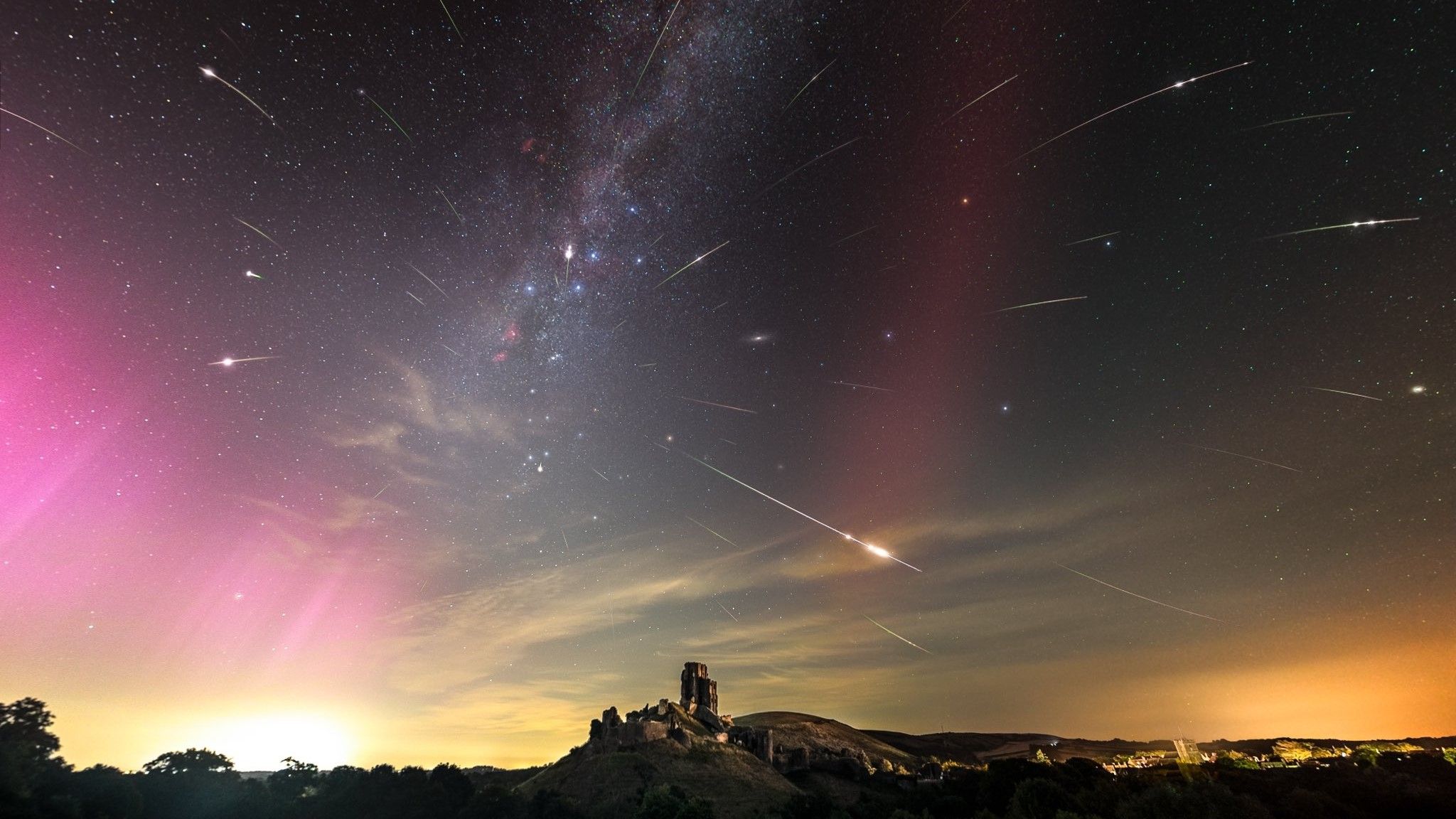
The Perseid meteor shower, a perennial favorite, is predicted to reach its peak on the morning of August 13th. The meteors from this shower appear to originate from a point in the sky near the border of Perseus and Cassiopeia, not far from the renowned Double Cluster. The radiant of the Perseids rises at dusk and is highest in the sky, nearly overhead, by 5:40 a.m. local time.
When the peak occurs under dark skies, as is anticipated this year, this exceptionally rich stream offers a dazzling crescendo, averaging more than 50 meteors per hour, with documented instances of double this rate. Many of these meteors are characterized by flaring and leaving persistent trains, adding to their visual spectacle. The Perseids are active annually from approximately July 17th through August 24th, originating from the dust and debris left behind by Comet 109P/Swift-Tuttle. This year’s favorable lunar conditions—with the new moon occurring on August 12th—promise an exceptional viewing experience for the Perseids, allowing for the fainter meteors to be more readily observed.
Kappa Cygnids: A Subtle Display of Slow-Moving Fireballs
The final notable summer shower to grace the night sky is the Kappa Cygnids. The activity window for this shower extends from August 3rd to August 25th, with its peak expected on August 17th. While the maximum rate is modest, typically around four meteors per hour, this stream is noteworthy for producing slow-moving, flaring fireballs. A diligent observer may be handsomely rewarded for their patience. The radiant of the Kappa Cygnids is situated just north of the star Kappa Cygni and is nearly overhead, at an elevation of about 80 degrees, around 10:00 p.m. local time. At this time, a waxing crescent moon will be low in the southwest, having just set, thus posing minimal interference to viewing. This shower’s parent comet is currently unknown, adding an element of mystery to its celestial origins.
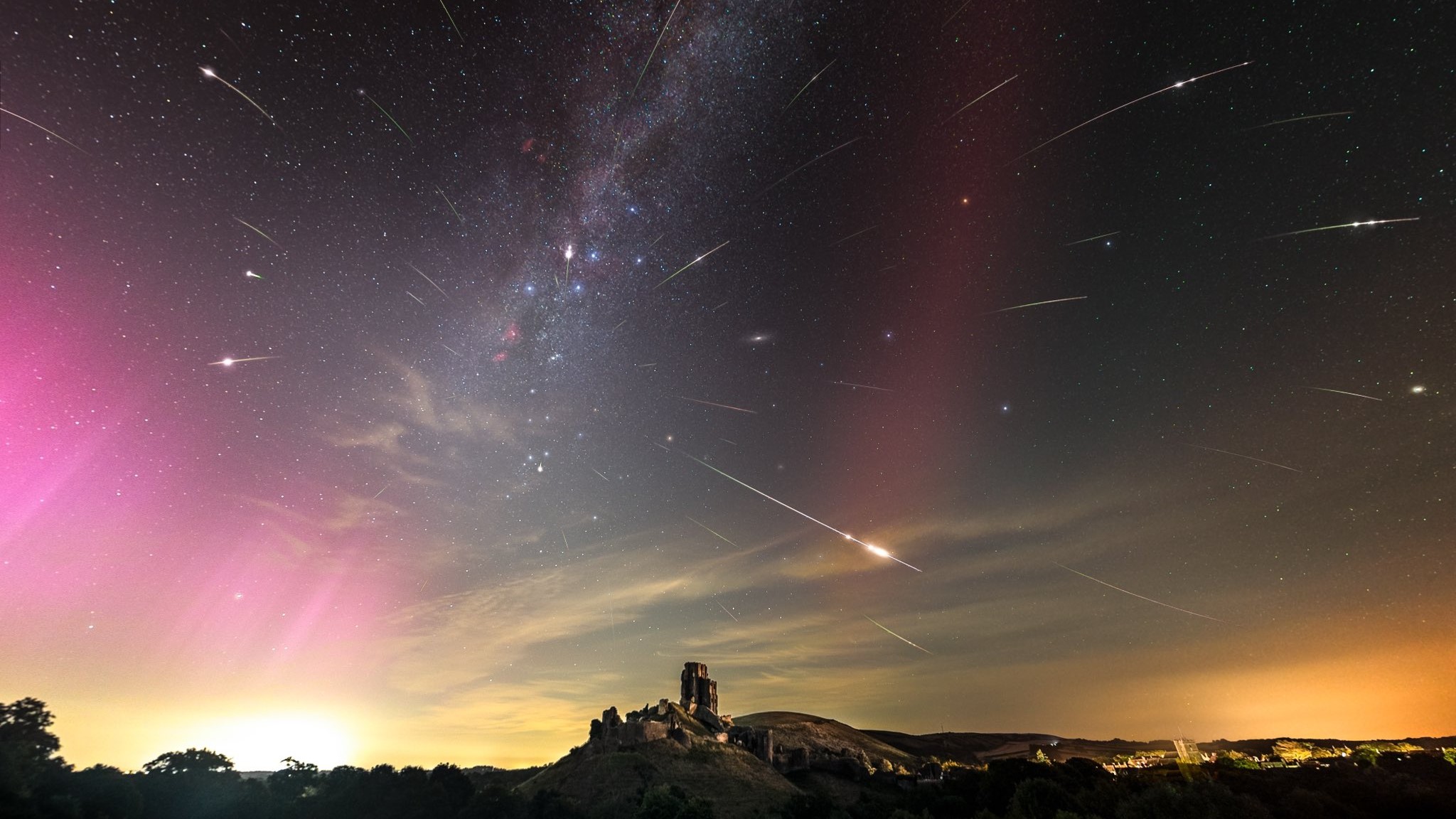
Navigating the Night Sky: Where and How to Look
Understanding the concept of a meteor shower’s radiant is crucial for effective observation. The radiant is the point in the sky from which the paths of shower members appear to diverge when plotted on a star chart. It is a common misconception that the best place to look for these meteors is directly at the radiant. In reality, only stationary meteors—those appearing to come straight at the observer—can be seen at the radiant.
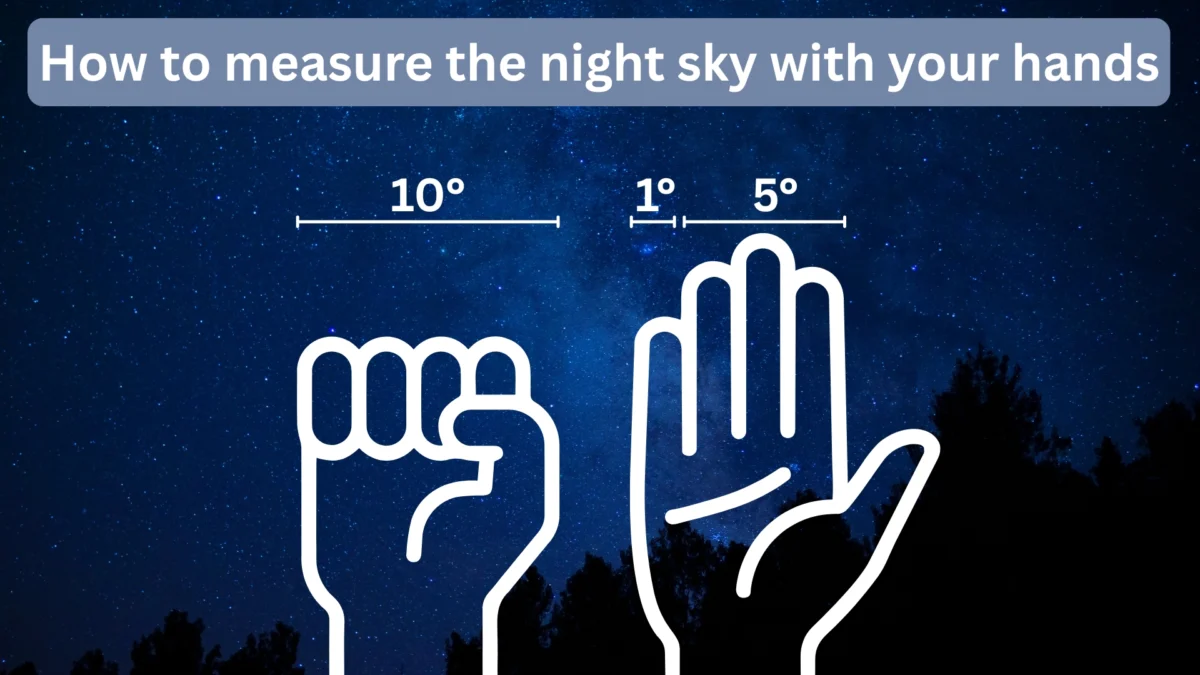
The greatest number of meteors are typically observed at a distance of about 30 degrees from the radiant, often in the general direction of the zenith (the point directly overhead). For reference, a clenched fist held at arm’s length spans approximately 10 degrees of the sky, a useful tool for estimating angular distances.
In addition to the meteors belonging to specific showers, there are always sporadic meteors—individual shooting stars that appear unrelated to any particular shower. These occur at an average rate of about 7 per hour. The duration of a specific shower is somewhat arbitrary, as the onset and conclusion of their activity are gradual and indefinite.
Essential Skywatching Tips for Optimal Viewing
The primary equipment required for meteor shower observation is remarkably simple: your own eyes and a healthy dose of patience. The number of meteors an observer can spot in an hour is significantly influenced by atmospheric conditions, light pollution, and the elevation of the radiant. The quoted hourly rates are generally based on exceptionally good, dark skies (allowing observation of stars down to magnitude +6.5), an experienced observer, and the assumption that the radiant is directly overhead.
As the radiant’s altitude decreases, so does the visible meteor count. At an elevation of about 30 degrees, the hourly rate is roughly halved, and at 15 degrees, it drops to about one-third of the maximum. It is important to note that no two observers approach a meteor vigil in precisely the same manner.
Comfort is paramount for extended observation. Expect overnight low temperatures to be considerably cooler than the daytime forecast suggests. When sitting still, close to the ground that rapidly loses heat, and in slightly damp air, one can become quite chilled. It is advisable to take a late afternoon nap, followed by a shower, and to wear fresh clothing. Essential gear includes heavy blankets, sleeping bags, a ground cloth, an auto cushion, and a pillow. Sustenance in the form of food and non-alcoholic beverages can also contribute to a more comfortable and enjoyable experience.
The Lunar Factor: A Critical Consideration for Meteor Gazing
Another significant factor influencing meteor shower visibility is the phase of the moon. This year, the full moon occurs on July 29th, with the new moon on August 12th. This lunar cycle makes 2026 a particularly favorable year for viewing the Perseids, as their peak will be close to the new moon. However, for showers peaking at the end of July and early August, the bright moon will present a challenge. Fortunately, most meteor showers are active for a considerable number of days before and after their peak, offering alternative viewing opportunities when moonlight is less intrusive.
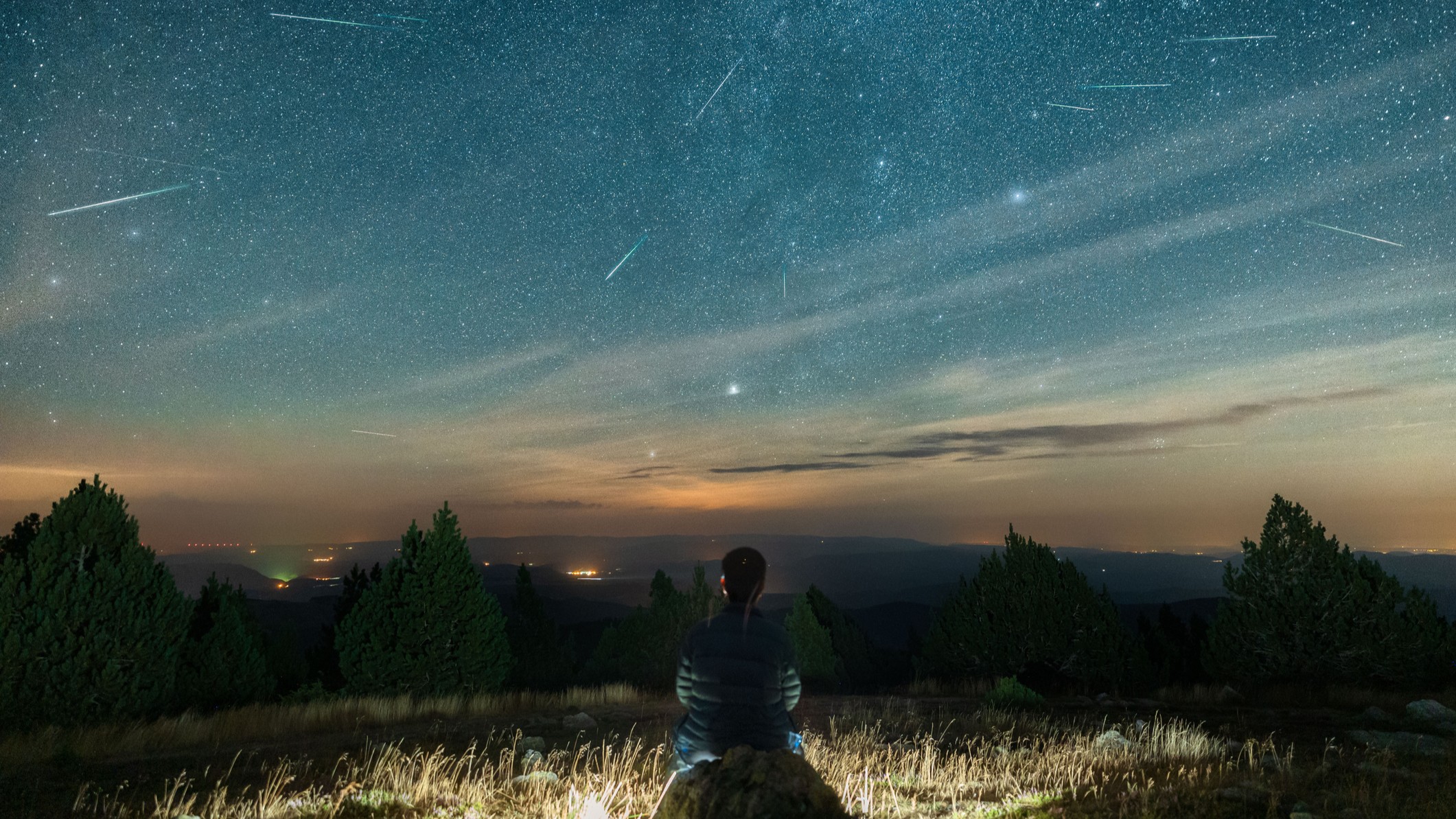
Assessing the Value: Are These Minor Showers Worth the Effort?
In essence, the minor summer meteor showers are well worth watching for those who appreciate patient, low-key skywatching and the subtle beauty of the cosmos. However, they are not ideal for individuals who expect a dramatic, high-intensity display.
These showers offer an extended observing season, require no specialized equipment, and can produce a captivating variety of meteors with differing colors, speeds, and paths, occasionally including brilliant fireballs. They also provide observers with more opportunities to witness celestial events when skies are clear and moonlight is less of a hindrance.
Conversely, most of these showers are considerably weaker when compared to the Perseids, characterized by lower hourly rates and a prevalence of faint meteors. The presence of moonlight, low radiant positions, overlapping shower activity, and the constant presence of sporadic meteors can all make identification and observation more challenging. Therefore, successful viewing of these less prominent showers necessitates dark skies, minimal light pollution, and a significant degree of patience and dedication from the observer.
Joe Rao serves as Space.com’s skywatching columnist. He is also a seasoned meteorologist and an avid eclipse chaser. Rao holds the position of instructor and guest lecturer at New York’s Hayden Planetarium and contributes regularly to publications such as Natural History magazine, Sky & Telescope, and The Old Farmer’s Almanac. His extensive career in meteorology, spanning over two decades in the Putnam Valley region of New York, has earned him eight Emmy nominations. Rao actively tracks celestial events like lunar and solar eclipses and meteor showers, sharing his insights on platforms like Twitter and YouTube.