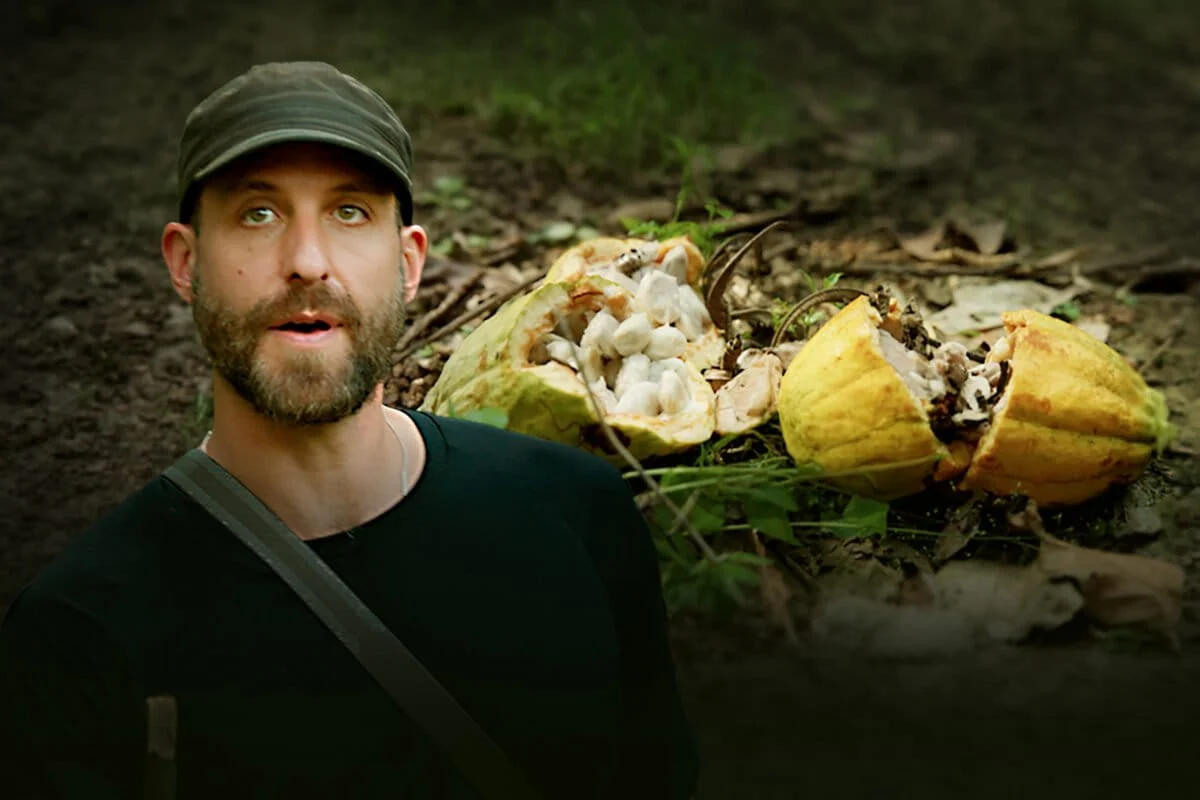
Deep within the dense, emerald canopy of southeastern Liberia, a silent transformation is underway that threatens to dismantle one of the world’s most critical ecological strongholds. In the county of Grand Gedeh, the local population has found a new obsession, a commodity they call "brown gold." This refers to cacao, the primary ingredient in the world’s multi-billion-dollar chocolate industry. While the crop promises a path out of systemic poverty for thousands of Liberians, its rapid expansion is driving a wave of deforestation that mirrors the environmental catastrophes seen in neighboring West African nations.
For over a century, the Upper Guinean rainforest, which once stretched across the entirety of West Africa, has been systematically dismantled by commercial agriculture, infrastructure development, and industrial logging. Today, more than half of the remaining intact forest is located within Liberia’s borders. However, satellite data and on-the-ground investigations reveal that this last bastion of biodiversity is now facing its most significant threat yet: an unregulated rush to plant cocoa.
The Economic Allure of the Brown Gold
The shift toward cocoa production in Grand Gedeh is not merely an agricultural trend; it is a fundamental economic restructuring of the region. For decades, many communities in southeastern Liberia lived in extreme poverty, residing in mud huts and relying on subsistence farming. The arrival of large-scale cocoa cultivation has begun to change the physical and economic landscape of these towns.
"Grand Gedeh is crazy for cocoa," explains local observers and community members. The fervor for the crop has permeated every level of society, from local villagers and migrant workers to high-ranking government officials. The motivation is simple: cocoa provides a reliable cash flow in a region where economic opportunities are otherwise scarce. In many towns, the visible signs of this newfound wealth are undeniable. Traditional huts are being replaced by more permanent structures, and the local markets are buzzing with activity driven by cocoa profits.
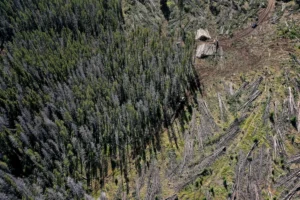
However, this prosperity comes at a staggering environmental cost. Unlike traditional farming, which often utilizes smaller plots of land, the "cocoa rush" involves the clearing of vast tracts of primary rainforest. Satellite imagery analyzed by environmental monitors shows massive patches of forest loss appearing in areas that were previously untouched. This expansion is moving so rapidly that conservationists fear the forest may not survive the decade if current trends continue.
Biodiversity Under Siege: The Proposed National Park
The frontline of this conflict is located within the proposed national parks of Grand Gedeh, areas designated for protection due to their unique biodiversity. These forests are home to some of the world’s most endangered species, including the Western chimpanzee, forest elephants, pygmy hippos, and rare leopards.
George, a ranger with the Wild Chimpanzee Foundation, spends his days patrolling these proposed protected areas, attempting to stem the tide of illegal farming. "In the name of cocoa farming, people are destroying the forest," George warns. The destruction of the canopy is not just a loss of trees; it is the destruction of a delicate ecosystem. The Western chimpanzee, already critically endangered, relies on these contiguous forest corridors for survival. As the forest is fragmented into cocoa plantations, these animals lose their habitats and are pushed into closer contact with human populations, leading to increased poaching and human-wildlife conflict.
During a recent investigation into the heart of the forest, rangers discovered massive cocoa plantations—some spanning over 100 hectares—hidden deep within the proposed national park boundaries. These are not small family plots but large-scale operations that require significant labor and capital. The age of the trees, many only a year or two old, suggests that the most aggressive phase of this expansion has occurred very recently.
Migration, Labor, and the Social Dynamics of Deforestation
The cocoa industry in Liberia is heavily reliant on a complex network of migrant labor, particularly from Burkina Faso. Known as "Burkinabe" workers, these individuals travel to Liberia in search of "greener pastures," often invited by Liberian community landowners who lack the technical expertise or the labor force to clear the forest themselves.
The social dynamics are fraught with tension and ethical concerns. Many of these migrant workers, including children who should be in school, live in makeshift camps deep in the forest, far from government oversight. When forest rangers conduct patrols, these workers are often the ones who face the immediate risk of arrest, while the landowners and financiers behind the operations remain safely in the towns.
There is a palpable sense of sympathy for these workers among some conservationists. Many are simply looking for a way to survive, and they are being used by local elites to bypass environmental regulations. "If the community knows these guys are being exposed to this kind of risk, why do they keep sending them?" asks one investigator. The answer lies in the lucrative nature of the trade; the potential profits from a successful cocoa harvest far outweigh the legal risks in a region where enforcement is sporadic and corruption is common.
The Broker System: Profit and Lack of Transparency
While the farmers and migrant workers do the grueling work of clearing the land and harvesting the beans, the real power and profit in the Liberian cocoa trade lie with the brokers. In hubs like Zleh City, brokers act as the essential link between the remote forest farms and the global market.
Lincoln, a prominent broker in the region, admits that the business is growing daily. For the brokers, cocoa is a high-volume, high-reward enterprise. However, there is a profound lack of transparency regarding where the cocoa actually goes. "We do not know which company it is—whether a European or an American company," Lincoln says. "We’re just here because we were living in poverty, and we’re seeing the cocoa bringing little money to us."
This "blind" supply chain is a significant hurdle for global conservation efforts. Once the beans leave the forest, they are mixed with other harvests, making it nearly impossible to trace them back to an illegal farm inside a protected rainforest. From the brokers, the cocoa travels to exporters in the capital, Monrovia, and from there, more than half is shipped to Europe, Liberia’s primary customer.
The European Response: The EU Deforestation Regulation (EUDR)
The European Union, recognizing its role as a major consumer of products linked to deforestation, recently passed the European Deforestation Regulation (EUDR). This landmark legislation aims to ensure that products sold on the European market—including cocoa, coffee, palm oil, and timber—are not sourced from land that was deforested after December 31, 2020.
EU legislators argue that the law is a necessary step to take responsibility for the "one-sided exploitation of resources." By setting high standards for the European market, the EU hopes to incentivize sustainable agricultural practices in producer nations like Liberia. For the forests of Grand Gedeh, the EUDR could theoretically be a lifesaver, as it would block the export of cocoa grown on illegally cleared land.
However, the implementation of the EUDR has faced significant hurdles. Originally set to go into force in late 2024, the regulation has been delayed following intense pressure from global industries and some member states. Critics of the delay argue that it is a political decision rather than a technical one. Meanwhile, Liberian farmers fear that the law will exclude them from the world’s most lucrative market, potentially pushing them further into poverty or forcing them to sell to markets with fewer environmental protections.
The Ivorian Precedent and the Future of Liberia’s Forests
The current trajectory of Liberia’s cocoa industry bears a haunting resemblance to the history of Côte d’Ivoire. Once home to vast rainforests, Côte d’Ivoire has lost approximately 90% of its forest cover over the last several decades, largely due to the unchecked expansion of the cocoa industry. Today, Côte d’Ivoire is the world’s top cocoa producer, but the environmental cost has been absolute.
Liberia now stands at a crossroads. It possesses the last significant remnants of the Upper Guinean rainforest, a landscape of global importance for carbon sequestration and biodiversity. Yet, the economic pressures that decimated the forests of Côte d’Ivoire are now being felt in Liberia.
The challenge for the Liberian government and the international community is to find a way to provide economic development without sacrificing the country’s natural heritage. This would require robust land-use planning, the formalization of the cocoa sector, and a crackdown on corruption among local officials who facilitate illegal land deals.
As the world’s appetite for chocolate continues to grow, the forests of Grand Gedeh remain on the edge of a precipice. The "brown gold" has brought houses and commerce to the region, but it has also brought the chainsaws and the fire. Unless there is a fundamental shift in how cocoa is produced and regulated, Liberia’s rainforests may soon become nothing more than a memory, replaced by endless rows of cacao trees in a landscape that has lost its wild heart.