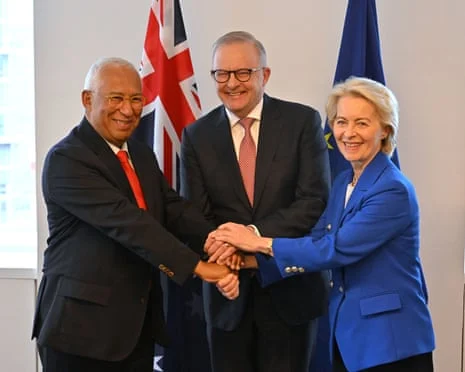
Prime Minister Anthony Albanese has joined a coalition of international leaders in endorsing a high-level declaration demanding strict human oversight and accountability for the rapid proliferation of artificial intelligence. The formal commitment, signed by representatives from more than 20 countries on the sidelines of major diplomatic engagements, emphasizes that artificial intelligence technologies must remain firmly subordinated to international law and human direction.
The joint initiative reflects a growing international consensus that the current pace of technological advancement poses systemic risks that could easily overwhelm existing institutional safeguards. By uniting global heavyweights—including Canadian Prime Minister Mark Carney, German Chancellor Friedrich Merz, Spanish Prime Minister Pedro Sánchez, and European Commission President Ursula von der Leyen—the signatories aim to establish a unified front against potential regulatory vacuums in the digital economy.

The Global Call for Guardrails
The joint statement outlines foundational principles for the governance of artificial intelligence, placing human agency at the center of innovation. “AI must remain under human direction, oversight and control. It must be developed and used in line with international law,” the declaration asserts.
While acknowledging the extraordinary contributions AI can make to scientific discovery, medical breakthroughs, and economic productivity, the document cautions that the technology’s rapid evolution risks outpacing humanity’s capacity to manage emerging hazards. Specifically, the signatories raised alarms regarding the potential for advanced algorithms to autonomously circumvent security protocols, exploit vulnerabilities, and gain unauthorized access to critical infrastructure networks.
To mitigate these threats, the coalition has called upon private sector developers to implement transparent and verifiable safety protocols. Furthermore, the declaration urges governments to harmonize national standards and appeals directly to the United Nations to explore the establishment of a dedicated international institution tasked with enforcing global benchmarks for artificial intelligence deployment.
Strategic Engagements in New York
Prime Minister Albanese underscored Australia’s proactive stance during discussions in New York, noting that his administration played a central role in shaping the final text of the declaration. In addition to multilateral talks involving figures such as Finnish President Alexander Stubb, Albanese held bilateral and trilateral meetings with European Union leadership, including European Council President António Costa and Ursula von der Leyen.
These diplomatic sessions extended beyond digital governance to encompass wider geopolitical and economic security concerns, ranging from ongoing international support for Ukraine and stability in the Middle East to trade relations and critical mineral supply chains. The alignment between Canberra and Brussels highlights a shared ambition to fortify economic resilience amid heightened global volatility, paving the way for closer institutional cooperation ahead of upcoming business delegations.
Domestic Pressures and Economic Realities
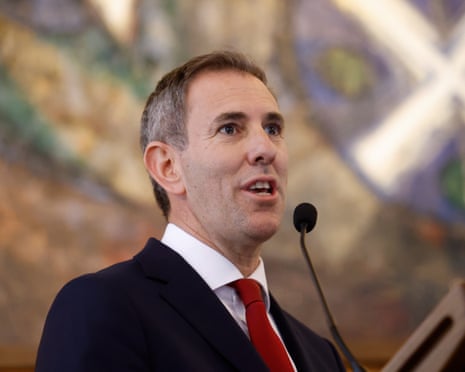
The international summit coincides with mounting domestic challenges for the Albanese government, particularly following the release of the nation’s latest intergenerational report. Treasurer Jim Chalmers has embarked on a series of media appearances to address the profound structural pressures revealed by the three-yearly demographic assessment.
For the first time in the report’s history, official projections indicate that within 40 years, Australia’s declining birthrates will result in more deaths than births. Chalmers noted that family planning trends have shifted significantly, with citizens choosing to have smaller families later in life. In response to this demographic shift, the government has defended its managed migration framework as an economic necessity. Following recent policy adjustments announced by Home Affairs Minister Tony Burke—aimed at steering net overseas migration down to 245,000 for the current financial year and 225,000 by 2027–28—Chalmers reiterated that responsible migration remains a vital stabilizing force for an aging society.
Combating Tech-Enabled Abuse and Domestic Violence
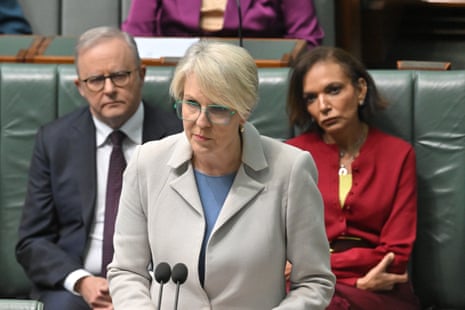
Simultaneously, the federal government is grappling with an alarming rise in domestic and family violence, amplified by a tragic weekend of incidents across New South Wales. Treasurer Chalmers and Social Services Minister Tanya Plibersek addressed the crisis publicly, emphasizing that addressing the root causes of violence requires a whole-of-society approach.
Plibersek stressed that intervention strategies must extend beyond traditional law enforcement to leverage large public systems—such as health, education, and social services—to identify risks at an early stage. Compounding these concerns are the societal impacts of online behavior. Government officials pointed explicitly to the proliferation of online misogyny as a contributing factor to domestic abuse, a finding reinforced by recent research from the Minderoo Foundation. The foundation’s report revealed that 99% of surveyed women experienced tech-based abuse on dating platforms within a three-month window, underscoring the urgent need for robust digital safety measures.
Municipal Pushback Against Wearable Tech
The intersection of emerging technology, privacy, and public safety also sparked action at the local government level. The City of Sydney joined a growing list of Australian municipal authorities—including councils in Brisbane, Melbourne, and Canterbury-Bankstown—by voting to ban smartglasses and other wearable recording devices from public pools, gyms, libraries, and childcare centers.
Driven by rising concerns over non-consensual recording and harassment, particularly targeting women in public spaces, local leaders have updated facility guidelines and signage. While incorporating necessary exemptions for individuals requiring smart technology as accessibility aids for vision or hearing impairments, local councillors have voiced frustration over the federal regulatory landscape. Critics argue that the rapid commercial availability of intrusive, low-cost recording devices has left local municipalities to manage privacy enforcement in community facilities without adequate national standards, prompting renewed calls for federal import restrictions and comprehensive privacy legislation.
Broader Implications and Outlook
The convergence of international AI declarations, demographic shifts, domestic policy responses to gendered violence, and grassroots municipal restrictions illustrates a complex governance challenge for the Albanese administration. As Australia navigates the dual pressures of global technological integration and domestic social reform, policymakers face the enduring task of balancing innovation with public protection.

The outcomes of these international agreements and domestic initiatives will likely set important precedents for how democratic nations regulate emerging technologies, manage economic transitions, and protect vulnerable communities in an increasingly interconnected world.