The United States Senate narrowly approved a resolution on Thursday to overturn a 20-year moratorium on mineral leasing within the watershed of the Boundary Waters Canoe Area Wilderness in northeastern Minnesota. In a 50-49 party-line vote, lawmakers utilized the Congressional Review Act (CRA) to dismantle protections established by the executive branch, effectively clearing the way for large-scale sulfide-ore copper mining in one of the nation’s most ecologically sensitive regions. The move has ignited a firestorm of legal and environmental debate, as critics argue the legislative maneuver bypasses established scientific review and ignores long-standing tribal treaty rights.
The Boundary Waters Canoe Area Wilderness (BWCAW) spans more than 1.1 million acres within the Superior National Forest. It is a vast network of glacial lakes and forests that serves as a primary driver of the regional economy through outdoor recreation and tourism. The 20-year withdrawal, which was finalized during the Biden administration, was intended to protect the pristine watershed from the potential catastrophic impacts of acid mine drainage, a byproduct of the specific type of mining proposed for the area.
The Congressional Review Act: A Tool for Deregulation
The resolution’s passage marks a significant and controversial application of the Congressional Review Act. Enacted in 1996 as part of former House Speaker Newt Gingrich’s "Contract with America," the CRA was designed to provide Congress with a streamlined mechanism to oversee and nullify federal agency rules. Under the act, a simple majority in both chambers can pass a "resolution of disapproval," which, if signed by the president, not only strikes down a specific regulation but also prohibits the agency from issuing any "substantially similar" rule in the future without new authorization from Congress.
Historically, the CRA was a rarely used tool, employed only once in its first two decades of existence—to overturn an OSHA ergonomics rule in 2001. However, the mechanism has been increasingly "weaponized" in recent years. During the first year of the first Trump administration in 2017, Republicans used the CRA to invalidate 17 Obama-era regulations. In 2025, following the transition of power, the pace accelerated, with the administration signing 22 CRA repeals in a single year.
Legal experts have raised alarms regarding the specific application of the CRA in the Boundary Waters case. The act typically mandates a 60-day window for Congress to act after a rule is finalized. The protections for the Boundary Waters, however, were issued more than three years ago as a Public Land Order rather than a standard regulatory "rule." By applying the CRA to an older executive order, the Senate has entered what Earthjustice representative Blaine Miller-McFeeley described as "extraordinarily legally questionable" and "uncharted territory."
The Twin Metals Project and the Duluth Complex
At the center of the legislative battle is the Twin Metals Minnesota project, a proposed underground mine targeting the Duluth Complex. This geological formation contains one of the world’s largest undeveloped deposits of copper, nickel, and platinum-group metals. Twin Metals is a subsidiary of Antofagasta PLC, a Chilean mining conglomerate controlled by the Luksic family.
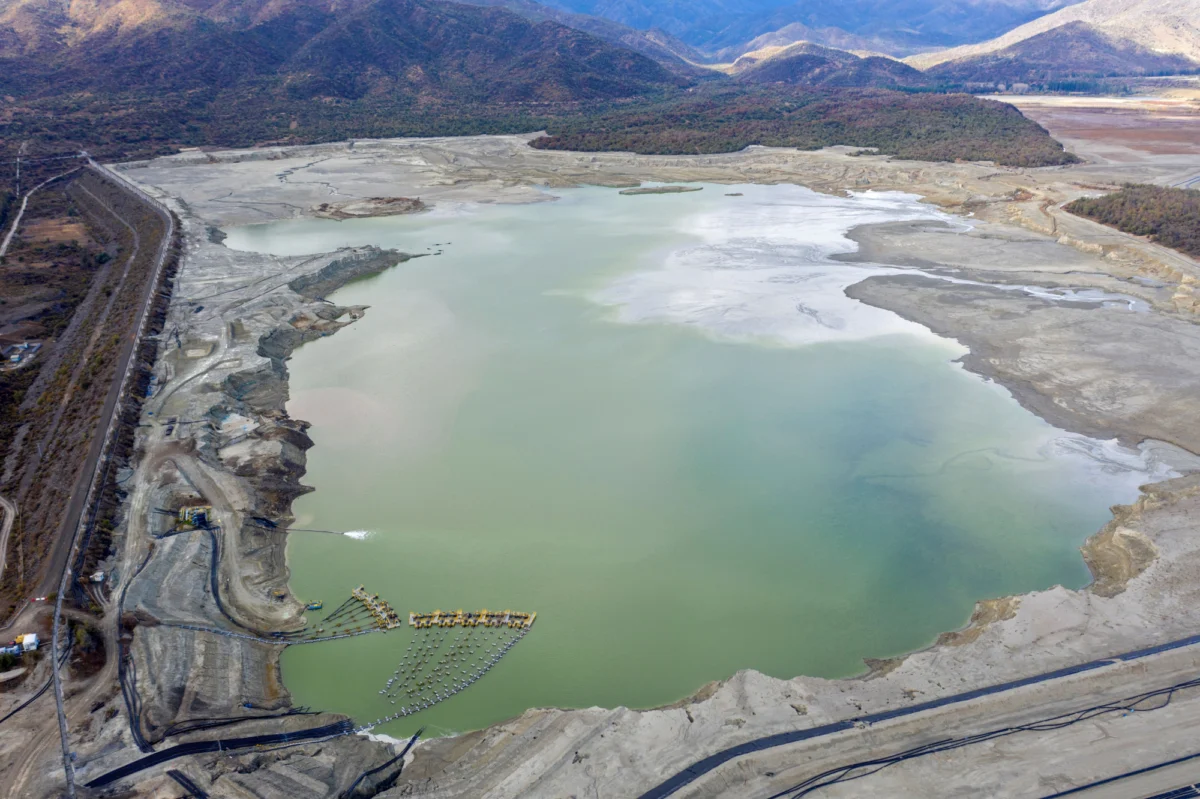
The proximity of the proposed mine to the wilderness area—roughly five miles from the BWCAW border—has been the primary point of contention for decades. Unlike the iron ore mining that has historically sustained the Minnesota Iron Range, the Duluth Complex requires sulfide-ore mining. When sulfide minerals are exposed to air and water during the mining process, they create sulfuric acid. This "acid mine drainage" can leach heavy metals into the surrounding watershed, posing a permanent threat to aquatic ecosystems.
In 2016, the U.S. Forest Service conducted a study concluding that a sulfide-ore mine in this specific location could cause "serious and irreplaceable harm" to the wilderness. The agency noted that because the BWCAW is a water-based wilderness with highly interconnected hydrology, any contamination within the watershed would be nearly impossible to contain or remediate.
Geopolitical Drivers and the Critical Minerals Race
Proponents of the mining resolution argue that domestic production of copper and nickel is a matter of national security and economic necessity. The global transition toward clean energy, coupled with the rapid expansion of artificial intelligence (AI) and defense technology, has created an unprecedented demand for critical minerals.
Data centers, which power AI computations, are massive consumers of copper for electrical infrastructure. A report from S&P Global recently projected that global copper demand will increase by 50 percent by 2040. Similarly, the Carnegie Endowment for International Peace has warned of a significant nickel deficit by 2035, noting that the United States has a "limited ability to increase domestic production."

However, environmental advocates and economic analysts point to a significant bottleneck in the U.S. supply chain: smelting and processing. The United States currently operates only three copper smelters and zero nickel smelters. Without domestic processing capacity, critics argue that ore extracted from Minnesota would likely be shipped abroad for processing, primarily to China or Europe, before being sold back to American manufacturers. This reality complicates the "national security" argument, as the extraction itself does not guarantee a domestic supply of finished metals.
Tribal Sovereignty and Treaty Rights
The Senate’s decision has also drawn sharp condemnation from tribal nations in the region. The Bois Forte Band, the Fond du Lac Band, and the Grand Portage Band of Chippewa hold extensive treaty rights in northeastern Minnesota, guaranteed under the 1854 Treaty of La Pointe. These rights include the ability to hunt, fish, and gather—specifically wild rice (manoomin), which is highly sensitive to changes in water quality and sulfate levels.
Senator Martin Heinrich of New Mexico criticized the vote on the Senate floor, stating that the use of the CRA to bypass environmental reviews effectively silences Indigenous voices. "By overturning the Public Land Order with a CRA resolution, Senate Republicans will not only cut Tribes out of the conversation; they disrespect Tribal treaty rights and directly risk those Tribes’ guaranteed access to their traditional way of life," Heinrich said.
The federal courts have repeatedly reaffirmed these treaty rights, and legal analysts suggest that the failure to consult with tribal nations or respect treaty-protected resources could form the basis for future litigation against the mining project.
Political Fallout and the "Slippery Slope" Precedent
The vote followed a dramatic effort by Minnesota Senator Tina Smith to block the resolution. Smith held the Senate floor for five hours on Wednesday night, arguing that the legislative body was disregarding its own laws and procedures regarding public land orders. "The Senate and House should follow the law," Smith stated, emphasizing that the misuse of the CRA could undermine the stability of all federal land management decisions.
The precedent set by this vote could have far-reaching implications for other protected lands. Republican Senator Mike Lee of Utah has already signaled intentions to use similar CRA resolutions to eliminate resource management plans for the Grand Staircase-Escalante National Monument. If land management decisions can be overturned by a simple majority vote years after they are implemented, the long-term planning processes governed by the National Environmental Policy Act (NEPA) could be effectively rendered moot.
The debate occurs alongside broader discussions regarding "permitting reform." While there is bipartisan support for streamlining the permitting process for clean energy projects and transmission lines, environmental groups warn that combining NEPA reform with the aggressive use of the CRA could leave all federal lands vulnerable to industrial development regardless of their ecological or cultural value.
Conclusion and Next Steps
The resolution now moves to President Trump’s desk, where he is widely expected to sign it into law. Upon his signature, the 20-year withdrawal will be officially rescinded, and the Bureau of Land Management will likely move to reinstate the mineral leases previously held by Twin Metals.
However, the signing of the bill is unlikely to be the end of the conflict. Environmental organizations, including Earthjustice and the Center for Biological Diversity, have signaled that they are prepared to challenge the legality of the CRA’s application in federal court. Furthermore, any specific mining proposal will still be subject to state and federal environmental review processes, though the political pressure to expedite these approvals is expected to be intense.
As the federal government sets itself in opposition to its own scientific researchers at the U.S. Forest Service, the fate of the Boundary Waters remains uncertain. The clash between the drive for domestic mineral independence and the preservation of one of the world’s last great freshwater wildernesses has entered a new and more volatile chapter.