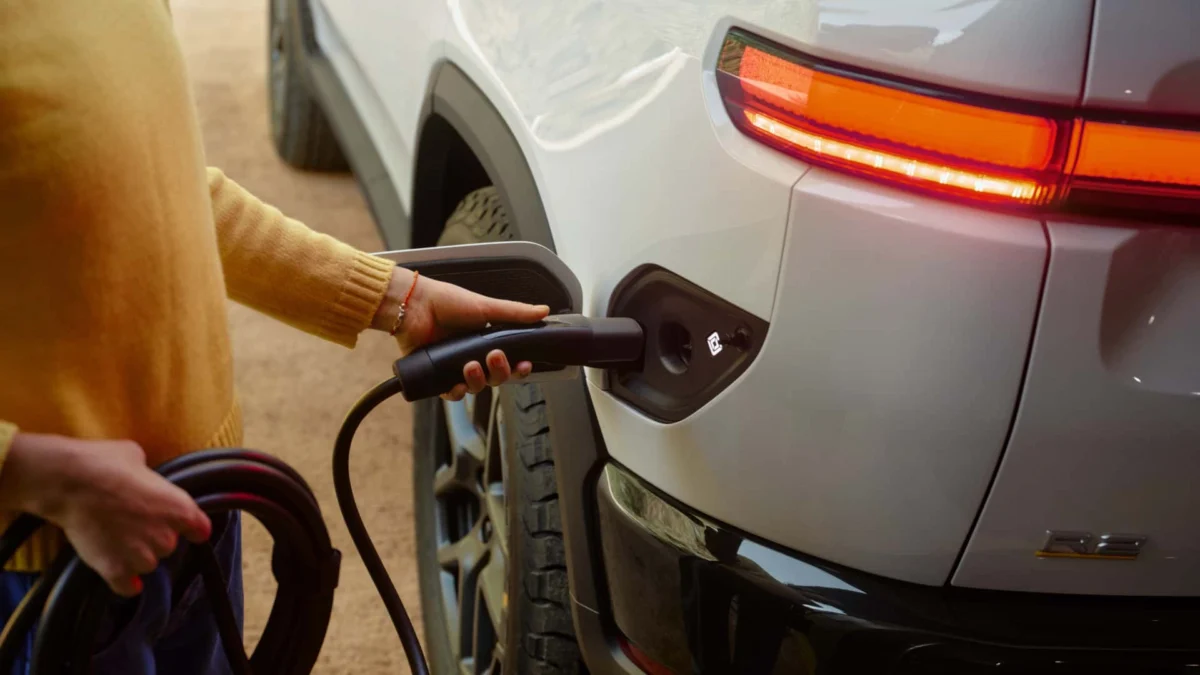
The recent testing of the Rivian R2, the highly anticipated mid-sized electric SUV from the American EV manufacturer, has brought a critical hardware compatibility issue to the forefront of the automotive conversation. During a comprehensive evaluation of the R2’s charging capabilities, Tom Moloughney, a veteran journalist and host of the prominent "State of Charge" YouTube channel, experienced a hardware failure that resulted in a melted charging adapter. The incident occurred while attempting to charge the Rivian R2 at a Combined Charging System (CCS) station using an older-generation Tesla North American Charging Standard (NACS) to CCS adapter. This failure underscores a significant technical challenge facing the electric vehicle industry as it transitions between charging standards and moves toward higher power delivery.
The failure was not identified as a malfunction of the Rivian R2 itself, nor was it a fault of the charging station. Instead, the melting of the adapter pin was a direct consequence of the R2’s specific electrical architecture and the physical limitations of legacy charging hardware. As the R2 features a native NACS port—the standard pioneered by Tesla and recently adopted by nearly every major automaker in North America—owners will frequently need adapters to access the vast existing network of CCS-based fast chargers, such as those operated by Electrify America, EVgo, and ChargePoint. The incident serves as a stark warning that not all adapters are created equal, especially when subjected to the high-performance charging curves of modern electric vehicles.
The Technical Conflict: Voltage versus Amperage
To understand why the adapter failed, it is necessary to examine the engineering decisions Rivian made during the development of the R2. The Rivian R2 is designed to be a more accessible, mass-market sibling to the flagship R1S and R1T models. To achieve a significantly lower price point—targeted at approximately $45,000—Rivian opted to utilize a 400-volt battery architecture rather than the 800-volt systems found in competitors like the Hyundai Ioniq 5, Kia EV6, or Porsche Taycan.
In electrical engineering, the total power delivered to a battery (measured in kilowatts) is the product of voltage and amperage (Current). To achieve fast charging speeds comparable to 800-volt vehicles, a 400-volt vehicle must pull a much higher amount of current (amperage). While an 800-volt vehicle can achieve 200 kW of charging power by drawing roughly 250 amps, a 400-volt vehicle like the Rivian R2 must draw 500 to 600 amps to reach similar power levels.
During Moloughney’s test, the Rivian R2 was observed drawing upwards of 600 amps. The older Tesla adapter used in the test was not engineered to handle such a sustained, high-amperage load. The resulting electrical resistance generated intense heat, which eventually reached the melting point of the plastic housing surrounding the adapter’s pins. This phenomenon is a classic example of thermal runaway in electrical components that are pushed beyond their rated thermal dissipation limits.
Sustained High-Amperage Loads and the R2 Charging Curve
The Rivian R2 is not the only electric vehicle capable of drawing high amperage. Certain models from BMW, Polestar, and Tesla are also capable of reaching the 600-amp threshold. However, the R2 distinguishes itself through its charging curve—the specific rate at which a car accepts power over time. While many EVs might peak at 600 amps for a few minutes before tapering down to protect the battery and components, the R2 is designed to sustain high amperage for a significantly longer duration.
This sustained load is what makes the choice of adapter so critical. In Moloughney’s demonstration, the vehicle continued to request high power because its internal systems indicated the battery could handle it. The legacy adapter, lacking modern thermal communication protocols, did not signal the car or the charger to "throttle" or slow down the flow of electricity as it began to overheat. Modern, high-quality adapters are equipped with internal temperature sensors. When these sensors detect that the hardware is becoming dangerously hot, they communicate with the vehicle to reduce the charging speed, thereby preventing physical damage. The older adapter used in this instance lacked these safeguards, allowing the charging process to continue until the hardware literally began to fail.
The Evolution of NACS and CCS Infrastructure
The transition to NACS as the primary charging standard in North America has created a "bridge" period where adapters are essential. For years, Tesla maintained a proprietary ecosystem, while almost every other manufacturer utilized the CCS Type 1 connector. With the industry-wide shift to NACS, the market has been flooded with various adapters, ranging from official manufacturer-supplied equipment to cheap, uncertified third-party options found on online marketplaces.
The incident with the R2 highlights the "Wild West" nature of the current adapter market. Official adapters, such as those produced by Tesla and Rivian, are built to rigorous specifications and include the aforementioned thermal management systems. For example, Rivian has stated that it includes a high-quality, thermally-monitored adapter with the purchase of an R2 for customers in states that follow California Air Resources Board (CARB) mandates. These official units are tested to handle the specific amperage profiles of Rivian’s 400-volt architecture.
The danger for consumers lies in the use of "legacy" or "subpar" hardware. Many older adapters were designed when the average EV charged at 50 kW or 100 kW. The R2’s ability to pull more than double that power creates a mismatch that legacy hardware simply cannot bridge safely.
Manufacturer and Expert Reactions
Following the publication of the "State of Charge" video, the EV community and industry analysts have reacted with a mix of concern and calls for better consumer education. While Rivian has not issued a formal recall or safety bulletin—rightly noting that the vehicle itself functioned as intended—the incident has sparked a broader discussion about the certification of charging accessories.
Industry experts suggest that organizations like Underwriters Laboratories (UL) must become more involved in the certification of NACS-to-CCS adapters. Currently, many third-party adapters sold to consumers lack any formal safety certification, leaving the user to trust the manufacturer’s claims regarding power limits. Tom Moloughney’s test proves that these claims are not always sufficient for the demands of next-generation EVs.
Tesla, which produces some of the most reliable adapters on the market, has designed its "Magic Dock" and standalone adapters with integrated thermal sensors that are specifically calibrated to handle high-amperage sessions. The takeaway for R2 owners, and indeed all EV owners, is that the adapter is not just a passive piece of plastic and metal; it is a critical link in a high-voltage power circuit that requires active management.
Chronology of the Charging Infrastructure Shift
To provide context for this event, it is helpful to look at the timeline of the North American charging standard transition:
- 2012–2022: Tesla operates the Supercharger network using its proprietary connector, while the rest of the industry standardizes on CCS.
- November 2022: Tesla rebrands its connector as the North American Charging Standard (NACS) and opens the design to other manufacturers.
- May 2023: Ford becomes the first major automaker to announce it will adopt NACS and gain access to the Tesla Supercharger network.
- June 2023: General Motors and Rivian follow suit, committing to NACS for future models.
- Early 2024: Rivian begins shipping NACS-to-CCS adapters to R1T and R1S owners to allow them to use Tesla Superchargers.
- March 2024: Rivian unveils the R2, confirming it will feature a native NACS port, reversing the need: R2 owners will now need adapters to use CCS stations.
- Late 2024: Independent testing by Tom Moloughney identifies the thermal failure of legacy adapters when paired with the R2’s high-amperage 400V system.
Implications for the Future of EV Charging
The melting of a charging adapter pin may seem like a minor technical glitch, but its implications for the EV industry are profound. As more 400-volt vehicles with high-capacity batteries enter the market, the demand for high-amperage charging will only increase. This puts a premium on hardware quality and thermal safety.
First, there is a clear need for consumer education. EV owners must understand that a "cheap" adapter can be a fire hazard or result in expensive damage to the vehicle’s charging port. Manufacturers will likely need to become more aggressive in recommending—or requiring—the use of certified hardware. We may see vehicle software updates that can detect the presence of an adapter and, if the adapter cannot "handshake" with a thermal safety profile, limit the charging speed to a "safe" 150 amps or less.
Second, this incident may influence future engineering decisions. While 400-volt systems are cheaper to produce, the thermal challenges associated with high-amperage charging might push more manufacturers toward 800-volt architectures sooner than planned. Higher voltage allows for faster charging with lower current, which reduces heat and allows for thinner, lighter charging cables and more durable connectors.
Finally, the charging network operators themselves (Electrify America, etc.) may need to upgrade their hardware to ensure that the cables and connectors at their stations can handle the sustained 600-amp loads that vehicles like the Rivian R2 are now capable of demanding.
In summary, the Rivian R2 is a testament to the rapid advancement of EV technology, offering high-speed charging and impressive performance at a competitive price. However, this advancement has outpaced some of the secondary hardware used to support it. For the R2 and similar vehicles, the message is clear: the era of "dumb" adapters is over. To safely harness the power of modern fast-charging, every link in the chain—from the station to the adapter to the vehicle—must be equipped with the intelligence to manage the heat. Owners of the Rivian R2 should prioritize official, manufacturer-recommended adapters to ensure that their charging experience remains efficient and, most importantly, safe.