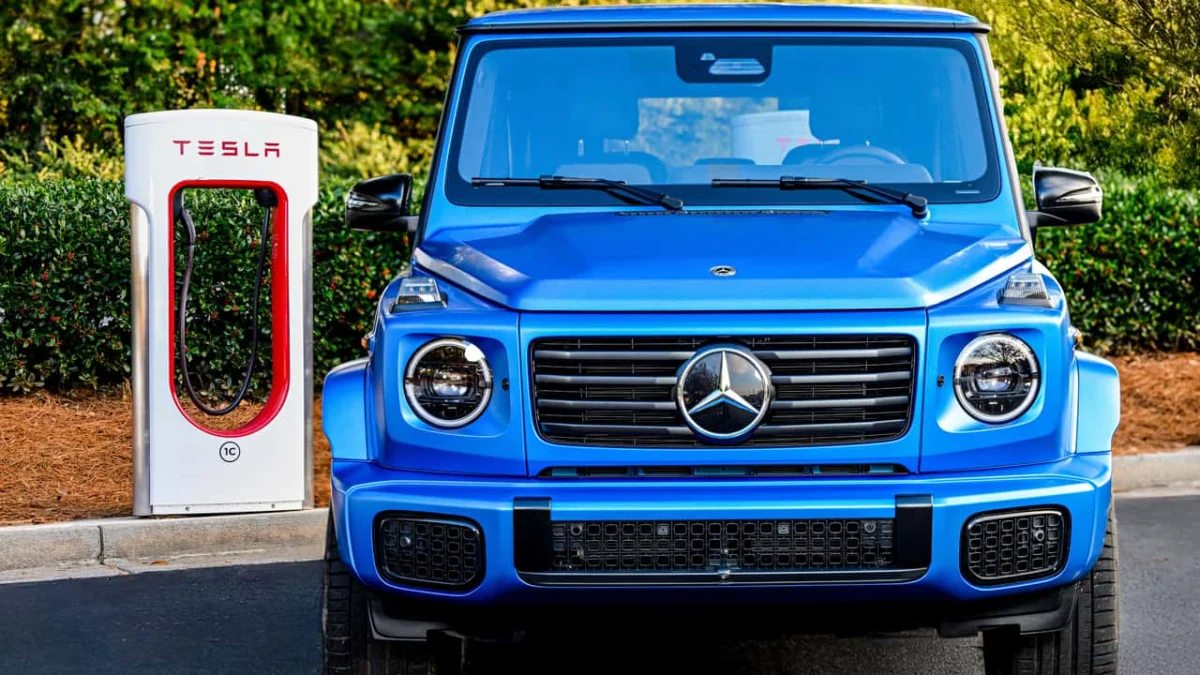
The 2027 Mercedes-Benz G 580 Electric has arrived, marking a significant step forward in the evolution of the brand’s most iconic SUV. As the electrified version of the legendary "G-Wagen," the G 580 retains its status as a paragon of off-road capability and luxury, now bolstered by technological refinements that address the primary concerns of long-distance electric vehicle (EV) travel. With the transition to the North American Charging Standard (NACS) and improvements in energy consumption, Mercedes-Benz is positioning this heavy-duty luxury vehicle to better compete in an increasingly sophisticated EV market.
A New Standard for Charging Connectivity
The most notable change for the 2027 model year is the integration of a native NACS charging port. By ditching the CCS1 connector that defined the previous iteration, Mercedes-Benz has aligned the G 580 with the broader industry trend toward Tesla’s charging architecture. This shift is designed to streamline the ownership experience, allowing drivers to access the expansive Tesla Supercharger network without the need for cumbersome adapters.
To ensure a seamless transition for current and future owners, the automaker is bundling a complimentary CCS1-to-NACS adapter, mitigating concerns regarding legacy charging infrastructure. However, the architecture of the 2027 G 580 is distinct, utilizing a dual-port design—a configuration mirroring the new CLA electric sedan. While the NACS port handles high-speed DC fast charging, a separate J1772 port is dedicated exclusively to Level 2 AC charging. This dual-port approach means that owners wishing to utilize public Tesla Destination chargers or other J1772-compatible infrastructure will require a dedicated adapter. Because this specific AC-to-NACS adapter is not included with the vehicle, prospective owners should account for an additional investment, with aftermarket solutions generally starting at approximately $120.
Engineering Refinements and Efficiency Gains
Beyond the physical charging hardware, Mercedes-Benz engineers have focused on optimizing the vehicle’s power management systems. Despite retaining the substantial 117-kilowatt-hour battery pack, the 2027 model demonstrates improved charging performance. The manufacturer reports that a 10-to-80% charge can now be achieved in 29 minutes, a three-minute reduction compared to the 32-minute window required by the 2026 model.
This improvement is attributed to refined charging logic and enhanced thermal management, allowing the vehicle to maintain a higher average power draw throughout the charging cycle, even while the maximum input remains capped at 200 kilowatts. On the AC front, the vehicle supports a standard 9.6 kW input for residential or workplace charging.
Furthermore, the 2027 G 580 shows tangible progress in energy efficiency. The vehicle’s consumption has improved to 48 kWh/100 miles, equating to 71 MPGe. This is a marked improvement over the 2026 model, which recorded 54 kWh/100 miles (62 MPGe). This increase in efficiency, despite the vehicle retaining its 20-inch wheels and aerodynamic limitations, has resulted in an EPA-estimated range of 249 miles—a gain of 10 miles over the previous model. While the G 580 remains an energy-intensive vehicle due to its weight and boxy architecture, these incremental gains represent a significant effort by Mercedes-Benz to optimize its high-performance EV platforms.
Performance and Off-Road Prowess
The 2027 G 580 remains an engineering marvel in terms of raw power and terrain navigation. Tipping the scales at 6,746 pounds, the vehicle is propelled by a sophisticated quad-motor powertrain. With a dual-speed motor positioned at each wheel, the G 580 offers precision torque vectoring that few other SUVs can replicate.

The powertrain delivers a total output of 579 horsepower and a massive 859 pound-feet of torque. This translates to a 0-to-60 mph sprint time of just 4.6 seconds, a figure that is particularly impressive given the vehicle’s curb weight and traditional off-road design. Unlike many EVs that focus purely on on-road performance, the G 580 is equipped with low-range gearing and virtual differential lockers as standard, ensuring it maintains the G-Wagen’s reputation for tackling extreme landscapes. The inclusion of the "G Turn" feature, which allows the vehicle to rotate in place like a tank, underscores the unique capabilities provided by the independent, quad-motor layout.
Market Context and Strategic Implications
The arrival of the 2027 model comes at a pivotal time for the luxury electric segment. As legacy manufacturers like Mercedes-Benz, BMW, and General Motors shift to the NACS standard, the barrier to entry for EV adoption is lowering. By incorporating native NACS ports, Mercedes-Benz is actively addressing "range anxiety" and the practical hurdles of charging infrastructure compatibility.
The price adjustment for the 2027 model—now starting at $165,200 including destination, up from the previous $164,550—reflects both the inflationary pressures in the automotive sector and the added value of the refined charging architecture. This premium positioning is consistent with the G-Wagen’s historical market performance, where the vehicle is viewed less as a mass-market commodity and more as an aspirational, high-end lifestyle asset.
Industry analysts suggest that the G 580 serves as a technical showcase for Mercedes-Benz’s "EQ" technology. By proving that a vehicle as large and utilitarian as the G-Wagen can be electrified without sacrificing its core identity, the company is signaling its commitment to maintaining the heritage of its most recognizable nameplates while adhering to a carbon-neutral future. The move to standardize the NACS port across its fleet—consistent with moves by other major manufacturers—is a strategic pivot aimed at leveraging the most reliable fast-charging network currently available in North America.
Looking Ahead
The decision to implement a dual-port charging system is a practical, if slightly complex, solution to a transitional period in the automotive industry. As the charging ecosystem moves toward total NACS adoption, the presence of the J1772 port serves as a bridge for legacy infrastructure while the NACS port prepares the vehicle for the future of high-speed charging.
For the prospective buyer, the 2027 Mercedes-Benz G 580 Electric offers a balance of heritage and innovation. It remains a heavy, powerful, and highly capable machine, but with the added convenience of faster charging times and a slightly improved range. As the luxury EV market continues to mature, the G 580 stands as a testament to the brand’s ability to evolve its most sacred icons. Whether the target demographic is the off-road enthusiast or the luxury-focused urbanite, the latest refinements ensure that the G-Wagen will remain a dominant force in the high-end electric SUV segment for years to come.
The integration of these updates, while minor in isolation, collectively lowers the friction of ownership. By refining the efficiency of the massive 117-kWh battery and simplifying the charging process, Mercedes-Benz has successfully extended the viability of the G 580 as a daily driver. The 2027 update is not merely a product refresh; it is a clear indication that the manufacturer is listening to the feedback of its user base, prioritizing usability alongside the rugged performance that defines the G-Class legacy. As the transition to electrification continues to gain momentum, such vehicles will serve as the benchmarks by which the success of luxury EVs is measured.