The transition from internal combustion engines to electric propulsion represents the most significant shift in personal mobility since the assembly line, yet for many prospective buyers, the perceived complexity of charging remains a primary barrier to adoption. According to recent consumer sentiment studies, nearly half of shoppers still view public charging availability as a potential "dealbreaker" when considering a battery-electric vehicle (BEV) or plug-in hybrid electric vehicle (PHEV). However, as the industry enters 2025, the infrastructure landscape is undergoing a rapid maturation characterized by standardized connectors, faster charging speeds, and a fundamental shift in how drivers interact with their vehicles’ energy needs.
The Infrastructure Expansion and the End of Range Anxiety
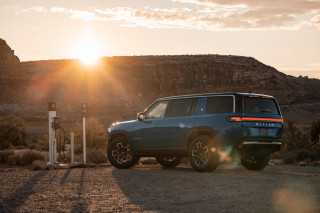
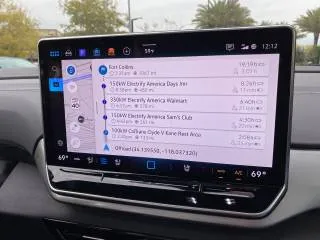
In 2024, the deployment of public charging stations in North America began to keep pace with—and in some regions, exceed—the rate of new EV registrations. This growth is bolstered by the federal government’s National Electric Vehicle Infrastructure (NEVI) Formula Program, a $5 billion initiative designed to create a coast-to-coast network of high-speed chargers. The objective is to ensure that DC fast chargers are available every 50 miles along major travel corridors, effectively neutralizing the "range anxiety" that has historically plagued the market.
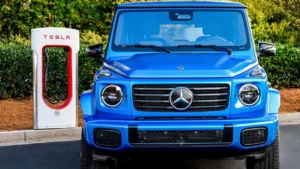
Simultaneously, the technical capabilities of the vehicles themselves have advanced. Modern EVs are increasingly utilizing 800-volt architectures, allowing for significantly reduced charging times and more consistent power delivery during long-distance travel. The industry has also moved toward a unified standard; with the near-universal adoption of the North American Charging System (NACS), previously known as the Tesla connector, the fragmentation of the charging experience is rapidly becoming a relic of the past.

A Paradigm Shift: From Gas Stations to Smartphone Habits
The most critical hurdle for new EV owners is often psychological rather than technical. For over a century, the "empty-to-full" refueling model has dictated driver behavior: wait until the fuel light appears, visit a dedicated station, and fill the tank in five minutes. EV ownership requires a different mindset, one that aligns more closely with modern consumer electronics.
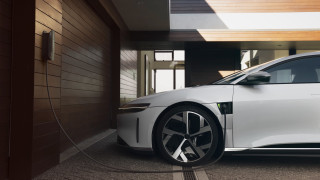
Industry experts advocate for a "charge-as-you-go" approach. Rather than seeking a "gas station equivalent," owners are encouraged to treat their vehicles like smartphones or tablets—plugging in overnight at home or at a destination to ensure the battery is replenished during periods of inactivity. This shift transforms charging from a dedicated errand into a background task. For the average commuter who travels fewer than 40 miles a day, the need for public fast charging is rare, as a home-based Level 2 charger can easily recover that range in a few hours.
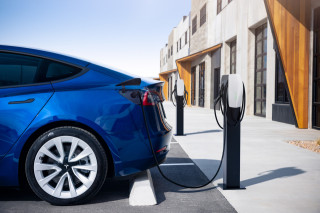
Technical Classification: Understanding AC and DC Power
To navigate the EV ecosystem, consumers must distinguish between the two fundamental types of electrical current used for charging: Alternating Current (AC) and Direct Current (DC).
AC Charging (Level 1 and Level 2)
AC power is what flows through standard residential and commercial outlets. However, an EV battery stores energy as DC. Therefore, when an EV is plugged into an AC source, an onboard charger within the vehicle must convert that electricity into DC.
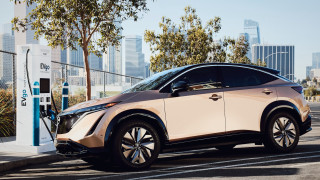
- Level 1 (L1): Utilizing a standard 120V household outlet, Level 1 is the slowest form of charging, typically delivering about 1.2 to 1.4 kW. This translates to roughly 3 to 5 miles of range per hour. While insufficient for most full-battery EVs, it remains a viable option for plug-in hybrids with smaller batteries.
- Level 2 (L2): Operating on 240V (similar to a clothes dryer or electric oven), Level 2 is the gold standard for home and "destination" charging. These systems typically deliver between 7 kW and 19.2 kW, capable of fully charging most EVs overnight.
DC Fast Charging (Level 3)
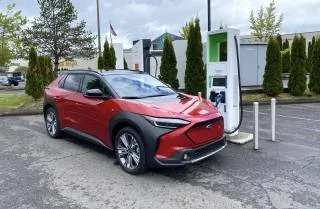
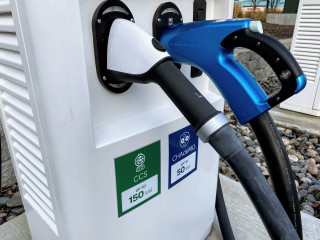
DC fast chargers (DCFC) bypass the vehicle’s onboard converter and feed high-voltage power directly into the battery. These stations are designed for rapid replenishment during road trips. While older hardware might be limited to 50 kW, modern "ultra-fast" chargers can deliver up to 350 kW. In ideal conditions, these units can charge a vehicle from 10% to 80% in under 20 minutes.
The Standardization Timeline: From Fragmentation to J3400
The history of EV connectors in North America has been characterized by a "format war" that is only now reaching a resolution.
- 2009-2010: The J1772 connector (Type 1) becomes the standard for AC charging in the U.S.
- 2011: The Nissan Leaf introduces the CHAdeMO port to the U.S. market, a Japanese standard for DC fast charging.
- 2012: Tesla launches the Model S with a proprietary, compact connector that handles both AC and DC power.
- 2013: The Combined Charging System (CCS) is introduced, adding DC pins to the existing J1772 AC plug. This becomes the standard for most non-Tesla manufacturers.
- 2023: In a watershed moment for the industry, Ford announces it will switch from CCS to Tesla’s connector. Within months, nearly every major automaker, including General Motors, Rivian, and Volkswagen, follows suit.
- 2024-2025: The Tesla connector is officially standardized by SAE International as J3400, or the North American Charging System (NACS).
While new vehicles will eventually feature native NACS ports, the current transition period relies on adapters. Owners of CCS-equipped vehicles are increasingly gaining access to the Tesla Supercharger network—the most reliable and expansive fast-charging network in the world—via approved NACS-to-CCS adapters.
Residential Installation and the "80% Rule"
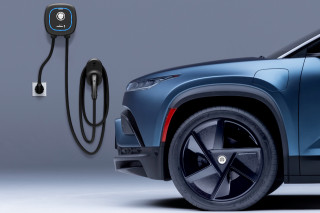
Home charging remains the most convenient and cost-effective method of fueling an EV, but it requires careful electrical planning. For a safe installation, the "80% rule" of the National Electrical Code (NEC) must be observed: a continuous electrical load should not exceed 80% of the circuit’s rated capacity.
For example, a 50-amp circuit should only be used to power a 40-amp charger. While some modern EVs can accept up to 80 amps (requiring a 100-amp circuit), such high-power residential installations are often unnecessary and expensive. A 32-amp or 40-amp charger is generally sufficient to charge even the largest EV batteries during a typical 10-hour sleep cycle.
Homeowners with older electrical panels (100 or 125 amps) may need to consider load-management devices that prioritize household appliances over the car charger to avoid costly service upgrades.
Future Innovations: Wireless and Bidirectional Charging
The charging landscape continues to evolve beyond physical cables and one-way energy flow.
Wireless Inductive Charging
Technology for wireless charging, or inductive charging, has already reached the commercialization phase. By using magnetic resonance between a pad on the ground and a receiver on the vehicle’s underbody, drivers can charge their cars simply by parking over a designated spot. While currently more expensive than wired wallboxes, wireless charging promises to eliminate the physical effort of plugging in, particularly for luxury markets and autonomous fleet vehicles.
Bidirectional Charging (V2X)
Perhaps the most transformative development is bidirectional charging, which allows the EV to act as a mobile power plant.
- V2H (Vehicle-to-Home): During a power outage, an EV can provide backup power to a residence.
- V2G (Vehicle-to-Grid): Utilities can "borrow" power from parked EVs during peak demand to stabilize the grid, potentially paying owners for the service.
- V2L (Vehicle-to-Load): Standard outlets on the vehicle can power tools, camping equipment, or even charge another EV.
Manufacturers like Ford, Hyundai, Kia, and General Motors have already integrated these features into their latest models, and Tesla has signaled that its entire lineup will be bidirectional-capable by 2025.
Charging Etiquette and the Social Contract
As the EV community grows from a niche group of early adopters to a mainstream demographic, "charger etiquette" has become an essential aspect of the ownership experience. Public charging stations are shared resources, and maintaining decorum is vital for the ecosystem’s health.
Key principles of modern etiquette include:

- The 80% Threshold: In DC fast charging, the rate of power delivery slows significantly after the battery reaches 80% to protect cell health. Occupying a fast charger to reach 100% is often viewed as inconsiderate if others are waiting, as the final 20% can take as long as the first 80%.
- Power Matching: Drivers are encouraged to use chargers that match their vehicle’s capabilities. A vehicle limited to a 50 kW intake should avoid using a 350 kW "ultra-fast" stall if a lower-powered option is available, leaving the high-speed stalls for vehicles that can actually utilize them.
- Active Charging Only: Charging stalls are not parking spots. Most networks now implement "idle fees" that charge users by the minute if they remain plugged in after the charging session has ended.
Broader Implications for the Automotive Industry
The stabilization of charging standards and the expansion of the network have profound implications for the global economy and environmental policy. By lowering the "barrier to entry" for EVs, the industry is accelerating the reduction of tailpipe emissions and decreasing reliance on volatile global oil markets.
Furthermore, the integration of EVs into the electrical grid via bidirectional charging offers a unique solution to renewable energy storage. Because wind and solar power are intermittent, the combined battery capacity of millions of EVs could serve as a massive buffer, storing excess green energy during the day and releasing it back to the grid at night.
In conclusion, while the transition to electric mobility requires a period of learning and adaptation, the infrastructure of 2025 is more robust, standardized, and user-friendly than ever before. With the shift toward the NACS standard, the expansion of the NEVI network, and the rise of home-based energy management, the "charging dealbreaker" is rapidly becoming a relic of the past, paving the way for the full-scale electrification of the transport sector.