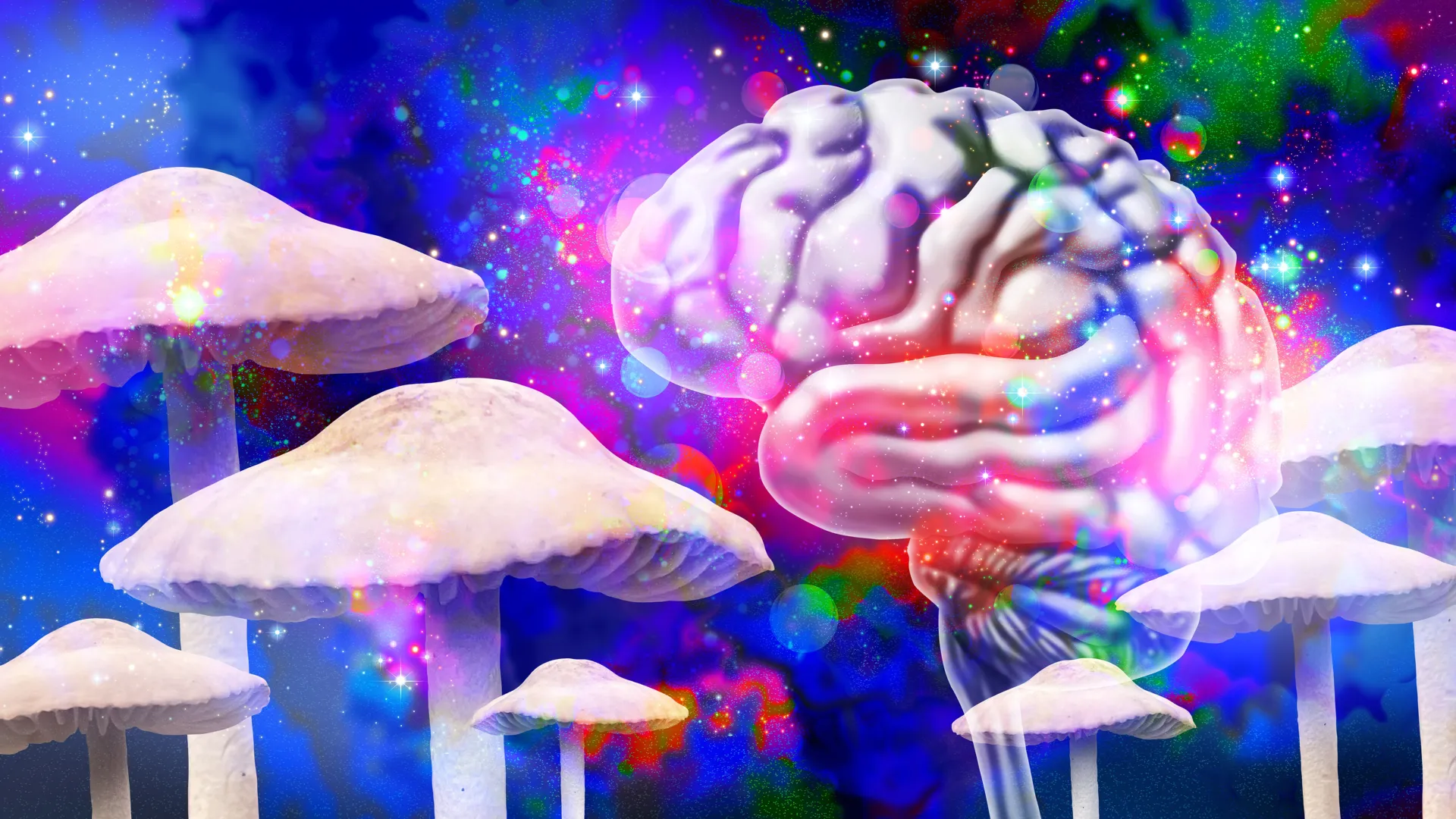
A groundbreaking study conducted by researchers at the University of California, San Francisco (UCSF) and Imperial College London has revealed that a single dose of psilocybin, the principal psychoactive compound found in magic mushrooms, can induce physical alterations in the brain that persist for as long as a month. This discovery offers significant insights into the potential therapeutic mechanisms of psychedelics, particularly their observed efficacy in treating conditions such as depression, anxiety, and addiction.
The findings, published in the prestigious journal Nature Communications, emerged from an investigation involving healthy adult participants who had no prior experience with psychedelic substances. While none of the volunteers presented with diagnosed mental health conditions, the study’s results provide crucial clues as to why psilocybin has garnered considerable attention for its therapeutic potential. The research specifically focused on transient increases in brain "entropy," a measure of the variability and unpredictability of neural activity, suggesting that this enhanced neural flexibility may foster psychological insight and play a pivotal role in the sustained benefits of psychedelic therapy.
Unveiling the Mechanism: Psilocybin and Brain Entropy
At the core of this research is the concept of brain entropy. In a healthy, functioning brain, neural activity tends to follow established, predictable patterns. However, under the influence of psilocybin, this predictability appears to decrease, leading to a state of heightened neural complexity and diversity. The study posits that this "entropic" state allows the brain to break free from rigid, maladaptive thought patterns, thereby opening pathways for new perspectives and emotional processing.
Specifically, the researchers observed that a greater surge in brain entropy within the hours following a high dose of psilocybin was directly correlated with increased emotional insight the subsequent day. Furthermore, participants who reported experiencing more profound insight were also significantly more likely to report improvements in their overall well-being one month later. This suggests a direct link between the acute psychedelic experience, its impact on brain dynamics, and lasting psychological benefits.
Dr. Robin Carhart-Harris, the senior author of the study and the Ralph Metzner Distinguished Professor of Neurology at UCSF, elaborated on this connection. "Psychedelic means ‘psyche-revealing,’ or making the psyche visible," he stated. "Our data shows that such experiences of psychological insight relate to an entropic quality of brain activity and how both are involved in causing subsequent improvements in mental health. It suggests that the trip — and its correlates in the brain — is a key component of how psychedelic therapy works." This statement underscores the study’s emphasis on the subjective experience of the psychedelic journey as integral to its therapeutic outcome, mediated by measurable changes in brain function.
A Rigorous Approach to Measuring Psilocybin’s Impact
To meticulously measure the effects of psilocybin on the brain, the research team employed a multi-faceted approach, utilizing a range of advanced neuroimaging and assessment techniques. These included electroencephalography (EEG), functional magnetic resonance imaging (fMRI), and diffusion tensor imaging (DTI). Measurements were systematically collected at several key junctures: prior to any drug administration, during the peak of the psychedelic experience, and again one month after the intervention.
The study cohort comprised 28 healthy volunteers, carefully selected for their lack of prior psychedelic use and absence of diagnosed mental health conditions. This inclusion criterion was crucial, as it allowed the researchers to observe the effects of psilocybin in a "clean" baseline, free from confounding factors often present in clinical patient populations. This enabled a broader and more precise range of experimental tests to be conducted.
The experimental protocol was designed in two stages. Initially, participants received a low dose of psilocybin, precisely 1 mg, which was administered as a placebo. During this phase, their brain activity was monitored using EEG, a non-invasive technique that records electrical signals generated by brain activity via electrodes placed on the scalp. This provided a baseline understanding of brain activity in the presence of a sub-perceptual dose.
Following this initial phase, and over the subsequent weeks, participants underwent a series of psychological assessments. These evaluations focused on measuring psychological insight, general well-being, and various aspects of cognitive performance. Simultaneously, fMRI was employed to study brain activity patterns, examining how different brain regions communicate and function. DTI was utilized to map and assess the integrity of neural pathways, essentially charting the brain’s "wiring."
Approximately one month after the initial placebo dose, the participants were administered a significantly higher dose of psilocybin: 25 mg. This dosage is known to reliably induce a profound psychedelic experience. During this period, EEG recordings captured brain activity in real-time as participants experienced the effects of the full dose. The comprehensive battery of psychological and neuroimaging assessments was then repeated in the weeks that followed, mirroring the procedures used after the placebo phase. This meticulous comparative design allowed the researchers to directly contrast the effects of a full psychedelic dose with those observed after the placebo, isolating the specific impacts of psilocybin at a therapeutic dosage.
Psilocybin Induces Measurable Increases in Brain Entropy and Structural Changes
The immediate aftermath of ingesting the 25 mg dose of psilocybin yielded striking results. Within just 60 minutes, EEG recordings clearly demonstrated a significant increase in brain entropy. This finding strongly suggests that the brain, under the influence of psilocybin, entered a state characterized by the generation and processing of a far wider spectrum of information than is typical. This heightened neural complexity is believed to be the basis for the broadened perspective and altered states of consciousness associated with psychedelic experiences.
Beyond the acute functional changes, the study also uncovered compelling evidence of lasting structural alterations in the brain. One month after the psilocybin administration, when participants were re-examined using DTI, the researchers observed indications of denser neural tracts and enhanced integrity in brain connectivity. DTI functions by tracking the diffusion of water molecules along neuronal pathways. A more uniform and directional movement of water suggests that the neural fibers are more organized and robust.
This observed pattern of increased neural tract density and integrity was notable because it represented the opposite of changes commonly associated with aging, a process that typically leads to more diffuse and less organized neural connections. While the researchers emphasized that further studies are necessary to fully elucidate the precise implications of these structural findings, they characterized the result as an unprecedented indication that psychedelics may induce enduring, physically detectable changes in brain architecture. This discovery moves beyond the purely functional understanding of psilocybin’s effects, suggesting a potential for neuroplasticity at a structural level.
Sustained Gains in Insight and Well-Being Documented
The subjective reports from the participants following the 25 mg dose of psilocybin were equally significant. The day after experiencing the full psychedelic effect, an overwhelming majority of the volunteers, 27 out of 28, described the experience as the "single most" unusual state of consciousness they had ever encountered. The remaining participant ranked it among the top five most unusual experiences of their life, highlighting the profound nature of the psilocybin journey.
Crucially, participants reported a substantially greater degree of psychological insight after the 25 mg dose compared to the 1 mg placebo. This enhanced insight was not merely a fleeting phenomenon. Measures of well-being showed marked improvements at both two-week and four-week follow-ups. These assessments included responses to statements designed to gauge optimism, resilience, and effective problem-solving, such as "I’ve been feeling optimistic about the future" and "I’ve been dealing with problems well."
Furthermore, one month after the experiment, participants demonstrated improved performance on a cognitive flexibility test. This type of test measures an individual’s ability to adapt their thinking and adjust their responses when faced with changing information or situations – a key indicator of mental agility and resilience.
Dr. Taylor Lyons, a research associate at Imperial College London and the first author of the paper, summarized these findings, stating, "Psilocybin seems to loosen up stereotyped patterns of brain activity and give people the ability to revise entrenched patterns of thought. The fact that these changes track with insight and improved well-being is especially exciting." This sentiment reflects the growing excitement within the scientific community regarding the potential of psilocybin to facilitate meaningful and lasting psychological change.
The Psychedelic Experience as a Catalyst for Therapeutic Benefits
The study’s analysis further delved into the causal links between the acute effects of psilocybin and the subsequent improvements in mental health. A key finding was that participants who exhibited the most significant increases in brain entropy during the initial hours after taking psilocybin were also the most likely to report greater psychological insight the following day. This insight, in turn, was strongly associated with more pronounced improvements in well-being observed one month later.
This chain of events suggests that the experience of psychological insight, facilitated by the psilocybin-induced entropic state of the brain, acts as a primary driver for the later, sustained gains in well-being. In essence, the profound shift in consciousness and perspective during the psychedelic session creates the fertile ground for deeper self-understanding, which then translates into lasting positive changes in mood and outlook.
The implications of these findings for clinical practice are considerable. They could pave the way for more refined psilocybin-assisted therapies, particularly for individuals grappling with persistent mental health conditions. For instance, clinicians might be able to optimize psilocybin dosage protocols to reliably induce a sufficient level of brain entropy to foster meaningful insight, without necessarily creating an overwhelmingly intense or challenging experience for the patient. This precision dosing could enhance therapeutic efficacy while minimizing potential discomfort.
"We already knew psilocybin could be helpful for treating mental illness," Dr. Carhart-Harris concluded. "But now we have a much better understanding of how." This statement encapsulates the study’s significant contribution: moving beyond empirical observation to a more mechanistic understanding of psychedelic action. By identifying the interplay between brain entropy, psychological insight, and lasting well-being, this research offers a clearer roadmap for harnessing the therapeutic potential of psilocybin.
Broader Implications and Future Directions
The study’s findings have far-reaching implications for our understanding of consciousness, mental health, and the potential of psychedelic substances. For decades, psilocybin and other psychedelics were largely relegated to the fringes of scientific inquiry due to legal restrictions and societal stigma. However, a resurgence of research in recent years, exemplified by this UCSF and Imperial College London study, is rapidly changing that landscape.
The demonstration of physically detectable changes in brain structure, such as denser neural tracts, opens up new avenues for research into neuroplasticity. If psilocybin can indeed promote the integrity of neural connections, it suggests a potential for brain repair and enhancement that could benefit not only those with mental health disorders but also potentially individuals experiencing cognitive decline or brain injury.
Moreover, the study’s emphasis on the subjective "trip" as a critical therapeutic component highlights the importance of the therapeutic context and the role of trained facilitators in psychedelic-assisted therapy. The integration of psychological support before, during, and after the psychedelic experience appears to be essential for translating the acute effects of the drug into sustained benefits. This underscores the need for comprehensive training and ethical guidelines for professionals working in this emerging field.
Looking ahead, several questions remain to be addressed. Further research is needed to determine the precise nature and long-term stability of the observed structural changes. Longitudinal studies with larger cohorts and diverse patient populations are essential to confirm these findings and to explore the efficacy of psilocybin-assisted therapy across a wider range of mental health conditions. Investigating the optimal timing and duration of psilocybin interventions, as well as exploring the potential for combining psilocybin therapy with other treatment modalities, are also critical next steps.
The current study, while focused on healthy adults, provides a vital foundation for future clinical trials. The understanding that a single dose can induce measurable and lasting changes in brain function and structure offers a compelling scientific rationale for the continued exploration and development of psilocybin-based treatments. As research progresses, it is poised to revolutionize our approach to mental healthcare, offering new hope and effective interventions for millions worldwide.
The research was supported by philanthropic donations to the Centre for Psychedelic Research at Imperial College London, the Alex Mosley Charitable Trust, and the Beckley Foundation. Dr. Carhart-Harris also receives support from the Ralph Metzner Distinguished Professorship and philanthropic donations to the Psychedelics Division, Neuroscape, UCSF, and the Carhart-Harris Lab. The collaborative effort involved contributions from other UCSF authors, including Manesh Girn, PhD, Hannes Kettner, and Adam Gazzaley, MD, PhD.