The 2025 Volkswagen ID.Buzz has officially reached the United States, marking the culmination of a decades-long effort by the German automaker to revive its most iconic silhouette for a modern, electrified era. This long-awaited three-row electric van represents more than just a new entry into the competitive electric vehicle (EV) market; it is a strategic attempt to bridge the gap between Volkswagen’s counterculture heritage and its future as a leader in sustainable mobility. While the vehicle has been met with significant enthusiasm across various demographics, its arrival comes with complex questions regarding its market positioning, premium pricing, and the logistical challenges of importing a vehicle that does not currently qualify for federal tax incentives.

A Chronology of Anticipation: From Concept to Production
The journey of the ID.Buzz to the American market has been characterized by a series of false starts and conceptual teases spanning over twenty years. Following the discontinuation of the Eurovan in the U.S. in the early 2000s, Volkswagen struggled to find a suitable successor that captured the spirit of the original Type 2 Microbus.
The timeline of the ID.Buzz’s development highlights the internal deliberation within Volkswagen:
- 2001: Volkswagen debuts the Microbus Concept at the North American International Auto Show, sparking immediate public interest that ultimately failed to transition into a production model.
- 2011: The Bulli concept is introduced at the Geneva Motor Show as a smaller, more compact homage to the original van.
- 2016: The BUDD-e concept is revealed at CES, showcasing the potential for a dedicated electric platform.
- 2017: The ID.Buzz concept is unveiled in Detroit, officially confirming that the reboot would be part of the brand’s "ID" electric family.
- 2022: The standard-wheelbase version of the ID.Buzz launches in Europe.
- 2024: The extended three-row version, tailored specifically for North American preferences, finally enters the U.S. market as a 2025 model.
Volkswagen executives noted that the decision to delay the U.S. launch was driven by a desire to provide a larger, more powerful version suitable for American families, including a 91-kWh battery and a more robust infotainment system than the earlier European iterations.

Design and Aesthetics: Balancing Retro Cues with Modern Utility
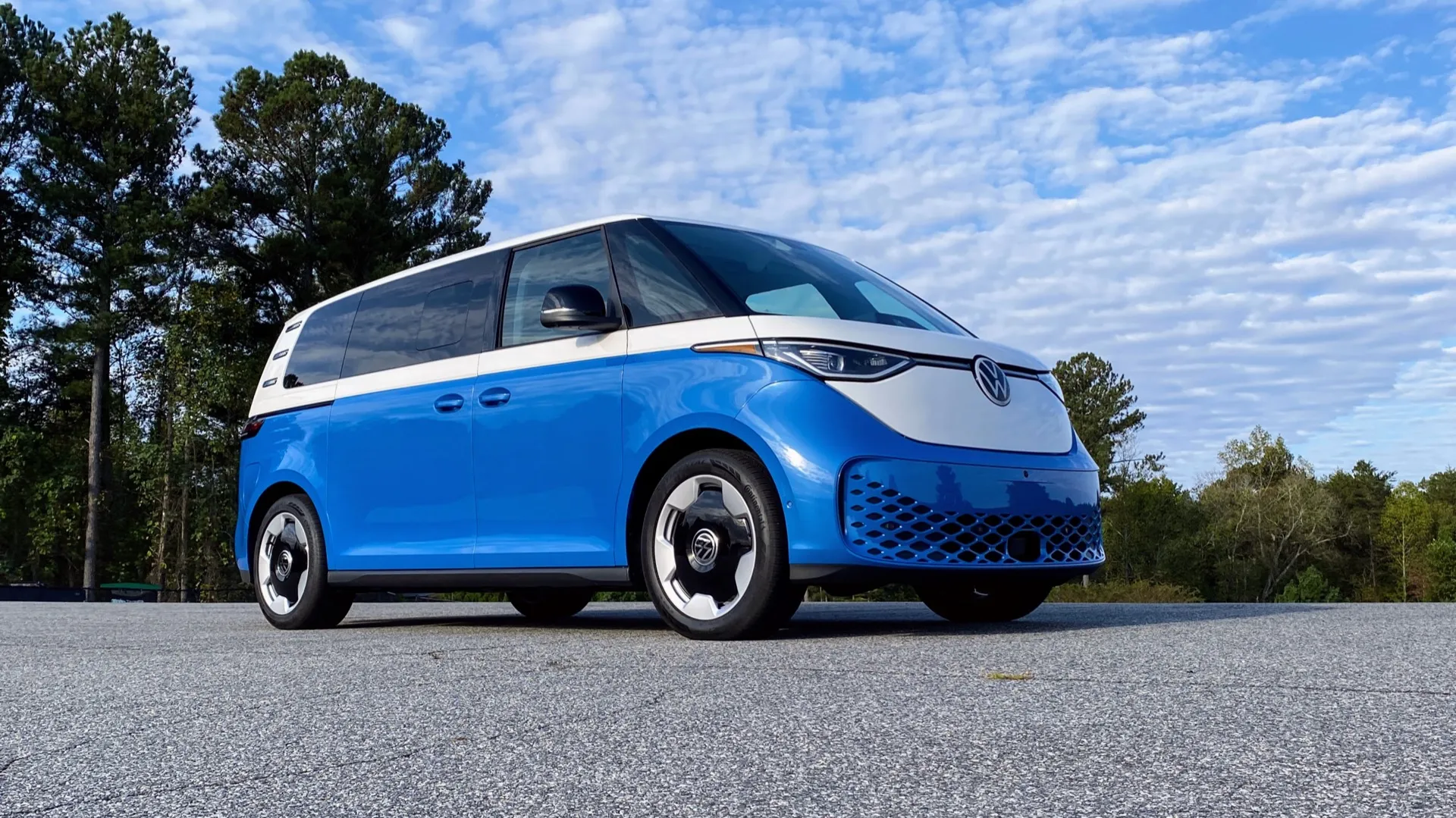
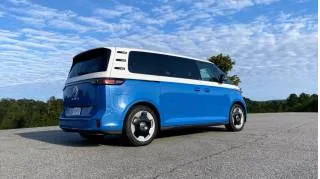
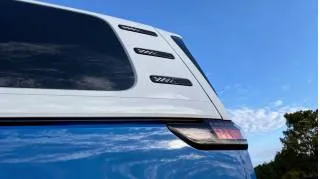
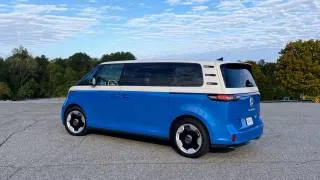
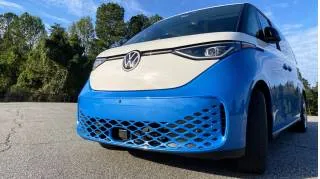
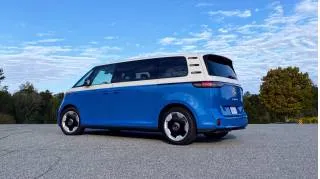
The 2025 ID.Buzz avoids the pitfalls of purely "retro" design by focusing on the utility of a "one-box" van while retaining recognizable signatures. The most prominent feature is the oversized Volkswagen logo and the available two-tone paint schemes—offering seven combinations such as Cabana Blue and Candy White.
Physically, the U.S. version is significantly larger than the European model. It measures 195.4 inches in total length, riding on a 127.5-inch wheelbase. With an overall height of 76.2 inches, it stands roughly 10 inches taller than the Volkswagen ID.4 crossover. Despite its boxy dimensions, the vehicle achieves a coefficient of drag of 0.29, an impressive feat for a van that aids in its overall efficiency and range.
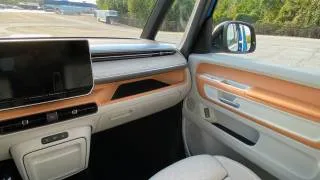
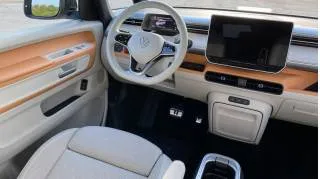
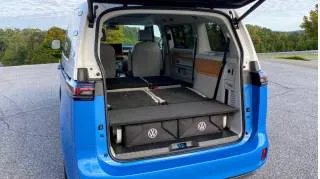
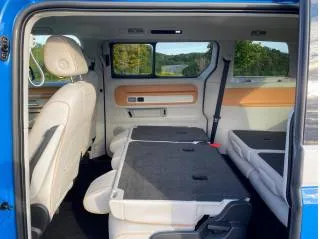
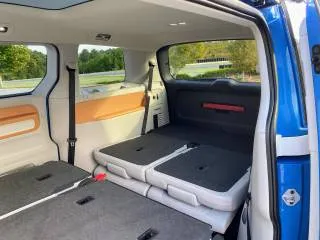
The interior is designed to leverage the advantages of the Modular Electric Drive (MEB) platform. By placing the battery pack beneath the floor, Volkswagen has created a flat-floor cabin that offers 6.1 inches of ground clearance. This layout provides what the company claims is best-in-industry third-row legroom, positioning the ID.Buzz as a legitimate alternative to full-size SUVs like the Volkswagen Atlas.
Technical Specifications and Performance
The U.S. ID.Buzz is powered by Volkswagen’s latest electric drive unit, known internally as the AP550. This rear-mounted motor produces 282 horsepower and 413 lb-ft of torque in the standard rear-wheel-drive (RWD) configuration. For consumers seeking more power, an all-wheel-drive (AWD) version adds an inductive motor to the front axle, bringing total system output to 335 horsepower.

Performance metrics for the ID.Buzz include:
- 0-60 MPH Acceleration: Approximately 7.5 seconds for RWD models and 6.0 seconds for AWD models.
- Top Speed: Electronically limited to 99 mph.
- Towing Capacity: 2,600 pounds for braked trailers (RWD) or 1,650 pounds unbraked.
- Weight: The vehicle is notably heavy, with the RWD version weighing just under 6,000 pounds and the AWD version reaching approximately 6,197 pounds.
The driving dynamics are described as compliant and softly sprung, prioritizing ride comfort over aggressive handling. However, the low center of gravity provided by the battery pack and a remarkably tight turning circle of 37.4 feet (for RWD models) make the ID.Buzz more maneuverable in urban environments than many traditional minivans or large SUVs.
Range, Charging, and Efficiency Data
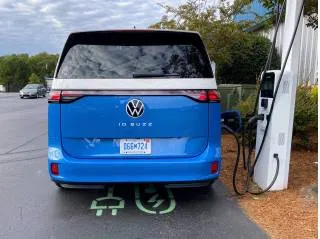
Range anxiety remains a critical factor for American EV buyers. The 2025 ID.Buzz carries an EPA-estimated range of 234 miles for the RWD version and 231 miles for the AWD version. While these figures are lower than some competitors in the three-row EV space, Volkswagen emphasizes the vehicle’s fast-charging capabilities to mitigate long-distance travel concerns.
The charging architecture supports DC fast charging at rates of up to 200 kW. According to manufacturer data, this allows the battery to charge from 10% to 80% in approximately 26 minutes. For home charging, an 11-kW onboard charger is standard, allowing for a full recharge on a Level 2 station in roughly nine hours.
Real-world testing in varied conditions—including highway speeds and suburban commuting—suggests an efficiency of approximately 2.4 to 2.6 miles per kWh. To assist with efficiency, the vehicle’s navigation system includes integrated trip planning that automatically initiates battery preconditioning when a charging stop is added to the route.
Interior Versatility and Consumer Technology
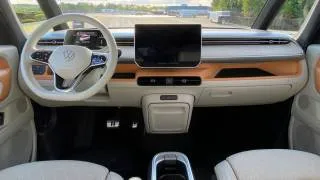
The cabin of the ID.Buzz is kitted with a 12.9-inch infotainment display running Volkswagen’s latest software, which addresses previous criticisms of the ID.4’s interface with faster response times and backlit sliders for climate control.

Standard and optional features include:

- Seating Configurations: A seven-passenger layout with a second-row bench or a six-passenger layout with second-row captain’s chairs (standard on AWD).
- Removable Console: A "Flexboard" system that allows the center console to be removed entirely, creating an open walkthrough.
- Power Features: Dual power-sliding doors and a power tailgate are standard across all trims.
- Connectivity: Eight USB-C ports are distributed throughout the three rows, along with a wireless charging shelf for smartphones.
- Panoramic Roof: An optional 67-inch electrochromic glass roof can transition from transparent to opaque with the touch of a button.
Market Positioning and Economic Analysis
The most controversial aspect of the ID.Buzz’s U.S. launch is its pricing structure. The base Pro S model starts at $61,545, while the top-tier 1st Edition with AWD exceeds $71,000.

To provide historical context, in 1965, the Volkswagen Microbus cost approximately $2,550. When adjusted for inflation using the Consumer Price Index (CPI), that amount equates to roughly $25,400 in 2024 dollars. With a starting price of over $60,000, the ID.Buzz is positioned as a premium niche product rather than the "people’s car" its ancestor was.

Furthermore, because the ID.Buzz is manufactured at Volkswagen’s commercial vehicle plant in Hanover, Germany, it does not currently qualify for the $7,500 federal EV tax credit for purchases under the Inflation Reduction Act. While leasing may provide a workaround through commercial credit loopholes, the high entry price places the ID.Buzz in direct competition with luxury electric SUVs like the Kia EV9 and the Rivian R1S.
Broader Industry Impact and Implications
The arrival of the ID.Buzz represents a significant moment for Volkswagen of America. After years of struggling to move past the "Dieselgate" scandal, the brand has leaned heavily into electrification. The ID.Buzz serves as a "halo car"—a vehicle designed to generate excitement and foot traffic into dealerships, even if its sales volume remains lower than the more affordable ID.4 or the internal combustion Atlas.
Industry analysts suggest that the ID.Buzz occupies a unique "market of one." Currently, there are no other fully electric retro-styled vans on the American market. This lack of direct competition may allow Volkswagen to maintain high margins and avoid the aggressive discounting seen elsewhere in the EV sector. However, the success of the vehicle will ultimately depend on whether the "nostalgia factor" is strong enough to convince consumers to overlook its premium price and moderate range compared to more utilitarian electric SUVs.
As Volkswagen begins deliveries, the automotive world will be watching to see if the ID.Buzz can transcend its niche status to become a pillar of the brand’s American lineup, or if it will remain a high-priced tribute to a bygone era. For now, the "Bus" is back, and it is humming with the quiet, heavy, and expensive promise of the electric future.