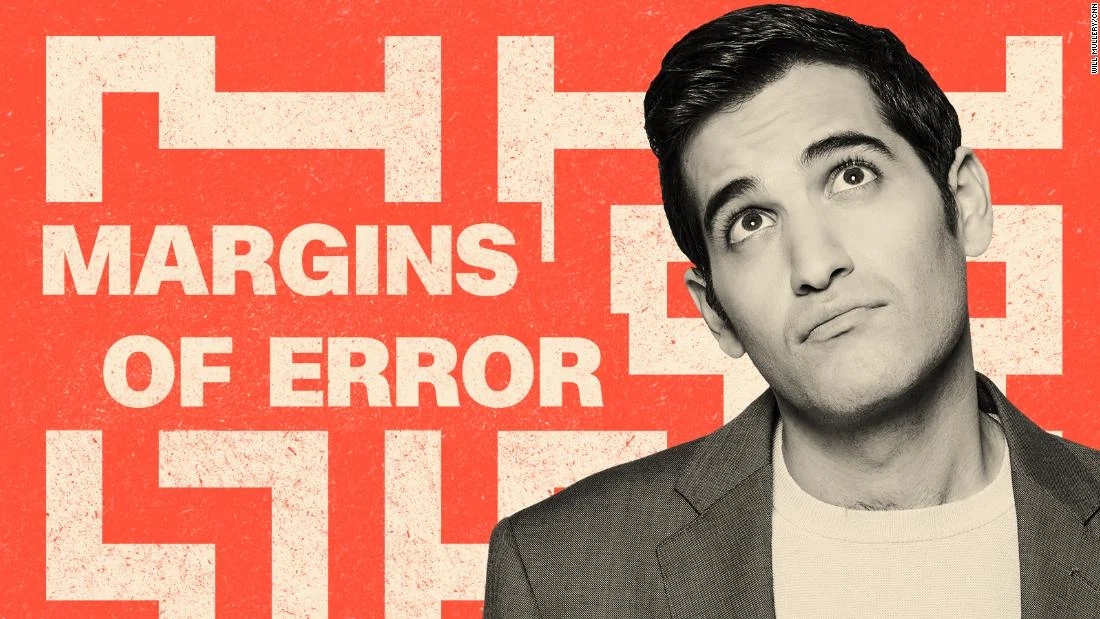
CNN Podcasts has carved out a distinctive niche in the audio landscape with "Margins of Error," a weekly program hosted by CNN’s senior data reporter and analyst, Harry Enten. Launched to explore the nuanced narratives hidden within the vast troves of everyday data, the podcast challenges listeners to look beyond raw numbers and delve into what statistics truly reveal about human behavior, societal beliefs, and the myriad phenomena that shape our world. Enten, known for his incisive yet accessible analysis, guides audiences through a fascinating journey, dissecting complex data points to uncover the often-surprising truths behind common assumptions.
The Genesis of "Margins of Error": A Deep Dive into Data
In an increasingly data-saturated world, the ability to interpret and contextualize information is paramount. "Margins of Error" emerged as a timely response to this need, leveraging Enten’s expertise to demystify statistics and apply them to an eclectic array of topics. Since its inception in early 2022, the podcast has consistently offered a unique blend of rigorous analysis and engaging storytelling, setting it apart in the crowded podcasting sphere. The show’s premise is simple yet profound: almost every aspect of modern life, from personal preferences to global trends, is underpinned by data. Enten’s mission is to push past mere calculations to understand the deeper implications of these numbers, examining "who we are and what we believe." This commitment to empirical investigation, coupled with a curious and often humorous approach, defines the podcast’s appeal.
CNN’s foray into diverse audio content reflects a broader industry trend of media organizations expanding their reach beyond traditional broadcast formats. "Margins of Error" exemplifies this strategy by offering a specialized, in-depth look at subjects that resonate with a wide audience, all through the lens of data. The podcast’s consistent output, featuring episodes approximately 35-45 minutes in length, provides listeners with digestible yet comprehensive explorations of topics ranging from the trivial to the profound.
Chronology of Key Explorations: A Snapshot of Early Episodes
The initial run of "Margins of Error" in the spring and summer of 2022 showcased the breadth of Enten’s inquisitive mind and the podcast’s commitment to diverse subject matter. These early episodes laid the groundwork for the show’s signature style, blending data analysis with cultural commentary and expert interviews.
- July 5, 2022 – "Pains, Trains and Automobiles" (36 mins): This episode explored the inherent stresses of travel, from cramped legroom to high gas prices, and investigated more efficient ways to navigate modern transportation, including AI-optimized road trips and the science of faster airplane boarding, even touching on futuristic concepts like kelp-powered vehicles.
- June 28, 2022 – "Why are Losers the Favorites?" (39 mins): Delving into the psychology behind human favoritism for underdogs, this episode examined why people often side with the less likely victor in sports, politics, and life. Enten engaged with experts like Neil Paine of FiveThirtyEight and former NFL player Coy Wire to dissect this universal phenomenon and even challenged the notion of "America’s Team."
- June 21, 2022 – "Forecasting the Future of Weather" (35 mins): Addressing the public’s reliance on weather forecasts and their frustration when predictions go awry, this episode explored the secrets to accurate weather prediction and how climate change is introducing new complexities and "cloudier" outlooks.
- June 14, 2022 – "The Mysterious Disappearance of Love, Sex and Romance" (36 mins): Enten investigated statistical trends suggesting a decline in traditional romance, including less sex, more singles, and fewer romantic gestures. His inquiry led him to a "Bridgerton Ball" to immerse himself in the cultural representations of romance.
- June 7, 2022 – "Why Americans Won’t Give an Inch on Metric" (40 mins): This episode tackled the long-standing American resistance to adopting the metric system, examining the interplay of national pride, historical factors, economic considerations, and political will that keeps the U.S. in a "hybrid world" of measurements.
- May 31, 2022 – "When Did ‘Diet’ Become a Dirty Word?" (35 mins): Enten explored the beverage industry’s shift from "diet" to "zero sugar" labeling, questioning whether this was a genuine product evolution or merely a rebranding exercise driven by consumer perception.
- May 24, 2022 – "Cashing in on Happiness" (35 mins): This episode investigated the relationship between money and happiness, featuring insights from Matt Killingsworth, who developed an app to track real-time happiness. Enten explored whether there’s an optimal income for contentment and the psychological benefits of spending on experiences.
- May 17, 2022 – "Harry Makes a Spectacle of Himself" (34 mins): Examining the evolving perception of people who wear glasses, this episode delved into historical stereotypes, the modern association of eyewear with intelligence, and even its strategic use by defense attorneys in courtrooms.
- May 10, 2022 – "Bursting the Bath Time Bubble" (33 mins): Enten explored the cultural and scientific debate surrounding optimal bathing frequency, tracing the history of hygiene from Ancient Rome to modern times and questioning societal norms versus actual biological necessity, even experimenting with life without deodorant.
- May 3, 2022 – "Do I Sound Funny to You?" (43 mins): This inaugural episode explored the phenomenon of regional accents, their role in personal and geographic identity, and the potential for their disappearance due to increased mobility and media influence. Enten even experimented with adopting different accents.
These episodes illustrate the podcast’s commitment to dissecting everyday observations through a data-driven lens, offering listeners a fresh perspective on the world around them.
Unpacking Societal Riddles: Diverse Topics Under the Microscope
"Margins of Error" distinguishes itself by applying rigorous data analysis to a remarkably diverse range of topics, often unearthing surprising insights.
The Science of Travel: Optimizing Journeys and Fueling Futures
The "Pains, Trains and Automobiles" episode resonated with many who experienced the heightened anxieties of travel in a post-pandemic world, exacerbated by factors like fluctuating fuel prices and intricate travel logistics. Data from organizations like the American Automobile Association (AAA) frequently reports on consumer stress related to travel costs and delays. Enten’s exploration into optimizing travel tapped into cutting-edge research, including the application of artificial intelligence (AI) in creating the most efficient road trips—a field where algorithms can process vast amounts of traffic, weather, and road condition data to minimize travel time and fuel consumption. For instance, researchers like Randy Olson, cited in the episode, have demonstrated how computational methods can design optimal routes for cross-country journeys, reducing hundreds of hours of travel time. The discussion also extended to the science behind faster airplane boarding, drawing on studies that propose various boarding methods (e.g., WilMA, reverse pyramid) to significantly cut down turnaround times, a crucial factor for airline efficiency. The intriguing mention of kelp power for future transportation underscores the podcast’s willingness to explore innovative, sustainable solutions, aligning with growing global interest in renewable energy sources for the transport sector.
The Allure of the Underdog: A Human Predilection
The episode "Why are Losers the Favorites?" tapped into a fundamental aspect of human psychology. Research in social psychology consistently shows that individuals often exhibit greater empathy and support for underdogs, particularly when they perceive an imbalance of power or resources. Studies by figures like Nadav Goldschmied, a professor of psychology and an expert on the underdog phenomenon, suggest that this preference is rooted in a desire for fairness, a challenge to established hierarchies, and a vicarious experience of triumph against adversity. This psychological inclination extends beyond sports, influencing political campaigns, business narratives, and even personal relationships. The discussion involving Neil Paine, then of FiveThirtyEight, provided a statistical framework for understanding this phenomenon in sports and politics, while Coy Wire, a former Buffalo Bills player, offered a firsthand account of being part of an underestimated team. The debate over "America’s Team"—often attributed to the Dallas Cowboys or New York Yankees based on branding and historical success—was challenged with data, suggesting that public sentiment and national representation might lean towards teams that embody a more relatable, underdog spirit or broader geographic appeal.
Weather’s Unpredictable Dance: Forecasting in a Changing Climate
"Forecasting the Future of Weather" highlighted the paradox of modern meteorology: while forecasting models are more accurate than ever, public frustration with incorrect predictions persists. Over the past 50 years, the accuracy of a 5-day hurricane track forecast, for instance, has improved by roughly 75%, according to the National Oceanic and Atmospheric Administration (NOAA). This advancement is due to increasingly sophisticated satellite technology, supercomputing power, and global data sharing. However, the episode underscored how climate change is introducing unprecedented variables, making long-range and even short-term extreme weather predictions more challenging. Phenomena like rapidly intensifying storms, prolonged heatwaves, and unpredictable precipitation patterns are testing the limits of current models, leading to a "cloudier" future for forecasting and increasing the "margins of error" in predictions. The podcast effectively balanced public expectation with the scientific realities and evolving challenges faced by meteorologists.
The Shifting Landscape of Love and Connection
The "Mysterious Disappearance of Love, Sex and Romance" delved into compelling sociodemographic trends. Data from sources like the General Social Survey (GSS) and the U.S. Census Bureau have indicated shifts in marriage rates, cohabitation patterns, and reported sexual activity among various age groups, particularly younger generations. For example, the median age for first marriage has steadily risen over decades, and studies have shown a decline in the frequency of sexual activity among certain demographics. Enten’s investigation explored potential culprits, including the rise of digital dating apps, increased focus on career and personal development, economic pressures, and changing societal expectations regarding relationships and family formation. The whimsical inclusion of Enten attending a "Bridgerton Ball" served as a poignant counterpoint, contrasting idealized, historical notions of romance with the complex, data-driven realities of modern relationships.

America’s Stance on Measurement: A Stubborn Imperial Legacy
The episode "Why Americans Won’t Give an Inch on Metric" explored one of the most enduring cultural quirks of the United States: its staunch adherence to the imperial system. Despite official attempts, notably the Metric Conversion Act of 1975, to encourage voluntary conversion, the U.S. remains one of only three countries not fully using the metric system. Enten meticulously dissected the reasons behind this resistance, highlighting a complex interplay of factors. Historically, resistance has been fueled by a strong sense of national pride and a reluctance to abandon deeply ingrained traditions. Economically, the cost of converting industrial machinery, updating infrastructure, and retraining the workforce has always been a formidable barrier, estimated to be in the hundreds of billions of dollars. Politically, the issue has rarely garnered sufficient bipartisan support to overcome public inertia and opposition. The podcast effectively illustrated how this "hybrid world" of measurements creates practical inconveniences, particularly in international trade and scientific collaboration, yet remains firmly entrenched due to a powerful combination of cultural, economic, and political forces.
The Evolution of Beverage Marketing: From ‘Diet’ to ‘Zero Sugar’
"When Did ‘Diet’ Become a Dirty Word?" investigated a subtle yet significant shift in consumer branding. For decades, "diet" products signified a lower-calorie alternative. However, market research and consumer behavior studies have shown a growing aversion to the term "diet," which consumers often associate with deprivation, artificiality, and an outdated approach to health. The episode highlighted how brands, particularly in the carbonated beverage industry, strategically moved towards "zero sugar" labeling. This rebranding aims to evoke a more positive, modern image associated with naturalness and a proactive approach to wellness, rather than merely cutting calories. Enten explored whether this was a true innovation in product formulation or primarily a sophisticated marketing maneuver, underscoring the power of semantics and consumer psychology in shaping market trends.
Quantifying Contentment: The Elusive Link Between Money and Happiness
The "Cashing in on Happiness" episode tackled a perennial question: how much money does it take to be happy? Enten drew on the pioneering work of researchers like Matt Killingsworth, who, through his "Track Your Happiness" app, collected real-time data on people’s moods and income. Killingsworth’s findings, published in 2021, suggested that happiness continues to rise with income even beyond the previously cited threshold of $75,000, challenging earlier research by Nobel laureates Daniel Kahneman and Angus Deaton. The episode delved into the nuances of this relationship, explaining that while basic needs must be met, greater wealth often provides more autonomy, security, and opportunities for experiences, which are increasingly linked to sustained joy. The segment where Enten tested the theory of experiential purchases by trying a high-flying trapeze underscored the psychological evidence that spending on experiences often leads to greater and longer-lasting satisfaction than material goods, as they create memories, foster social connections, and contribute to personal growth.
Eyewear Through the Ages: Perception, Intelligence, and Fashion
"Harry Makes a Spectacle of Himself" explored the fascinating evolution of how glasses are perceived. Historically, eyewear was often associated with infirmity or academic isolation, leading to stereotypes like "four eyes." However, data and cultural shifts have transformed this perception. The episode discussed how glasses have become a fashion accessory and are often associated with intelligence and sophistication. Research in social psychology has indeed shown that people wearing glasses can sometimes be perceived as more intelligent, diligent, or honest. Enten also uncovered the intriguing phenomenon of defense attorneys strategically advising clients to wear glasses in court. Studies in legal psychology suggest that jurors may perceive defendants wearing glasses as less threatening, more credible, or more educated, potentially influencing verdicts. His visit to an optometrist provided a practical counterpoint to the cultural analysis, grounding the discussion in the reality of visual correction.
The Modern Bathing Debate: Hygiene, History, and Our Bodies
The episode "Bursting the Bath Time Bubble" delved into a surprisingly contentious topic: how often we truly need to bathe. Drawing on historical context, Enten traced bathing practices from the communal baths of Ancient Rome to the modern Western emphasis on daily showering. Scientific experts on dermatology and the human microbiome provided insights into the biological necessity of bathing versus societal norms. Research suggests that excessive bathing can strip the skin of its natural oils, disrupting the skin’s microbiome and potentially leading to dryness, irritation, and even making one more susceptible to certain infections. Conversely, insufficient hygiene can lead to body odor and skin issues. The episode highlighted the cultural relativity of hygiene standards and even saw Enten experiment with foregoing deodorant, demonstrating the interplay between biological needs, social expectations, and personal comfort.
The Vanishing American Accent: A Linguistic Exploration
The inaugural episode, "Do I Sound Funny to You?", tackled the intriguing subject of regional accents and their potential disappearance. Sociolinguists have long studied dialect leveling, a phenomenon where distinct regional speech patterns become less pronounced due to factors like increased geographical mobility, mass media exposure, and greater social interaction across regions. Enten explored whether this trend, if true, means a loss of cultural diversity and unique identity embedded in language. Accents are not just about pronunciation; they carry historical, social, and cultural information, signaling origin, social class, and even personality traits. The episode emphasized that while no one truly believes they have an accent (perceiving their own speech as "standard"), everyone does. Enten’s personal experiment with adopting new accents served as an engaging illustration of the malleability of speech and the complex interplay between language and identity.
Harry Enten’s Method: Bridging Data and Human Experience
A significant strength of "Margins of Error" lies in Harry Enten’s distinctive approach. As a seasoned polling and data analyst, Enten possesses a rare ability to translate complex statistical concepts into accessible narratives. His style is characterized by genuine curiosity, a willingness to challenge conventional wisdom, and a commitment to following the data wherever it leads. He makes statistics relatable by anchoring them in everyday experiences, whether it’s the frustration of traffic or the search for happiness. The podcast skillfully blends factual data points with personal anecdotes and interviews with a diverse array of experts—from psychologists and meteorologists to former NFL players and academic researchers. This multi-faceted approach ensures that each episode is not only informative but also highly engaging, making the often-dry world of statistics come alive. Enten’s conversational tone and self-deprecating humor further enhance the listener experience, making complex subjects feel approachable and even entertaining.
Broader Implications: Fostering Data Literacy and Critical Thinking
"Margins of Error" plays a crucial role in promoting data literacy, an increasingly vital skill in the 21st century. By consistently demonstrating how data can be used to understand and question the world, the podcast empowers listeners to think more critically about the information they encounter daily. It encourages a deeper engagement with news and societal debates, moving beyond superficial headlines to the underlying evidence. In an era often characterized by misinformation and sensationalism, Enten’s objective, fact-based analysis serves as a valuable counter-narrative, championing the power of empirical inquiry.
The podcast’s success also highlights CNN’s strategic expansion into diverse content formats. By investing in specialized audio programming like "Margins of Error," CNN is not only reaching new audiences but also reinforcing its brand as a source of in-depth, analytical journalism. The show exemplifies how traditional news organizations can adapt to evolving media consumption habits, offering nuanced discussions that complement their real-time news coverage.
Conclusion
"Margins of Error with Harry Enten" stands as a testament to the enduring power of data to illuminate the human condition. Through its incisive analysis, engaging narratives, and wide-ranging thematic explorations, the podcast has established itself as an essential listen for anyone curious about the unseen forces that shape our lives. Harry Enten’s unique blend of analytical rigor and approachable storytelling transforms what could be dry statistics into compelling insights, fostering a greater understanding of ourselves and the complex world we inhabit. By continuously dissecting the numbers that underpin our everyday existence, "Margins of Error" enriches public discourse and encourages a more informed, critical perspective on the multitude of phenomena that often go unquestioned.