The human quest to determine whether we are alone in the universe has recently reached a fever pitch, fueled by two high-profile announcements in 2025 that captured the global imagination. From the deep-space detection of potential chemical signatures on a distant exoplanet to the analysis of a peculiar rock formation on the surface of Mars, the prospect of discovering extraterrestrial life has shifted from the realm of science fiction into the heart of mainstream discourse. However, these headlines often mask a more complex reality: a scientific community that remains deeply cautious, nuanced, and far from unanimous.
A Chronology of Recent Potential Breakthroughs
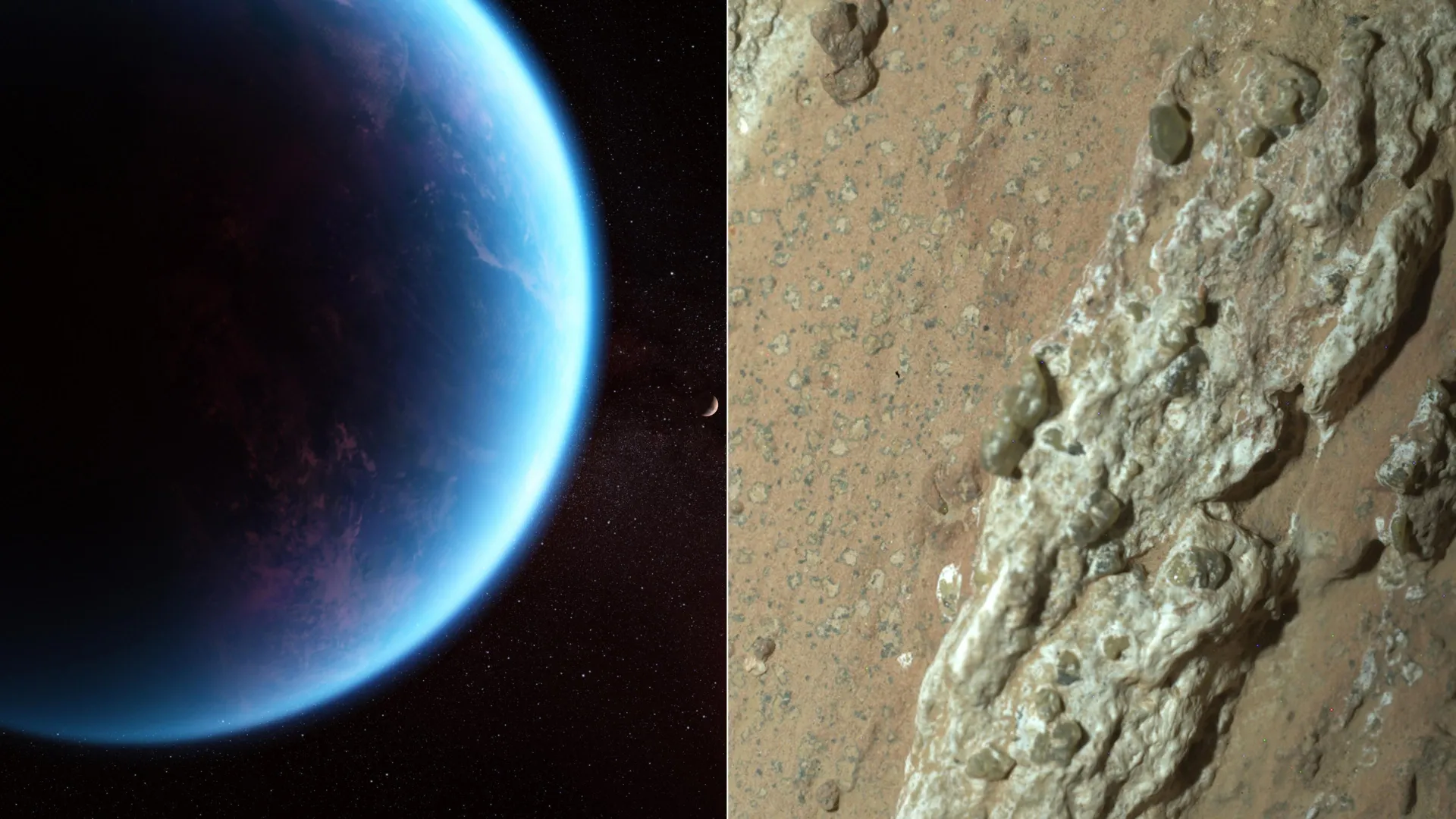
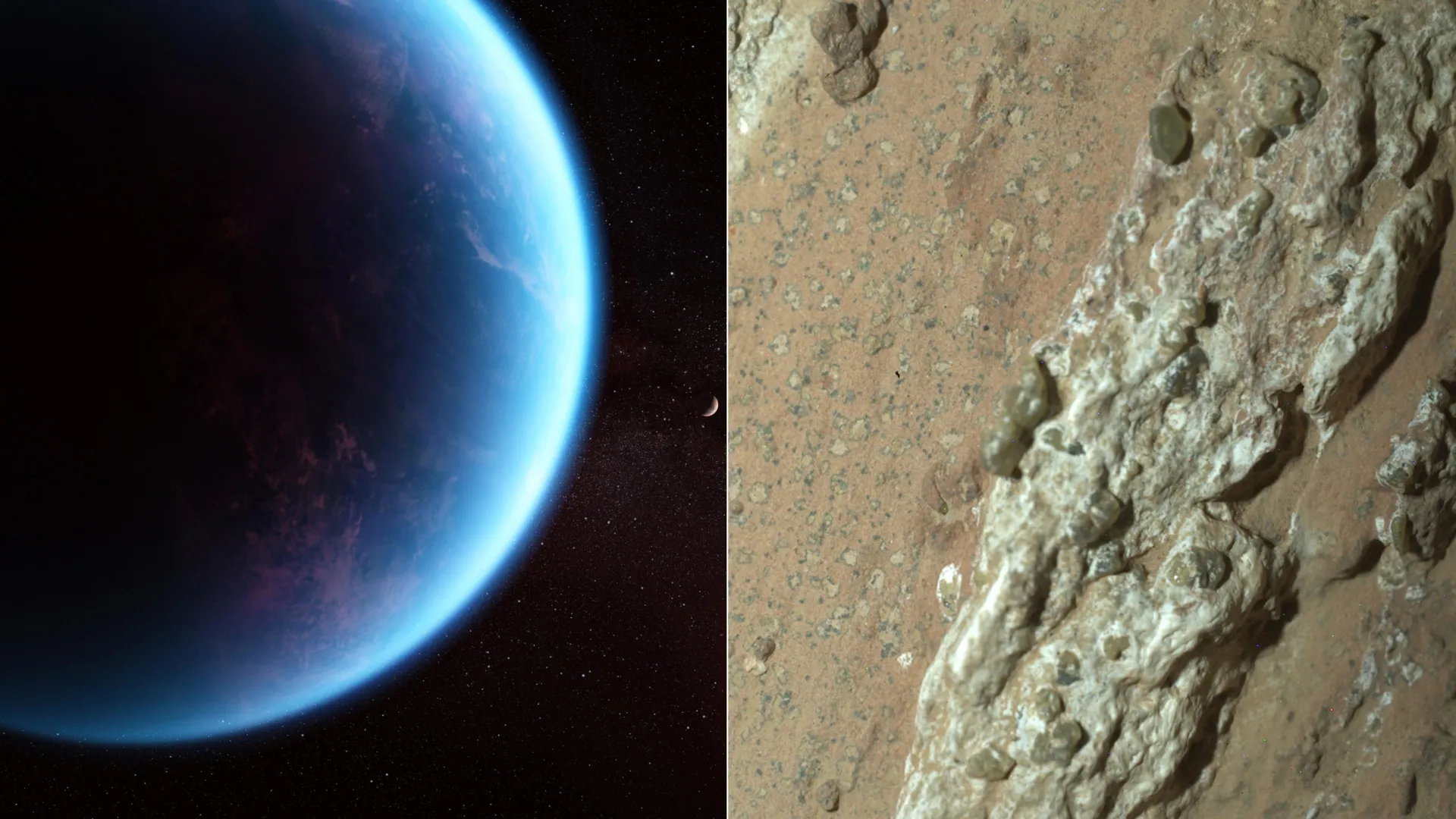
The narrative of 2025 was defined by two major events that reignited the debate over biological signatures beyond Earth. The first occurred in April, when researchers utilizing advanced observational data reported the presence of dimethyl sulfide (DMS) and potential traces of dimethyl disulfide within the atmosphere of K2-18b, an exoplanet orbiting in the habitable zone of a red dwarf star. On Earth, these compounds are primarily produced by biological activity—specifically by phytoplankton in marine environments. The announcement triggered intense media speculation, with many outlets framing the findings as the most significant lead in astrobiology to date.
The second, arguably more tangible, development arrived in September 2025, when NASA’s Perseverance rover encountered a rock at the Cheyava Falls site in Jezero Crater. The rover identified distinctive "leopard spot" patterns—mineral rings containing iron and phosphate that, under terrestrial conditions, often serve as chemical remnants of microbial life. NASA Administrator Sean Duffy characterized the find as the "closest we have ever come" to discovering evidence of past life on the red planet.
These announcements, while monumental, highlight a persistent disconnect between public perception and the consensus-building processes within the scientific community. When such discoveries hit the news cycle, journalists often rely on a handful of prominent experts, creating an impression of a "scientific consensus" that may not exist.
Data-Driven Insights into Expert Opinion
To bridge the gap between media hype and expert reality, a research team from the Centre for Scientific Community Opinion Polling and Evaluation (C-Scope) at Durham University launched a systematic survey of hundreds of astrobiologists globally. Conducted within days of each announcement, the survey sought to quantify the level of professional confidence in the "life-detected" narrative.
The results, published in the journal Nature, revealed a striking degree of intellectual humility. In the case of K2-18b, only 6.6% of respondents agreed that the data indicated the discovery of extraterrestrial life. A substantial 65.4% disagreed with that assertion, while 28.0% adopted a neutral stance, citing the need for more data.
The response to the Mars "leopard spot" discovery showed a slightly higher degree of openness but remained firmly grounded in skepticism. Approximately 15.1% of astrobiologists agreed that the evidence likely pointed to life, while 44.6% remained in disagreement. Notably, the "neutral" cohort grew to 40.3%, reflecting a community that is increasingly hesitant to dismiss findings outright while simultaneously unwilling to endorse them as definitive proof.
The Nuance of Scientific Skepticism
A critical takeaway from the C-Scope data is the shift in the quality of dissent. Following the K2-18b announcement, 35.1% of surveyed experts expressed "strong disagreement" with the conclusion that life had been found. By the time the Mars announcement was processed, that figure plummeted to 11.1%.
This shift is not necessarily an indication that experts are changing their minds about the existence of life; rather, it suggests that the nature of the evidence influences the degree of skepticism. K2-18b represents a remote, atmospheric detection where the margin for error—and the possibility of "false positives" caused by complex abiotic chemistry—is significantly higher. In contrast, the Mars findings involve a physical sample that allows for closer, albeit still challenging, analysis.
Astrobiologists are well-versed in the phenomenon of "false biosignatures." History is replete with examples of mineralogical or chemical patterns that appear organic but are, in fact, the result of non-biological, geological processes. The challenge facing modern science is not just identifying signals that look like life, but systematically ruling out every possible natural, non-biological explanation. This "burden of proof" approach is why the majority of the field remains cautious; the more we learn about the universe, the more we realize that nature is capable of producing remarkably "lifelike" phenomena through inorganic means.
Official Responses and the Challenge of Communication
The role of institutions in managing these expectations cannot be understated. NASA’s framing of the Cheyava Falls discovery as the "closest we have ever come" was factually grounded in the context of previous Mars missions, yet it inevitably amplified public expectation. When space agencies and research universities announce findings, they are navigating a delicate balance between transparency, funding requirements, and the necessity of keeping the public engaged.
However, this excitement often clashes with the slow, iterative process of scientific verification. Independent researchers frequently urge the public to view such announcements as "preliminary findings" rather than "discoveries." The scientific method demands peer review, replication, and the scrutiny of data by competing research groups—a process that can take years, if not decades.
Broader Implications: Beyond Extraterrestrial Life
The findings from the C-Scope research highlight a significant problem in modern public discourse: the tendency to treat science as a binary, "for-or-against" proposition. Whether the topic is climate change, artificial intelligence safety, or the efficacy of new medical treatments, the public often seeks a clear answer from "the science."
When such clarity is absent, the resulting void is often filled by hyperbole. By failing to communicate the nuances of scientific opinion—such as the difference between "strong disagreement" and "neutrality"—media coverage can inadvertently undermine public trust in science when initial "breakthroughs" are later downgraded or debunked.
The work being done at institutions like Durham University suggests a new path forward. By systematically measuring and documenting how experts respond to emerging evidence, researchers can provide a more accurate barometer of scientific consensus. This does not mean that majority opinion should be treated as absolute truth, nor that it should replace empirical data. Instead, it offers a more honest representation of the scientific process: a journey through uncertainty, disagreement, and the gradual, often messy, revision of our understanding of the universe.
The Path Forward: Managing Uncertainty
As humanity pushes further into the cosmos, the frequency of these "potential discovery" headlines is likely to increase. With the deployment of the James Webb Space Telescope and the return of Martian samples currently planned for the next decade, the capacity for detecting anomalies will grow exponentially.
If the goal of scientific communication is to foster an informed society, it is imperative to shift the focus from "have we found aliens?" to "what does this data tell us about the complexity of the universe?" Acknowledging that the scientific community is, at its core, a body of skeptics is not a sign of failure—it is the hallmark of a healthy, rigorous, and intellectually honest research culture.
Ultimately, the search for life is not a sprint toward a single "Eureka!" moment. It is a slow, methodical interrogation of the cosmos. As the C-Scope survey demonstrates, the true state of scientific inquiry is found in the middle ground—in the 40% of experts who say, "we don’t know yet, but the evidence is worth investigating." That willingness to reside in the space of "not yet" is the engine that drives true discovery. As we look to the stars, the most important lesson may be to embrace the uncertainty, for it is within those gaps of knowledge that the most significant scientific progress is ultimately made.