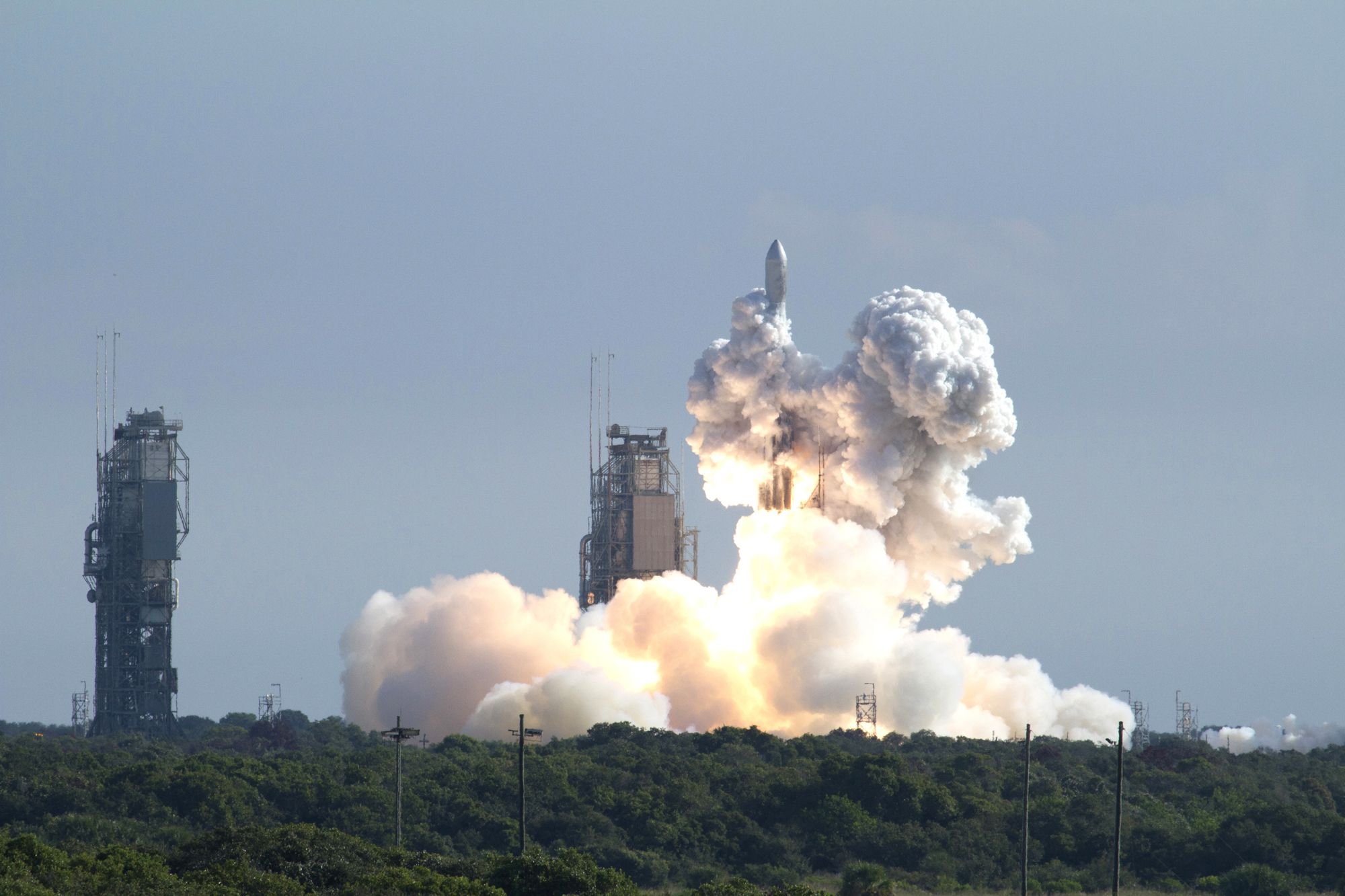
On September 10, 2011, a Delta II rocket lifted off from Cape Canaveral Air Force Station in Florida, carrying a pair of pioneering robotic explorers into the Florida night sky. This launch marked the commencement of NASA’s Gravity Recovery and Interior Laboratory (GRAIL) mission, a $496 million scientific endeavor designed to fundamentally change how researchers understand the moon. Rather than studying the lunar surface through optical cameras alone, the GRAIL mission aimed to peer deep beneath the crust by mapping the moon’s gravitational fields in unprecedented detail.
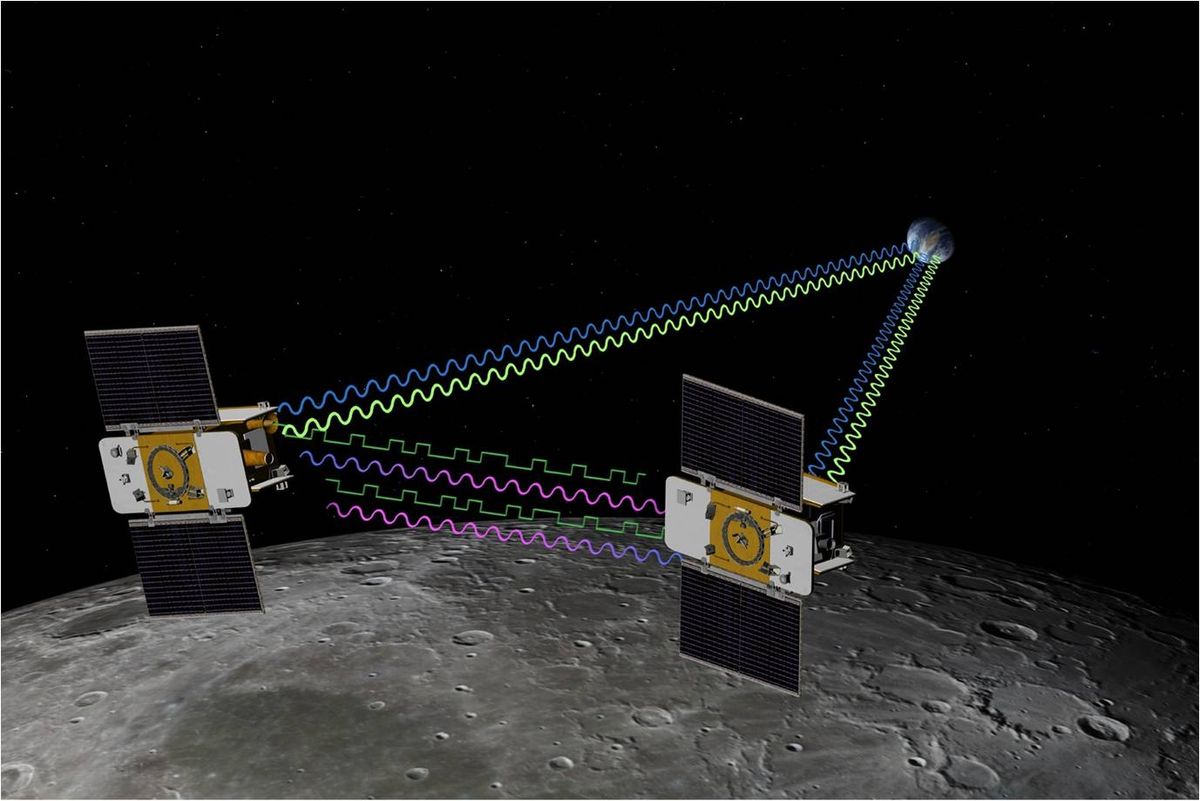
The two spacecraft, affectionately named Ebb and Flow, were tasked with flying in a precise, low-altitude tandem formation around Earth’s natural satellite. Over a successful nine-month science phase, the twin probes gathered a wealth of gravitational data that helped scientists untangle long-standing mysteries regarding the moon’s formation, internal composition, and geological history. By measuring minute fluctuations in the distance between the two spacecraft as they orbited, GRAIL provided a revolutionary three-dimensional map of the lunar interior, shedding light on ancient asteroid impacts and the asymmetrical distribution of mass hidden beneath the lunar regolith.
Unraveling the Mystery of Lunar Mascons
To the casual observer, the moon appears to be a uniform, cold, and heavily cratered sphere of rock. However, planetary scientists have long known that the moon is structurally complex and gravitationally lumpy. Decades before the GRAIL mission, tracking data from early lunar orbiters revealed unexpected anomalies in the moon’s gravitational pull. Spacecraft flying over certain circular maria—large, dark basaltic plains formed by ancient volcanic eruptions—would unexpectedly accelerate or dip slightly toward the surface, pointing to localized areas of exceptionally high density.
These dense underground pockets of material were designated as mass concentrations, or "mascons." For years, the exact origin of mascons remained a subject of intense scientific debate. Researchers theorized that they were the scars of colossal asteroid and comet impacts that occurred billions of years ago during the early history of the solar system, when the moon’s interior was much hotter and more fluid.
The GRAIL mission was specifically engineered to test this hypothesis. Equipped with advanced instruments, including the Lunar Gravity Ranging System and a Radio Science Beacon, Ebb and Flow were able to measure the gravity field with phenomenal precision. By tracking the exact distance between the two probes using microwave ranging technology down to the micrometer level, scientists could map even the subtlest variations in the lunar gravitational field.
"GRAIL data confirm that lunar mascons were generated when large asteroids or comets impacted the ancient Moon when its interior was much hotter than it is now," explained Jay Melosh, a GRAIL co-investigator at Purdue University, highlighting the mission’s primary scientific triumph. The high-resolution gravity maps conclusively demonstrated that when massive impactors punched through the lunar crust, dense mantle material welled up beneath the impact basins, creating the gravitational anomalies observed today.
A Collaborative and Educational Endeavor
Beyond its monumental scientific contributions, the GRAIL mission served as a powerful vehicle for public engagement and STEM education. A standout feature of the mission was the MoonKam—short for Moon Knowledge Acquired by Middle School Students—an onboard imaging system designed entirely to involve students in planetary exploration.

Developed by undergraduate students at the University of California, San Diego, in collaboration with the Sally Ride Science foundation, the MoonKam initiative allowed middle school students from around the globe to request images of specific lunar targets. Instead of relying solely on professional astronomers to dictate the cameras’ schedules, young students actively participated in planetary science, analyzing high-resolution photographs of craters, mountains, and maria captured by the orbiting spacecraft.
Public participation also extended to the naming of the twin spacecraft. The monikers "Ebb" and "Flow" were selected following a nationwide student competition, submitted by a fourth-grade class at Emily Dickinson Elementary School in Bozeman, Montana. This grassroots connection fostered a widespread sense of ownership and excitement across American classrooms, inspiring a new generation of scientists and engineers.
Chronology of the GRAIL Mission
The lifecycle of the GRAIL mission, from conception to its dramatic conclusion, represents a triumph of precision orbital mechanics and mission management.
- September 10, 2011: Ebb and Flow successfully launch aboard a United Launch Alliance Delta II rocket from Cape Canaveral Air Force Station, beginning their long, energy-efficient journey to lunar orbit.
- December 31, 2011 – January 1, 2012: After taking a circuitous low-energy trajectory designed to conserve fuel, both spacecraft successfully execute lunar orbit insertion maneuvers, entering into initial elliptical orbits around the moon.
- March 2012: Following a series of orbital adjustments, the twins settle into their operational, nearly circular tandem orbits, flying at an average altitude of just 30 miles (50 kilometers) above the lunar surface and separated by a distance ranging from 109 to 140 miles (175 to 225 kilometers).
- March to December 2012: The primary and extended science phases are conducted. Ebb and Flow successfully map the lunar gravity field, achieving data coverage that exceeds initial mission requirements by a factor of thousands.
- December 17, 2012: With their propellant supplies completely exhausted, the spacecraft execute a controlled de-orbit maneuver, crashing purposefully into the side of a mountain near the moon’s north pole.
The Controlled Finale and Scientific Legacy
By late 2012, the GRAIL probes had fulfilled all their primary scientific objectives. However, operating in such a low lunar orbit requires constant station-keeping thruster burns to counteract the uneven gravitational forces and the subtle perturbations caused by solar radiation pressure. As the mission approached its natural conclusion, the propellant reserves aboard both Ebb and Flow neared total depletion.
Rather than letting the spacecraft drift aimlessly into an uncontrolled decay and risk damaging historic assets, NASA mission planners engineered a controlled impact. On December 17, 2012, the twin probes were guided into a designated impact site—a previously unnamed mountain near the moon’s north pole.
This controlled crash was executed with meticulous care to protect historically significant locations on the lunar surface, such as the Apollo landing sites where human footsteps were left decades prior. By intentionally disposing of the spacecraft in a remote area, mission controllers ensured that no debris would compromise future scientific research or heritage sites.
The implications of the GRAIL mission extend far beyond the moon. Understanding the formation and distribution of mascons provides a critical baseline for planetary geologists studying other rocky bodies in the inner solar system, including Mercury, Mars, and large asteroids. Because these worlds share similar impact histories, the principles uncovered by Ebb and Flow help researchers model internal differentiation and crustal evolution across the cosmos.
Ultimately, NASA’s GRAIL mission proved that even our closest celestial neighbor still holds deeply guarded secrets. By combining cutting-edge engineering, precision physics, and inclusive educational outreach, Ebb and Flow transformed our understanding of the moon from a simple cratered rock into a complex, dynamically scarred archive of early solar system history.