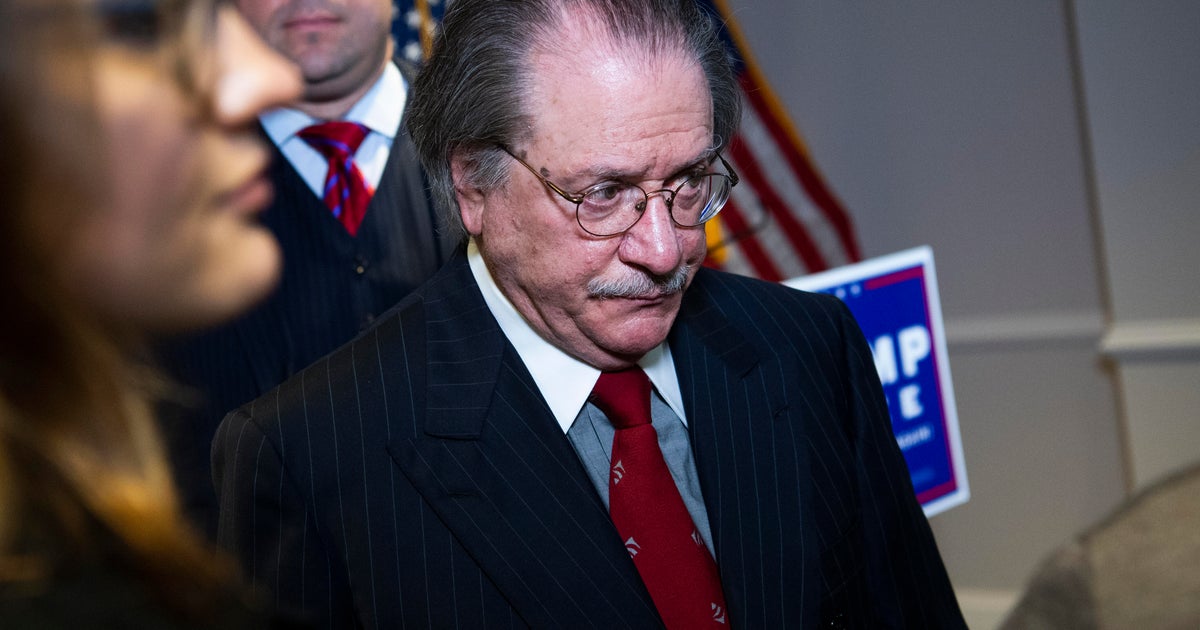
Joe DiGenova, the seasoned attorney and former prosecutor appointed to supervise the controversial Justice Department "grand conspiracy" investigation, abruptly stepped down from his role on Thursday, sending shockwaves through legal and political circles in Washington. In a brief telephone conversation with CBS News, DiGenova confirmed that he submitted his formal resignation letter to Attorney General Todd Blanche at 3:00 p.m. on Thursday, bringing an abrupt end to his brief, five-month tenure overseeing the sprawling federal inquiries based out of Fort Pierce, Florida.
"It was an honor and a privilege to serve the president and the department," DiGenova remarked during the brief exchange. He further disclosed that his wife and longtime legal partner, attorney Victoria Toensing—who had also joined the specialized federal prosecution team in Florida—would officially depart the Justice Department on Friday.
DiGenova declined to elaborate on the precise motivations behind his sudden departure, which was initially broken by ABC News. The Justice Department has not yet issued a formal public statement addressing his exit, though inquiries from media outlets remain pending. The unexpected leadership vacuum occurs at a highly sensitive juncture for the team of federal prosecutors, leaving the future trajectory of the high-profile probes uncertain as investigators press forward with witness subpoenas and voluntary interviews.
The Timing and Immediate Aftermath of the Resignation
The timing of DiGenova’s departure has intensified scrutiny over the inner workings of the Fort Pierce-based investigative unit. His exit comes merely days after lawyers representing several key witnesses in the broad conspiracy probe received electronic notifications alerting them that their clients were slated to receive grand jury subpoenas. Sources close to the matter revealed that the unfolding legal maneuvers signal a stepped-up phase in the investigation, which aims to unearth alleged coordinated efforts by former administration officials to sideline Donald Trump politically.
Moreover, in the weeks leading up to his resignation, investigators operating under DiGenova’s supervision reached out to defense counsel representing former FBI agents. These agents had previously participated in the counterintelligence investigations concerning President Trump’s retention of classified documents at his Mar-a-Lago estate. According to sources briefed on those interactions, the prosecutors requested voluntary interviews with the former law enforcement personnel, further expanding the scope and friction of the ongoing inquiries.
Background and Scope of the "Grand Conspiracy" Inquiry
The probe currently unfolding in Fort Pierce was initiated earlier this year under the directives of Attorney General Todd Blanche. Designed as a sweeping "grand conspiracy" investigation, the inquiry aims to determine whether high-ranking officials from the Barack Obama and Joe Biden administrations engaged in a multi-year, coordinated effort to thwart Mr. Trump’s political ambitions, weaponize the federal government, and undermine his administrations.
Alongside the broader conspiracy inquiry, DiGenova was tasked with overseeing a separate criminal probe examining former CIA Director John Brennan. Investigators have been probing whether Brennan allegedly provided false statements to Congress during testimony in 2023 regarding the intelligence community’s consensus assessment on Russian election interference during the 2016 presidential cycle.
The appointment of DiGenova to spearhead these matters in April followed the abrupt removal of Maria Medetis Long, the career prosecutor who had previously overseen both cases within the U.S. Attorney’s Office for Miami. Reports indicated that Long was removed from her supervisory post after raising internal concerns regarding the legal sufficiency and overall strength of the evidence compiled thus far. To date, the Justice Department’s investigative team has not brought criminal charges against any individual in connection with either the broad conspiracy probe or the Brennan inquiry.
A Chronology of Key Events
To fully understand the context surrounding DiGenova’s resignation, it is helpful to examine the timeline of events that brought these investigations to the forefront of the Justice Department’s docket:
- 1983–1988: Joe DiGenova serves as the United States Attorney for the District of Columbia, establishing a long-standing career in federal law enforcement and prosecution.
- Late 2020: DiGenova acts as an external legal representative for the Trump campaign in its unsuccessful legal challenges aimed at contesting the results of the 2020 presidential election.
- 2023: Former CIA Director John Brennan testifies before Congress regarding the 2016 intelligence community assessment, later becoming the target of a subsequent criminal inquiry over those statements.
- Early 2025: Maria Medetis Long oversees the dual cases out of the Miami U.S. Attorney’s Office before being abruptly removed after expressing skepticism regarding the evidentiary strength of the cases.
- April 2026: Attorney General Todd Blanche appoints Joe DiGenova to return to the Justice Department and take charge of the Fort Pierce-based investigations, bringing Victoria Toensing along with him.
- Mid-2026: Former CIA Director John Brennan files a civil lawsuit against the administration, alleging a politically motivated abuse of the criminal justice system to penalize perceived adversaries.
- September 2026: Investigators contact lawyers for former FBI agents requesting voluntary interviews and issue notices regarding impending grand jury subpoenas.
- September 10, 2026: Joe DiGenova abruptly submits his resignation letter to Attorney General Todd Blanche, with Victoria Toensing scheduled to depart the following day.
Reactions, Criticisms, and Legal Challenges
The dual investigations have drawn sustained criticism from career law enforcement veterans, legal scholars, and former intelligence officials. Critics have repeatedly expressed concern that the Department of Justice is being utilized for partisan objectives, warning that the placement of loyalist personnel into pivotal investigative roles threatens the traditional independence and institutional integrity of federal law enforcement.
These tensions boiled over earlier this year when former CIA Director John Brennan filed a federal lawsuit challenging the legitimacy of the criminal probes. In his legal filings, Brennan alleged that the administration had "adopted a policy of using criminal process and prosecution to punish the President’s perceived adversaries," framing the investigations as an unconstitutional retaliation campaign designed to chill political dissent and reshape historical narratives surrounding the 2016 election.
DiGenova’s appointment in April was seen by supporters of the administration as a necessary step to bring accountability to agencies that they argue overreached during previous administrations. DiGenova, a vocal critic of the intelligence community’s handling of the 2016 Russia investigations, had frequently targeted Brennan in public commentary. In past media appearances, DiGenova notably characterized Brennan as the "primogenitor of the entire counterintelligence investigation," underscoring long-standing animosities that predated his formal return to the Justice Department.
Broader Impact and Implications for the Justice Department
DiGenova’s departure creates an immediate operational challenge for the Department of Justice as it navigates one of its most politically explosive dockets. With grand jury subpoenas reportedly moving forward and voluntary interview requests circulating among former FBI personnel, the investigation’s momentum hangs in the balance.
The vacancy at the top of the Fort Pierce prosecution team forces leadership to decide whether to appoint another high-profile external figure or to transition oversight back to career prosecutors—a choice that will be closely watched by lawmakers, legal analysts, and the public alike. As the department prepares to address the leadership change, the broader implications of these investigations continue to fuel intense national debate over the separation of powers, executive accountability, and the proper boundaries of federal prosecutorial power.