The automotive landscape is currently witnessing a significant pivot as Stellantis, the parent company of iconic brands such as Jeep, Ram, and Chrysler, explores new methods to integrate high-efficiency hybrid powertrains into its most rugged platforms. According to recent filings with the United States Patent and Trademark Office (USPTO), the multinational automaker is developing a sophisticated hybrid transmission system that adapts the planetary gear logic found in the Chrysler Pacifica Hybrid for use in vehicles equipped with traditional, mechanical four-wheel-drive systems. This move signals a potential shift in how future off-road vehicles will balance the demands of extreme terrain with the increasing pressure for fuel efficiency and reduced emissions.
The core of this innovation lies in the marriage of a planetary power-split system with a multi-speed transfer case. While planetary gearsets have become a staple of high-efficiency hybrids—most notably perfected by Toyota and adopted by Chrysler for its plug-in hybrid minivan—they have historically struggled when paired with the heavy-duty hardware required for rock crawling and heavy towing. The new patent, filed in July 2023 and published on February 6, 2024, details a mechanism designed to overcome these engineering hurdles, potentially paving the way for a new generation of electrified Jeeps and Ram trucks.
The Evolution of Hybrid Architectures at Stellantis
To understand the significance of this patent, one must look at the two distinct paths Stellantis has previously taken regarding electrification. On one side is the Chrysler Pacifica Hybrid, which utilizes a "si-EVT" (single-input electrically variable transmission). This system employs a planetary gearset to blend the power from a 3.6-liter V-6 engine with two electric motors. It is celebrated for its seamless power delivery and high efficiency in urban environments, but it lacks a mechanical connection to a traditional 4WD transfer case, making it unsuitable for the high-torque, low-speed demands of off-roading.
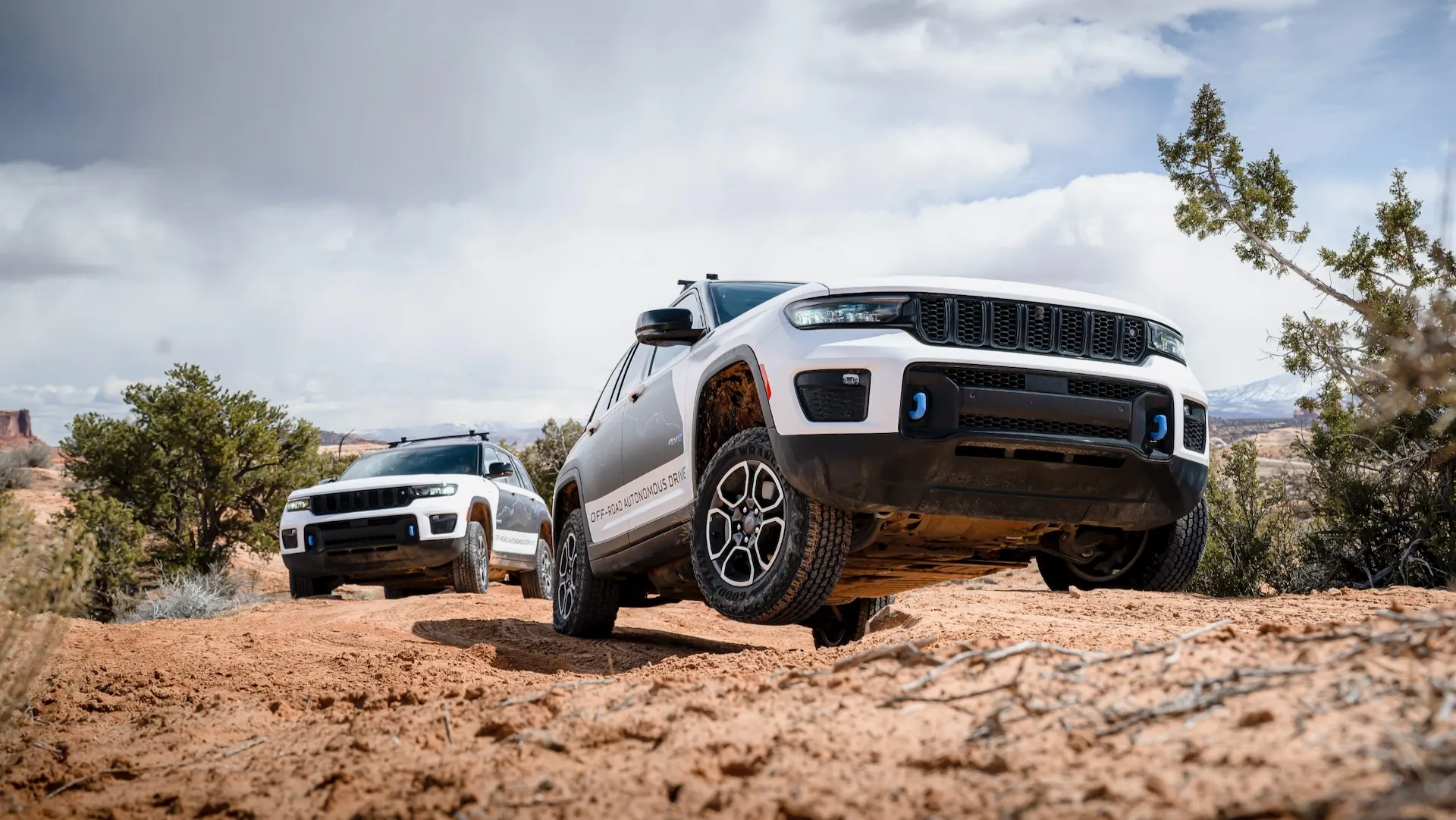
On the other side are the Jeep Wrangler 4xe and Grand Cherokee 4xe. These vehicles utilize a "P2" hybrid architecture. In this setup, a single electric motor is sandwiched between the engine and a conventional eight-speed automatic transmission. While this allows the vehicle to retain a robust, mechanical 4WD system and a two-speed transfer case (offering high and low ranges), it is often criticized for being less smooth than planetary systems. The transition between electric and gasoline power can occasionally feel abrupt, and the system relies heavily on the traditional transmission’s clutches to manage power flow.

The new patent indicates that Stellantis engineers are seeking a "third way"—a system that captures the smoothness and efficiency of a planetary power-split drive while maintaining the mechanical integrity of a rugged 4×4 drivetrain.
Addressing the Challenges of Hybrid Off-Roading
In the USPTO filing, Stellantis candidly discusses the limitations of current hybrid configurations. The company notes that when a standard planetary-gear system is mated to a traditional mechanical transfer case, several operational "pain points" emerge. Specifically, the document cites rough shifts between high and low ranges, difficulty in engaging the splines of the low-range gear while the vehicle is stationary, and the complex challenge of synchronizing shifts while operating in low-range 4WD.
In a traditional off-road vehicle, shifting into "4-Low" often requires the vehicle to be moving at a very slow crawl or stopped in neutral to allow the mechanical gears to align. In a hybrid system, the presence of electric motor torque and the lack of a traditional torque converter can make this synchronization violent or difficult to execute.
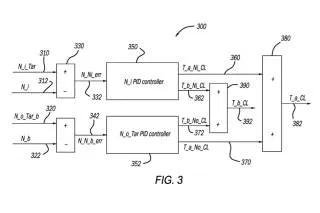
To solve this, the Stellantis patent introduces a "disconnect device" and a unique control logic that uses the electric motors to manage synchronization. By utilizing the precise torque control of the electric motors, the system can match the speeds of the input and output shafts of the transfer case with mathematical precision. This would theoretically allow for "shift-on-the-fly" capabilities that are smoother than any current mechanical system, even when transitioning into high-torque crawling modes.
Chronology of Development and Patent Publication
The timeline of this development highlights Stellantis’ long-term commitment to refining its hybrid technology:
- 2017: The Chrysler Pacifica Hybrid debuts, introducing the planetary-gear power-split system to the North American minivan market.
- 2020: Jeep officially announces the "4xe" sub-brand, opting for the P2 hybrid architecture for the Wrangler to ensure off-road durability.
- 2021-2022: The Wrangler 4xe becomes the best-selling plug-in hybrid in the United States, proving market demand for electrified off-roaders despite the architectural trade-offs.
- July 2023: Stellantis files the patent for the "Planetary Gear Transmission with Torque-Synchronized Transfer Case" (published as part of the Feb 6, 2024, USPTO update).
- Early 2024: The patent is made public, coinciding with Stellantis’ broader "Dare Forward 2030" strategic plan, which aims for 50% of U.S. sales to be battery-electric vehicles by the end of the decade.
Technical Analysis: How the Synchronized System Works
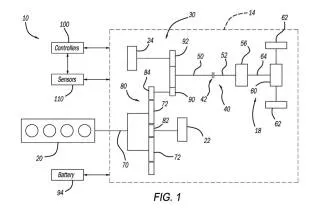
The patent describes a complex arrangement where the planetary gearset serves as the primary distribution hub for power. One electric motor-generator is typically connected to the sun gear, while the internal combustion engine is linked to the planet carrier. The second motor-generator and the output to the transfer case are connected to the ring gear.
The innovation lies in how the system handles the transfer case’s two speeds. In a traditional setup, shifting ranges requires physical gear teeth to slide into mesh. If the speeds don’t match, you get the infamous "gear grind." Stellantis’ proposed system uses the electric motors to "brake" or "accelerate" the internal components of the transmission to the exact RPM required for a perfect mesh.
This level of control is only possible because electric motors can adjust their rotational speed almost instantaneously, unlike an internal combustion engine which has significant rotational inertia. By decoupling the engine via the new disconnect device during the shift, the electric motors can act as a high-precision synchronization tool, ensuring that the transition into 4-Low is silent and seamless.
Market Implications and Competitive Landscape
The development of this technology comes at a critical time. Competitors are also racing to perfect the "rugged hybrid." Toyota recently introduced the i-FORCE MAX hybrid in the Tacoma and Tundra, which uses a P2-style setup similar to the current Jeep 4xe. Ford uses a similar "Modular Hybrid Transmission" in the F-150 PowerBoost.
If Stellantis successfully implements a planetary-based system in a 4×4, it could gain a significant advantage in refinement. Planetary hybrids are generally more efficient in "charge-sustaining" mode (when the battery is depleted) compared to P2 hybrids. For a vehicle like the Jeep Grand Cherokee, which is often used as a daily driver as well as a weekend adventurer, this could result in significantly better real-world MPG figures without sacrificing the "Trail Rated" capability that defines the brand.
Furthermore, industry analysts suggest that this technology could be a bridge toward "charge-depleting" hybrids that do not require a plug. While the current 4xe models are PHEVs, Jeep leadership has recently hinted at exploring non-plug-in hybrids for the North American market to cater to buyers who lack easy access to charging infrastructure but want the torque and efficiency benefits of electrification.
Official Perspectives and Future Outlook
While Stellantis has not officially confirmed which future models will receive this specific hardware, the company’s recent corporate filings emphasize a "multi-energy" platform approach. During recent earnings calls, CEO Carlos Tavares has stressed the importance of "technological flexibility," allowing the company to pivot between internal combustion, hybrid, and fully electric powertrains based on consumer demand and regulatory requirements.
The implications of this patent extend beyond Jeep. The Ram 1500, which is moving away from its legendary HEMI V-8 in favor of turbocharged inline-six "Hurricane" engines, could benefit immensely from a planetary hybrid system. A hybrid Ram capable of smooth, high-torque towing and refined highway cruising would be a formidable competitor in the lucrative light-duty truck segment.
As the automotive industry moves deeper into the 2020s, the "rugged hybrid" is no longer a niche product; it is a volume necessity. Stellantis’ investment in a more sophisticated, planetary-based 4WD system suggests that the company is not content with the status quo. By solving the mechanical friction between high-efficiency gearsets and heavy-duty transfer cases, Stellantis is positioning itself to lead the next era of electrified adventure. Whether this system debuts in the next-generation Wrangler or an electrified Wagoneer, it represents a major engineering milestone in the quest to make green vehicles as capable as their fossil-fuel-burning predecessors.