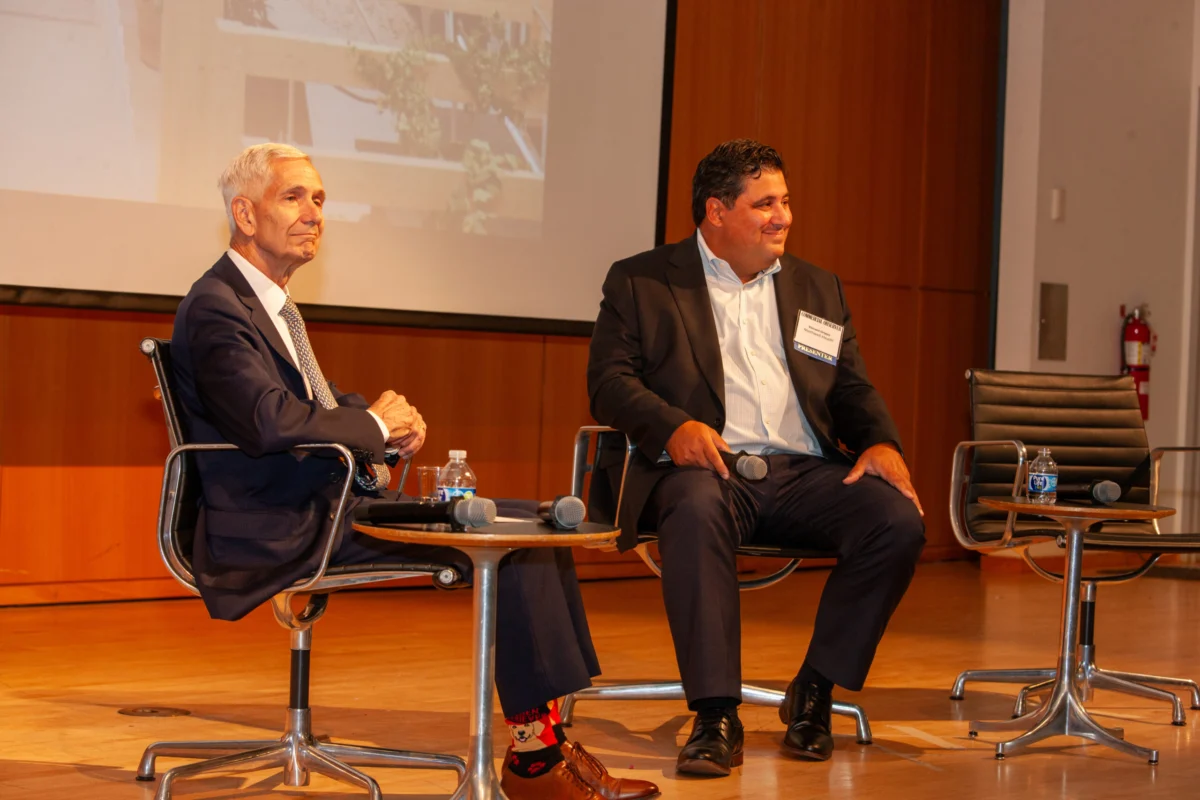
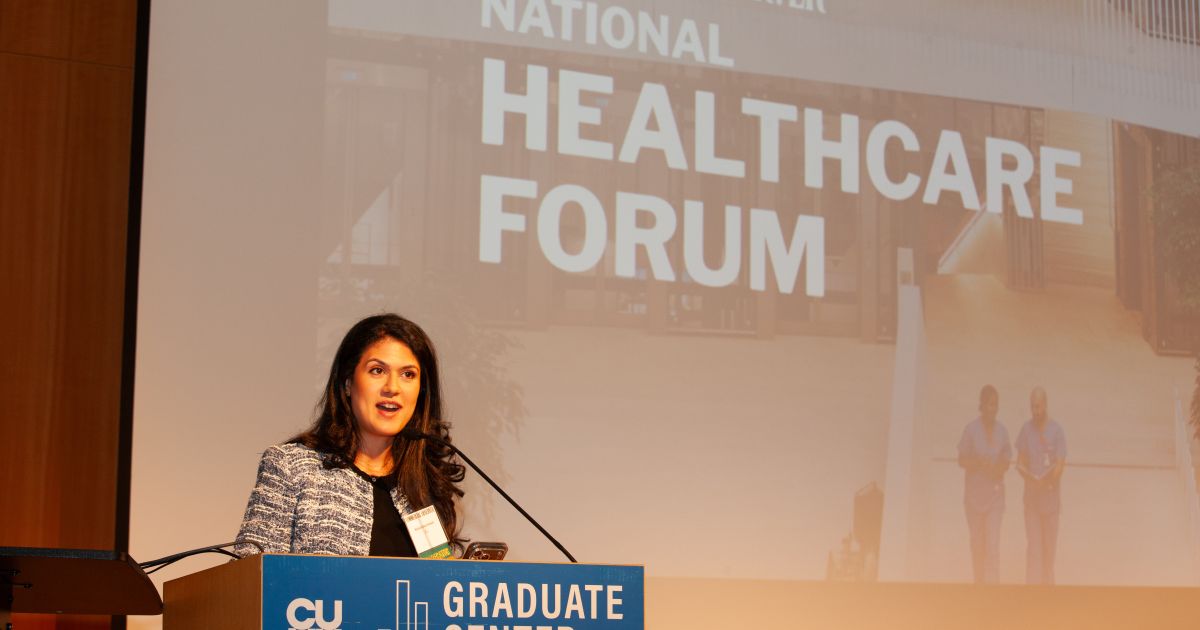
The modern landscape of health care is undergoing a seismic shift, characterized not only by advancements in clinical medicine but by a fundamental transformation in how and where care is delivered. On Thursday, Sept. 10, 2026, the Commercial Observer convened its annual National Healthcare Forum at the Proshansky Auditorium within the City University of New York (CUNY) Graduate Center. The event brought together a multidisciplinary cohort of capital planning executives, legal counsel, construction managers, and architecture leads to address the intersection of financial sustainability, regulatory complexity, and the rapid evolution of medical infrastructure.
The Imperative of Infrastructure Resiliency
The forum opened with a poignant keynote session featuring Vincent Grippo, senior vice president of real estate and facilities services at Northwell Health, and Mitch Green, senior vice president at AECOM Tishman. The discussion transcended traditional real estate metrics, grounding the technical aspects of building management in a deeply personal narrative. Grippo, who has spent 25 years in client-facing operational roles, revealed he is seven years cancer-free—a diagnosis he attributes to toxic air exposure during the 9/11 terrorist attacks. His request for a moment of silence served as a somber reminder of the human stakes involved in maintaining the facilities where life-saving care is provided.
The dialogue quickly pivoted to the "run-to-fail" operational model that has plagued many legacy hospital systems for decades. Grippo highlighted that Northwell, like many of its peers, had historically deferred critical infrastructure maintenance, leading to hazardous gaps in emergency power and climate control. "Some of these things are not easily solved because we have extreme limitations in the size of our plants and certain facilities, and of course in the amount we can invest," Grippo explained.
To combat this, Northwell pivoted its fiscal strategy, reclassifying infrastructure upgrades from discretionary capital investments to essential maintenance expenses. This administrative shift allowed the system to fast-track critical repairs, increasing its annual infrastructure investment from a range of $40 million to $60 million to a record $170 million last year. This aggressive capital deployment is exemplified by the ongoing $1 billion redevelopment of Lenox Hill Hospital, a project that represents the logistical complexity of modernizing dense urban medical campuses.
Strategic Master-Planning and Outpatient Expansion
As the event progressed, the focus shifted toward the geographic decentralization of care. A panel moderated by Andrew Weinberg, director of business development for LF Driscoll Healthcare, explored the transition from reactive, crisis-driven facility maintenance to proactive, strategic master-planning. The panelists, including representatives from the Children’s Hospital of Philadelphia and Catholic Health Services of Long Island, noted a market-driven pivot toward outpatient facilities.
The rise of "care-near-home" models has forced health systems to reconsider their real estate portfolios. Patients increasingly prioritize convenience, leading systems to acquire or repurpose retail, commercial, and even industrial sites for medical use. David Kontra, assistant vice president of real estate at the Children’s Hospital of Philadelphia, emphasized that the primary challenge in this decentralized model is mitigating downtime. "My biggest concern when it comes to infrastructure, particularly outside the main hospital, is just that downtime," Kontra stated. "Because the hardest thing for us is to have any kind of an issue where we’re canceling appointments, or we’re sending families to different locations."
This shift necessitates a change in project management, where property management providers must be involved in the initial design phases to ensure that future operational failures are "built out" of the system.

Navigating Complexity in Historic Infrastructure
The afternoon sessions addressed the technical and regulatory hurdles of revitalizing aging facilities. Jaimee Nardiello, a partner at Zetlin & De Chiara, moderated a discussion with leaders from Mount Sinai Health System, Gilbane Building Company, and Kohn Pedersen Fox. The conversation centered on the Tisch Cancer Center Hospital project, a high-stakes construction endeavor occurring within a 1960s-era building on Manhattan’s Upper East Side.
The project illustrates the "surgical" nature of modern health care construction. Building a 72-bed inpatient facility, complete with specialized oncology units, stem cell labs, and apheresis services, inside an aging structure requires managing extreme spatial constraints and outdated mechanical systems. Keith Marks of Gilbane noted that the project team operates with a "nimble and realistic" mindset, acknowledging that the team often learns as they perform demolition. This reality underscores the need for high-level coordination between clinical staff, who continue to treat patients in adjacent wings, and the construction crews working behind the scenes.
The Human Element: Design and Clinical Performance
While infrastructure is often discussed in terms of steel, HVAC, and capital allocation, the forum underscored the vital role of design in clinical outcomes. Suzanne Marie Musho, corporate director at New York-Presbyterian Hospital, and Rahul Tikekar of Loring Consulting Engineers, argued that the physical environment is an extension of the care process.
"The most important thing in health care is the human connection," Tikekar stated. He argued that spaces should be designed to support the well-being of not only the patients but also the exhausted caregivers and medical staff. This human-centric approach to architecture seeks to replace the sterile, intimidating atmosphere of traditional hospitals with environments that feel welcoming and consistent. Musho emphasized that owners and architects must maintain a constant focus on the ultimate goal: providing a seamless, reassuring experience for everyone who crosses the threshold of a medical facility.

Repurposing the Built Environment
The final panel of the day, again led by Nardiello, featured a deep dive into the financial and operational mechanics of adaptive reuse. With Dejan Bratun of Columbia University Irving Medical Center and representatives from NBBJ Designs and Memorial Sloan Kettering, the conversation explored the criteria for transforming legacy buildings into high-performance clinical spaces.
The suitability of a building for health care conversion is predicated entirely on the clinical program. Bratun noted that the process begins with the "back-of-house" requirements—the unseen infrastructure like medical-grade ventilation and patient flow logistics—before ever considering the aesthetic or superficial layout.
The diversity of successful conversions is increasing. While senior housing is often developed from old hotels or multi-family properties, specialty care is finding its way into more unconventional assets. Christina Grimes of NBBJ Designs highlighted a project involving the conversion of an old cigar factory into a high-tech facility housing MRI machines and eye-acuity clinics. This underscores a broader industry trend: as traditional health care real estate becomes more expensive and scarce, systems are increasingly looking to adaptive reuse as a pragmatic and creative solution to meet rising demand.
Future Implications and Conclusion
The 2026 National Healthcare Forum highlighted a sector that is increasingly defined by its adaptability. Whether it is reclassifying maintenance budgets to prevent operational failure, master-planning for the decentralization of services, or turning factories into medical clinics, the industry is moving away from a "business as usual" approach.

The data presented throughout the day suggests that the financial burden of aging infrastructure will continue to pressure health systems. However, the successful integration of technology, flexible design, and patient-centered planning provides a roadmap for future development. The consensus among the experts at CUNY was clear: in the face of regulatory pressures and evolving clinical needs, the ability to innovate within the built environment is no longer just a competitive advantage—it is a requirement for the survival and efficacy of modern health care. As health systems continue to navigate the next decade, the balance between fiscal responsibility and the demand for superior patient experiences will remain the defining challenge of the sector.