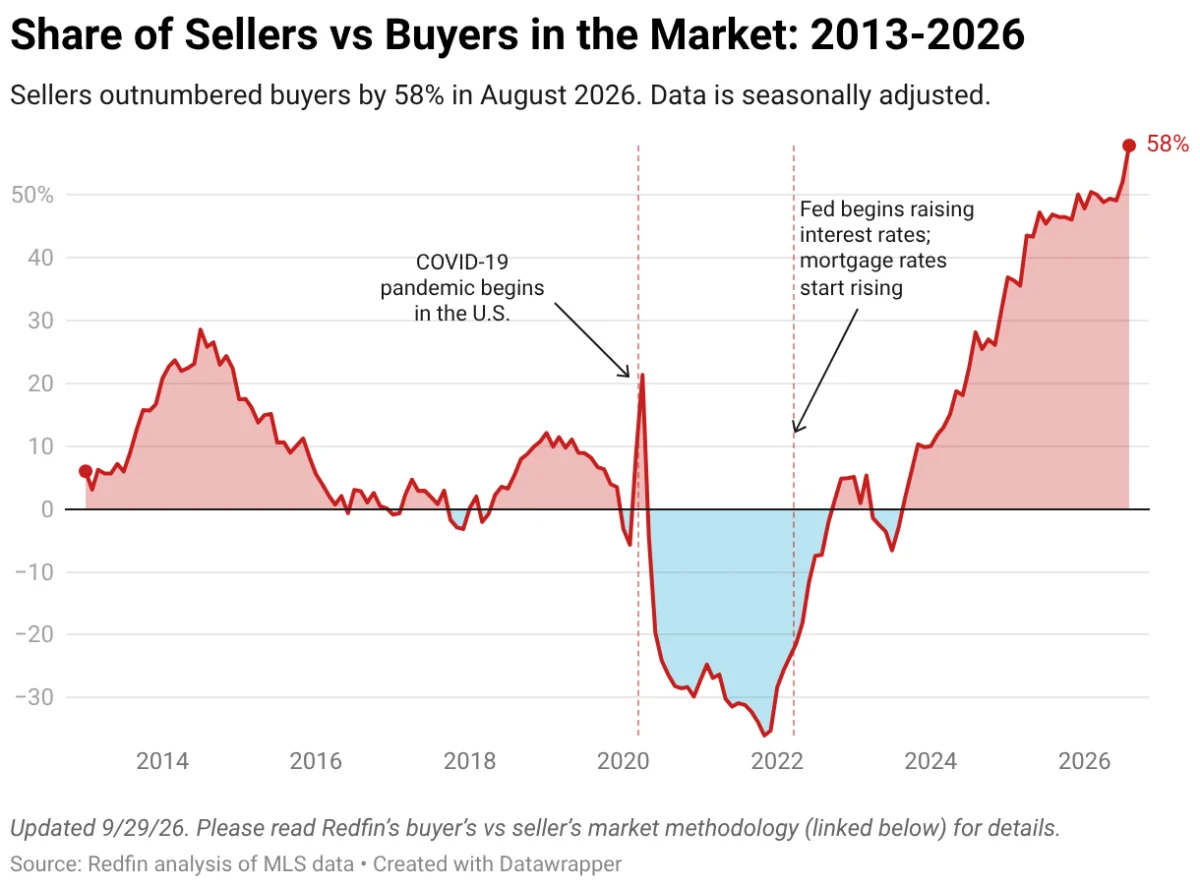
Homeowners across the United States are facing an increasingly complex real estate landscape this fall, caught between near-record housing costs, fluctuating mortgage rates, and a sluggish market that has steadily shifted leverage into the hands of buyers. With the typical monthly housing payment hovering above $2,600 and home prices having outpaced wage growth significantly since the onset of the pandemic, a growing number of prospective sellers find themselves debating whether to list their properties or remain on the sidelines.
The current environment is characterized by an oversupply of inventory relative to buyer demand, creating a distinct buyer’s market on a national scale. However, regional divergences, macroeconomic pressures, and shifting consumer sentiment mean that the decision to sell cannot be reduced to a simple binary choice. For those contemplating a move, understanding the broader economic forces, regional trends, and strategic timelines is essential before engaging a real estate agent.
Macroeconomic Headwinds and the Modern Housing Squeeze
The modern housing market does not exist in a vacuum; it is deeply intertwined with broader domestic and international economic shifts. Throughout the year, elevated home values—with national median prices topping $398,000 as of late summer—have strained household budgets. Combined with sticky inflation and persistent economic uncertainty, these factors have cooled buyer enthusiasm and driven many would-be purchasers to delay their home-buying journeys.
Geopolitical tensions, particularly conflicts in the Middle East, have introduced additional volatility into global financial systems. These international disruptions have influenced energy costs, stoked fears of persistent inflation, and triggered anxiety within the bond market. Consequently, mortgage rates have climbed to three-year highs, making financing significantly more expensive than it was during the ultra-low rate era of the early 2020s.
Economic analysts point out that these compounding pressures have created a psychological barrier for many consumers. Elevated borrowing costs effectively shrink a buyer’s purchasing power, meaning they secure less square footage for the same financial commitment. For sellers, this translates to longer days on the market, more frequent price reductions, and a necessity to offer concessions—such as covering closing costs or funding home repairs—to finalize deals.
The Supply-Demand Imbalance and Regional Disparities
A defining feature of the current real estate ecosystem is the widening gap between housing supply and demand. Nationwide data indicates that there are currently more than 500,000 additional home sellers than active buyers. This imbalance has forced asking prices down to their lowest levels in a year in many parts of the country as sellers adjust to diminished competition.
Yet, a nationwide generalization obscures critical regional variations. The national oversupply is heavily concentrated in the Sun Belt, where a prolonged surge in new construction following the pandemic has created an abundance of housing inventory, firmly anchoring those markets in favor of buyers. Conversely, the Midwest and the Northeast are experiencing a distinct inventory shortage. In metropolitan areas such as Rochester, New York, and Milwaukee, Wisconsin, demand routinely outstrips supply, frequently resulting in competitive bidding wars, quick sales, and upward pressure on prices.
For sellers located in high-demand pockets, the current market conditions remain remarkably favorable. However, for those attempting to offload properties in oversupplied regions, patience, competitive pricing, and professional staging are prerequisites for success.
Insights from Industry Leadership
Industry experts emphasize that successfully navigating today’s real estate environment requires a pragmatic approach to pricing and expectations. Daryl Fairweather, Chief Economist at Redfin, underscores the realities facing market participants.
"Home sellers should prepare for a strong buyer’s market," Fairweather notes. "Elevated inventory has given buyers more options, but record costs have made them wary. Volatile mortgage rates and an unstable economy are adding a layer of uncertainty as well, making it harder for buyers to plan and act with confidence. Affordability has slowly improved over the last year, but those willing to brave today’s market are still prepared to lead negotiations and pay a fair price."
Echoing these sentiments, Chen Zhao, Head of Economics Research at Redfin, points to the external pressures shaping mortgage trends. "Mortgage rates are reacting to the conflict in the Middle East, as rising energy costs and concerns over inflation and a bond market selloff put pressure on the economy," Zhao explains. "Prolonged tensions have kept investors and consumers on edge, waiting to react to changes in oil prices. Unless homebuilding skyrockets or the country falls into a severe recession, buyer activity and housing affordability are unlikely to improve substantially in the near future."
Evaluating the Right Time to Sell
Determining the optimal moment to list a residential property depends heavily on a combination of seasonal trends, personal financial needs, and local market indicators. Historically, spring has proven to be the most lucrative season for home sales. Data compiled by real estate analysts indicates that sellers typically close transactions faster and secure higher net proceeds in late April. Conversely, late summer often provides buyers with the greatest degree of leverage.
When assessing personal readiness, financial experts advise sellers to weigh several specific conditional factors:
When Housing Supply is Low: If a local market suffers from a severe inventory shortage—a trend currently visible across parts of the Midwest and Northeast—sellers can often leverage the scarcity to command higher prices and secure rapid offers.
When Mortgage Rates Fluctuate Downward: Even minor dips in borrowing costs can immediately reactivate dormant buyer demand. Sellers monitoring their local markets should remain vigilant for rate drops, which often precede sudden influxes of serious buyers and renewed bidding activity.
When Personal Circumstances Demand It: Life events—such as growing families, employment relocations, or the necessity to care for aging relatives—frequently override macro-level market conditions. In such scenarios, trying to time the market perfectly becomes secondary to executing a strategic move with the assistance of a qualified real estate professional.
Conversely, market analysts advise caution and suggest delaying a sale under specific adverse conditions. If mortgage rates remain at restrictive highs, potential buyers may be entirely priced out of a home’s target valuation, resulting in stale listings and eventual price cuts. Furthermore, homeowners who have recently refinanced into ultra-low historical rates should carefully calculate whether the financial gains of selling outweigh the loss of their favorable loan terms, particularly after factoring in closing costs, agent commissions, and moving expenses. Properties requiring extensive deferred maintenance or major structural repairs also face an uphill battle in a buyer’s market, often necessitating upfront capital investments before a successful listing can be achieved.
Timeline Realities: How Long Does It Take to Close?
The broader economic slowdown is clearly reflected in the timeline required to complete a real estate transaction. Currently, the typical home remains on the market for approximately 50 days before securing a finalized contract. While this duration represents a notable increase compared to the frenzy of the early pandemic years—when homes frequently sold in under a month—it remains significantly faster than the 60-to-90-day averages recorded during the stabilization period of the 2010s.
Sellers entering the market must recalibrate their expectations accordingly. Approaching the sale with a realistic timeline, pricing the property competitively from day one, and remaining adaptable during contract negotiations are critical strategies for mitigating the friction caused by a slower-moving macroeconomic environment.
Strategic Implications and Broader Outlook
Ultimately, deciding whether to sell a home requires a sober assessment of financial readiness, local supply-demand dynamics, and personal life goals. While the national landscape favors buyers due to elevated inventory and elevated borrowing costs, highly localized market conditions mean that opportunity still exists for well-prepared sellers.
Those who choose to list their properties in the current climate are advised to partner with experienced local agents, price their homes in alignment with recent comparable sales, and maintain an open posture toward buyer concessions. While macroeconomic volatility and geopolitical tensions will likely continue to influence mortgage rates and consumer confidence in the near term, a methodical strategy remains the most effective tool for navigating an unpredictable housing market.