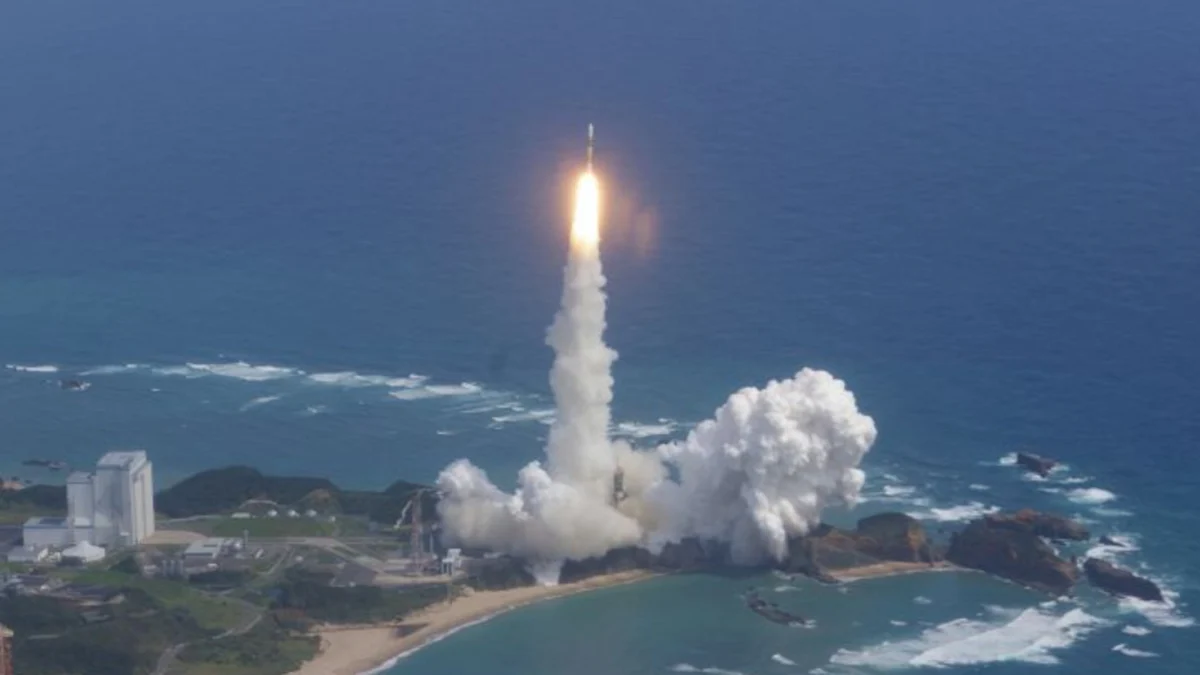
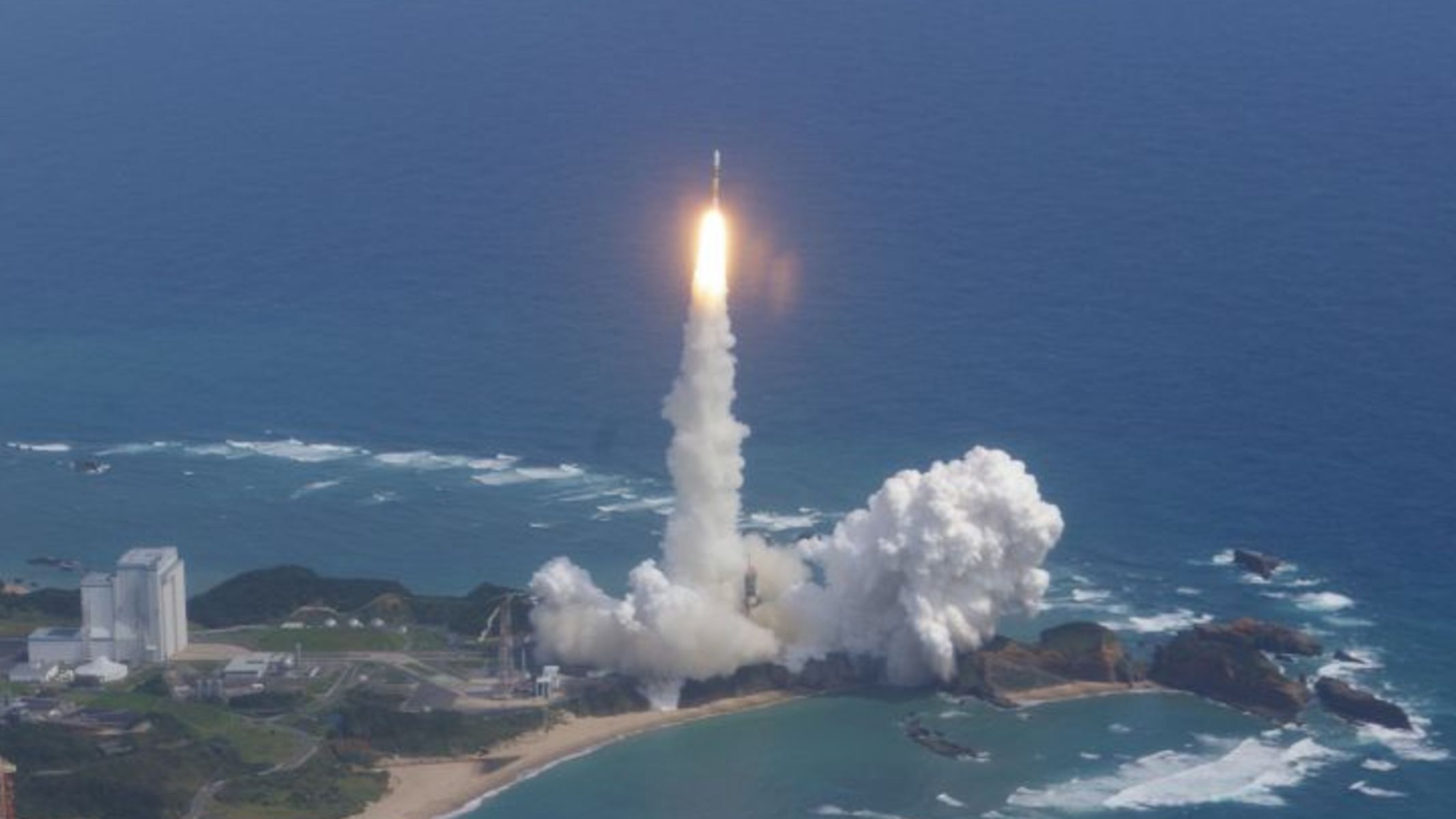
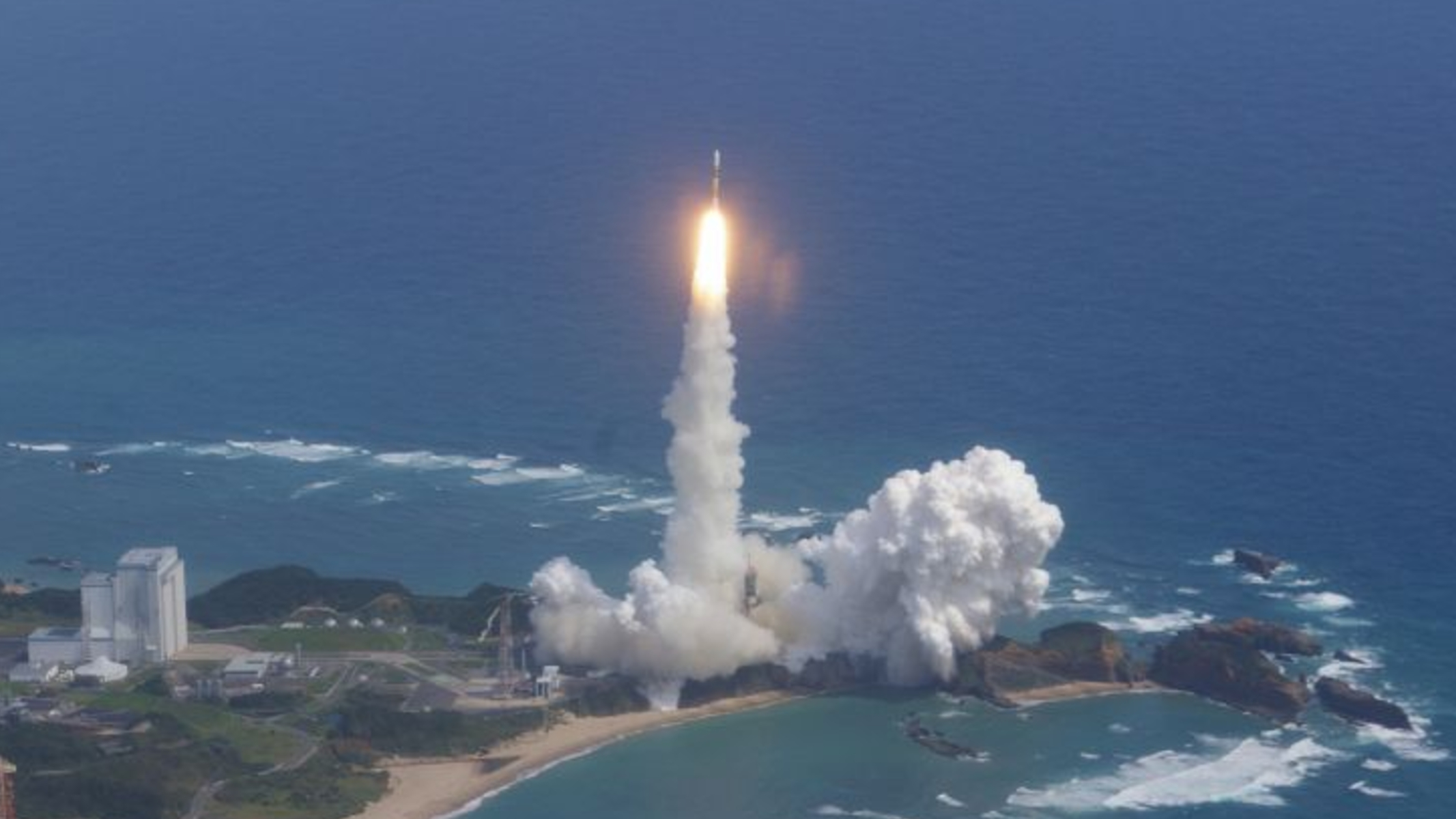
Seventeen years ago, on September 13, 2007, the Japan Aerospace Exploration Agency (JAXA) achieved a monumental milestone in deep-space exploration by successfully launching the Kaguya spacecraft toward the moon. Formally designated as SELENE (SElenological and ENgineering Explorer), the ambitious mission represented Japan’s second endeavor to reach Earth’s natural satellite, yet it marked the nation’s inaugural true lunar orbiter. Liftoff took place at the Tanegashima Space Center, propelled by a stalwart Japanese H-IIA rocket. While the event was logged on the evening of September 13 in Eastern Standard Time, local time at the launch facility marked 10:31 a.m. on September 14.
The spacecraft system was intricately designed, consisting of a primary orbiter accompanied by two small microsatellites—named Okina and Ouna—which were deployed sequentially after reaching lunar orbit. Together, this trio carried an arsenal of 14 distinct scientific instruments dedicated to mapping the rugged lunar surface, characterizing its mineral composition, and meticulously studying its gravitational field. Following a complex orbital insertion trajectory that included looping around the Earth twice before breaking free toward the moon, Kaguya arrived at its destination after a 20-day transit.
The Chronology of SELENE: From Concept to Impact
The origins of Japan’s lunar exploration program trace back several decades, with the precursor mission Hiten serving as a critical stepping stone. Launched in 1990, Hiten operated in a highly elliptical orbit that enabled ten lunar flybys and the deployment of a small sub-satellite named Hagoromo, before concluding with a planned impact on the lunar surface in 1993. While Hiten and Hagoromo primarily tested navigation and trajectory-control technologies, Kaguya translated those engineering concepts into a fully realized, comprehensive scientific observatory.
Shortly after its successful launch, a public naming campaign led JAXA to christen the spacecraft "Kaguya," drawing inspiration from the legendary moon princess Kaguya-hime featured in classic Japanese folklore. The accompanying sub-satellites, Okina and Ouna, fulfilled crucial roles in relaying communications and conducting radio science experiments, respectively.
After entering lunar orbit in late September 2007, the mission embarked on a nominal one-year scientific campaign. During this period, the spacecraft systematically gathered topographical, geological, and gravitational data. However, as the mission progressed into late 2008, technical hurdles emerged. Although JAXA mission planners initially hoped to extend operations through early 2009, a faulty reaction wheel compromised attitude control and forced an early curtailment of the extended phase. To prevent uncontrolled orbital decay and responsibly conclude the mission, flight controllers commanded Kaguya to execute a targeted, high-velocity crash landing on the lunar surface. The impact occurred successfully on February 12, 2009, near Gill Crater.
Unprecedented Scientific Discoveries and Public Engagement
While Kaguya’s suite of spectrometers, magnetometers, and plasma analyzers yielded invaluable geophysical data, the mission is perhaps most fondly remembered for capturing the public imagination through its advanced optical payload. Equipped with two high-definition cameras developed in collaboration with NHK (Japan Broadcasting Corporation), Kaguya delivered the first-ever high-definition video footage and still imagery of the moon.
Among these visual achievements were breathtaking sequences of "Earthrise"—the phenomenon of Earth appearing to rise over the lunar horizon—a sight that had not been documented in high fidelity since NASA’s historic Apollo program in the late 1960s and early 1970s. These broadcasts provided humanity with a renewed, poetic perspective of our home planet suspended against the stark black void of deep space, inspiring a new generation of students, scientists, and space enthusiasts worldwide.
Beyond its aesthetic contributions, Kaguya achieved significant scientific breakthroughs. According to comprehensive technical reviews conducted by NASA and JAXA, the mission:
- Generated a complete, highly accurate topographical map of the entire lunar globe.
- Detected subtle gravitational anomalies across both the near side and the remote far side of the moon, shedding light on its internal mass distribution.
- Captured pioneering optical observations of the permanently shadowed interior of Shackleton Crater near the lunar south pole, providing critical baseline data for future investigations into potential water ice deposits.
Broader Impact and Implications for Modern Lunar Exploration
The successful execution of the Kaguya mission cemented Japan’s status as a formidable contributor to international space exploration. By demonstrating advanced orbital insertion techniques, precise satellite deployment, and high-resolution remote sensing, JAXA validated technologies that paved the way for subsequent lunar missions globally.
In the broader context of 21st-century space exploration, the data collected by Kaguya remains foundational. As space agencies and private aerospace companies increasingly target the lunar south pole for future crewed outposts and resource extraction under frameworks like the Artemis program, topographical and gravitational datasets first refined by SELENE continue to inform landing site selection and orbital mechanics models.
Furthermore, Kaguya demonstrated the profound value of public engagement in large-scale scientific endeavors. By merging rigorous geophysical research with high-definition visual storytelling, JAXA bridged the gap between complex planetary science and the global public consciousness. Seventeen years after its fiery descent onto the lunar regolith, the legacy of Kaguya endures as a testament to international scientific collaboration, engineering excellence, and the enduring human curiosity that drives us to explore the cosmos.