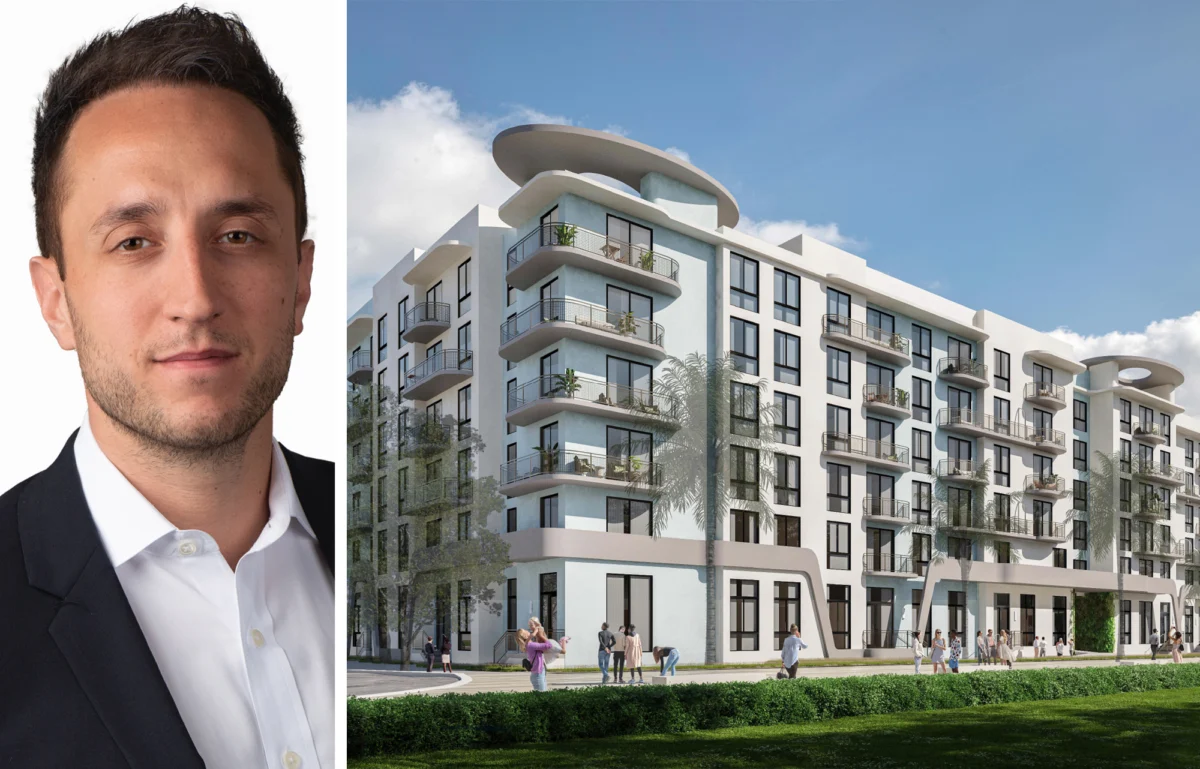
Asia Capital Real Estate, a prominent global real estate private equity firm, has successfully finalized a $123 million financing package to spearhead the development of its second major multifamily project in Miami’s historic Upper Eastside neighborhood. The financing, structured as floating-rate debt, was provided by Canyon Partners, a leading global alternative asset management firm. This significant capital injection marks a pivotal moment for the development known as Adela II at MiMo Bay, located at 685 Northeast 64th Street. The project sits strategically just south of Legion Park and a short distance from the bustling Biscayne Boulevard corridor, nestled within the MiMo Biscayne Boulevard Historic District.
The securing of this nine-figure loan underscores the continued appetite for high-density residential development in South Florida, despite a broader national landscape characterized by tightening credit and fluctuating interest rates. For ACRE, the project represents a doubling down on a neighborhood that has seen a dramatic transformation over the last decade, evolving from a neglected stretch of mid-century motels into a vibrant cultural and residential hub.
Project Specifications and Design Vision
Adela II at MiMo Bay is designed to be a six-story residential complex that complements its predecessor, the original Adela at MiMo Bay, which was completed by ACRE in 2020. Earlier this year, Miami city officials granted final approvals for the 337-unit development. The project is designed by Corwil Architects, a firm renowned for its work on urban infill projects and high-end residential structures throughout South Florida.
The architectural vision for Adela II seeks to respect the "Miami Modern" (MiMo) aesthetic that defines the surrounding district. This style, which flourished between the post-war period of 1945 and the late 1960s, is characterized by glamour, playfulness, and geometric experimentation. While the new development will feature contemporary amenities and construction techniques, its scale and integration into the streetscape are intended to harmonize with the historic character of the Upper Eastside.
The development will occupy a 2.6-acre site that ACRE acquired for $19 million. In addition to the 337 residential units, the project includes a substantial parking component with 510 spaces. This high parking-to-unit ratio reflects both the requirements of the Miami 21 zoning code and the practical realities of a city where car ownership remains high, even in increasingly walkable neighborhoods like the Upper Eastside.
Addressing the Housing Affordability Crisis
A critical component of the Adela II development is its commitment to workforce housing. As Miami continues to grapple with one of the most severe housing affordability crises in the United States, developers are increasingly required or incentivized to include units for middle-income earners. At Adela II, 20 apartments will be specifically reserved for individuals and families earning between 80 percent and 120 percent of the Area Median Income (AMI).
While these 20 units represent a fraction of the total 337 units, their inclusion was a vital part of the negotiation process with the City of Miami. The 80-120 percent AMI bracket typically targets "essential workers," such as teachers, nurses, and first responders, who are frequently priced out of the urban core where they work. By integrating these units into a market-rate luxury development, ACRE is participating in a broader municipal strategy to maintain socioeconomic diversity within the city’s rapidly gentrifying neighborhoods.
Community Benefits and Public Infrastructure
The development agreement for Adela II goes beyond the physical boundaries of the apartment complex. As part of its deal with the City of Miami, ACRE has committed to several public benefit initiatives. Most notably, the developer will construct public parking facilities, which are expected to alleviate some of the congestion in the MiMo District, a neighborhood where parking has become increasingly scarce as new restaurants and boutiques have opened.
Furthermore, ACRE has pledged a $1 million donation to the office of Miami City Commission Commissioner Christine King. These funds are designated for use within District 5, which encompasses the project site. Such "public benefit" payments are a common feature of large-scale developments in Miami, often used to fund park improvements, infrastructure repairs, or social programs within the specific district hosting the new construction. This contribution is seen as a way for developers to mitigate the impact of increased density while providing tangible resources to the local community.
A Strategic Timeline of Expansion
The development of Adela II is the latest chapter in ACRE’s long-term strategy for the Upper Eastside. The timeline of this expansion reflects the broader growth trajectory of Miami’s real estate market over the past five years:
- 2018-2019: ACRE identifies the MiMo District as a high-growth corridor and begins construction on the first phase, Adela at MiMo Bay.
- 2020: The original Adela, a five-story, 236-unit building, is completed. Despite the global pandemic, the project sees strong leasing activity as residents seek out the neighborhood’s unique blend of historic charm and modern convenience.
- 2023: Reflecting the increased value of the stabilized asset, Nuveen Real Estate provides $72 million to refinance the first Adela building, allowing ACRE to pull equity for future projects.
- Early 2024: The City of Miami approves the plans for Adela II, and ACRE finalizes the purchase of the additional 2.6-acre site for $19 million.
- Late 2024: Canyon Partners closes on the $123 million construction loan, clearing the way for groundbreaking.
The transition from the 236-unit Phase I to the 337-unit Phase II represents a nearly 43 percent increase in unit count, signaling ACRE’s confidence that demand in the Upper Eastside remains far from its peak.
The Role of Canyon Partners and the Financing Landscape
The involvement of Canyon Partners as the lender for this project is significant. Canyon is known for providing sophisticated capital solutions for complex real estate transactions. The choice of floating-rate debt suggests a calculated bet on the future of interest rates. While floating-rate loans carry more risk if rates rise, they also offer the developer the flexibility to refinance or pay down the debt more easily if interest rates stabilize or decline during the construction and lease-up period.
In the current economic environment, securing over $100 million for a single project is no small feat. Traditional banks have become more conservative in their commercial real estate lending portfolios, particularly for ground-up construction. Private lenders and alternative asset managers like Canyon have stepped into the void, often seeking out experienced developers with proven track records in high-growth markets like Miami.
Market Context: The Upper Eastside and MiMo District
The Adela II project is situated in one of Miami’s most architecturally significant and culturally rich areas. The MiMo Biscayne Boulevard Historic District is a 27-block stretch known for its concentration of mid-century modern architecture. For decades, the area was overlooked, but a concerted effort by preservationists and the City of Miami led to its designation as a historic district in 2006.
Since then, the neighborhood has become a magnet for "creative class" professionals. Its proximity to the Miami Design District, Wynwood, and the emerging Magic City Innovation District in Little Haiti makes it a central node for those who want to be near the city’s cultural heart without the congestion of Downtown or Brickell.
The location of Adela II, just south of Legion Park, is particularly advantageous. Legion Park is home to one of Miami’s most popular weekly farmers’ markets and provides vital green space and Biscayne Bay access. As renters increasingly prioritize outdoor amenities and neighborhood character, developments that can offer proximity to such assets command a premium.
Implications for Miami’s Real Estate Future
The move to build Adela II suggests several key trends in the South Florida market:
- Sustained In-Migration: Despite headlines about rising costs of living, developers like ACRE are betting that the influx of high-earning professionals from the Northeast and West Coast will continue. These residents are the primary target for the luxury, amenity-rich lifestyle offered by the Adela brand.
- The Rise of the "Secondary" Core: While Brickell and Downtown Miami remain the primary hubs for high-rise living, neighborhoods like the Upper Eastside are emerging as "secondary cores"—areas that offer high density and urban amenities but with a distinct, often more residential or historic, identity.
- Institutional Confidence: The involvement of major players like ACRE, Canyon Partners, and Nuveen Real Estate indicates that institutional capital still views Miami as a "safe haven" for real estate investment compared to other major U.S. metros that have seen slower recoveries post-pandemic.
- Regulatory Navigation: The successful approval of Adela II, with its mix of workforce housing and public benefit contributions, serves as a blueprint for how developers can navigate Miami’s complex zoning and political landscape.
As construction begins on Adela II at MiMo Bay, the project will be closely watched by industry analysts as a bellwether for the multifamily sector. If ACRE can replicate the success of the first Adela phase, it will further solidify the Upper Eastside’s status as a premier residential destination and provide much-needed housing inventory—both luxury and workforce—to a city that continues to grow at a rapid pace.
The development of Adela II is more than just an expansion of a residential brand; it is a testament to the enduring appeal of Miami’s historic neighborhoods and the sophisticated financial engineering required to bring large-scale urban visions to life in a volatile economic era. With $123 million in new capital, the transformation of the 64th Street corridor is set to enter its most ambitious phase yet.