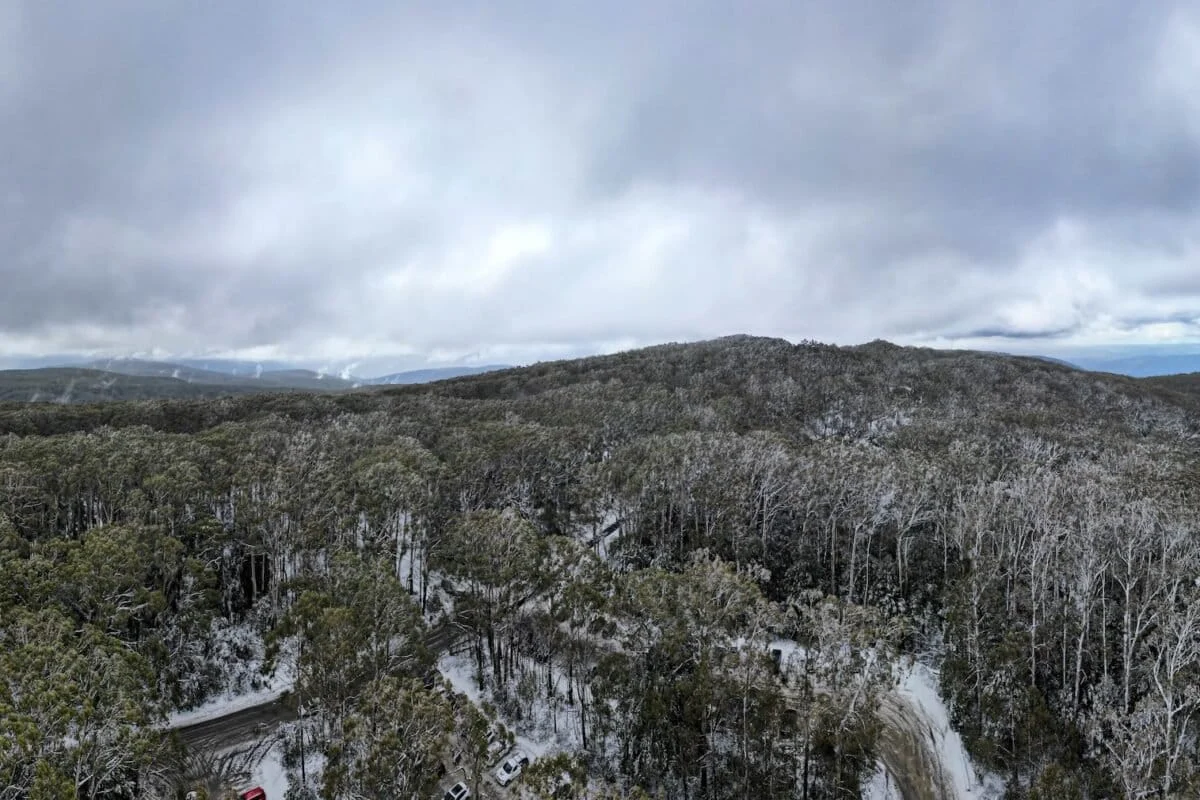
The Australian federal government has officially designated the alpine ash forests of mainland Australia as an endangered ecological community, a move that underscores the growing vulnerability of the nation’s high-altitude ecosystems to climate-driven disasters. This landmark decision, announced by the Department of Climate Change, Energy, the Environment and Water (DCCEEW), follows years of advocacy from environmental scientists who warned that the iconic eucalypt forests are facing a "collapse" due to the increasing frequency and intensity of bushfires. While the listing provides a new layer of legal protection under the Environment Protection and Biodiversity Conservation (EPBC) Act, it has sparked a significant rift between conservation groups and the timber industry regarding the necessity and scientific basis of the declaration.
The Ecological Profile of the Alpine Ash
The alpine ash (Eucalyptus delegatensis), also known as woollybutt in some regions, is one of Australia’s most majestic and ecologically vital tree species. These forests are primarily located across the high-country slopes of the Great Dividing Range, spanning Victoria, New South Wales, and the Australian Capital Territory. Typically found at elevations between 900 and 1,500 meters (3,000 to 5,000 feet), these forests thrive in cool, moist climates where they can reach heights of up to 90 meters, making them some of the tallest flowering plants on Earth.
Beyond their physical stature, alpine ash forests serve as a cornerstone for mountain biodiversity. They provide essential habitat for a variety of specialized fauna, including the superb lyrebird and the spotted-tailed quoll. Most notably, the hollows found in old-growth alpine ash trees are critical nesting sites for the Leadbeater’s possum (Gymnobelideus leadbeateri), a critically endangered marsupial that serves as a faunal emblem for the state of Victoria.
For tens of thousands of years, these forests have also held deep cultural and spiritual significance for First Nations peoples. As "Cool Country" landscapes, they are integrated into the traditional knowledge systems and land management practices of various Indigenous groups who have historically navigated these high-altitude terrains.
The Science of Decline: The "Interval Squeeze"
The primary driver behind the endangered listing is not necessarily the total loss of forested area, but rather a catastrophic decline in the "condition and function" of the ecosystem. Unlike many other eucalypt species that can resprout from dormant buds under their bark after a fire, the alpine ash is an "obligate seeder." This means the adult trees are killed by high-intensity fire, and the forest must rely entirely on the germination of seeds stored in the canopy to regenerate.
A critical biological bottleneck exists: an alpine ash tree typically requires approximately 20 years to reach reproductive maturity and produce a viable seed crop. Historically, bushfires in these high-altitude regions occurred once every 50 to 100 years, allowing ample time for forests to mature and replenish their seed banks. However, climate change has shortened this fire cycle dramatically.
When a second fire occurs before the regrowth has reached maturity—a phenomenon scientists call the "interval squeeze"—the forest cannot regenerate naturally. Without a seed bank, the ecosystem collapses, often being replaced by shrublands or different, less biodiverse vegetation types. According to the DCCEEW, more than half of the current alpine ash ecosystem is now "structurally immature," meaning it is just one fire away from permanent loss.
A Chronology of Escalating Threats
The path to this endangered listing has been paved by a series of unprecedented fire seasons over the last two decades, which have fundamentally altered the landscape of the Australian Alps.
- 2002-2003: Massive fires swept through the Victorian Alps and the ACT, burning over one million hectares and killing vast swathes of old-growth alpine ash.
- 2006-2007 and 2009: Successive fires, including the Black Saturday bushfires, impacted areas that were still recovering from the 2003 events, marking the beginning of the "re-burn" crisis.
- 2019-2020: The "Black Summer" bushfires represented a tipping point. During this season, approximately 80,000 hectares (nearly 200,000 acres) of alpine ash forest were severely impacted. In many locations, this was the third or fourth fire in less than 20 years.
- 2023-2024: Following a rigorous assessment by the national Threatened Species Scientific Committee (TSSC), the federal government opened the proposal for public consultation, eventually leading to the formal listing in early 2025.
The DCCEEW spokesperson emphasized that the decision was based on a "thorough assessment" that included input from forest ecologists, fire scientists, and the general public. The committee concluded that the cumulative impact of these fires, compounded by rising global temperatures, posed an existential threat to the community’s survival.

Divergent Perspectives: Industry vs. Conservation
The listing has been met with polar opposite reactions from stakeholders. Conservation organizations, such as the Victorian National Parks Association (VNPA), hailed the move as a vital step in acknowledging the climate reality facing Australia’s wilderness. Scientists writing in The Conversation noted that the listing serves as a "clear warning" that even widespread and seemingly robust ecosystems are no longer safe from the reach of climate change.
Conversely, the timber and forestry sectors have voiced strong opposition. The Australian Forest Products Association (AFPA) argued that the decision lacked sufficient evidence, pointing out that the geographic extent of the alpine ash forest has only decreased by roughly 5% since European settlement in 1750. They contend that because the "footprint" of the forest remains largely intact, the "endangered" label is misleading.
Forestry Australia, a nonprofit representing forest managers, expressed concern over the precedent being set. They noted that listing such an "extensive and predominantly intact ecosystem," much of which is already situated on public land and within national parks, is an unprecedented regulatory step. Industry advocates fear the listing will create unnecessary bureaucratic hurdles for sustainable forest management and fire mitigation efforts, such as mechanical fuel reduction or salvage harvesting.
The DCCEEW has countered these arguments by clarifying that the "endangered" status is a reflection of the ecosystem’s internal health. While the trees may still stand in some areas, the loss of age-class diversity and the inability to self-regenerate mean the ecosystem is no longer functioning as it should.
Regulatory Implications and the "Net Gain" Requirement
The formal listing of alpine ash forests as an endangered ecological community carries significant legal weight under the EPBC Act. Moving forward, any proposed activity that may have a "significant impact" on these forests will be subject to a much more rigorous federal assessment process.
Proponents of development, infrastructure, or resource extraction projects in these areas will now be required to:
- Avoid: Demonstrate that every effort has been made to avoid impacting the forest.
- Mitigate: Implement strict measures to reduce the footprint of any unavoidable damage.
- Offset/Net Gain: If damage is unavoidable, proponents must demonstrate a "net gain" for the environment. This means they must provide environmental benefits—such as restoring degraded land or protecting other high-value stands—that outweigh the harm caused by their project.
While the government has opted not to implement a formal "Recovery Plan" at this stage, it has released a comprehensive "Conservation Advice" document. This document provides a roadmap for land managers, emphasizing the protection of remaining old-growth stands and the implementation of active interventions, such as hand-seeding and aerial reseeding, in areas where natural regeneration has failed.
Broader Impact and the Future of High-Country Management
The endangered listing of the alpine ash is a watershed moment in Australian environmental policy. It signals a shift from managing individual "threatened species" to protecting entire "ecological communities" that are at risk of systemic collapse.
The implications for fire management are particularly profound. To save the alpine ash, fire authorities may need to prioritize these forests for aerial fire suppression during future bushfires—a strategy that was traditionally reserved for protecting human life and property. Furthermore, the listing may accelerate investments in "forest silviculture," where seeds are collected during good years and stored in "seed banks" to be manually dispersed via helicopters after future fires.
As climate change continues to drive higher temperatures and more frequent droughts in the Australian high country, the alpine ash stands as a sentinel species. Its struggle for survival highlights the limitations of traditional conservation; simply setting land aside in a national park is no longer enough when the climate itself is the primary threat. The endangered listing is an admission that without active, well-funded intervention and a global reduction in carbon emissions, one of Australia’s most iconic landscapes may eventually vanish, leaving behind a vastly different and diminished mountain wilderness.