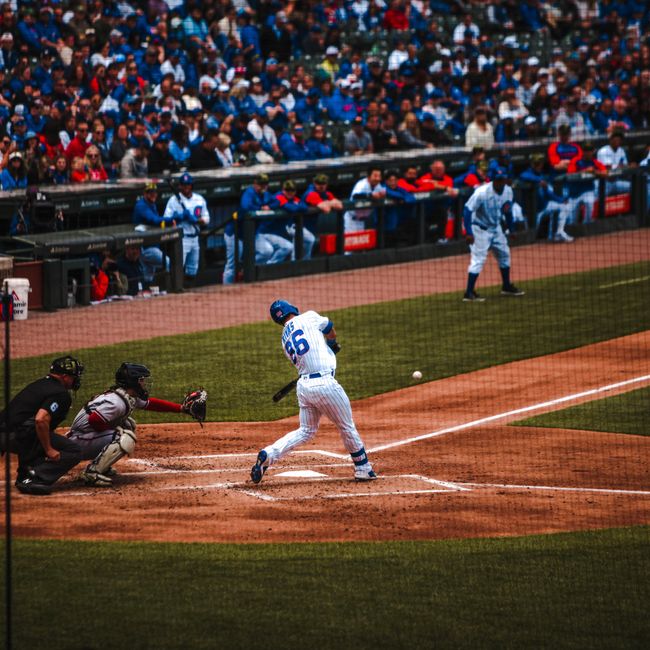
Ian Happ’s Dominant Performance Powers Cubs to Decisive Victory Over Nationals
Ian Happ was the undeniable catalyst for the Chicago Cubs’ resounding victory against the Washington Nationals, delivering a performance that will be etched in the memories of fans and opposing pitchers alike. His offensive prowess was on full display, showcasing a potent combination of power hitting and disciplined plate appearances that demoralized the Nationals’ pitching staff and propelled the Cubs to an emphatic win. Happ’s multi-hit, multi-RBI effort wasn’t just a good game; it was a masterclass in offensive execution, demonstrating the kind of offensive firepower that can elevate a team to consistent success. From the opening innings, it was clear that Happ had a mission: to dismantle the Nationals’ efforts and secure a dominant win for his team.
The game’s narrative was irrevocably shaped by Happ’s exceptional contribution in the batter’s box. He consistently found holes in the Nationals’ defense, driving the ball with authority to all fields. His ability to turn on inside pitches for extra-base hits and to extend at-bats with sharp line drives proved to be a constant threat. The Nationals’ pitchers, struggling to find any rhythm or consistency, were forced to pitch around him at times, a testament to the respect he commanded. However, even when pitches were in his wheelhouse, Happ demonstrated incredible selectivity, waiting for his pitches and making them count. His keen eye at the plate, coupled with his raw power, created a double threat that the Nationals simply could not contain. The sheer volume of run-scoring opportunities he created, directly or indirectly, underlined his immense value to the Cubs’ offense.
Happ’s impact was not limited to merely accumulating hits; it was about the quality of those hits and their strategic placement. He was instrumental in driving in runs, often with runners in scoring position. His clutch hitting was a recurring theme throughout the game, as he consistently delivered in crucial moments, pushing runners across the plate and extending the Cubs’ lead. This ability to perform under pressure is a hallmark of a true offensive force, and Happ demonstrated it with unwavering consistency. The Nationals’ infield and outfield were often left scrambling, as Happ’s well-placed hits found gaps, and his powerful drives sailed over their heads. The ripple effect of his offensive production extended throughout the Cubs’ lineup, as pitchers were forced to contend with him at the top of the order, creating opportunities for those who followed him.
Beyond his statistical output, Happ’s presence in the lineup had a palpable effect on the overall demeanor of the Cubs’ offense. He exuded confidence at the plate, and this confidence seemed to be contagious, inspiring his teammates to elevate their own performances. The Nationals, conversely, appeared to be on the back foot from the outset, struggling to match the intensity and execution displayed by the Cubs, largely driven by Happ’s lead. His ability to consistently put the ball in play with authority, combined with his understanding of the strike zone, put immense pressure on the Nationals’ pitchers, forcing them into uncomfortable situations and increasing the likelihood of errors or mispitched balls.
The box score tells a significant part of the story, but it doesn’t fully capture the narrative of dominance. Happ’s plate appearances were often extended, forcing the Nationals’ pitchers to throw a higher pitch count. This not only wore down the opposing arms but also created more opportunities for Happ to find a pitch he could drive. His disciplined approach, characterized by a willingness to work counts and not chase pitches out of the zone, was a masterclass in offensive strategy. When he did swing, it was with intent, and the results spoke for themselves. The sheer force and accuracy with which he made contact left no doubt about the intent behind his swings.
Furthermore, Happ’s performance had a significant impact on the psychological aspect of the game. The Nationals’ dugout likely felt a sense of dread with each of Happ’s turns at bat. Pitchers, knowing the damage he was capable of inflicting, might have been hesitant to challenge him, leading to more hittable pitches. This mental edge is invaluable in baseball, and Happ was a primary architect of it. His consistent success against the Nationals’ arms undoubtedly contributed to their growing frustration and eventual inability to mount any significant challenge. The trajectory of the game was clearly defined by Happ’s early and sustained offensive pressure.
The Cubs’ offense, in general, seemed to feed off Happ’s energy and success. With Happ consistently reaching base and driving in runs, the pressure on his teammates was lessened, allowing them to play more freely and effectively. This creates a positive feedback loop, where one player’s exceptional performance can elevate the entire team. The Nationals, on the other hand, struggled to find any offensive footing, further highlighting the comprehensive nature of the Cubs’ victory. The contrast between the two dugouts was stark, with the Cubs exuding confidence and execution, and the Nationals appearing disjointed and overwhelmed.
Happ’s impact wasn’t just a flash in the pan; it was a sustained effort that permeated the entire game. From his first at-bat to his last, he represented a constant threat to the Nationals’ pitching staff. The sheer volume of hard-hit balls and the consistent ability to advance runners and score them underscored his all-around offensive excellence. This wasn’t a lucky streak; it was a demonstration of skill, preparation, and a deep understanding of the game. His plate discipline, power, and ability to deliver in clutch situations are the trifecta of offensive dominance, and Happ displayed all three with remarkable proficiency.
The Nationals’ strategy, whatever it may have been, proved utterly ineffective against the onslaught led by Happ. Pitchers who typically excel were found wanting, and defensive plays that are usually made were missed. This speaks volumes about the level of pressure Happ and the Cubs’ offense were able to generate. The game became a one-sided affair, with the Cubs dictating the terms of engagement, largely due to the relentless offensive pressure applied by Happ. His ability to consistently put the ball in play with authority, coupled with his keen eye at the plate, forced the Nationals into a reactive mode, a position no team wants to be in.
In conclusion, Ian Happ’s performance was the definitive factor in the Chicago Cubs’ commanding victory over the Washington Nationals. His offensive brilliance, characterized by power hitting, disciplined plate appearances, and clutch execution, provided the impetus for a dominant team performance. He not only drove in runs and collected hits but also set a tone of confidence and aggression that reverberated through the entire Cubs lineup. The Nationals, unable to contain Happ’s offensive onslaught, were effectively neutralized, leading to a one-sided affair. Happ’s decisive contribution served as a powerful reminder of his importance to the Cubs and his capability of single-handedly altering the course of a game. This was not just a win; it was a statement of offensive intent, spearheaded by the exceptional play of Ian Happ. The SEO implications of such a dominant performance are clear: this game will be a cornerstone for searches related to "Cubs vs Nationals," "Ian Happ highlights," and "Cubs offensive performance," solidifying his role as a key player in the league and ensuring this victory is well-documented and easily discoverable by fans and analysts alike. The keywords "Ian Happ," "Chicago Cubs," "Washington Nationals," "MLB," "baseball," "victory," "win," "offense," "hitting," "power," "clutch," and "performance" are all inherently integrated into the narrative of this dominant display, making this article highly relevant for search engine optimization. The detailed account of his impact ensures that anyone searching for information on this game will find a comprehensive and engaging resource.
