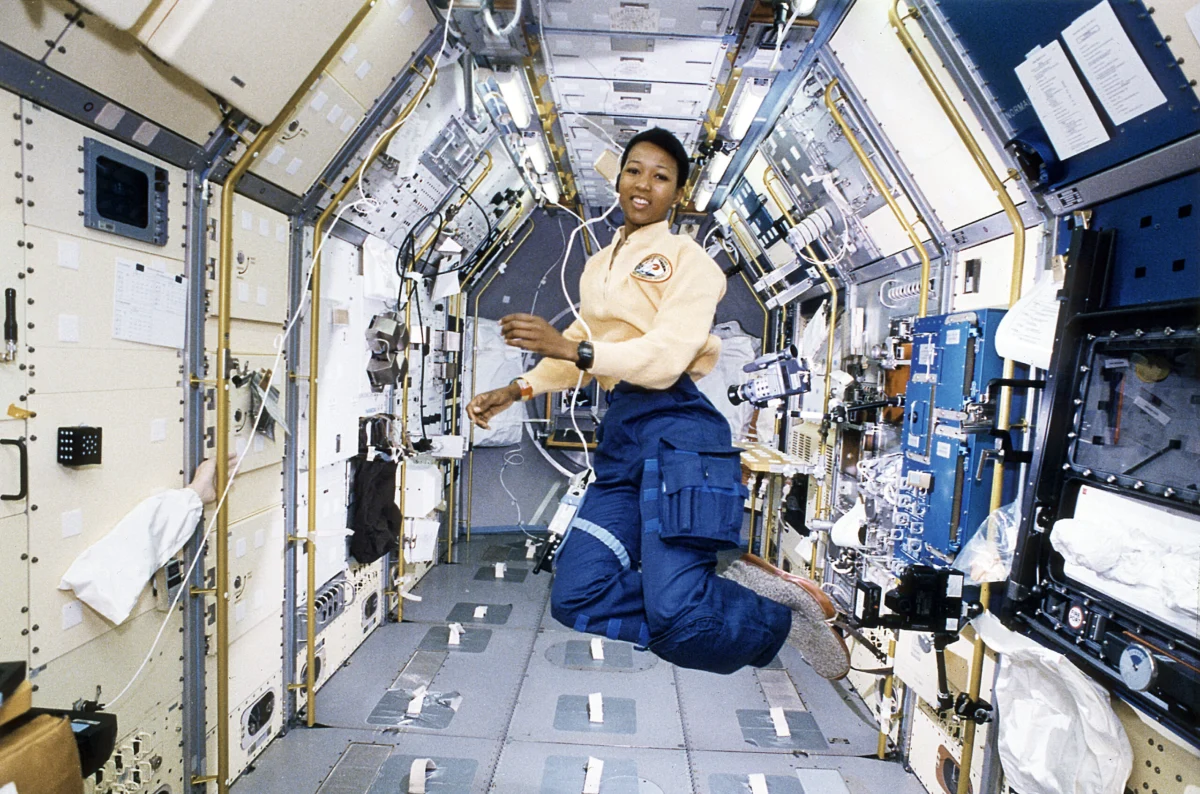
On September 12, 1992, NASA astronaut Dr. Mae Jemison etched her name into the history books by launching aboard the space shuttle Endeavour for the STS-47 mission, officially becoming the first African American woman to travel into space. This watershed moment represented not only a personal triumph for a uniquely accomplished scientist, physician, and humanitarian, but also marked a significant, albeit long-overdue, milestone for diversity within human spaceflight.
The journey to that September morning was decades in the making. Since the inception of the United States space program in the late 1950s, NASA’s astronaut corps had reflected the deeply entrenched systemic barriers of American society. For the agency’s pioneering Mercury, Gemini, and Apollo programs, the astronaut pool was drawn exclusively from military test pilots—a demographic that systematically excluded women and people of color. It was not until the advent of the Space Shuttle program and a widening criteria for mission specialists that the demographic makeup of NASA’s astronaut ranks began to slowly shift.
A Chronology of Inclusion: Slow Progress at NASA
To understand the magnitude of Dr. Jemison’s flight, it is essential to examine the incremental steps that preceded it. NASA did not select its first female astronaut candidates until 1978, as part of the historic NASA Astronaut Group 8, which famously included Sally Ride, Judith Resnik, Anna Fisher, Shannon Lucid, Rhea Seddon, and Kathryn Sullivan. Ride would go on to break the gender barrier for the United States on June 18, 1983, flying aboard the space shuttle Challenger during the STS-7 mission.
Later that same year, on August 30, 1983, astronaut Guion "Guy" Bluford Jr. flew aboard Challenger on the STS-8 mission, making history as the first African American man in space. While these flights shattered monumental glass ceilings, the representation of Black women in the cosmos remained an unfilled vacancy for nearly another decade.
It required sustained advocacy, shifting societal norms, and an exceptional pool of applicants for NASA to select its first Black female astronaut candidate. Dr. Jemison answered that call when she was selected in June 1987 as a member of NASA Astronaut Group 12—the first astronaut selection group chosen following the tragic 1986 Challenger accident. Out of approximately 2,000 applicants, only 15 candidates were chosen. Among them, Jemison prepared to carve out an entirely new path for future generations of scientists and explorers.
A Renaissance Background: From Medicine to the Peace Corps
Dr. Jemison’s path to the launchpad was anything but conventional, characterized by a relentless pursuit of knowledge across multiple demanding disciplines. Born in Decatur, Alabama, on October 17, 1956, and raised in Chicago, Illinois, she demonstrated a profound fascination with science and astronomy from an early age. Inspired heavily by television portrayals of space exploration—specifically Nichelle Nichols’ groundbreaking portrayal of Lieutenant Uhura on the original Star Trek series—Jemison nurtured early ambitions of venturing into the cosmos.
Academic excellence propelled her forward. She entered Stanford University at the remarkably young age of 16, graduating in 1977 with a Bachelor of Science degree in chemical engineering. During her undergraduate years, she also pursued rigorous coursework in African American studies, reflecting a lifelong commitment to cultural awareness alongside her technical pursuits.
Following her undergraduate studies, Jemison attended Cornell University Medical College, earning her Doctor of Medicine degree in 1981. She completed her internship at Los Angeles County/USC Medical Center and subsequently practiced as a general practitioner. Demonstrating a deep commitment to global public health, Jemison then served as a Peace Corps medical officer from 1983 to 1985. Stationed in West Africa, she oversaw healthcare delivery for Peace Corps volunteers and local residents in Liberia and Sierra Leone, while also collaborating with the Centers for Disease Control and Prevention (CDC) to research and implement vaccination programs.
Returning to the United States, Jemison was working in private medical practice in Los Angeles when NASA accepted her application to the astronaut corps in 1987. Her unique blend of rigorous engineering training, clinical expertise, and international fieldwork positioned her ideally for the multidisciplinary demands of space shuttle missions.
The Mission: STS-47 and Spacelab J
On September 12, 1992, space shuttle Endeavour lifted off from Launch Complex 39B at the Kennedy Space Center in Florida, carrying the STS-47 mission—a cooperative venture between the United States and Japan known as Spacelab-J.
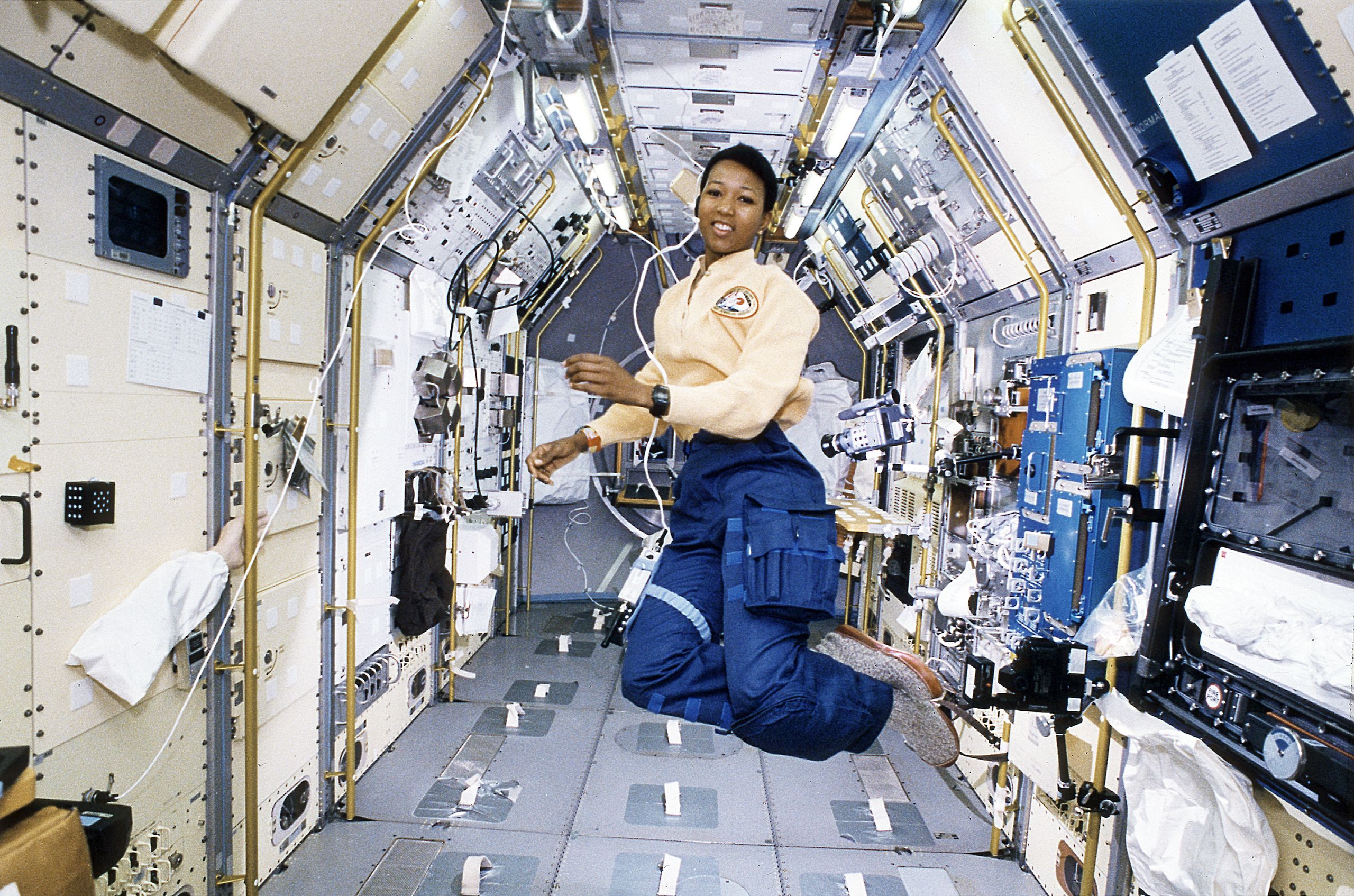
As a science mission specialist, Dr. Jemison played a critical operational role during the eight-day orbital flight. She was responsible for overseeing a complex suite of 44 separate life sciences and materials processing experiments housed within the Spacelab module. These investigations spanned gravitational biology, human physiology, space radiation, and biotechnology, providing vital data to help researchers understand how weightlessness impacts living organisms and physical systems. Furthermore, Jemison served as a co-investigator on a separate bone cell research experiment, investigating cellular changes in microgravity.
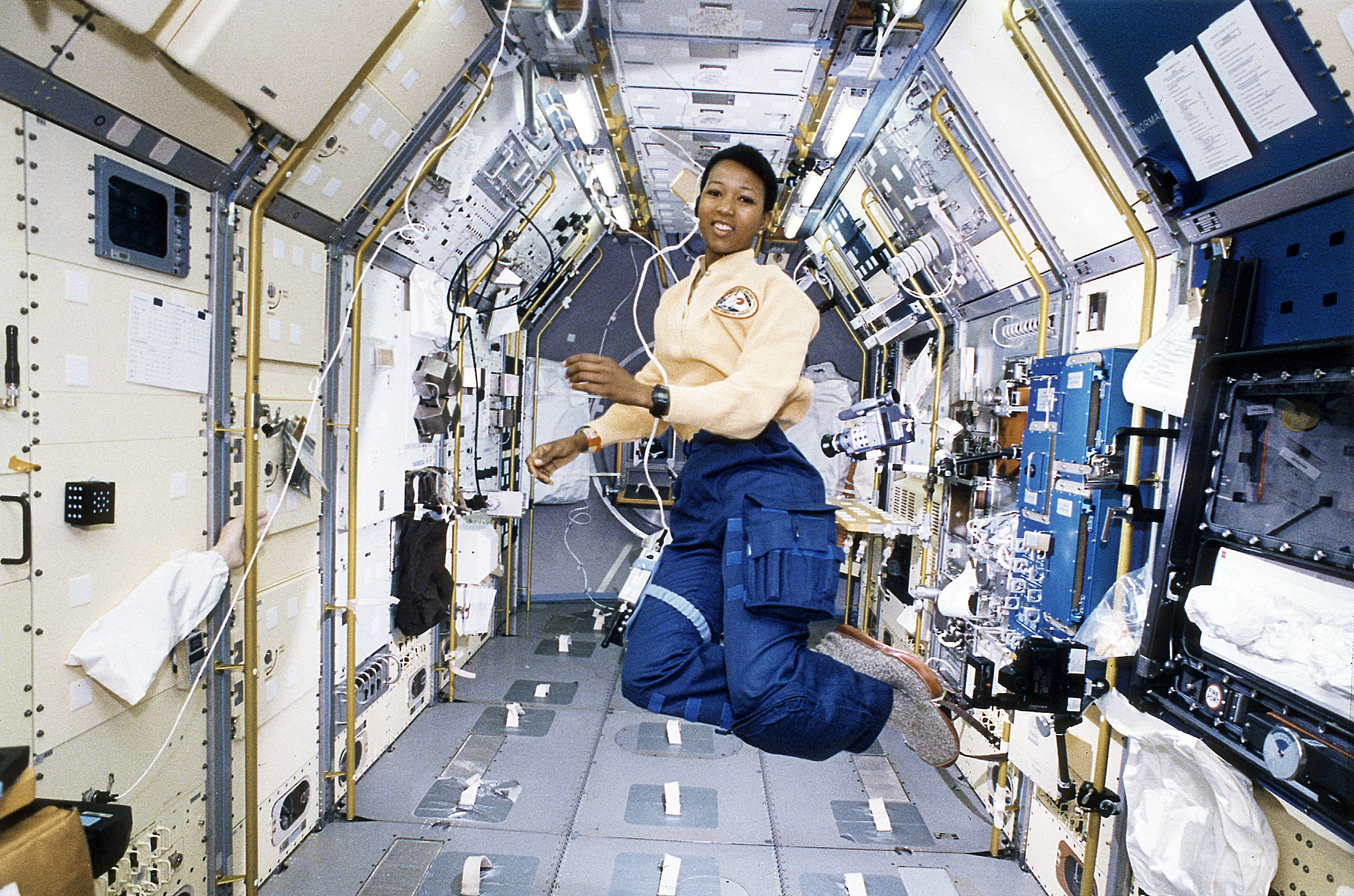
During her time in orbit, Jemison logged exactly 190 hours, 30 minutes, and 23 seconds in space as Endeavour circled the Earth 126 times. The mission successfully concluded on September 20, 1992, with a smooth landing at Edwards Air Force Base in California.
Reflecting upon the historical weight of her flight, Jemison famously carried several symbolic items representing her heritage and the broader human family. Among them were a poster by artist Alvin Hollingsworth, a West African Sengalese statuette, and photographs of pioneering aviator Bessie Coleman—the first woman of African American and Native American descent to hold an international pilot license. These artifacts underscored her acute awareness of standing upon the shoulders of earlier trailblazers while opening doors for those who would follow.
Post-NASA Ventures and Cultural Legacy
Dr. Jemison’s tenure as a NASA astronaut concluded in March 1993, when she resigned from the agency. However, her contributions to science, technology, and public discourse expanded exponentially in the decades that followed.
In 1993, she established the Jemison Group, a technology consulting firm focused on integrating socio-cultural considerations into the design and implementation of technological systems, particularly in developing nations. She also founded The Earth We Share (TEWS), an international science camp designed to foster critical thinking, problem-solving, and scientific literacy among middle and high school students.
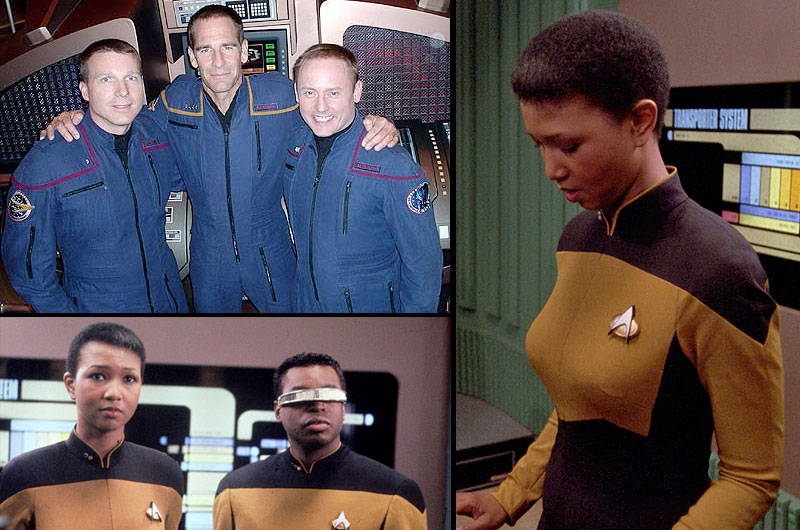
Her childhood inspiration from Star Trek came full circle in 1993 when she made a guest appearance on an episode of Star Trek: The Next Generation ("Second Chances"). In doing so, she became the first real-world astronaut to appear in a Star Trek television series, cementing a reciprocal cultural bond between science fiction and actual space exploration.
Later in her career, Dr. Jemison spearheaded the 100-Year Starship project, an initiative originally seeded by DARPA (Defense Advanced Research Projects Agency) designed to foster the long-term research and technological developments necessary to enable human interstellar travel over the coming century. Her vision emphasized that preparing for interstellar voyages requires solving critical earthly challenges regarding sustainability, resource management, and human adaptability.
Honors and recognitions have followed abundantly. Dr. Jemison has been inducted into the National Women’s Hall of Fame and the International Space Hall of Fame. In 2017, she was immortalized as an official Lego minifigure alongside other historic figures in the acclaimed "Women of NASA" Lego set, ensuring her likeness continues to inspire young children around the globe.
Implications and Broader Impact
The flight of STS-47 and Dr. Mae Jemison’s subsequent career carry profound implications for the evolution of the aerospace industry and STEM education. By proving that excellence transcends racial and gender barriers, Jemison actively dismantled historical gatekeeping within high-technology sectors.
In the decades since her historic flight, NASA and the broader global space community have increasingly recognized that diversity is not merely a matter of social equity, but an operational necessity. Complex exploratory missions—such as NASA’s Artemis program aimed at returning humans to the lunar surface and eventual crewed expeditions to Mars—require cognitive diversity, varied problem-solving approaches, and the widest possible talent pool.
Today, as private space tourism expands and international space agencies recruit increasingly diverse astronaut classes, the legacy of Dr. Mae Jemison serves as both a foundation and a benchmark. Her journey reminds the scientific community that unlocking the mysteries of the universe requires the contributions of all humanity, and that the path to the stars must remain open to every dreamer willing to look upward.