The landscape of modern television is undergoing a period of profound restructuring, defined by sweeping corporate consolidations, shifting streaming paradigms, and the looming integration of artificial intelligence into daily production pipelines. Amid this climate of systemic change, seasoned performers who weathered long-running network mainstays find themselves uniquely positioned to observe the industry’s trajectory. Among them is Bridget Moynahan, whose tenure as a co-lead on the CBS police procedural Blue Bloods provided a rare anchor of stability across fourteen seasons before concluding its run in 2024.
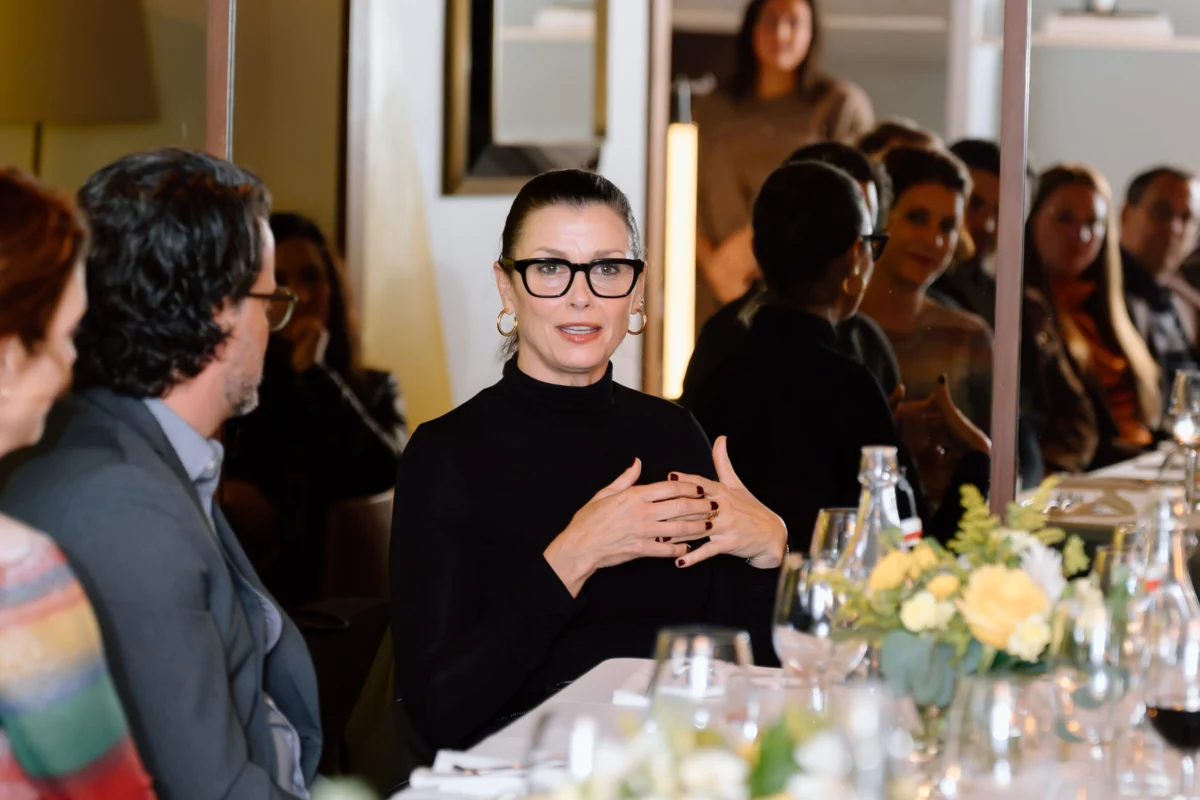
Reflecting on these seismic industry shifts, Moynahan shared her perspectives during the most recent installment of the Deadline Dinners series. Held on October 21 at the American Beech Hotel in Greenport, New York, the intimate gathering served as a focal point for industry insiders to debate the future of media storytelling. Moderated by Deadline New York Business Editor Dade Hayes, the conversation brought together approximately two dozen prominent figures, including actors Kate Walsh and Michael Nathanson, alongside festival stakeholders representing the legal, sponsorship, and production sectors.
While macroeconomic pressures, corporate mergers—such as the alignment of Paramount and Warner Bros. Discovery assets forming Skydance—and operational restructurings at platforms like Netflix have fueled widespread anxiety across Hollywood, Moynahan offered a distinctly optimistic outlook. Rather than viewing disruption as an existential threat to the medium, the actor emphasized that the core human appetite for narrative remains unchanged. Her remarks underscored a broader industry sentiment: while distribution channels, monetization models, and corporate structures fluctuate wildly, the fundamental currency of entertainment continues to be compelling, character-driven storytelling.
Navigating Industry Transformation and Corporate Consolidation
The television ecosystem of the mid-2020s bears little resemblance to the landscape that greeted Moynahan when Blue Bloods premiered in the fall of 2010. Over the past decade and a half, the traditional broadcast model has had to contend with the explosive rise of subscription video-on-demand services, the fragmentation of audience attention, and the rapid contraction of scripted series orders—a phenomenon frequently termed "Peak TV’s correction."
Compounding these structural adjustments are massive corporate realignments. Mergers and acquisitions among major legacy studios have altered the balance of power, concentrating resources while simultaneously triggering rounds of layoffs and strategic cutbacks. Furthermore, the rapid advancement of generative artificial intelligence has introduced new efficiencies alongside profound ethical and labor concerns, prompting guild negotiations and industry-wide panels to evaluate how automated technologies will reshape writing, pre-production, and post-production workflows.
Despite these headwinds, Moynahan’s perspective during the Deadline Dinners session pointed toward a resilient creative core within the industry. "I still feel optimistic about great stories and creativity being able to break through," Moynahan stated to the assembled guests. "Despite all of the changes, people will always gravitate toward stories, so I do feel hopeful. You have to have hope." This philosophical stance resonates with veteran creators who have observed multiple iterations of technical and economic disruption—from the rise of cable and reality television to the advent of streaming—only to see the medium continually reinvent itself through innovative writing and performance.
A Multifaceted Career Across Film and Television
Moynahan’s career trajectory provides a comprehensive lens through which to view the evolution of contemporary entertainment. First rising to prominence in the fashion industry before transitioning to acting, she secured early, high-profile recognition with recurring roles in landmark television series such as Sex and the City, where she portrayed Natasha Naginsky, a character she later reprised in the HBO Max sequel series And Just Like That.
Beyond her extensive television work, Moynahan has built a formidable presence in feature films. Her credits include notable action and thriller projects, most prominently her role as Helen Wick alongside Keanu Reeves in the critically acclaimed and commercially successful John Wick film franchise. However, it is her fourteen-year run portraying Assistant District Attorney Erin Reagan on Blue Bloods that cemented her status as a reliable fixture of network television.
The conclusion of Blue Bloods in 2024 marked the end of an era for CBS and for long-form network procedural dramas generally, which have faced shrinking linear television audiences as viewers migrate to on-demand alternatives. Yet, rather than stepping back from the industry, Moynahan has utilized the conclusion of her series commitments to pivot into behind-the-camera endeavors, expanding her creative footprint into producing and directing.

Expanding Creative Horizons Behind the Camera
During the North Fork conversation, Moynahan discussed her transition into directing and producing, noting that stepping behind the lens has provided a revitalizing perspective on production. Having directed three episodes of Blue Bloods, as well as an additional episode of the spin-off series Boston Blue, she demonstrated a hands-on commitment to understanding the technical and structural mechanics of television creation.
Furthermore, Moynahan’s engagement with independent cinema was highlighted by her role as a producer on an independent pilot that premiered at the 2025 North Fork Television Festival. When questioned by moderator Dade Hayes regarding the genres, formats, or creative philosophies she hopes to explore in future projects, Moynahan pointed to contemporary prestige television as a benchmark for compelling narrative architecture. She specifically cited Youth, the HBO series created by Sharon Horgan, praising it as a sophisticated template that successfully balances high-level entertainment value with substantive, socially resonant themes.
Moynahan’s inquiry to the dinner guests regarding whether they had caught up with Youth sparked an immediate, spontaneous dialogue around the table. Attendees enthusiastically chimed in, comparing notes on current viewing habits, debating the merits of various streaming offerings, and sharing their own preferred series. This organic exchange served as a living illustration of Moynahan’s central thesis: that regardless of delivery mechanisms or industrial turbulence, engaging narratives naturally provoke discourse and community among audiences.
The North Fork Television Festival: A Growing Cultural Nexus
The setting for Moynahan’s remarks, the 11th annual North Fork Television Festival, offers an interesting contrast to more traditional industry hubs like Los Angeles or Manhattan. Situated on Long Island’s East End approximately 90 miles from New York City, the festival occupies a deliberate position away from the glitz and high-pressure publicity cycles of the nearby Hamptons.
Over its eleven-year history, the North Fork festival has successfully leveraged the tranquil environment of Greenport—historically a working-class fishing village—to foster intimate, high-level discussions among creative professionals, financiers, and media executives. As the region has evolved into a significant cultural and residential hub for figures across finance, technology, and the arts, the festival has established itself as a premier boutique showcase for independent television pilots, panel discussions, and industry networking.
The multi-day event featured a robust programming schedule alongside the Deadline Dinners session. On October 21, the festival hosted a dedicated conversation featuring actor Kelly AuCoin, known for his work on Showtime’s Billions. The subsequent evening featured a gala dinner honoring notable industry veterans, including Kate Walsh, Anthony Anderson, and Kelsey Grammer, who received career achievement accolades. In addition to star-studded panels and galas, the festival maintained its commitment to emerging talent by screening independent television pilots and convening specialized panels dedicated to analyzing pressing contemporary issues, such as the operational and economic integration of artificial intelligence into television production.
Broader Implications for the Future of Media
The convergence of prominent industry veterans, business journalists, and emerging independent creators at events like the North Fork Television Festival highlights an industry in transition. As legacy media giants continue to restructure debt, reevaluate streaming profitability metrics, and adjust to shifting consumer viewing habits, the path forward for scripted television remains complex.
Financial analysts note that the contraction of network series orders and the shift toward risk-averse programming have placed a premium on intellectual property and proven talent. However, the enthusiasm displayed by creators like Moynahan, Walsh, and others at the Greenport gathering suggests that creative resilience remains high. By embracing multi-platform distribution, exploring independent production models, and stepping into directorial and executive roles, established actors are actively participating in the reinvention of the medium.
Ultimately, the dialogue led by Bridget Moynahan at the American Beech Hotel reinforces the idea that institutional and technological disruptions, while challenging, cannot permanently displace the foundational demand for authentic human storytelling. As the television industry navigates the remainder of the decade, the ability of creators to adapt to new operational realities while maintaining narrative integrity will likely determine the shape of the next golden age of television.