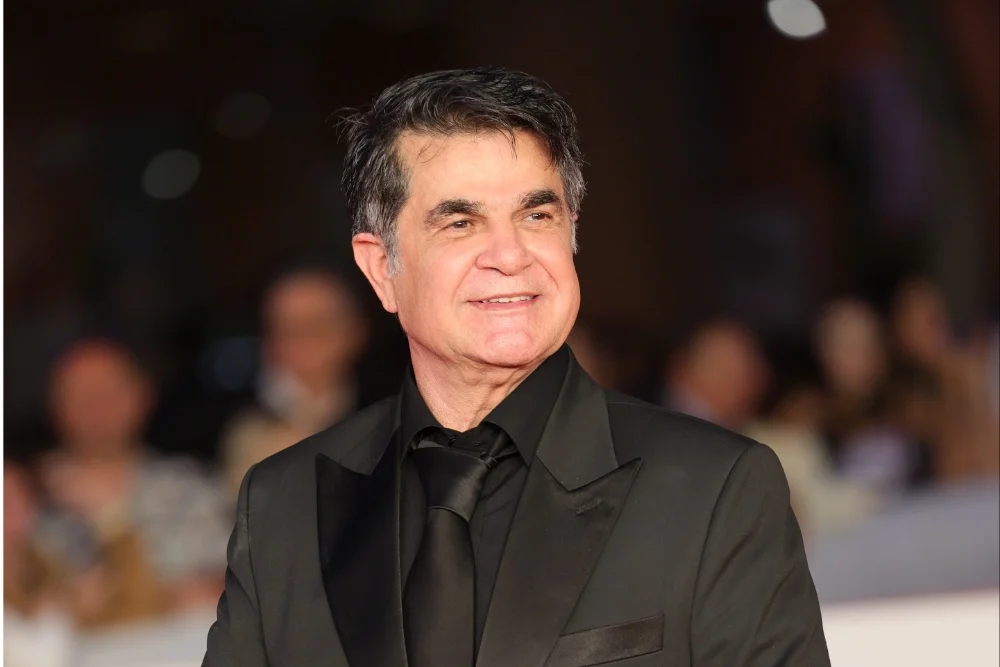
Renowned Iranian filmmaker Jafar Panahi, a celebrated figure on the international cinematic stage and a Palme d’Or winner, faces a severe escalation in his legal troubles. According to reports from the Iranian reformist media outlet Emtedad News Agency, a Tehran Revolutionary Court has sentenced the director in absentia to five years and one month in prison. This new ruling compounds an existing one-year prison sentence that the auteur was already grappling with.
The latest judgment, detailed by Panahi’s defense attorney Mostafa Nili, also includes sweeping supplementary penalties: an order to confiscate the filmmaker’s assets, a two-year ban on utilizing social media platforms, and a two-year travel restriction. While the exact nature of the specific charges levied against Panahi in this latest case remains officially undisclosed, the development highlights the precarious and volatile environment in which independent artists continue to operate within the Islamic Republic of Iran.
The Discovery of the Verdict
The existence of this new conviction came to light unexpectedly last week when Panahi discovered that his personal bank accounts had been suddenly and inexplicably frozen. Prompted by this financial blockade, Panahi and his lawyer, Mostafa Nili, visited the Tehran prosecutor’s office to investigate the matter. It was during this inquiry that they were informed of the severe verdict, which had been handed down without the director or his legal representation being present in court.
According to Nili, the court’s case file erroneously asserted that Panahi was residing outside of Iran. This bureaucratic pretext was entirely contradicted by reality; Panahi had returned to Tehran on March 30, 2026. His return followed a high-profile international trip that included attending the 98th Academy Awards ceremony. His latest critically acclaimed feature film, It Was Just an Accident, had been selected as France’s official submission in the Best International Feature Film category, marking another milestone in a career defined by artistic defiance and global recognition.
Legal experts note that while the sentence of over five years has been formally issued, the implementation of both this new ruling and the prior one-year sentence remains discretionary under Iranian legal mechanics, leaving Panahi in a state of legal limbo. Nonetheless, the punitive measures—particularly the asset confiscation and communication bans—signify a concerted effort by judicial authorities to curtail his influence and ability to work.
A Timeline of Defiance and Persecution
Jafar Panahi’s relationship with Iranian authorities has been fraught with confrontation, censorship, and state-sanctioned persecution for over two decades. His body of work has consistently challenged social norms, critiqued political structures, and examined the human condition under authoritarian constraints, making him both a darling of international film festivals and a prime target for domestic repression.
The pivotal turning point in Panahi’s modern legal struggles occurred in 2010. Following his outspoken support for the opposition Green Movement and his attempts to make a film about the contentious 2009 presidential election, the auteur was arrested. Subsequently, a revolutionary court sentenced him to six years in prison and imposed a sweeping 20-year ban. Under the terms of this draconian prohibition, Panahi was explicitly barred from making films, writing screenplays, giving interviews to domestic or foreign media, and traveling outside the country.
Rather than succumbing to silence, Panahi turned his restrictions into a unique artistic medium. Operating with astonishing ingenuity and quiet resilience, he subverted the ban to produce a series of internationally acclaimed guerrilla-style films. These included This Is Not a Film (2011), a documentary shot entirely inside his apartment while under house arrest; Closed Curtain (2013); Taxi (2015), which won the prestigious Golden Bear at the Berlin International Film Festival; and No Bears (2022), which earned the Special Jury Prize at the Venice International Film Festival.
Despite operating under the constant threat of imprisonment, Panahi became a symbol of creative freedom. However, the pressure intensified significantly in July 2022. Panahi was arrested once again after visiting a Tehran prosecutor’s office to inquire about the detention of fellow dissident filmmaker Mohammad Rasoulof. He was subsequently sent to the notorious Evin Prison to serve out the remainder of his 2010 sentence.
A Brief Respite and the Return Home
Panahi’s imprisonment in Evin Prison drew widespread international condemnation from human rights organizations, global film institutions, and fellow artists. Following a hunger strike and mounting international pressure, Panahi was released on bail in February 2023, having served approximately seven months of his sentence.
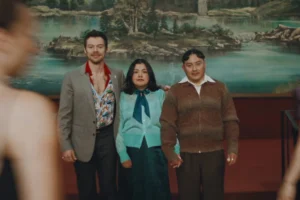
A few months later, in April 2023, the Iranian Supreme Court overturned his previous conviction and ordered a retrial, leading to the temporary lifting of his long-standing travel ban. This legal opening allowed Panahi to finally step foot outside of Iran and travel to the Cannes Film Festival, where he presented It Was Just an Accident. The drama, deeply rooted in the psychological aftermath of his incarceration, explores the complex emotions of a group of former prisoners confronting a guard who subjected them to torture.
Panahi subsequently embarked on an extensive international promotional tour for the film, earning accolades across Europe and North America. Yet, despite holding valid visas and enjoying the safety of exile, Panahi made the conscious and perilous decision to return to his homeland in the spring of 2026.
Speaking candidly to Variety prior to his return, Panahi explained the profound, inescapable pull his homeland holds for him, acknowledging the immense risks involved. "I am the kind of person who needs to be in his country," Panahi stated. "I need to breathe there and work there. And even if they want to go ahead with that prison sentence, they can go ahead. Nothing will change my mind about going back."
Broader Implications for Iranian Cinema
The new five-year sentence against Jafar Panahi sends a chilling message to the broader Iranian artistic community, which has long been at the vanguard of cultural expression and political critique in the country. The targeting of Panahi comes amid a broader, intensifying state crackdown on independent thinkers, journalists, and filmmakers who refuse to submit to stringent censorship guidelines set by the Ministry of Culture and Islamic Guidance.
For years, Iranian cinema has punched above its weight on the global stage, winning top honors at Cannes, Berlin, Venice, and the Academy Awards, serving as a vital cultural window into the nation’s societal complexities. However, the systematic harassment of its most prominent practitioners—exemplified by the imprisonments and legal limbo faced by Panahi, Mohammad Rasoulof, and others—threatens to eviscerate the infrastructure of independent filmmaking within Iran.
International human rights bodies and cinematic associations are expected to issue renewed calls for the Iranian judiciary to drop all charges against Panahi and to rescind the discretionary prison sentences, asset seizures, and travel restrictions. Yet, given the hardline trajectory of Tehran’s Revolutionary Courts, the outlook for domestic artistic freedom remains bleak.
As Panahi navigates this latest legal assault, his enduring legacy as a filmmaker who chose artistic integrity and physical presence over the safety of exile remains secure. Whether through covert productions or sheer psychological resilience, Panahi has repeatedly demonstrated that physical imprisonment cannot easily dismantle an unyielding voice.