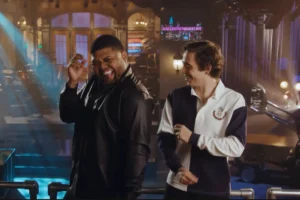
The cinematic landscape is bracing itself for the conclusion of one of the most ambitious science-fiction epics of the twenty-first century. As the theatrical release date for Denis Villeneuve’s highly anticipated Dune 3 approaches, the film’s star-studded cast has begun preparing audiences for significant narrative divergences from Frank Herbert’s foundational literary franchise. Primarily drawing its narrative framework from Herbert’s 1969 sequel novel, Dune Messiah, the upcoming Warner Bros. and Legendary Pictures production promises to challenge reader expectations while delivering a deeply emotional conclusion to the trilogy.
Scheduled to arrive in theaters on December 18, the film has already generated substantial discourse regarding its creative liberties. While Villeneuve has largely maintained a reputation for meticulous fidelity to Herbert’s sprawling universe, the cast’s recent promotional statements indicate that the third installment will chart its own distinct course through the complex sociopolitical landscape of the Imperium.
Navigating Creative Departures from the Literary Canon
Adapting Frank Herbert’s dense intellectual property has always presented formidable challenges for filmmakers. The complexity of Dune Messiah—a novel that subverts the hero’s journey established in the original 1965 book by examining the tragic, tyrannical consequences of Paul Atreides’ ascension—demands a sophisticated translation to the screen.
Cast members have been transparent about the script’s evolution during production. Zendaya, who reprises her role as Chani, recently addressed the delicate balance between honoring the source material and crafting a compelling cinematic narrative.
"There’s a lot in this film that is very true to the source material, and there are departures," Zendaya noted in a joint interview.
These sentiments were echoed by franchise newcomer Robert Pattinson, who makes his debut in the universe as the pivotal character Scytale, a Face Dancer of the Bene Tleilax. Pattinson offered a candid assessment of the screenplay’s intricate nature and Villeneuve’s directorial vision.
"The script was really cool, but it was quite complicated," Pattinson remarked. "And watching the film, it’s not about what I thought it was going to be about at all. It reads as much more of a grand political, moral fable, and the movie is so much more emotional. A lot of it is about parenting, and I just thought it was so moving."
Pattinson further defended the creative changes against potential purist criticism, suggesting that the artistic integrity of Villeneuve’s adaptation supersedes strict adherence to every plot point in the text. "You got to be kind of crazy if you’re going to be picking fault with this one," he added.
Timothée Chalamet, returning to anchor the franchise as the complex and conflicted Emperor Paul Atreides, expressed total confidence in the trilogy’s concluding chapter. When asked if he was satisfied with how Villeneuve resolves the cinematic journey, Chalamet offered high praise for the director’s enduring ambition.
"Absolutely. It didn’t feel like the bar dropped at all, Denis just changed the location of the bar," Chalamet stated. "This movie is its own thing."
A Chronology of Cinematic Triumph: The Road to Dune 3
The journey of Villeneuve’s Dune franchise is a testament to resilience, strategic distribution innovation, and the enduring power of theatrical exhibition. The path to Dune 3 spans half a decade, marked by unprecedented global challenges and historic box office milestones.
The chronology of the franchise’s modern cinematic era unfolds as follows:
- October 2021: Warner Bros. releases the first installment, Dune, utilizing a hybrid release strategy with simultaneous theatrical distribution and streaming availability on HBO Max amidst ongoing COVID-19 disruptions. Despite the challenging market conditions, the film proves its viability by grossing $410 million globally and capturing critical acclaim.
- March 2024: Dune: Part Two receives an exclusive theatrical release, capitalizing on a recovering global exhibition market. The sequel shatters expectations, pulling in a formidable $714 million worldwide and cementing the franchise as a modern cultural touchstone.
- December 2026: Dune 3 is slated for a theatrical release, positioned at the culmination of a blockbuster year for the global box office.
Florence Pugh, who reprises her role as Princess Irulan, reflected on the cultural significance of the series and its role in reviving communal cinematic experiences following the disruptions of the pandemic and subsequent industry strikes.
"What an event the second one was," Pugh stated. "It was just so lovely to be a part of something that we know is our generational kind of ‘Star Wars.’"
Zendaya reinforced this sentiment, emphasizing the personal and cultural importance of preserving the theatrical ecosystem. "Any opportunity that we have that we can hopefully contribute to the moviegoing experience and keep that alive, because it’s so much a part of my life, my childhood, so many people’s lives — it’s the reason we do it."
Box Office Expectations and Industry Implications
As Dune 3 prepares to enter the marketplace, industry analysts are projecting historic economic indicators for the global film industry. The movie is scheduled to open during the exact same weekend as Marvel Studios’ highly anticipated event film, Avengers: Doomsday. Box office forecasters suggest this pairing could result in the highest-grossing single weekend in cinematic history, drawing massive crowds back to multiplexes worldwide.
The commercial trajectory of the Dune trilogy underscores a broader industry shift toward premium, event-driven filmmaking. While the first film faced the headwinds of a pandemic-era hybrid release model—netting $410 million—the massive $714 million haul of the 2024 sequel demonstrated pent-up consumer demand for large-scale, immersive theatrical spectacles.
By positioning the trilogy’s conclusion against another industry titan like Avengers: Doomsday, Warner Bros. and Legendary are signaling extreme confidence in the franchise’s enduring pull. Analysts point out that this strategic scheduling reflects a revitalized exhibition sector where audiences actively seek out definitive, high-concept conclusions rather than endlessly open-ended cinematic universes.
The Artistic Legacy of Denis Villeneuve’s Vision
The decision to diverge from Frank Herbert’s Dune Messiah highlights the unique pressures and creative freedoms inherent in adapting literary masterpieces for the screen. While books allow for internal monologues and dense philosophical digressions, cinematic storytelling requires narrative economy, heightened emotional resonance, and visual translation.
Villeneuve’s approach has consistently favored atmosphere, thematic weight, and psychological depth over slavish literalism. By reframing the core conflicts of Dune Messiah into a narrative heavily centered on the burdens of parenting, the morality of absolute power, and intimate emotional stakes, the final film promises to offer a distinct interpretation of Herbert’s cautionary tale against charismatic leadership.
As the December 18 release date draws closer, anticipation continues to mount among cinephiles and literary fans alike. Whether viewers embrace or debate the specific narrative departures taken by Villeneuve and his co-writers, Dune 3 is poised to leave an indelible mark on the science-fiction genre, closing out one of the most remarkable trilogies of the modern era with ambition, emotional gravity, and unyielding scale.