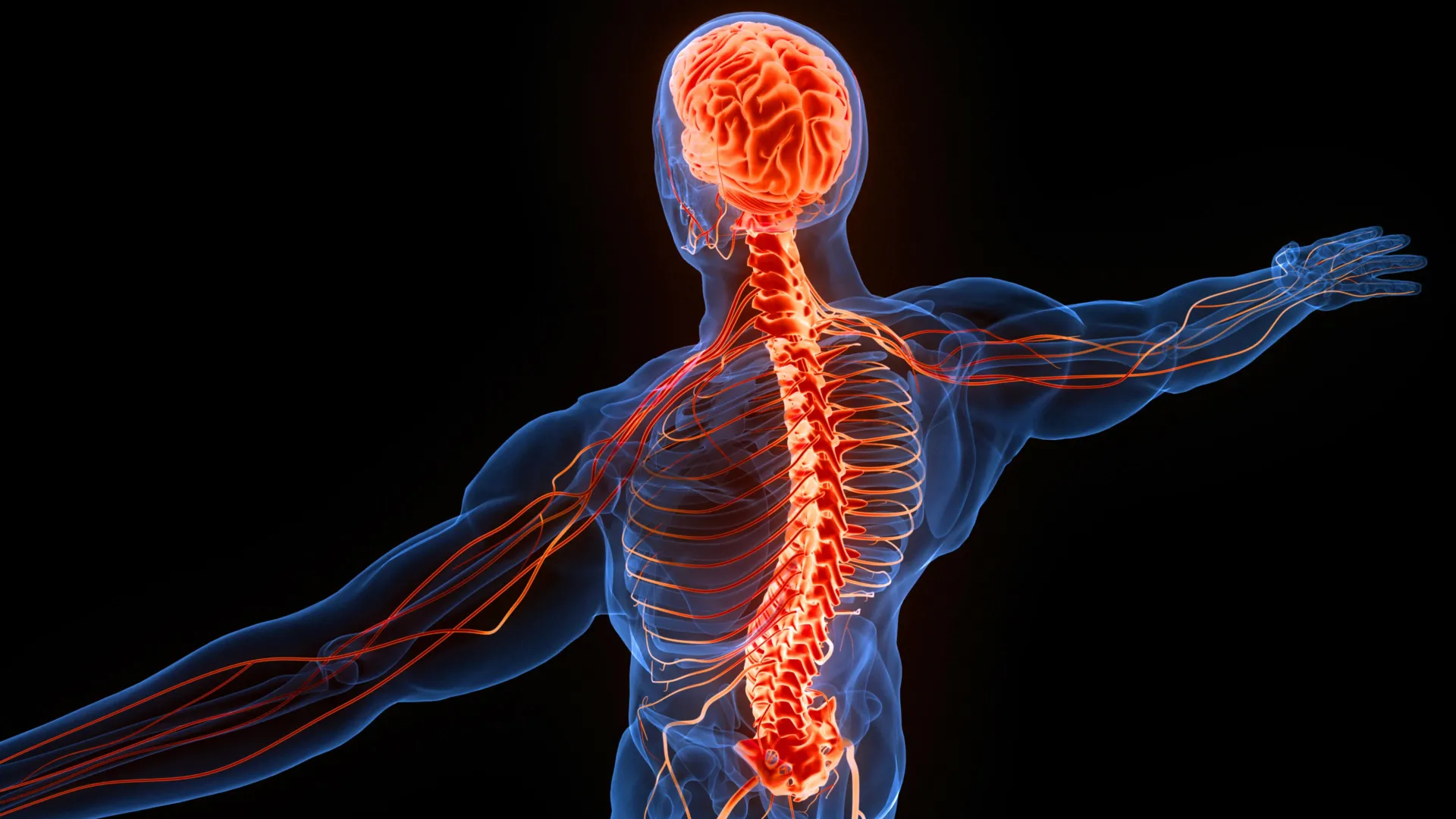
The human brain is a marvel of biological engineering, yet it functions according to an anatomical blueprint that appears counterintuitive: the left hemisphere controls the right side of the body, and the right hemisphere commands the left. For centuries, this contralateral organization has remained one of the most enigmatic features of the vertebrate nervous system. Recent research spearheaded by neuroscientist Dr. Martin Wessendorf of the University of Minnesota and cognitive neuroscientist Daniel Wang offers a compelling, evidence-based explanation that anchors this phenomenon in deep evolutionary time, suggesting our nervous system is essentially "hard-wired" by structures that emerged over 500 million years ago.
The Evolutionary Foundation of Neural Cross-Wiring
The hypothesis, published in the journal Frontiers in Neuroanatomy, posits that the crossed connection of the human brain is not a modern functional optimization, but rather an evolutionary inheritance. The researchers argue that as vertebrates evolved, new neural circuits were integrated into a structural foundation already established by an ancient visual system.
To understand why this occurred, one must look at the mechanics of the vertebrate eye. When light enters the eye, it is inverted by the lens, projecting an image of the right visual field onto the left side of the retina. This information then travels to the optic chiasm, a structure where nerve fibers from each eye cross to the opposite side of the brain. This early "crossover" ensures that the left hemisphere processes the right visual field, and vice versa. Because the optic tectum—a midbrain structure responsible for rapid responses to visual stimuli—is present in all vertebrate species, it serves as the original template for cross-wired neural mapping.
Chronology of a Biological Blueprint
The origins of this system date back to the Cambrian Period, roughly 538 to 486 million years ago. Paleontological and neuroanatomical data suggest that the basic architecture of the optic chiasm and the optic tectum was present in primitive jawless fish. This timeline implies that the "cross-wired" nature of the nervous system was established before the emergence of most complex land-dwelling vertebrates.
By the time tetrapods—the ancestors of mammals, birds, reptiles, and amphibians—began to diversify, the precedent for cross-brain connectivity was already set. As these organisms developed more sophisticated motor and sensory pathways, they likely utilized the existing spatial mapping already present in the brainstem and midbrain. Consequently, pathways such as the dorsal column (carrying touch and vibration) and the spinothalamic tract (carrying pain and thermal sensations) evolved to cross the midline of the central nervous system, mirroring the orientation established by the ancient visual system.
Supporting Data and Neural Pathways
The research team identified several key pathways that illustrate this persistent evolutionary pattern:
- The Tectospinal Pathway: This circuit connects the optic tectum directly to the spinal cord. It allows for reflexive movements, such as turning one’s head toward a sudden sound or a flash of light. Because it originates in the tectum, it naturally crosses the midline, reinforcing the contralateral control of skeletal muscles.
- The Rubrospinal Pathway: Originating in the red nucleus of the midbrain, this pathway is critical for limb movement. Its presence in mammals, and even in some cartilaginous fish like sharks and rays, confirms that the contralateral control of movement is an ancient trait predating the evolution of terrestrial life.
- The Corticospinal Tract: Perhaps the most significant pathway in human evolution, this tract connects the cerebral cortex to the spinal cord. While in most mammals this tract functions primarily to modulate sensory input, in primates, it has evolved to provide high-precision motor control. This allows for the nuanced dexterity of the human hand.
Dr. Wessendorf and Wang suggest that the human capacity for fine motor skills represents an evolutionary "repurposing." Rather than inventing an entirely new neural architecture to control fingers, evolution adapted an existing sensory-regulating pathway and extended its influence to include motor command, maintaining the ancient crossed-wire arrangement throughout the process.
Expert Perspectives and Scientific Implications
While the study is purely theoretical in its conclusions, the scientific community has noted its significance in moving away from teleological explanations—the idea that every biological feature exists because it provides a specific, immediate survival advantage.
"We often assume that if something exists in nature, it must be the most efficient solution to a problem," says an independent analyst familiar with neuro-evolutionary biology. "This study flips that narrative. It suggests that evolution is more like a renovator than an architect. It works with the floor plan it was given hundreds of millions of years ago, adding rooms and modifying hallways, but rarely tearing down the foundation to start fresh."
The implication is that the human brain’s organization is a historical artifact. The crossed-wiring does not necessarily offer a superior survival advantage compared to a hypothetical "straight-wired" system; rather, it is the path of least resistance taken by evolutionary processes. By continuing to build upon the established contralateral mapping of the Cambrian period, the vertebrate nervous system maintained a consistent, reliable structure that survived the transition from water to land and the later emergence of the six-layered cerebral cortex.
The Broader Impact on Neurobiology
The hypothesis offers a testable framework for future paleoneurology. If the researchers are correct, fossilized crania of ancient jawless fish should contain anatomical evidence of the optic chiasm. If such structures are identified in the fossil record, it would provide definitive proof that the neural organization governing modern human movement was already functional half a billion years ago.
This research also reframes our understanding of neurodegenerative diseases and brain injury recovery. By recognizing that certain pathways are "evolutionarily ancient" while others, like the cortical control of fine motor skills, are more recent "add-ons," clinicians may eventually develop more nuanced approaches to neuro-rehabilitation. Understanding which pathways are primary and which are secondary adaptations could potentially allow for more targeted therapies that account for the biological constraints imposed by our evolutionary history.
Conclusion
The strange asymmetry of our nervous system is not a glitch, nor is it a complex strategic maneuver by nature. It is a testament to the conservatism of evolution. The brain, as we know it, is a historical document written in tissue and electrical impulses. Every time we reach out to grasp an object, the signal crosses the midline of our central nervous system, retracing a path that was first blazed in the dim, early waters of the Cambrian era.
By grounding modern cognitive neuroscience in deep-time evolutionary biology, Dr. Wessendorf and Wang have provided a rare glimpse into the "legacy code" of the human brain. This research serves as a reminder that to understand the pinnacle of biological complexity, one must be willing to look back at the very beginning of the vertebrate lineage. As we continue to map the human connectome, the realization that our most advanced functions are tethered to the visual systems of ancient fish highlights the profound continuity of life on Earth. The legacy of the Cambrian period is not just found in the fossil record; it is active within the very neural circuits that allow us to perceive, interpret, and manipulate the world today.