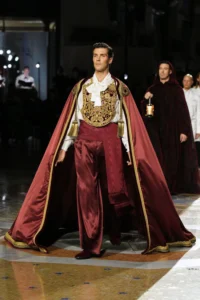
Two decades into a notoriously fickle industry, Canadian luxury fashion house Greta Constantine continues to defy the odds. Marking its twentieth anniversary, the celebrated label recently unveiled its Spring Ready-to-Wear collection, an offering meticulously crafted by co-founder and designer Kirk Pickersgill. Rather than retreating into archival nostalgia, Pickersgill used the milestone to look forward, anchoring his latest designs in direct, unfiltered feedback from the brand’s fiercely loyal and glamorous clientele.
In an era where independent luxury labels face unprecedented economic headwinds, Greta Constantine’s enduring relevance serves as a masterclass in market responsiveness. By translating the desires of women about town into high-octane eveningwear, Pickersgill has managed to preserve the brand’s DNA while ensuring its commercial viability across generations of clientele.
A Two-Decade Legacy of Canadian Design Resilience
Founded in 2006 by Kirk Pickersgill and Stephen Wong, Greta Constantine emerged as a rare success story within the Canadian fashion landscape. While Canada has historically served as a fertile incubator for creative talent, many of its most promising designers eventually relocate to global fashion capitals like New York, Paris, or London to achieve sustained commercial scale. Pickersgill and Wong chose a different path, building their luxury empire from a Toronto base.
Over the past twenty years, the brand has carved out a distinct niche, becoming synonymous with architectural silhouettes, bold jewel tones, unyielding confidence, and unapologetic glamour. The label’s creations have routinely graced international red carpets, worn by prominent actresses, musicians, and public figures who seek statement pieces devoid of transient micro-trends.
Survival in the contemporary luxury market requires more than aesthetic appeal; it demands operational agility. Independent labels operating outside the sprawling conglomerates of LVMH or Kering must cultivate deeply personal relationships with both retail partners and end consumers. For Greta Constantine, this intimacy has become its greatest competitive advantage. The genesis of the Spring collection lay not in an isolated mood board or abstract artistic whim, but in the real-world wardrobe dilemmas communicated directly to Pickersgill by his high-net-worth clientele.
"There are so many different women wearing our clothes," Pickersgill noted following the presentation. "I wanted to focus on fabrications and colors that will make sure she’s always remembered."
Bridging Heritage Silhouettes with Contemporary Innovation
To satisfy both longtime collectors and retail buyers looking for freshness, Pickersgill doubled down on his signature approach to evening dressing while introducing clever structural updates. The collection struck a delicate balance between grandeur and modernity, proving that eveningwear can be both opulent and functional.
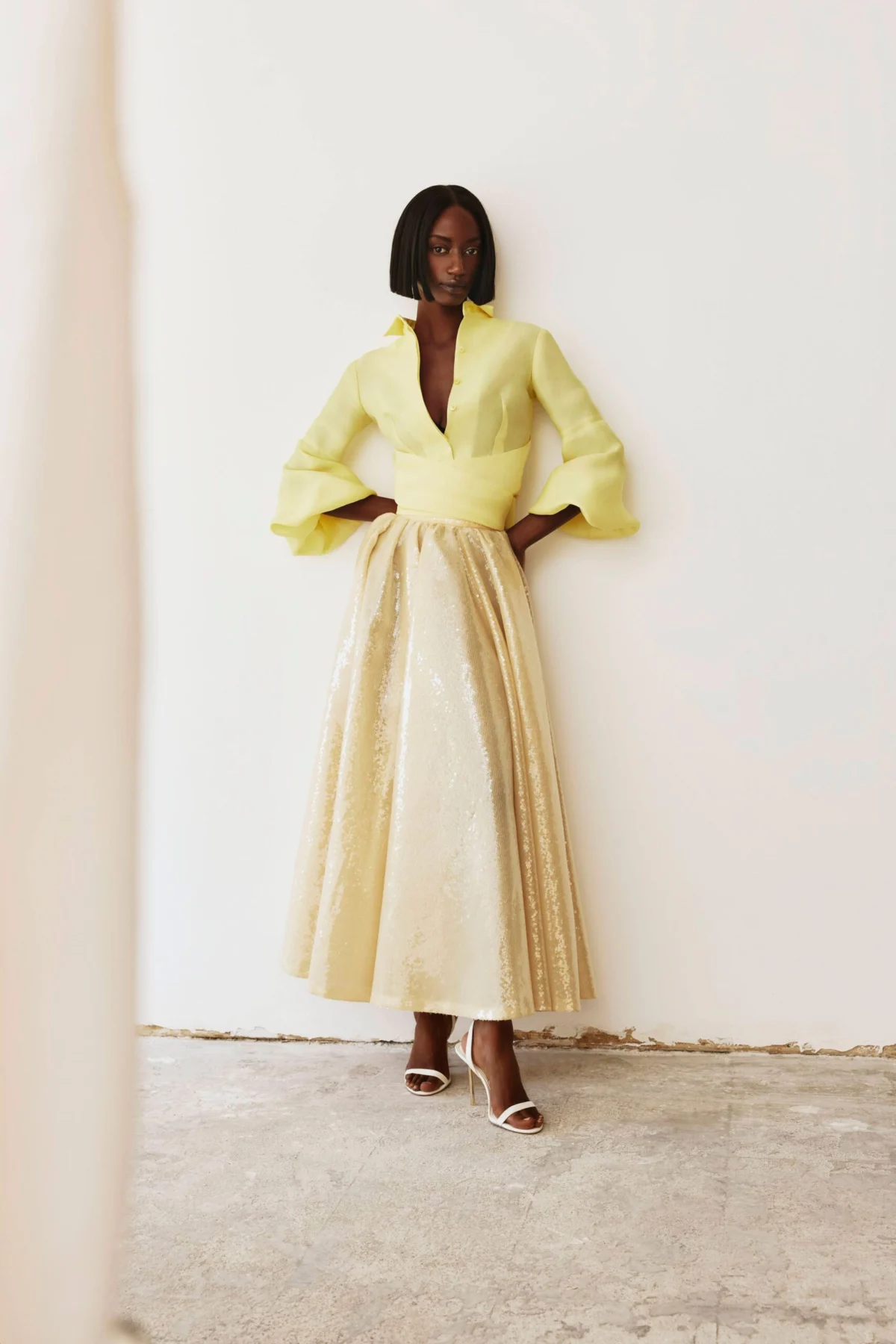
The presentation opened with a striking butter-yellow sequined ball skirt that immediately signaled a departure from standard, predictable formalwear. Constructed from eight distinct panels of organza spliced together to create a heavy, cascading pleating effect, the skirt was paired with a matching silk-gazar top. The resulting look delivered all the dramatic volume of a traditional princess gown while retaining a crisp, contemporary edge suitable for modern galas and high-profile charity events.
Recognizing the shifting demographics of luxury consumers, Pickersgill also turned his attention to younger clients who favor versatility and playful proportions. Among the standout ensembles was a two-piece set featuring a high-shine, floral-print top paired with a tiered miniskirt crafted from engineered sequins. This piece demonstrated the label’s technical prowess; engineering sequins to lie flat on tiered ruffles without adding bulk requires advanced garment construction techniques.
However, it was the dresses that ultimately anchored the collection. Pickersgill has long been celebrated for his mastery of color theory and textile manipulation, strengths that were fully visible in a strapless, curved-bodice pink gown constructed entirely from fringed strips of microfiber. The texture created an illusion of fluidity, causing the dress to ripple dynamically with every movement of the wearer.
The Evolution of Client-Centric Luxury
The defining characteristic of the new collection, however, was not merely visual, but functional. In an era where consumers increasingly demand sustainability, cost-per-wear value, and multi-purpose functionality—even within the luxury sector—Greta Constantine responded with clever design engineering.
A prime example was a long-sleeved red chiffon dress featuring an innovative, versatile front panel. Depending on the wearer’s preference or the formality of the event, the panel could be artfully knotted, threaded through a discreet waist loop for a draped effect, or left entirely free and flowy.
According to Pickersgill, modern luxury consumers are prioritizing versatility over one-and-done garments. "Our women want more than one way to wear a gown," he explained. "If you can offer them several ways to wear it, they’re obsessed."
This design philosophy reflects a broader psychological shift among affluent shoppers. Even the most ritzy clientele, accustomed to purchasing couture-level garments for single-use occasions, are increasingly drawn to pieces that offer modular styling. By creating a three-in-one dress that maintains structural integrity in every configuration, Greta Constantine successfully addressed the contemporary demand for intelligent, adaptable fashion.
Economic Implications and Retail Strategy
The timing of this client-driven collection coincides with a complex economic climate for the global luxury sector. Industry analysts note that post-pandemic consumer spending has experienced normalization, with shoppers exercising greater selectivity. While ultra-high-net-worth individuals continue to purchase luxury goods, their buying habits have shifted toward pieces that offer enduring emotional resonance and practical longevity.
For independent labels, aligning design output directly with retail feedback minimizes inventory risk and strengthens sell-through rates. Retailers stocking Greta Constantine have reportedly responded favorably to the Spring collection’s emphasis on wearable glamour. By balancing show-stopping runway pieces with adaptable, client-informed silhouettes, the brand ensures strong commercial performance across both wholesale channels and direct-to-consumer touchpoints.
Furthermore, the brand’s longevity reinforces Canada’s viability as a hub for luxury production. As supply chain disruptions and rising operational costs continue to pressure independent designers worldwide, Greta Constantine’s twenty-year milestone stands as a testament to disciplined business management paired with uncompromising creative vision.
Looking Ahead: The Next Decade of Greta Constantine
As Greta Constantine embarks upon its third decade in business, the Spring collection establishes a clear blueprint for the future. The brand has demonstrated that heritage does not preclude experimentation, and that listening to customers is not a compromise of artistic integrity, but rather a catalyst for innovative design.
By refining its core silhouettes, embracing sustainable notions of garment versatility, and maintaining an intimate connection with the women who wear its clothes, Greta Constantine has secured its place not just in Canadian fashion history, but on the global luxury stage. As Pickersgill and his team look toward future seasons, the message from the runway is clear: true glamour is timeless, adaptable, and—above all—attuned to the realities of the modern woman.