The peaceful valley near the border of Nepal and Tibet was forever altered on the morning of August 26, when a catastrophic mountain collapse unleashed an unprecedented wall of mud, rock, and ice. Triggered by the sudden destabilization of a high-altitude slope, the disaster has claimed more than 1,300 lives, left thousands missing, and exposed the terrifying vulnerabilities facing mountainous regions worldwide as global temperatures steadily rise.
The event, which ranks among the deadliest environmental disasters of the decade in South Asia, underscores a grim reality for glaciologists and disaster-management experts: while climate change accelerates the decay of the world’s frozen landscapes, predicting the exact timing and location of these colossal mountain failures remains one of modern science’s most formidable challenges.
The Anatomy of a Catastrophe
On August 26, approximately seven billion cubic feet of glacial ice and rock—a mass roughly equivalent to the volume of 100 football stadiums—sheared away from a mountain face near the Nepal-Tibet border. The material plummeted roughly a mile straight down into the valley river below, generating a kinetic impact so severe that it registered as a 5.2-magnitude seismic event, with shockwaves detected as far away as Alaska.
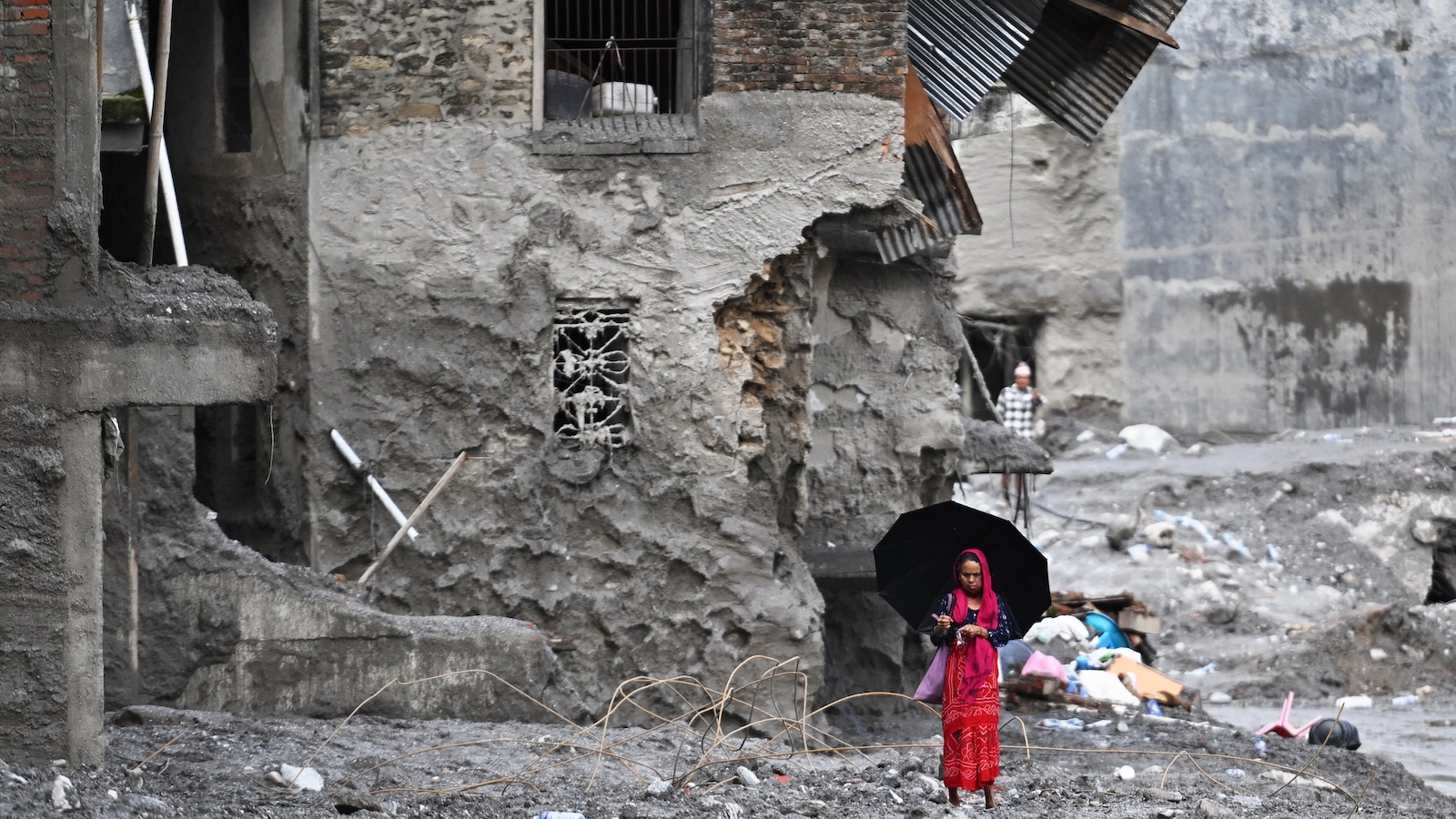
The impact instantly generated a monstrous, muddy torrent of water that surged downstream at speeds reaching up to 100 miles per hour. Within minutes, the roaring flood obliterated isolated mountain villages, submerged infrastructure, and caught residents entirely unawares.
While the human toll is currently confirmed at over 1,300 dead, rescue and recovery operations continue to struggle in the remote terrain, and thousands of individuals remain unaccounted for. Local authorities, overwhelmed by the scale of the destruction, have mobilized military and emergency response units, though treacherous conditions and blocked transport routes have severely hampered relief efforts.
A Global Crisis: Shrinking Ice and Unstable Slopes
The disaster near the Nepal-Tibet border did not occur in a vacuum. Over the past century, the world’s glaciers have shrunk by approximately one-fifth, and scientific models project they will lose at least another quarter of their mass by the year 2100. Hundreds of billions of tons of ice vanish annually, driven by fraction-of-a-degree increases in global atmospheric temperatures.
This rapid retreat strips away the natural buttresses that support steep mountain walls. As glaciers pull back, they leave behind freshly exposed, highly fragile silt and rock. Furthermore, permafrost—the permanently frozen layer of soil that acts as ecological "glue" binding mountain slopes together—thaws as temperatures climb above freezing point. Glacial meltwater simultaneously infiltrates microscopic cracks in the bedrock, exerting hydraulic pressure that progressively fractures the geological foundation.
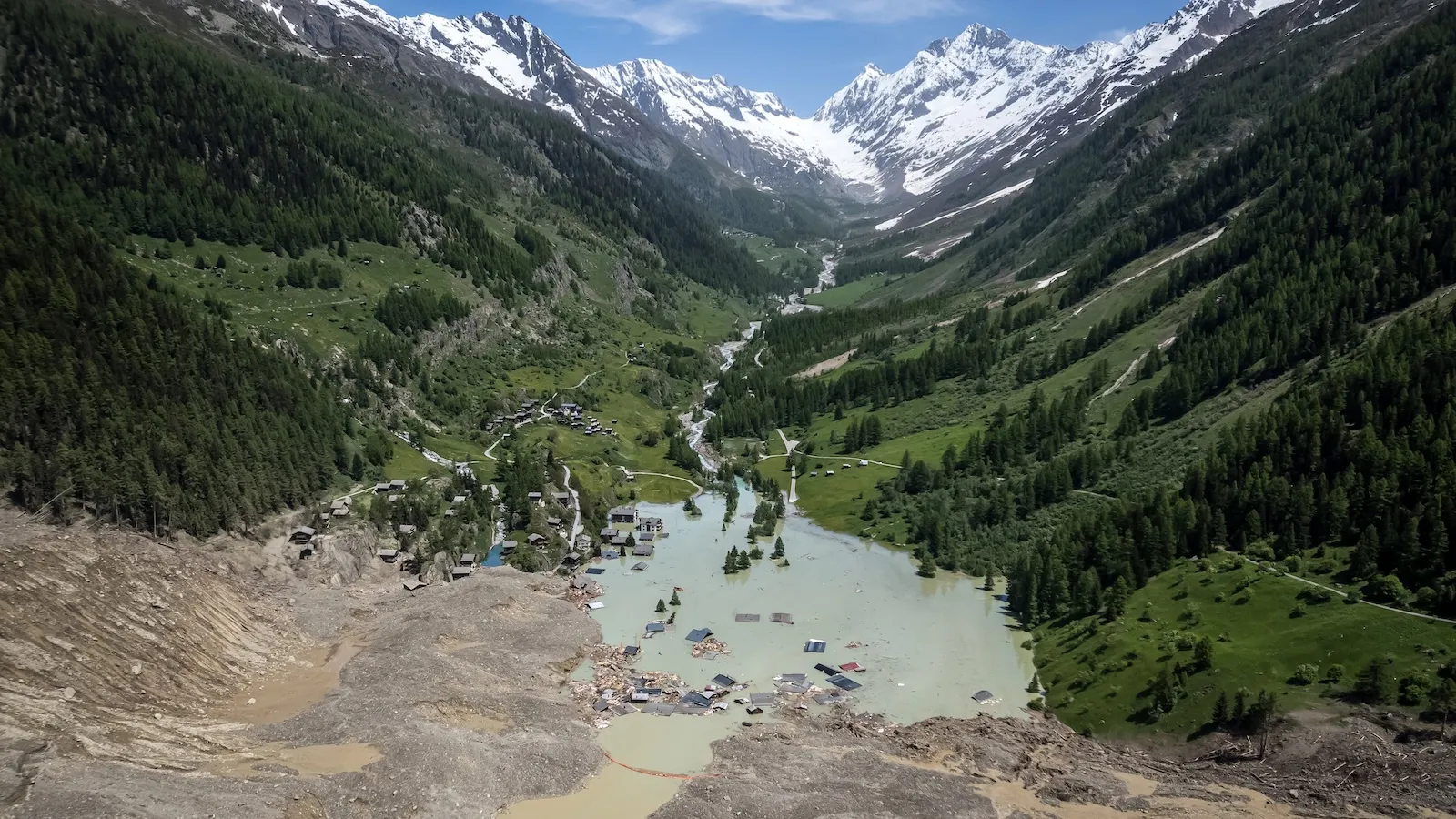
These interconnected mechanisms create a ticking time bomb across the world’s high mountain ranges. Similar processes triggered a staggering 1,500-foot megatsunami in Alaska’s Tracy Arm last summer, and contributed to the catastrophic slope failure that nearly engulfed the Alpine village of Blatten, Switzerland, in May 2025.
Beyond direct slope collapses, retreating glaciers frequently leave behind unstable ridges of earth and rock known as moraines. These natural dams trap massive volumes of meltwater and seasonal rain, creating glacial lakes that threaten downstream populations with catastrophic outbursts if the earthen walls breach. Similarly, glaciers themselves can act as unstable dams, pooling water until rising hydrostatic pressure lifts the ice barrier, releasing catastrophic floods—a recurring phenomenon seen annually at Suicide Basin near Juneau, Alaska.
Contrasting Realities: Success Stories Versus Himalayan Vulnerabilities
Disaster prevention and mitigation strategies have yielded notable successes in certain parts of the world, proving that engineering and monitoring can save lives.
In Peru, decades of coordinated government programs to drain high-risk glacial lakes across the Andes have averted numerous disasters, safeguarding tens of thousands of residents. In the Swiss Alps, proactive monitoring allowed local authorities to successfully evacuate 300 residents from Blatten just days before an impending avalanche destroyed the community. In Juneau, Alaska, comprehensive automated monitoring—featuring laser water-level sensors, continuous camera feeds, and automated cellular alert broadcasts—ensures that annual glacial outburst floods cause extensive property damage but zero casualties.
However, replicating these triumphs in the Himalayas presents unique and profound obstacles. The region spans thousands of glaciers distributed across vast, rugged, and remote terrain with limited financial and technological resources.
"Glacial loss destabilizes slopes in many far-reaching ways that are often unpredictable and catastrophic," explained Mark Carey, a professor of environmental studies and geography at the University of Oregon who leads a research laboratory dedicated to glacial study. "Proactive research and monitoring have saved lives in some parts of the world, but in a place like the Himalayas, it’s impossible to predict everything and establish early warning systems everywhere."
Eran Hood, a hydrologist and professor of environmental science at the University of Alaska, echoed these sentiments, noting the profound difficulty of mitigating sudden bedrock failures. "There’s really no effective way to monitor all these glaciers," Hood said. "When you’re dealing with something that releases immediately and moves downslope so quickly, how can you find a way to provide people with any warning?"
Technological Frontiers and Emerging Solutions
Despite the immense challenges, scientists and international space agencies are aggressively exploring innovative technologies to bridge the monitoring gap and provide critical early warnings for vulnerable downstream communities.
Seismic early-warning networks, traditionally deployed in earthquake-prone urban centers like Mexico City, are being repurposed to detect glacial and landslide events. During the Nepal disaster, the sheer force of the mountain collapse generated seismic waves that traveled thousands of miles. Researchers note that even a few minutes of advanced warning can drastically reduce fatalities. A striking example of this occurred during a previous downstream flood event in Nepal, where a fast-acting school principal successfully evacuated 900 students to safety just moments before a torrent completely submerged the campus.
In Switzerland, researchers have experimented with embedding fiber-optic cables directly into glacial ice to detect microscopic fractures, or "icequakes." These subtle seismic vibrations offer researchers real-time data regarding shifts in structural integrity before visible failures occur.
Perhaps the most promising leap forward lies in satellite observation. The newly deployed NISAR satellite—a joint mission between the United States’ NASA and the Indian Space Research Organisation (ISRO)—was specifically designed to monitor subtle changes in Earth’s surface topography. Utilizing advanced radar imaging capable of penetrating heavy cloud cover, NISAR can track shifting glaciers and minute surface deformations with unprecedented precision. A retrospective analysis of data collected by the satellite revealed that NISAR had actually recorded preliminary slumping on the ill-fated Nepal mountain slope several weeks prior to its catastrophic collapse.
The Tipping Point for Global Mountain Ranges
While technological advancements offer a glimmer of hope, experts caution that technology alone cannot completely eliminate the risk. The fundamental physics governing high-altitude terrain are shifting rapidly under the pressure of anthropogenic climate change.
"Many of these mountain ranges are at a tipping point," warned Dan McGrath, a glaciologist and associate professor at Colorado State University. "Freezing, or not freezing, is binary. And as temperatures warm above that and permafrost thaws, that is undoubtedly going to lead to an increase in disasters like this."
As global emissions continue to drive atmospheric warming, governments and international scientific bodies face an urgent race against time. Protecting populations living in the shadow of the world’s melting glaciers will require unprecedented investments in remote surveillance, international data sharing, and resilient infrastructure planning to confront a destabilized natural world.