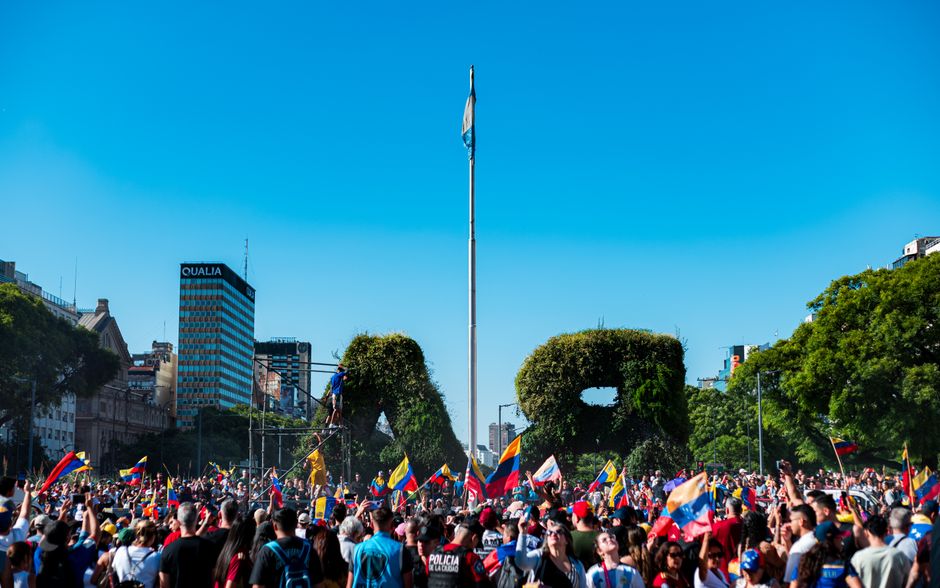
Latin American Politics: A Complex Tapestry of Democracy, Populism, and Persistent Challenges
Latin American politics constitutes a dynamic and multifaceted arena characterized by a persistent struggle between democratic aspirations, populist movements, economic inequality, and external influences. The region, encompassing South America, Central America, Mexico, and the Caribbean, shares a common colonial past, predominantly Iberian, which has profoundly shaped its socio-political structures, linguistic heritage, and cultural identity. However, this shared history is also marked by significant divergence, leading to a kaleidoscope of political systems, ideological currents, and developmental trajectories. At its core, Latin American political discourse often revolves around the tension between state intervention and free-market liberalism, the pursuit of social justice and economic growth, and the enduring quest for national sovereignty in a globalized world.
The post-World War II era witnessed a wave of democratic transitions across Latin America, often emerging from periods of authoritarian rule, military dictatorships, and revolutionary upheaval. These transitions were frequently accompanied by ambitious social reforms aimed at addressing deep-seated inequalities in land ownership, income distribution, and access to education and healthcare. However, the consolidation of democracy proved a challenging and often fragile process. Economic instability, fueled by fluctuating commodity prices, external debt burdens, and structural adjustment programs imposed by international financial institutions, frequently undermined democratic institutions and led to popular disillusionment. This disillusionment, in turn, created fertile ground for the resurgence of populism, a political style characterized by direct appeals to the masses, often bypassing traditional political parties and institutions, and frequently led by charismatic leaders promising swift solutions to complex problems.
Populist movements in Latin America have historically taken diverse forms, ranging from left-leaning regimes advocating for greater state control over key industries and social welfare programs to right-leaning movements emphasizing law and order, nationalistic sentiment, and often a more authoritarian approach to governance. Figures like Juan Perón in Argentina, Getúlio Vargas in Brazil, and later Hugo Chávez in Venezuela, represent distinct iterations of this phenomenon. While some populist leaders have achieved significant gains in poverty reduction and social inclusion, others have been accused of undermining democratic norms, centralizing power, and fostering political polarization. The economic underpinnings of many populist regimes have also been a source of instability, as reliance on commodity booms or unsustainable fiscal policies often leads to boom-and-bust cycles, exacerbating existing vulnerabilities.
Economic inequality remains a defining characteristic of Latin American societies and a persistent driver of political instability and social unrest. The legacy of colonialism, coupled with subsequent patterns of economic development, has resulted in highly stratified societies where a small elite often controls a disproportionate share of wealth and resources, while large segments of the population struggle with poverty, lack of opportunity, and limited access to essential services. This enduring inequality fuels social grievances, contributes to crime and insecurity, and often translates into electoral volatility, with voters seeking political alternatives that promise to address their material concerns. Efforts to mitigate inequality have often involved ambitious social programs, wealth redistribution initiatives, and progressive taxation policies. However, the effectiveness of these measures is frequently hampered by corruption, inefficient public administration, and resistance from entrenched economic interests.
The role of the state in Latin American economies and societies has been a constant point of contention and ideological debate. Following a period of import-substitution industrialization (ISI) in the mid-20th century, many Latin American countries embraced neoliberal economic policies in the 1980s and 1990s. These policies, often driven by the "Washington Consensus," emphasized privatization, deregulation, fiscal austerity, and free trade. While proponents argued that these reforms would foster economic growth and attract foreign investment, critics pointed to rising unemployment, increased inequality, and the erosion of social safety nets. The pendulum has since swung back and forth, with many governments seeking a more pragmatic approach that balances market mechanisms with state intervention to address social needs and promote inclusive development. The current political landscape often reflects this ongoing debate, with parties and movements proposing varying degrees of state involvement in key sectors like energy, telecommunications, and finance.
Corruption has been a pervasive and deeply entrenched problem throughout Latin American political history, significantly undermining public trust in institutions, distorting economic development, and fueling social discontent. From petty bribery to large-scale graft involving public officials and private corporations, corruption siphons away resources that could be used for public services, perpetuates inequality by benefiting a select few, and erodes the rule of law. Numerous high-profile corruption scandals involving prominent politicians and business leaders have rocked the region in recent years, leading to widespread protests and demands for greater accountability. Efforts to combat corruption have included strengthening judicial systems, implementing transparency measures, and fostering independent oversight bodies. However, the deeply rooted nature of corruption, often intertwined with political power and economic elites, makes its eradication a formidable and ongoing challenge.
Geopolitics and external influences have also played a significant role in shaping Latin American politics. Historically, the region has been subject to the geopolitical interests of global powers, particularly the United States. The Monroe Doctrine and subsequent interventions, both overt and covert, have left a lasting legacy of suspicion and resentment in some quarters. More recently, the rise of China as a major trading partner and investor has introduced a new dynamic, offering alternative sources of capital and markets for Latin American exports, while also raising concerns about economic dependence and potential geopolitical alignment. Regional integration initiatives, such as Mercosur, the Pacific Alliance, and the Community of Latin American and Caribbean States (CELAC), have emerged as efforts to foster greater cooperation and reduce external dependencies, though their effectiveness and cohesion have varied over time.
The contemporary political landscape of Latin America is characterized by a complex interplay of these historical forces and emerging trends. The region has witnessed a significant political realignment in recent years, with a wave of left-leaning governments coming to power in several key countries, often on platforms of social justice, economic redistribution, and greater state sovereignty. This "pink tide" has been met with varying degrees of success and has also faced significant challenges, including economic downturns, political instability, and internal divisions. Conversely, right-leaning governments have also emerged, emphasizing fiscal discipline, market-oriented reforms, and a more conservative social agenda. The ideological polarization within and between countries remains a defining feature, making consensus-building and effective governance difficult.
Environmental issues, particularly those related to climate change and resource extraction, are increasingly becoming central to political debates in Latin America. The Amazon rainforest, a vital global ecosystem, faces ongoing threats from deforestation, agricultural expansion, and illegal mining, all of which have profound environmental and social consequences. Indigenous communities, whose territories are often directly impacted by these activities, are increasingly asserting their rights and playing a more prominent role in environmental advocacy and political mobilization. The region’s reliance on extractive industries for economic growth also creates complex trade-offs between development and environmental sustainability, leading to contentious political debates and protests.
The ongoing challenges of poverty reduction, social inclusion, and economic development continue to be central to the political agenda across Latin America. Despite considerable progress in some areas, a significant portion of the population remains marginalized and vulnerable. Debates around the role of the state versus the private sector in delivering social services, the effectiveness of social protection programs, and the need for more equitable economic growth are constant. The younger generation, often more connected through digital technologies and exposed to global trends, is also increasingly vocal in demanding political accountability, greater opportunities, and a more sustainable future.
In conclusion, Latin American politics is a constantly evolving narrative, shaped by a rich and often turbulent history, a persistent struggle for socio-economic justice, and the enduring quest for democratic consolidation. The interplay of populism, economic realities, corruption, and external influences creates a complex and dynamic political environment. Understanding these multifaceted dynamics is crucial for comprehending the current trajectory of the region and its potential for future development and stability. The persistent challenges of inequality, corruption, and the search for sustainable and inclusive growth will undoubtedly continue to define the political landscape of Latin America for years to come.
