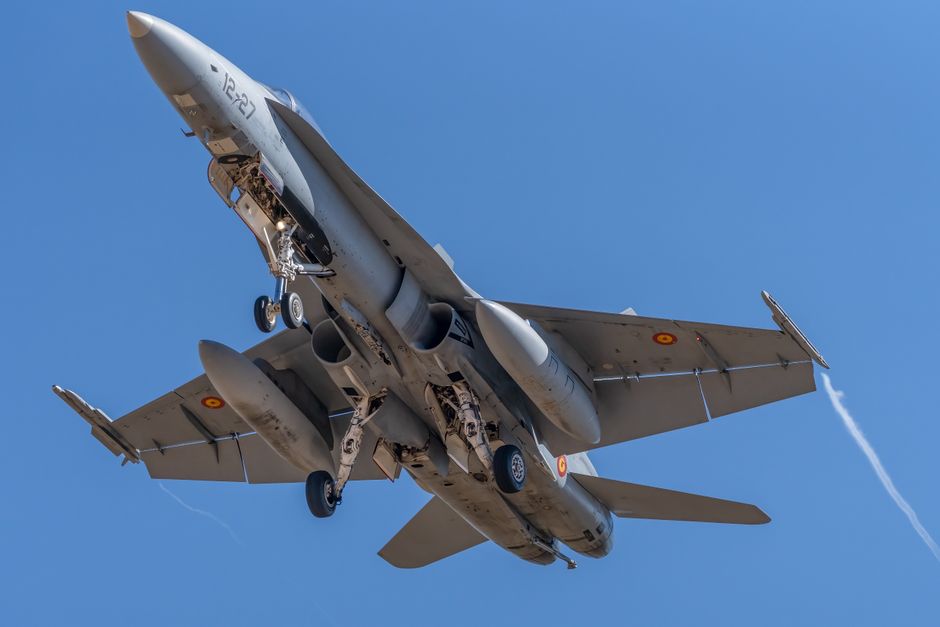
Spain to Stick to 2% GDP Defence Spending Goal, Defence Minister Says
Spanish Defence Minister Margarita Robles has reiterated the nation’s commitment to achieving and maintaining the 2% of Gross Domestic Product (GDP) defence spending target, a pledge central to NATO’s collective security framework. This firm stance underscores a significant shift in Spain’s defence posture, reflecting a growing recognition of evolving geopolitical threats and the imperative for increased national security investment. The commitment, first made in the context of the 2014 Wales Summit, has seen a gradual but accelerating implementation, particularly in the wake of Russia’s full-scale invasion of Ukraine in February 2022. Robles’ pronouncements are not merely symbolic; they signal a tangible increase in budgetary allocations and a strategic reorientation towards bolstering military capabilities. This article will explore the implications of Spain’s adherence to the 2% GDP defence spending goal, examining the drivers behind this commitment, the specific areas of investment, the economic and strategic consequences, and the challenges that lie ahead.
The imperative for Spain to align with the 2% GDP defence spending target is multi-faceted. Primarily, it is a matter of fulfilling alliance obligations within NATO. The 2% guideline, established by NATO leaders, is intended to ensure that all member states contribute a sufficient level of resources to collective defence, thereby enhancing deterrence and defence capabilities across the Euro-Atlantic area. Failure to meet this target can undermine the credibility of the alliance and place a disproportionate burden on other member states. Beyond alliance commitments, the escalating global security landscape has compelled Spain, like many other European nations, to re-evaluate its defence spending. The resurgence of great power competition, the persistent threat of terrorism, cyber warfare, and hybrid threats, alongside instability in neighbouring regions, necessitate a more robust and modernised military. Spain’s strategic location, bordering North Africa and deeply integrated into the European defence architecture, positions it as a key player whose security is intrinsically linked to broader regional and global stability. Therefore, increasing defence expenditure is seen as a proactive measure to safeguard national interests and contribute to a more secure environment.
The Spanish Ministry of Defence has outlined a clear roadmap for achieving the 2% GDP target, involving a phased increase in budgetary allocations over the coming years. While specific figures and timelines are subject to budgetary cycles and evolving national defence plans, the general direction is towards significant and sustained growth in defence expenditure. This increased investment is not being channelled haphazardly; rather, it is focused on critical areas designed to modernise the Armed Forces and enhance their operational readiness and interoperability with allies. Key areas of investment include the modernisation of ageing equipment, the acquisition of new capabilities in areas such as air defence, maritime surveillance, and cyber defence, and the enhancement of logistical support and infrastructure. Furthermore, there is a renewed emphasis on research and development (R&D) in defence technologies, aiming to foster indigenous innovation and reduce reliance on foreign suppliers for critical defence systems. Personnel development, including training and recruitment, also features prominently, recognising that modern military effectiveness depends as much on skilled personnel as it does on advanced technology.
The economic implications of Spain’s commitment to the 2% GDP defence spending goal are significant and warrant careful consideration. On the one hand, increased defence expenditure can act as a stimulus to the domestic economy, driving growth in the defence industry, creating high-skilled jobs, and fostering technological advancements that can have spillover effects into the civilian sector. Spain has a developing defence industry, and increased government spending can provide a much-needed boost to its competitiveness and capacity for innovation. This can lead to greater export opportunities and a stronger position in the global defence market. However, on the other hand, a substantial increase in defence spending also represents a significant reallocation of public funds. This necessitates careful fiscal management to ensure that defence investments do not come at the expense of other vital public services such as healthcare, education, or social welfare. The precise impact will depend on the efficiency of defence procurement processes, the extent to which domestic industries are leveraged, and the overall economic context in which these investments are made. A well-managed increase in defence spending, focused on strategic priorities and fostering innovation, has the potential to yield net positive economic benefits, but requires a balanced approach to fiscal policy.
Strategically, Spain’s adherence to the 2% GDP defence spending goal has far-reaching implications for both its national security and its role within NATO and the broader European security architecture. For Spain itself, it signifies a renewed commitment to national defence and an acknowledgement of the evolving security challenges. A more capable and modernised military enhances Spain’s ability to protect its territory, its citizens, and its interests, both at home and abroad. This includes projecting stability in its immediate neighbourhood, contributing to crisis management operations, and participating effectively in multinational security initiatives. Within NATO, Spain’s commitment strengthens the alliance’s overall defence capabilities and demonstrates solidarity among member states. It signals a willingness to share the burden of collective security and contributes to the alliance’s deterrence posture. For Europe, a stronger Spanish defence capability enhances regional security and stability, particularly in the context of the Mediterranean and North Africa. It also positions Spain as a more influential voice in European defence policy discussions and contributes to the broader European Union’s efforts to develop a more coherent and effective common security and defence policy.
Despite the clear commitment, several challenges lie ahead for Spain in fully realising and sustaining the 2% GDP defence spending goal. One of the primary challenges is the economic climate. Spain, like other European nations, has faced periods of economic uncertainty and has a significant national debt. Maintaining defence spending at the required level during economic downturns or periods of fiscal austerity will require strong political will and careful budget planning. Another significant challenge is the efficiency and effectiveness of defence procurement. Historically, large defence procurement projects can be prone to delays, cost overruns, and bureaucratic inefficiencies. Spain will need to implement robust oversight mechanisms and streamline its procurement processes to ensure that increased investment translates into tangible improvements in military capabilities without unnecessary waste. The defence industrial base, while growing, also faces challenges in scaling up to meet increased demand and in developing the cutting-edge technologies required for modern warfare. Fostering greater collaboration between government, industry, and research institutions will be crucial in this regard. Furthermore, public perception and political consensus are important factors. While there appears to be a growing consensus on the need for increased defence spending, sustained public support will be necessary to ensure the long-term viability of this policy. Communicating the rationale for increased defence expenditure and demonstrating its tangible benefits will be crucial in building and maintaining this support.
The increasing defence budget is expected to drive significant modernisation across all branches of the Spanish Armed Forces. In the Army, this will likely translate into upgrades for armoured vehicles, artillery systems, and tactical communication networks. The focus will be on enhancing mobility, firepower, and situational awareness for ground operations. For the Navy, the investment will be directed towards modernising surface vessels, including frigates and patrol boats, as well as enhancing submarine capabilities and maritime patrol aircraft. The strategic importance of maritime security, given Spain’s extensive coastline and its role in Mediterranean and Atlantic security, makes naval modernisation a key priority. The Air Force will see substantial investment in modern fighter jets, transport aircraft, and advanced air defence systems. The acquisition of fifth-generation fighter aircraft, or upgrades to existing platforms to incorporate similar capabilities, is likely to be a significant consideration. Furthermore, the development and deployment of robust cyber defence capabilities are paramount in the contemporary security environment. Spain is committed to bolstering its cyber warfare defence mechanisms, including offensive and defensive cyber capabilities, to protect critical infrastructure and counter cyber threats. This includes investing in advanced cyber intelligence, detection, and response systems.
The commitment to reaching the 2% GDP defence spending target is also intrinsically linked to Spain’s role in international military operations and its contribution to collective security efforts. As a member of NATO and an increasingly active participant in EU-led defence initiatives, Spain needs to possess the operational capabilities and interoperability to contribute effectively to multinational deployments. This includes participating in exercises, providing forces for rapid deployment missions, and contributing to ongoing peacekeeping and stabilisation operations. The increased defence spending will facilitate the procurement of necessary equipment and training to meet these requirements, ensuring that Spanish forces can operate seamlessly with their allies. Moreover, the emphasis on R&D and technological advancement aims to position Spain as a contributor to future defence capabilities, potentially leading to joint development projects with other allied nations. This collaborative approach not only strengthens alliances but also spreads the financial burden of developing complex defence technologies.
In conclusion, Spain’s unwavering commitment to the 2% GDP defence spending goal, as articulated by Defence Minister Margarita Robles, represents a significant and timely strategic decision. Driven by evolving geopolitical realities and alliance obligations, this commitment signals a substantial increase in defence investment, strategically allocated to modernise the Armed Forces and enhance national security. While economic and procurement challenges must be navigated with prudence, the potential benefits for Spain’s defence capabilities, its economic development, and its standing within NATO and the wider European security framework are considerable. Adherence to this target is not merely a financial undertaking; it is a declaration of Spain’s readiness to assume its responsibilities in contributing to a more secure and stable international order.
