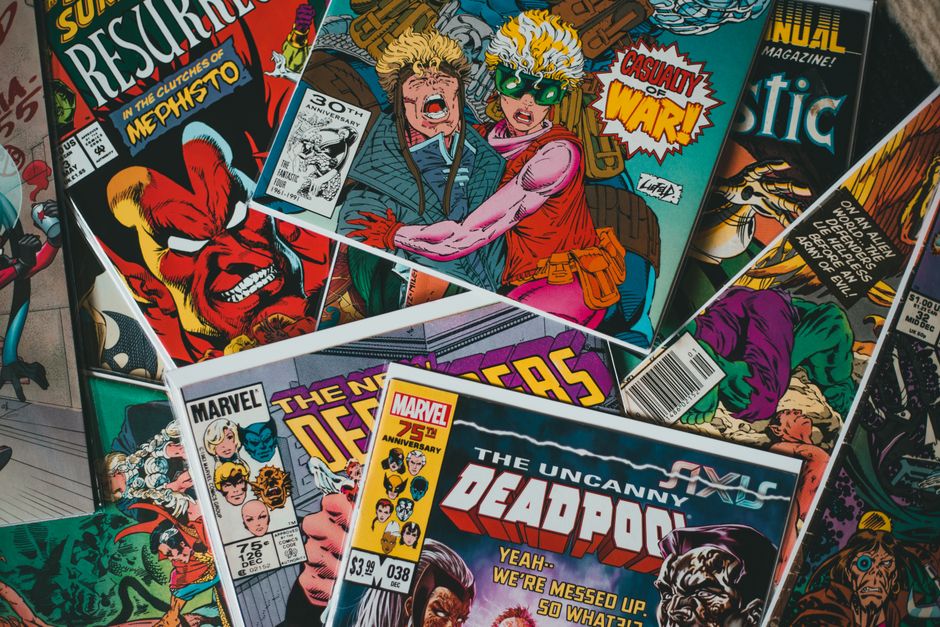
Marvel Comics: A Universe of Heroes, Villains, and Enduring Legacy
Marvel Comics stands as a titan of the comic book industry, a universe populated by an ever-expanding roster of iconic superheroes, compelling villains, and interwoven narratives that have captivated audiences for generations. Founded by Martin Goodman in 1939 as Timely Comics, the company underwent a transformation and rebranding in the early 1960s under the visionary leadership of Stan Lee, Jack Kirby, and Steve Ditko, marking the dawn of the Marvel Age of Comics. This era witnessed the birth of the Fantastic Four, Spider-Man, the Hulk, Thor, Iron Man, the X-Men, and the Avengers, characters whose archetypal struggles and relatable human flaws resonated deeply with readers. The distinctive Marvel formula – flawed heroes grappling with personal demons while defending humanity – set it apart from its contemporaries, fostering a sense of authenticity and emotional depth that continues to define its appeal. The success of these early creations paved the way for an expansive shared universe, where characters and storylines routinely crossed over, creating a rich tapestry of interconnected lore. This interconnectedness, a hallmark of Marvel’s storytelling, allows for intricate world-building and the exploration of complex character relationships, from the familial bonds of the Fantastic Four to the ideological clashes within the X-Men.
The genesis of Marvel’s most enduring characters often stemmed from a blend of scientific marvels, mythological influences, and psychological realism. The Fantastic Four, born from cosmic rays, embodied the spirit of scientific exploration and familial unity. Spider-Man, bitten by a radioactive spider, became the personification of responsibility and the everyday struggles of a young man balancing extraordinary power with ordinary life. The Hulk, a manifestation of Bruce Banner’s repressed rage, explored themes of duality and the monstrous within. Thor, the Norse god of thunder, brought a pantheon of gods and cosmic battles into the comic book realm, while Iron Man’s genius inventor Tony Stark navigated the complexities of war, technology, and personal redemption. The X-Men, a group of mutants facing prejudice and discrimination, became powerful allegories for civil rights and social justice, their struggles mirroring real-world societal anxieties. This early creative output laid the groundwork for a universe that was not only about superpowers but also about the human condition, the challenges of identity, and the fight for a better world. The visual dynamism and innovative storytelling techniques employed by artists like Kirby and Ditko further cemented Marvel’s unique identity, contributing to the vibrant and dynamic nature of its comic book offerings.
Marvel’s enduring legacy is intrinsically linked to its ability to evolve and adapt while remaining true to its core principles. The Silver Age of Comics, spearheaded by Lee and Kirby, introduced a new level of sophistication and serialized storytelling that captivated a burgeoning readership. Subsequent decades saw the introduction of new generations of heroes and the deepening of existing mythologies. The 1970s and 1980s witnessed the rise of darker, more complex characters and narratives, exemplified by the creation of Wolverine and the Punisher, and the groundbreaking work of writers like Chris Claremont on the X-Men, who introduced nuanced characters and tackled mature themes. The 1990s brought about a surge in creator-owned initiatives and a more extreme aesthetic, with characters like Venom and Carnage capturing a darker, grittier sensibility. Throughout these shifts, Marvel consistently demonstrated an ability to reinvent itself, introducing new creative teams and exploring diverse genres within its superhero framework, from cosmic epics to street-level crime dramas. This adaptability has been crucial to its sustained relevance, allowing it to connect with successive generations of readers.
The vastness of the Marvel Comics universe is a testament to its decades of continuous storytelling and expansion. Spanning multiple Earths, dimensions, and cosmic realms, the Marvel Multiverse is a rich and intricate tapestry of interconnected realities. Key celestial bodies like Asgard, home of Thor and the Aesir, and the Savage Land, a prehistoric continent teeming with dinosaurs, offer distinct backdrops for epic adventures. Cosmic entities such as Galactus, the Devourer of Worlds, and the Celestials, ancient cosmic beings who shape the destiny of galaxies, introduce stakes that transcend planetary concerns. The introduction of the Inhumans, a race of genetically altered beings with diverse powers, further broadened the scope of the universe. Each new creation, whether a planet, a species, or a cosmic force, is woven into the existing narrative fabric, creating a sense of a living, breathing universe. This intricate interconnectedness allows for complex character interactions and the exploration of profound philosophical themes within a grand, operatic canvas. The Multiverse concept itself has become a central tenet of modern Marvel storytelling, allowing for parallel universes and alternate timelines that offer new perspectives on familiar characters and events, exemplified by series like "What If…?" and "Exiles."
Central to Marvel’s appeal are its iconic characters, each with their distinct personalities, motivations, and relatable struggles. Spider-Man, Peter Parker, remains the archetypal adolescent hero, forever balancing his heroic duties with the everyday pressures of school, work, and relationships. His enduring popularity lies in his accessibility; readers see themselves in his anxieties, his triumphs, and his unwavering moral compass. The Avengers, a team of Earth’s mightiest heroes, represent a diverse collective of individuals who, despite their differences, unite to face threats beyond the capacity of any single hero. Iron Man, Tony Stark, embodies technological prowess and personal redemption, his journey from a self-serving arms dealer to a selfless protector resonating with themes of growth and responsibility. Captain America, Steve Rogers, stands as a symbol of idealism and unwavering courage, his moral clarity a beacon in turbulent times. The X-Men, a metaphor for marginalized groups, explore themes of prejudice, acceptance, and the fight for equality, their struggles with societal animosity and internal conflict making them profoundly relevant. The Hulk, the embodiment of unchecked rage and suppressed trauma, represents the duality of human nature, a constant battle between intellect and primal instinct. These characters, with their complex psychologies and evolving narratives, form the emotional core of the Marvel Universe, making their adventures compelling and their sacrifices meaningful.
The villains of Marvel Comics are as crucial to its success as its heroes. They are not merely obstacles but often possess their own compelling motivations, tragic backstories, or twisted ideologies that make them formidable and, at times, even sympathetic. Doctor Doom, the autocratic ruler of Latveria, is a master manipulator and brilliant scientist whose arrogance and desire for ultimate control make him a persistent threat to Reed Richards and the Fantastic Four. Loki, the God of Mischief, Thor’s adopted brother, embodies deceit and ambition, his constant machinations providing a formidable challenge to the Asgardian pantheon and Earth’s heroes. Thanos, the Mad Titan, driven by his nihilistic pursuit of universal balance through mass extinction, represents a cosmic-level threat with profound philosophical implications. Magneto, the enigmatic leader of the Brotherhood of Mutants, driven by a fervent belief in mutant supremacy and a deep-seated hatred of humanity born from his own experiences of persecution, presents a complex and often morally ambiguous antagonist for the X-Men. Ultron, an artificial intelligence with a genocidal agenda, explores the dangers of unchecked technological advancement and the potential for machines to surpass their creators. These villains are not mere caricatures; they are well-developed characters whose actions drive the narrative forward and challenge the heroes on both physical and ideological levels. Their presence elevates the stakes of every conflict and underscores the importance of the heroes’ unwavering commitment to justice and the greater good.
Marvel’s impact extends far beyond the pages of its comic books, permeating popular culture through various media. The Marvel Cinematic Universe (MCU), a meticulously crafted series of interconnected films and television shows, has achieved unprecedented commercial and critical success, introducing Marvel characters and narratives to a global audience. This multimedia empire has revitalized interest in the comic book source material, leading to renewed appreciation for the characters and storylines that have shaped the modern superhero landscape. The animated series, video games, and merchandise associated with Marvel further solidify its omnipresence. This cross-media synergy has created a virtuous cycle, where success in one medium fuels interest in another, expanding the reach and influence of the Marvel brand exponentially. The MCU, in particular, has demonstrated a remarkable ability to adapt complex comic book narratives into accessible and engaging cinematic experiences, while also developing its own unique storylines and character arcs that resonate with both longtime fans and newcomers alike. This comprehensive media strategy has cemented Marvel’s position as a dominant force in global entertainment.
The storytelling techniques and thematic depth of Marvel Comics have consistently pushed the boundaries of the medium. From the early innovations of Stan Lee and Jack Kirby to the mature and complex narratives of contemporary writers, Marvel has consistently explored universal themes of heroism, responsibility, loss, and redemption. The concept of "relatable heroes" – individuals burdened by human flaws and insecurities, even while wielding extraordinary powers – was a groundbreaking approach that resonated deeply with readers. This focus on the internal struggles of its characters, alongside their epic battles against cosmic threats, has created a rich and enduring mythology. The exploration of social and political commentary, particularly within the X-Men’s narrative of mutant discrimination, has given Marvel’s stories a timely relevance and a deeper intellectual resonance. The intricate plotting, the development of nuanced character arcs, and the commitment to consistent continuity across its vast universe have all contributed to Marvel’s status as a literary and cultural phenomenon.
The ongoing evolution of Marvel Comics continues to be shaped by new creative voices and fresh perspectives. While its iconic characters and core mythologies remain, the universe is constantly expanding and adapting to reflect contemporary issues and evolving societal values. The increasing diversity of its creative teams and the inclusion of a wider range of voices have led to richer, more nuanced storytelling, bringing new characters and perspectives to the forefront. The exploration of different genres, from cosmic sagas to grounded street-level dramas, ensures that Marvel’s appeal remains broad and dynamic. The company’s commitment to fostering new talent and its willingness to experiment with narrative forms suggest a future as vibrant and compelling as its storied past. The continued success of Marvel Comics hinges on its ability to balance its rich heritage with a forward-looking vision, ensuring that its universe remains a relevant and inspiring space for generations to come. The digital age has also presented new avenues for distribution and engagement, with digital comic platforms and online communities further expanding the reach and accessibility of Marvel’s stories. The ongoing exploration of the Multiverse allows for boundless creative possibilities, offering opportunities to revisit beloved characters in new contexts and introduce entirely novel concepts.
