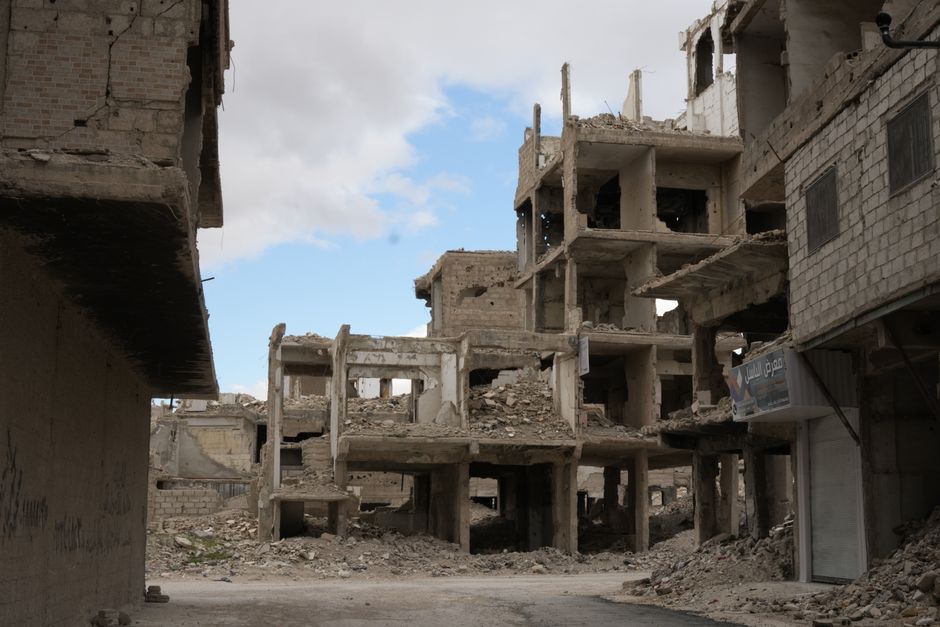
Middle East Conflicts: A Deep Dive into the Dynamics of Geopolitical Turmoil
The Middle East, a region historically at the crossroads of civilizations and trade, is presently characterized by a complex tapestry of interconnected conflicts. These conflicts are not monolithic; rather, they are multifaceted, drawing upon a confluence of historical grievances, political ambitions, religious ideologies, ethnic rivalries, and external interventions. Understanding these dynamics requires dissecting the primary drivers and examining the key actors involved, as well as the cascading effects these conflicts have on regional and global stability. At its core, many of the region’s conflicts are rooted in unresolved territorial disputes, the legacy of colonial-era border drawing, and the struggle for political and economic dominance. The artificiality of many nation-state boundaries, often imposed without regard for existing ethnic or sectarian affiliations, has created fertile ground for internal dissent and inter-state tensions. The rise of non-state actors, often fueled by popular discontent and exploiting political vacuums, further complicates the security landscape, blurring the lines between internal insurgencies and proxy warfare.
A pivotal, and arguably the most enduring, source of conflict in the Middle East is the Israeli-Palestinian conflict. This dispute, spanning over seven decades, centers on competing claims to the same land. The establishment of the State of Israel in 1948, following the UN partition plan and the subsequent Arab-Israeli wars, resulted in the displacement of hundreds of thousands of Palestinians. The occupation of the West Bank, Gaza Strip, and East Jerusalem by Israel since the 1967 Six-Day War remains a central point of contention, with Palestinians seeking an independent state on these territories. Key issues include the right of return for Palestinian refugees, the status of Jerusalem, Israeli settlements in the occupied territories, and security concerns for Israel. International law generally regards Israeli settlements as illegal, and the ongoing expansion of these settlements is a major impediment to a two-state solution, which has been the dominant framework for peace negotiations for decades. Various peace initiatives, including the Oslo Accords, have failed to achieve a lasting resolution, often derailed by renewed violence, political intransigence on both sides, and the rise of more radical factions. The internal political divisions within Palestinian society, primarily between Fatah in the West Bank and Hamas in Gaza, also hinder unified negotiations and governance.
Beyond the Israeli-Palestinian conflict, the region is deeply fractured by sectarian divides, most notably between Sunni and Shia Islam. While theological differences exist, these religious identities have been heavily politicized, becoming a proxy battleground for regional powers seeking to expand their influence. Saudi Arabia, a predominantly Sunni kingdom, and Iran, a Shia Islamic republic, are the two major poles of this geopolitical rivalry. Their competition manifests in proxy wars and interventions across the Middle East, exacerbating existing conflicts and igniting new ones. The Syrian Civil War, which erupted in 2011, has become a devastating theater for this Sunni-Shia proxy struggle. Iran, along with its Lebanese ally Hezbollah, has provided crucial military and financial support to the Syrian government of Bashar al-Assad, who is an Alawite (an offshoot of Shia Islam). Saudi Arabia, on the other hand, has supported various rebel factions, aiming to weaken the Assad regime and curb Iranian influence. This external meddling has prolonged the conflict, leading to immense human suffering, mass displacement, and the rise of extremist groups like ISIS.
The rise of ISIS (the Islamic State of Iraq and Syria) presented a particularly brutal and destabilizing chapter in the region’s recent history. Capitalizing on the power vacuum created by the collapse of state authority in parts of Syria and Iraq, ISIS established a self-declared caliphate, implementing a brutal interpretation of Sharia law and perpetrating widespread atrocities. While the territorial caliphate has largely been defeated, the ideology and residual networks of ISIS continue to pose a significant threat, not only in Iraq and Syria but also through its inspiration of lone-wolf attacks and its presence in other conflict zones. The fight against ISIS has necessitated complex international coalitions, often involving direct military intervention by global powers, further complicating the regional geopolitical landscape. The underlying conditions that allowed ISIS to flourish – state fragility, sectarianism, economic marginalization, and a lack of political representation – remain largely unaddressed, creating a risk of resurgence.
The ongoing civil war in Yemen represents another critical flashpoint in the Middle East’s complex web of conflicts, intricately linked to the Saudi-Iranian rivalry. A Saudi-led coalition, intervening in 2015, seeks to restore the internationally recognized government of President Abd Rabbuh Mansur Hadi, which was ousted by the Houthi movement. The Houthis, a Zaydi Shia group, are widely believed to be supported by Iran, though Iran denies direct military involvement. The conflict has plunged Yemen into one of the world’s worst humanitarian crises, with millions facing starvation and disease. The protracted nature of the war, coupled with the complex internal Yemeni factions and the involvement of regional powers, has made finding a diplomatic solution exceptionally challenging. The strategic location of Yemen, bordering a vital shipping lane, also adds an element of international concern, with fears of the conflict spilling over and impacting global trade.
The political instability and resource-rich nature of Iraq continue to be a source of ongoing concern. The aftermath of the 2003 US-led invasion and the subsequent insurgency, coupled with the rise and fall of ISIS, has left the country deeply scarred. Sectarian tensions, primarily between the Shia majority and the Sunni minority, persist, often exploited by political factions. The influence of external actors, particularly Iran, which enjoys significant leverage over various Shia political and paramilitary groups, is a constant factor in Iraqi politics. Balancing these internal divisions and external pressures while rebuilding state institutions and fostering economic recovery remains a monumental challenge for Iraq. The Kurdish region of northern Iraq, with its aspirations for greater autonomy and its own internal political dynamics, adds another layer of complexity to the country’s fragile political equilibrium.
Turkey’s role in the region, while not always framed as a direct participant in every conflict, is increasingly significant. Its involvement in Syria, particularly its operations against Kurdish militant groups like the YPG, which it considers an extension of the PKK (Kurdistan Workers’ Party), often brings it into friction with other regional and international players, including the United States. Turkey’s complex relationship with both Russia and the West, its historical ties to the region, and its own internal political considerations all shape its engagement. Furthermore, Turkey’s concerns over the rise of Kurdish separatism extend to its own borders and have implications for its relations with Iraq and Iran.
The broader implications of these interconnected conflicts are far-reaching. They fuel extremist ideologies, leading to the radicalization of individuals and the proliferation of terrorist groups. They trigger massive displacement of populations, creating refugee crises that strain the resources of neighboring countries and international aid organizations. They disrupt global energy markets, as the Middle East remains a critical producer of oil and gas. Furthermore, the constant state of insecurity and instability discourages foreign investment and hampers economic development, perpetuating cycles of poverty and discontent that can, in turn, fuel further conflict. The involvement of external powers, driven by their own strategic interests, often exacerbates these conflicts, turning regional disputes into proxy battlegrounds. The arms trade flourishes in these volatile environments, further arming all sides and making de-escalation and peacebuilding all the more difficult.
The search for lasting peace in the Middle East is a daunting task, requiring a multi-pronged approach. This includes addressing the root causes of grievances, such as political exclusion, economic inequality, and historical injustices. It necessitates fostering inclusive governance structures that represent all segments of society. Diplomatic solutions, dialogue, and de-escalation efforts, backed by sustained international commitment, are crucial. Rebuilding trust between communities and nations, promoting economic development, and addressing the humanitarian needs of affected populations are all essential components of any viable peacebuilding strategy. The interconnected nature of these conflicts means that progress in one area can have positive ripple effects elsewhere, while continued inaction or miscalculation in one theater can have devastating consequences for the entire region. The future of the Middle East hinges on the ability of its peoples and its leaders, with the support of the international community, to navigate these complex challenges and forge a path towards a more peaceful and stable future. The legacy of past interventions and the deeply entrenched nature of current rivalries present significant obstacles, but the imperative for peace and stability remains paramount for regional and global security.
