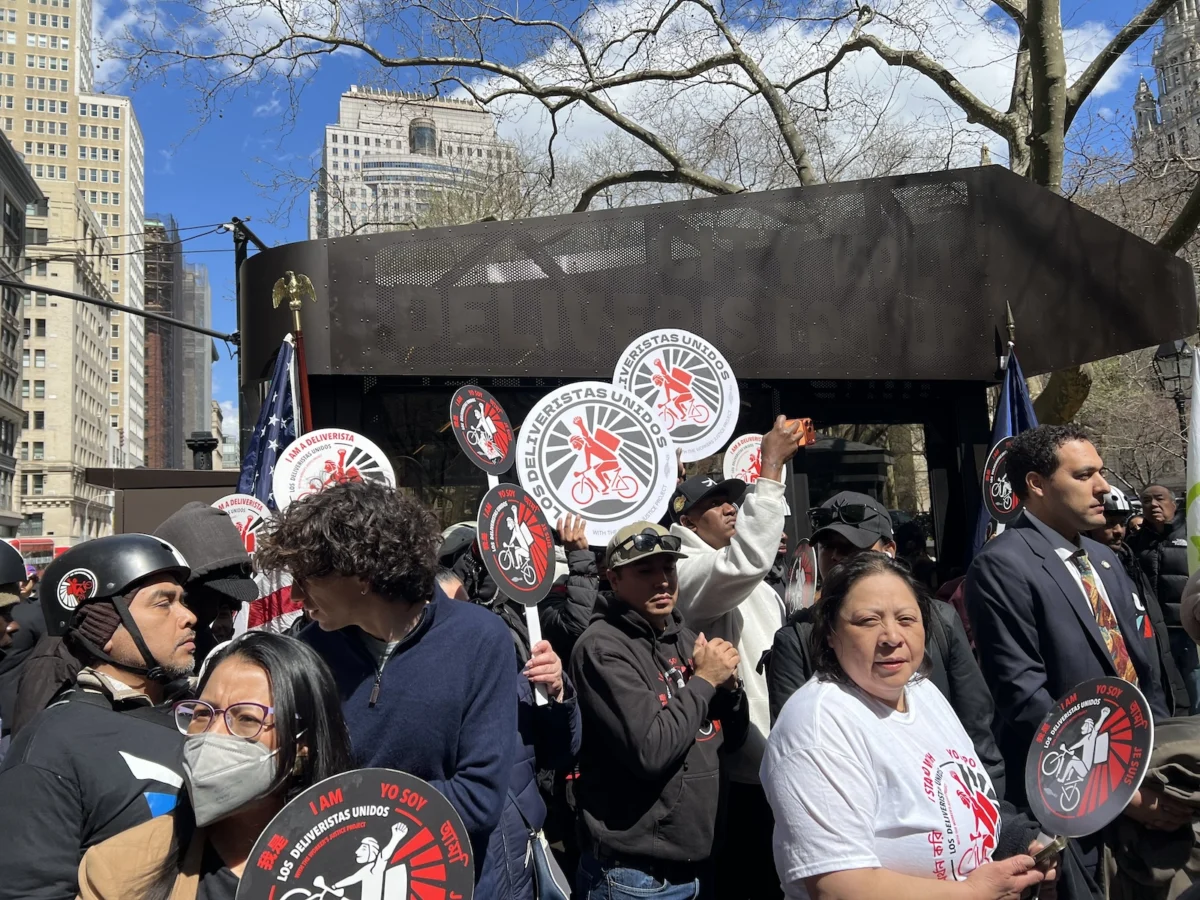
The opening of New York City’s first "deliverista hub" in Lower Manhattan marks a transformative shift in the city’s approach to urban infrastructure and labor rights. Located just a stone’s throw from City Hall, the sleek, modernist structure represents the culmination of years of advocacy by app-based delivery workers who have long served as the invisible backbone of the city’s economy. On a recent Tuesday, under a bright spring sun that belied the high-wind forecasts, municipal employees, union organizers, and delivery workers gathered to celebrate the conversion of a once-vacant newsstand into a sanctuary for the city’s 80,000-plus delivery professionals. The facility, while modest in size, is a high-tech beacon of the "Deliverista Power" movement, designed to provide shelter, battery-charging capabilities, and a sense of community for a workforce that has historically been marginalized in the public realm.
The Genesis of a Movement: From Pandemic Crisis to Infrastructure
The concept of the deliverista hub did not emerge in a vacuum; it was forged during the darkest days of the COVID-19 pandemic. As the city retreated indoors, delivery workers—predominantly immigrants—became essential lifelines, navigating empty streets to bring food and supplies to quarantined residents. Gustavo Ajche, the co-founder of Los Deliveristas Unidos (LDU), recalls the isolation of that period. Speaking to reporters in Spanish, Ajche noted that while the rest of the city was shuttered, delivery workers were left with no place to rest, use the restroom, or seek shelter from the biting cold and rain.
The struggle for basic amenities led Ajche and the Worker’s Justice Project to look at the city’s existing, underutilized infrastructure. They identified dozens of abandoned newsstands—relics of a pre-digital era—as ideal candidates for repurposing. Since 2021, Los Deliveristas Unidos has campaigned for these spaces to be transformed into "hubs" that address the unique needs of the e-bike-reliant workforce. These needs include safe lithium-ion battery charging, protection from extreme weather, and a centralized location for labor organizing.
A Chronology of Bureaucracy and Political Will
The path from the initial 2021 proposal to the 2024 ribbon-cutting was fraught with administrative hurdles. Under the previous mayoral administration led by Eric Adams, the project faced significant delays attributed to permitting bottlenecks and the complex web of jurisdictional oversight involving the Department of Transportation (DOT), the Parks Department, and the Fire Department of the City of New York (FDNY). Proponents of the hub lamented that while the city was quick to authorize outdoor dining sheds for restaurants, it moved at a glacial pace to provide similar protections for the workers delivering the food.
The trajectory changed with the administration of Mayor Zohran Mamdani. Recognizing the hub as a priority for both labor and climate resilience, Mamdani moved to expedite the building process. The New York Times reported that the mayor made the hub’s completion a "100-day" priority, successfully cutting through the red tape that had stalled the project for nearly three years. Once the final permits were secured, the physical construction of the Lower Manhattan hub took only about a month, demonstrating that the primary obstacle had been political rather than technical.
Technical Specifications and Current Operations
The new hub is a study in functional modernism. It features clear glass windows that allow for natural light and safety visibility, supported by tall metallic columns that give the structure an industrial yet clean aesthetic. While the structure is now formally open, its full suite of planned amenities is being rolled out in phases.
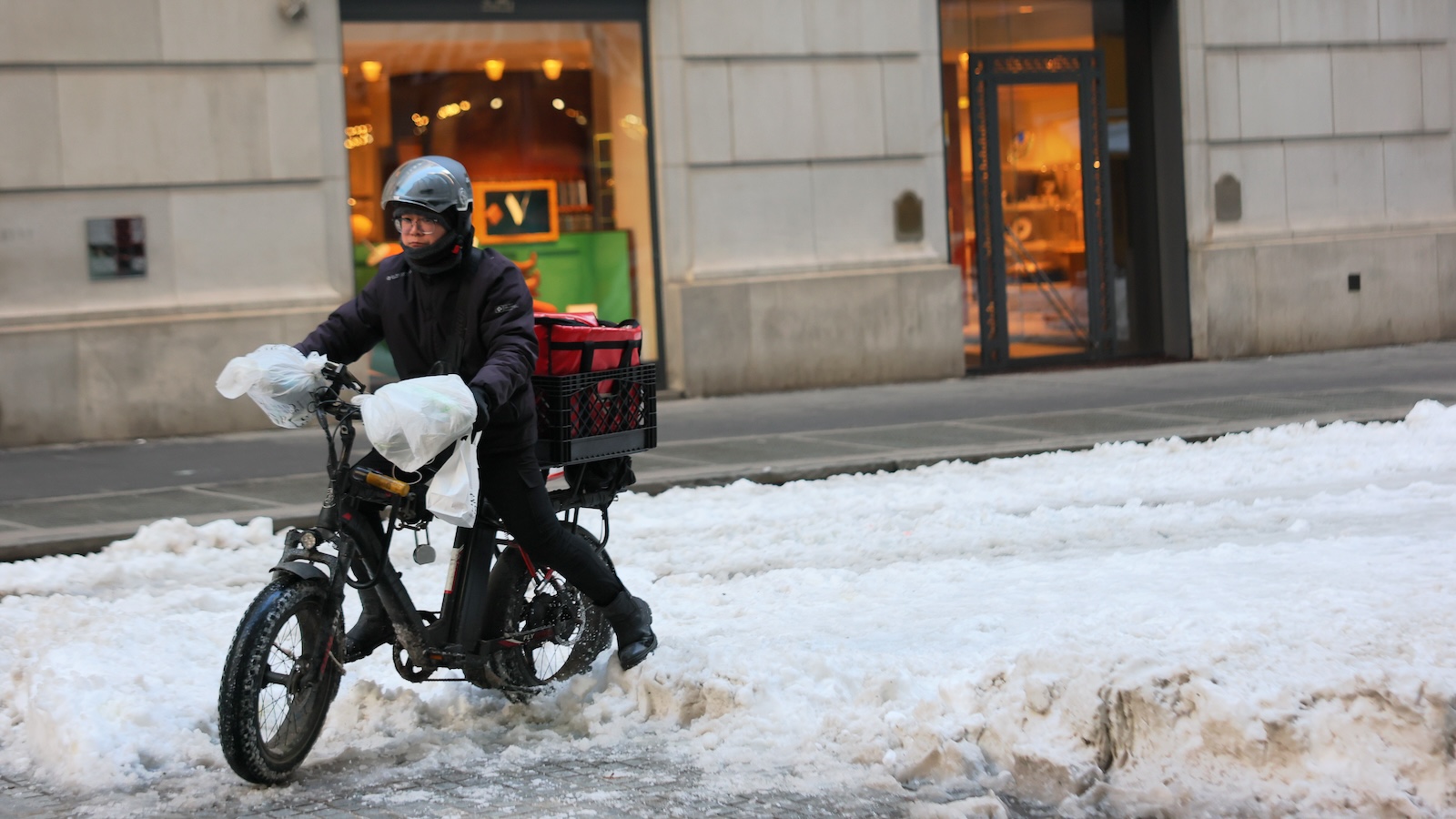
Currently, the hub serves as a critical node for e-bike battery management. Through a partnership with private technology providers, workers and cyclists can participate in a battery-swapping program. For a fee of approximately $2 per day, workers can exchange a depleted e-bike battery for a fully charged one. This system is a vital safety measure; NYC has seen a surge in residential fires caused by faulty lithium-ion batteries being charged in apartments. By providing a regulated, outdoor charging and swapping environment, the hub directly addresses a major public safety concern.
Future upgrades for the hub include the installation of a full HVAC (heating, ventilation, and air conditioning) system to provide a true climate-controlled environment, as well as high-speed charging stations for various electronic devices. Furthermore, the hub will serve an administrative and social function. It is slated to be staffed five days a week by a representative from the Worker’s Justice Project, providing a physical "front door" for workers to learn about their rights, join the union, and access legal or social services.
Supporting Data: The Scale of the Delivery Economy
The necessity of these hubs is underscored by the sheer scale of the app-based delivery industry in New York City. Recent data highlights the following:
- Workforce Size: There are an estimated 65,000 to 80,000 active delivery workers in the five boroughs.
- Economic Impact: The delivery sector accounts for billions of dollars in economic activity, with the city’s residents relying on apps for everything from hot meals to groceries and pharmaceutical supplies.
- Safety Statistics: Delivery workers are among the most vulnerable road users. In 2023, dozens of delivery workers were killed or seriously injured in traffic accidents, and the lack of dedicated rest areas often forces workers to wait on dangerous street corners or in cramped, unventilated spaces.
- Environmental Impact: By utilizing e-bikes and scooters instead of cars, deliveristas prevent thousands of tons of CO2 emissions annually. However, this shift to micro-mobility requires new types of infrastructure that the city’s 20th-century grid was not designed to accommodate.
Funding and Multi-Agency Cooperation
The Lower Manhattan hub was made possible through a blend of federal and local support. U.S. Senator Chuck Schumer played a pivotal role by securing $1 million in federal funding to kickstart the initiative. At the opening ceremony, Schumer emphasized that providing infrastructure for delivery workers is not just a local labor issue but a matter of national importance regarding the transition to green energy and fair work standards.
The project also required a rare alignment of city agencies. Parks Commissioner Tricia Shimamura, who has been in her role for only two months, noted that while the Parks Department manages the land for this specific hub, future sites may fall under the jurisdiction of the DOT or private-public partnerships. Other officials in attendance included New York City Public Advocate Jumaane Williams and City Council Member Shaun Abreu, both of whom have been vocal supporters of the "Minimum Pay" legislation that recently raised the base wage for app-based workers to $19.56 per hour before tips.
Implications for Climate Justice and Urban Planning
The deliverista hubs sit at the intersection of climate justice and urban equity. As climate change increases the frequency of extreme weather events—including record-breaking heatwaves and flash flooding—the outdoor nature of delivery work becomes increasingly hazardous. In 2021, during the remnants of Hurricane Ida, several delivery workers were filmed navigating waist-deep water to fulfill orders.
Ligia Guallpa, Executive Director of the Worker’s Justice Project, argues that the hub is a step toward "reclaiming the public realm." For decades, New York’s streets and sidewalks have been prioritized for private automobiles and the wealthy. By dedicating prime real estate near City Hall to a worker center, the city is signaling a shift in who is entitled to occupy public space. Guallpa noted that the hub is a "victory for the working class," proving that infrastructure can be designed to serve those who keep the city running rather than just those who can afford to pay for luxury amenities.
Looking Ahead: The Five-Borough Vision
While the opening of the first hub is a landmark event, both union leaders and city officials acknowledge that one shed cannot serve 80,000 people. The long-term vision involves a network of dozens of hubs across all five boroughs, particularly in "delivery deserts" where workers have few options for shelter.
The expansion of the program faces two primary challenges: financing and real estate. While the federal government provided the initial seed money, a city-wide rollout will require sustained municipal funding or a dedicated tax on delivery platforms. Furthermore, finding suitable locations that do not interfere with pedestrian flow or existing commercial interests remains a point of contention in many neighborhoods.
Despite these challenges, the mood at the inaugural hub remains jubilant. As the ceremony concluded last Tuesday, a fine mist began to fall—not from the clouds, but from window-washers working on a skyscraper across the street. The workers present didn’t mind. They posed for photos, held up their union signs, and chanted "Deliverista Power!" into the Manhattan air. For the first time in the history of New York City, they had a place of their own—a small, glass-and-metal testament to the power of organized labor in a changing world.