Physicist Emma Chapman, in her illuminating new book Radio Universe: How to explore space without leaving Earth (published as The Echoing Universe in the US on May 19th), invites readers on a journey through the cosmos, not by physically venturing into space, but by decoding the universe’s oldest and most pervasive language: light. This ambitious exploration draws a compelling parallel to Albert Einstein’s thought experiment at age 16, where imagining chasing a beam of light led to his groundbreaking theory of special relativity. While Einstein sought to experience the universe at its fastest speed, Chapman’s focus is on the light signals themselves, which serve as explorers, guides, and messengers, revealing the universe’s deepest secrets.
Chapman, a radio astronomer, emphasizes that "The universe already speaks the language of light," and her book serves as a profound guide to how humanity has learned to understand and interpret this cosmic dialect through the sophisticated lens of radio telescopes. This accessible yet comprehensive work demystifies the electromagnetic spectrum, highlighting how radio waves, with their comparatively vast wavelengths—stretching up to several meters between peaks or valleys—possess unique capabilities that differentiate them from their shorter-wavelength counterparts like ultraviolet or visible light.
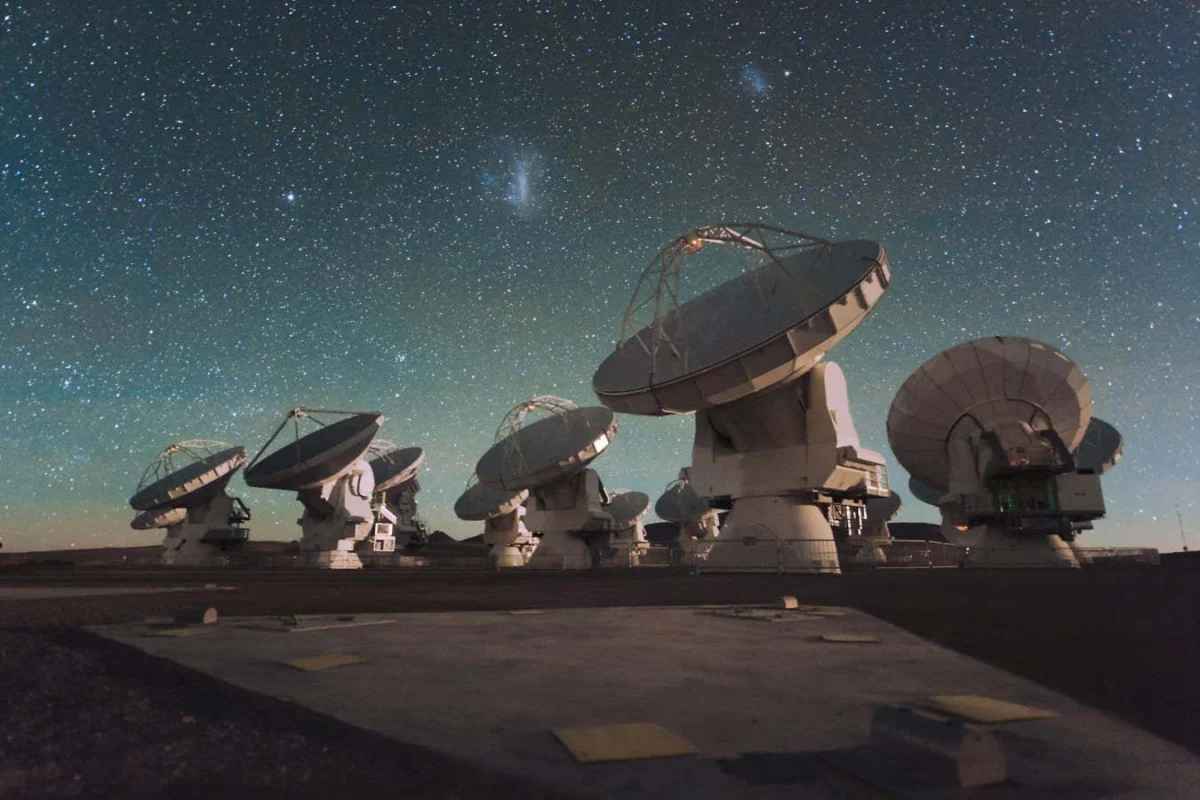
The extended reach of radio waves allows them to traverse greater cosmic distances than other forms of electromagnetic radiation. This fundamental property enables radio telescopes to probe deeper into the universe and detect fainter signals than optical telescopes. Furthermore, the ability of radio telescopes to operate effectively in both daylight and darkness offers astronomers extended observation periods, a significant advantage in the pursuit of celestial knowledge. Chapman extols the remarkable versatility of these instruments, showcasing their capacity to unveil the mysteries of our solar system, our galaxy, and the universe beyond, even reaching out to the potential abodes of extraterrestrial civilizations.
Charting the Cosmic Landscape: A Radio Signal’s Journey
Radio Universe is meticulously structured into three overarching sections: Our Solar System, Our Galaxy, and Our Universe. This organizational framework follows the conceptual journey of a radio signal from its origin to its reception by Earth-based observatories.

Exploring Our Solar System Through Radio Waves:
The book begins by revisiting humanity’s initial lunar encounters, revealing that the first touch of humankind on the Moon was not through Neil Armstrong’s iconic bootprint, but via a radio wave. Chapman details how contemporary radio studies continue to be pivotal in unraveling the Moon’s enigmatic origin and geological history. The narrative then shifts to Venus, a planet so inhospitable that conventional light-based observation techniques prove insufficient. Here, Chapman highlights the "superpower" of radio waves: their unparalleled ability to penetrate dense atmospheres and communicate with otherwise inaccessible environments. This capability has been crucial in understanding Venus’s surface composition and atmospheric dynamics, areas that remain largely obscured to optical observation.
Further into the solar system, Chapman delves into the intricacies of observing the asteroid belt. Her explanations offer not only a masterclass in radio astronomy but also a fundamental lesson in general astronomy. The reader is made to feel the dynamic nature of celestial bodies, such as Mercury’s swift orbit around the sun, which, despite posing landing challenges, does not deter investigations via radio signals. This engaging approach transforms complex astronomical concepts into vivid, relatable experiences, akin to receiving insights from a knowledgeable friend or an ideal travel companion.
Galactic Discoveries and Universal Enigmas:
Moving beyond our immediate solar neighborhood, Radio Universe illuminates the critical role of radio astronomy in understanding our Milky Way galaxy and the wider universe. Chapman discusses how some of the most iconic and groundbreaking images of black holes are derived from radio data. These observations have been instrumental in confirming the existence of these enigmatic celestial objects and studying their properties.
The book also chronicles the revolutionary impact of radio astronomers in detecting the first indirect evidence of gravitational waves – ripples in the fabric of spacetime predicted by Einstein’s theory of general relativity. These faint signals, often obscured by other cosmic noise, were first identified through meticulous radio observations. Furthermore, radio waves have played a significant part in the discovery of exoplanets, expanding our understanding of planetary systems beyond our own.
The Search for Extraterrestrial Intelligence and the Unseen Universe
A particularly captivating aspect of Radio Universe is its exploration of radio astronomy’s potential in the search for alien civilizations. Chapman posits, "Far more likely than any invasion is contact by radio signal." She elaborates on the profound implications of this idea, suggesting that regardless of the atmospheric conditions or biological characteristics of an extraterrestrial world, radio waves would likely serve as the primary medium for long-distance communication. This vision underscores the universal nature of physics and the potential for intergalactic dialogue through the language of radio.

The final chapters of the book tackle two of the most profound and persistent mysteries in modern physics: dark matter and dark energy. These elusive substances constitute the vast majority of the universe’s mass-energy content, yet their fundamental nature remains largely unknown due to the challenges in their direct detection. Chapman meticulously outlines how radio telescopes can indirectly contribute to our understanding of these cosmic enigmas. For instance, by detecting radiation emitted by interstellar hydrogen gas, astronomers can map the distribution of dark matter in galaxies, inferring its presence and gravitational influence. This approach exemplifies how radio astronomy, by observing the faint whispers of the universe, can illuminate the unseen.
A Beacon of Accessible Science and Inherent Challenges
Chapman’s writing style is consistently praised for its accessibility, imagination, and compelling narrative. Her ability to imbue scientific explanations with a sense of wonder and personal connection makes complex topics digestible and engaging. The humor woven throughout the book further enhances the reading experience, reflecting the author’s genuine passion for her field. The inclusion of an appendix listing visitable radio telescopes offers a practical avenue for enthusiasts to connect with the science on a more tangible level.
However, the book is not without its critical reflections. While Chapman champions the advancements in space exploration, the review notes a perceived lack of critical engagement with the current trajectory of commercial space ventures, particularly concerning the colonization of Mars and lunar resource exploitation. The reviewer questions whether an ardent astronomer should not advocate for a more democratic and equitable future for space exploration, moving beyond a model driven by private enterprise.
Additionally, while the narrative highlights the contributions of several prominent American and British radio astronomers, there is a noted imbalance in the detailed coverage of researchers from other global regions. The review points out that significant radio telescopes, such as those historically in Puerto Rico and more recently in Chile, have been instrumental in major discoveries, yet receive less detailed attention within Chapman’s narrative. This observation suggests a potential area for broader acknowledgment of the global collaborative nature of modern astronomical research.
Despite these reservations, Chapman’s central thesis remains powerfully articulated: the universe is far from silent. "Wherever you are, you are surrounded by radio waves," she explains. "Some have escaped black holes, some are the echoes from asteroids. Some have even travelled to us from the Era of the First Stars. We just have to close our eyes, and listen." This evocative sentiment serves as a powerful call to embrace the universe’s invisible symphony, encouraging readers to perceive the cosmos not just through sight, but through a deeper, more receptive form of listening.

Recommended Reading: Further Explorations in Astronomy
The review also thoughtfully recommends two additional significant works that delve into the profound questions of cosmology and physics, offering diverse perspectives and approaches:
1. Fear of a Black Universe: An outsider’s guide to the future of physics by Stephon Alexander
Stephon Alexander, a theoretical physicist and cosmologist, presents a captivating exploration of the universe, blending scientific rigor with personal introspection and artistic inspiration. His work draws parallels between complex cosmological theories, such as quantum gravity, and influences from his life experiences, including his background as a Black man and his engagement with practices like Zen Buddhism. Alexander masterfully integrates mathematical concepts, like Feynman diagrams, with narratives of his personal journey, offering a unique and interdisciplinary perspective on the universe’s fundamental mysteries.
2. The Disordered Cosmos: A journey into dark matter, spacetime and dreams deferred by Chanda Prescod-Weinstein
Chanda Prescod-Weinstein, a well-regarded theoretical physicist and regular columnist for New Scientist, delivers a potent combination of scientific insight and sociopolitical commentary. Her book provides rigorous explanations of phenomena such as dark matter while critically examining the societal and historical contexts that have shaped our understanding of physics. Prescod-Weinstein also directly addresses issues related to the ethical considerations of astronomical research, including the placement of telescopes and the importance of consent from indigenous communities. Her work underscores that scientific inquiry, even when focused on abstract concepts like light and spacetime, is deeply intertwined with broader societal responsibilities.
These complementary works, alongside Radio Universe, offer a rich tapestry of contemporary astronomical thought, demonstrating the multifaceted nature of scientific discovery and its profound connections to human experience and societal progress. They collectively underscore the ongoing quest to decipher the universe’s intricate narratives, urging us to listen more closely to the cosmic whispers that surround us.