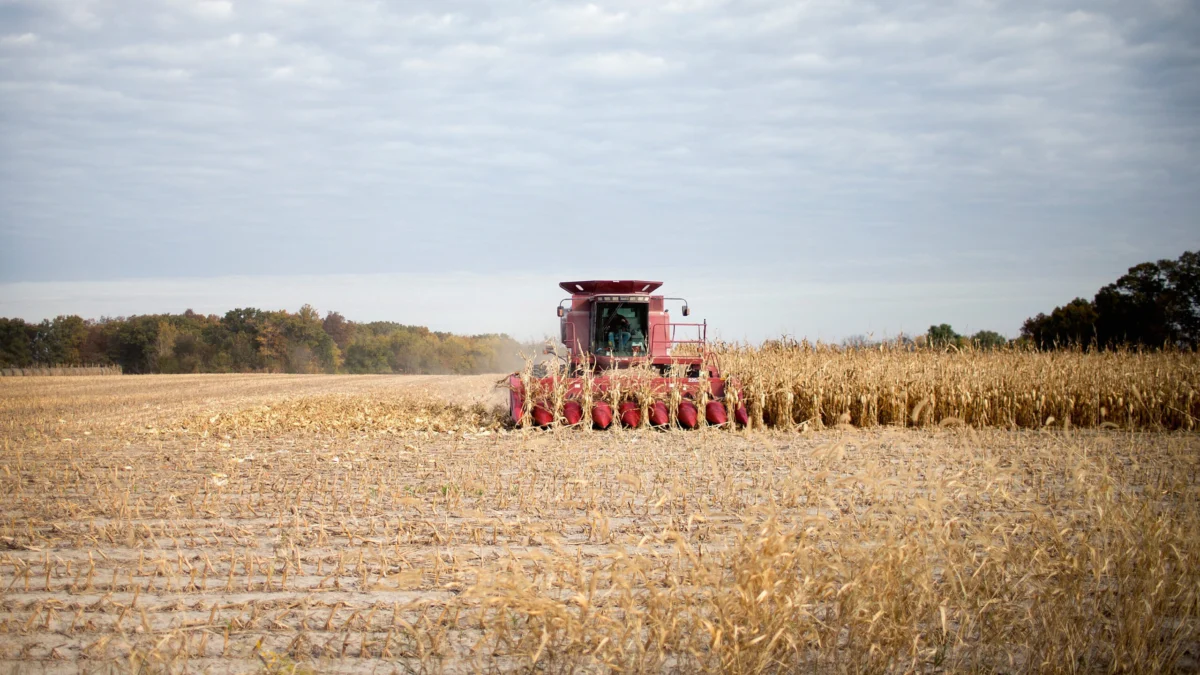
The Iowa state legislature has approved a controversial measure that provides a legal shield for agricultural operations against lawsuits related to the climate impacts of their greenhouse gas emissions. The bill, which now sits on the desk of Governor Kim Reynolds for her expected signature, marks a significant shift in the state’s legal landscape, effectively insulating a broad swathe of the state’s economy—from family farms to massive industrial ethanol plants—from litigation tied to global warming. While proponents argue the legislation protects food producers from "frivolous" legal challenges, critics and environmental advocates contend the move is a preemptive strike designed to protect corporate interests and industrial polluters at the expense of environmental accountability.
Legislative Background and the Definition of Agricultural Sources
The legislation was introduced by State Representative Derek Wulf, a Republican farmer from Hudson, who framed the bill as a necessary defense for the state’s primary industry. During House debates in February, Wulf characterized climate-related litigation as a threat based on "perceived greenhouse gases" and argued that farmers should not be held liable for global environmental phenomena. The bill’s passage reflects the Republican supermajority’s commitment to deregulating the agricultural sector, which remains the backbone of Iowa’s economy.
One of the most significant aspects of the bill is its expansive definition of "agricultural sources." Under the new law, the term applies to any location where a farm commodity is produced, handled, stored, processed, or distributed. This umbrella definition extends far beyond the traditional family farm, encompassing livestock confinement facilities (CAFOs), slaughterhouses, grain elevators, and, perhaps most notably, ethanol production plants. By grouping industrial processing facilities with traditional farming, the bill provides the state’s massive renewable fuels industry with the same legal protections intended for individual growers.
The Ethanol Industry: A Primary Beneficiary
While the public rhetoric surrounding the bill often focuses on the "family farmer," data suggests that Iowa’s ethanol industry stands to gain the most from these protections. Iowa is the nation’s leading producer of ethanol, home to 42 plants that account for nearly 25 percent of the total U.S. ethanol capacity. In a typical year, approximately 40 percent of the corn grown in Iowa is processed into ethanol.
The fermentation process used to create ethanol is energy-intensive and results in the release of significant quantities of carbon dioxide. According to industry data, Iowa’s ethanol plants produce nearly 4.5 billion gallons of biofuel annually, a process that inherently involves large-scale greenhouse gas emissions. In recent years, the industry has come under increased scrutiny. For example:
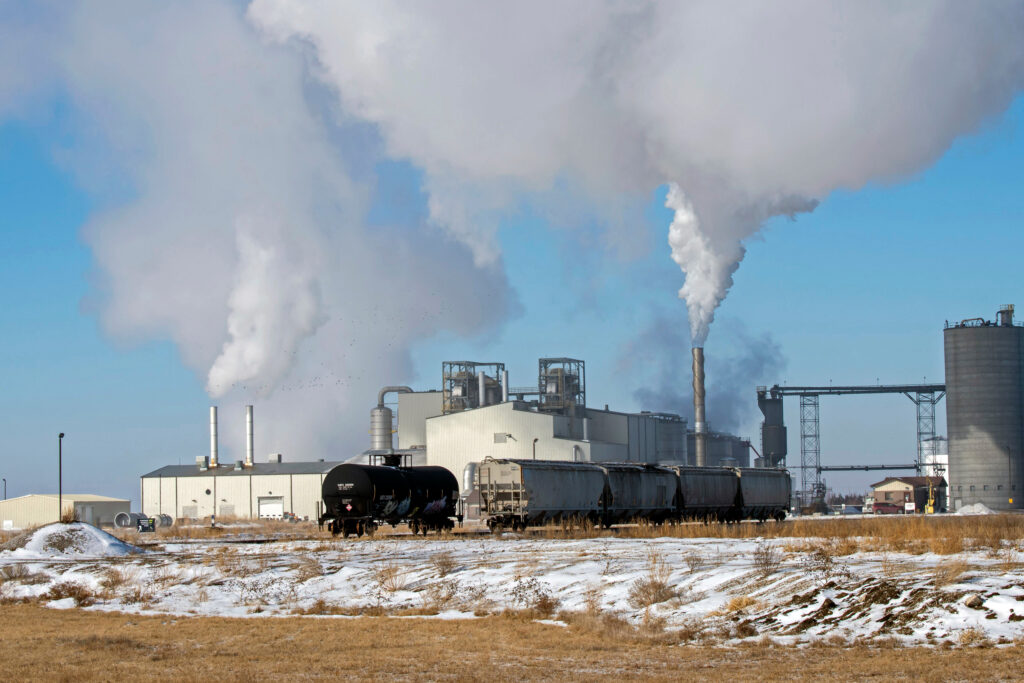
- Quad County Corn Processors: In 2024, Iowa Attorney General Brenna Bird sued this Galva-based plant for Clean Air Act violations spanning 600 days. While the case resulted in a $100,000 settlement—a fraction of the $6 million initially sought—it highlighted the industry’s vulnerability to emissions-related legal action.
- POET Bioprocessing: In 2023, one of the state’s largest producers was fined the maximum administrative penalty of $10,000 for failing to update emissions-reducing equipment and repeatedly exceeding carbon dioxide limits.
Critics argue that the new legislation is specifically designed to prevent these types of enforcement actions from escalating into broader climate-based liability suits. By shielding "processing and distribution" centers, the state is effectively protecting an industry that is currently navigating the complexities of carbon capture and sequestration (CCS) projects, such as the controversial multi-state carbon pipelines currently under development in the Midwest.
A Solution in Search of a Problem?
A central point of contention during the legislative debate was the actual existence of the threat the bill claims to mitigate. Aaron Lehman, president of the Iowa Farmers Union, has been vocal in his opposition, stating that climate lawsuits are not a concern for the state’s actual farmers. "We are not aware of any farmer or rancher who has been threatened by the types of legal challenges this law claims to protect them from," Lehman noted.
In subcommittee meetings, Representative Wulf acknowledged that there are currently no active lawsuits in Iowa targeting farmers for the climate impacts of their greenhouse gas emissions. Historical precedents also suggest that legal challenges have targeted regulatory agencies rather than individual producers. For instance, a 2018 attempt by Northeast Iowa residents to address hog confinement emissions was directed at the Department of Natural Resources (DNR) for failing to regulate air quality, rather than at the farmers themselves.
Furthermore, national climate litigation has largely focused on "greenwashing" rather than direct emission damages. Recent lawsuits filed by the New York Attorney General against JBS USA and the Environmental Working Group against Tyson Foods argue that these companies misled consumers with claims of reaching "net-zero" emissions. These cases are rooted in consumer protection and fraud rather than the physical harm caused by emissions, a distinction that critics say makes the Iowa bill’s protections redundant for farmers but highly beneficial for industrial emitters.
Chronology of State-Level Climate Shields
Iowa’s move is part of a broader national trend where conservative-led states are preemptively blocking climate litigation. The timeline of similar legislation highlights a coordinated effort to insulate carbon-intensive industries:
- 2021: Florida amended its "Right to Farm Act" to include protections against nuisance suits related to "environmental changes," setting a precedent for using agricultural laws to block climate-related claims.
- 2023: South Dakota Governor Kristi Noem signed legislation making it more difficult to file nuisance complaints against farms regarding odors or pollution, narrowing the window for environmental litigation.
- March 2024: Utah Governor Spencer Cox signed a law limiting liability for any "damage or injury" caused by greenhouse gas emissions. Utah’s law is even broader than Iowa’s, as it covers all individual and corporate emitters, not just those in the agricultural sector.
- April 2024: Iowa joins the cohort, passing a bill that specifically links "agricultural sources" to a shield against climate impact lawsuits.
The Legal Threshold: "Clear and Convincing Evidence"
The Iowa bill does not offer an absolute ban on all lawsuits, but it creates a formidable legal hurdle for potential plaintiffs. To successfully sue an agricultural operation for emissions, a plaintiff must prove by "clear and convincing evidence" that the operation violated existing state or federal laws or permits.

In legal terms, "clear and convincing evidence" is a significantly higher burden of proof than the "preponderance of evidence" standard typically used in civil cases. While "preponderance" simply means a claim is more likely true than not (51%), "clear and convincing" requires the evidence to be highly and substantially more probable to be true than not.
State Senator Art Staed argued during the Senate debate that this exception is a "red herring." He pointed out that permits often serve as a regulatory "floor" rather than a ceiling for safety. Furthermore, the effectiveness of this exception depends entirely on the existence of robust federal and state regulations. If federal standards for greenhouse gases are rolled back—a stated goal of some national political platforms—the "violation of a permit" clause becomes moot because the permits would no longer contain strict emission limits.
Implications for Federal Regulation and the Endangerment Finding
The debate over the Iowa bill is inextricably linked to the federal "endangerment finding." Established by the EPA in 2009, this finding determined that greenhouse gases threaten the public health and welfare of current and future generations, providing the legal basis for the EPA to regulate emissions under the Clean Air Act.
During the Trump administration, efforts were made to weaken the legal standing of this finding. Critics of the Iowa bill, including Dani Replogle, staff attorney for Food & Water Watch, argue that if the endangerment finding is ever successfully overturned or significantly weakened at the federal level, Iowa’s new law would essentially grant industrial emitters "blanket immunity."
"If the primary basis for emission limits in permits is off the table, this bill takes away a vital route for people who are injured by climate-related harms to be compensated," Replogle stated. This creates a potential "race to the bottom" where states compete to offer the most lenient regulatory environments for carbon-heavy industries.
Economic and Environmental Outlook
Iowa’s economy is deeply intertwined with carbon-intensive activities. The state is the largest producer of corn and pork in the United States and a leader in egg production. These sectors contribute significantly to methane and nitrous oxide emissions—greenhouse gases that are far more potent than carbon dioxide in the short term.

The passage of this bill suggests that Iowa’s leadership is prioritizing the immediate economic stability of the industrial agricultural and ethanol sectors over long-term climate accountability. By framing climate litigation as "frivolous," the state risks alienating farmers who are interested in participating in carbon markets or adopting regenerative practices that require transparent reporting of emissions.
Environmental groups argue that the law will stifle innovation. If companies are shielded from the legal consequences of their emissions, there is less financial incentive to invest in cleaner technologies. Conversely, industry groups like the Iowa Renewable Fuels Association (which registered in support of the bill) argue that such protections provide the "regulatory certainty" needed to keep Iowa competitive in the global energy market.
As Governor Reynolds prepares to sign the bill, the state enters a new era of environmental law. The legislation reinforces Iowa’s status as a stronghold for industrial agriculture and ethanol, while simultaneously setting a high bar for any future attempt to address the state’s contribution to the global climate crisis through the judicial system. The long-term impact will likely be felt not just in Iowa’s courtrooms, but in the state’s air and water quality for decades to come.