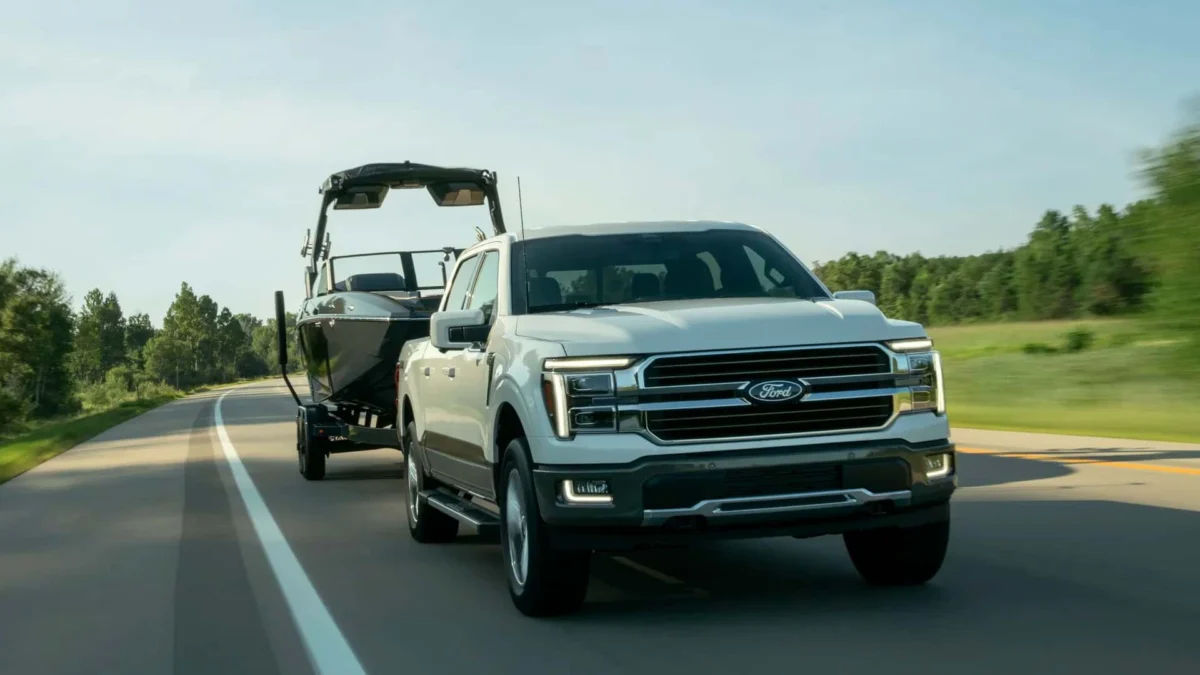
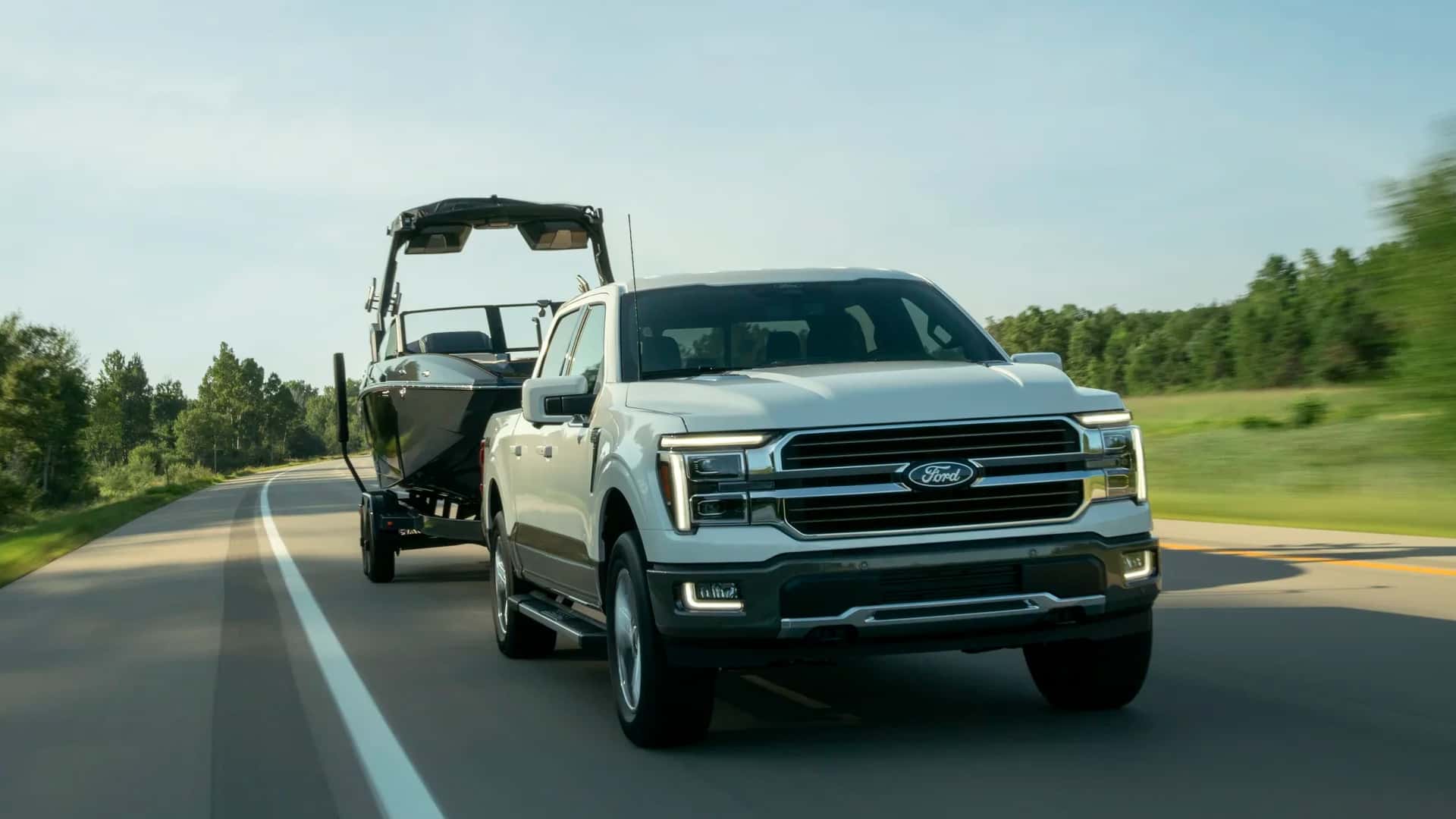
Ford Motor Company has officially announced a significant expansion of its advanced driver-assistance system (ADAS), introducing "BlueCruise with Towing" for the 2027 model year of the F-150. This technological leap addresses a core segment of the automaker’s customer base, as internal company data indicates that more than three-quarters of F-150 buyers utilize their vehicles for towing operations. By integrating hands-free driving capabilities while a trailer is attached, Ford is attempting to streamline the driving experience for millions of owners who regularly navigate highways with heavy payloads.
The new functionality, set to debut in 2027, allows the F-150 to maintain its lane position while towing up to 10,000 pounds. While the system represents a significant software milestone for the automotive giant, Ford is maintaining the Level 2 classification for the technology. This designation serves as a critical reminder to consumers that while the vehicle can manage steering and speed in specific conditions, the driver remains legally and operationally responsible for monitoring the road and surrounding traffic at all times.
The Evolution of Hands-Free Driving
The development of BlueCruise with Towing follows years of iterative improvements to Ford’s software suite. Since its introduction, BlueCruise has become a central pillar of Ford’s "Ford Blue" internal division, which focuses on internal combustion and hybrid vehicle technology, and "Ford Model e," which manages electric vehicles.
In the previous calendar year, Ford owners recorded approximately 118 million miles using BlueCruise. Despite this massive volume of usage, the inability to engage the system while towing had remained a notable limitation for the truck-heavy demographic. The integration of towing support effectively closes a feature gap between Ford and General Motors, which has offered a similar hands-free towing capability via its Super Cruise system since 2022.
The software architecture required to solve this problem was described by Ford engineers as one of the most complex in the company’s history. Unlike standard highway driving, towing introduces a shifting array of variables, including varying trailer lengths, dynamic weight distribution, and unpredictable aerodynamic forces. Engineering a system that can account for these factors while maintaining stable steering input required substantial advancements in sensor fusion and real-time load monitoring.
Technical Requirements and Operational Safeguards
Ford has established a rigorous framework for the activation of BlueCruise with Towing to ensure maximum safety. Drivers cannot simply engage the system without preparation; the vehicle requires a pre-configured trailer profile, which includes precise dimensions of the attached equipment. This data allows the onboard computer to calibrate steering assist and braking responsiveness based on the specific physics of the load.
To maintain safety standards, several operational limitations are hardcoded into the system:
- Lane-Change Restrictions: The system will not perform automatic lane changes while a trailer is attached.
- Geographic Constraints: BlueCruise with Towing remains restricted from construction zones, where road markings may be erratic or temporary.
- Velocity Caps: The system will not engage or maintain functionality at speeds exceeding 75 mph.
Beyond these operational limits, the F-150’s onboard sensors are designed to perform continuous diagnostics. If the system detects that the trailer has been overloaded or identifies dangerous anomalies such as "trailer sway," it is programmed to execute automatic safeguards. These measures range from limiting the vehicle’s speed to proactively disengaging the hands-free mode and prompting the driver to take full manual control.
Market Reach and Model Availability
Ford has confirmed that this technology will not be relegated to top-tier, luxury-priced trims. For the 2027 model year, BlueCruise with Towing will be available across the vast majority of the F-150 lineup. The only exceptions are the entry-level XL work truck and the STX trims, which are generally configured for fleet or commercial utility.
This decision signals a strategic move by Ford to normalize high-end driver-assistance features in the work-truck sector. By democratizing this technology, Ford is positioning its F-150 as a more sophisticated tool for contractors, outdoor enthusiasts, and long-distance haulers who are increasingly looking for ways to reduce driver fatigue during long, taxing journeys.
Industry Context and Competitive Landscape
The race for supremacy in the ADAS market has intensified as manufacturers pivot toward "software-defined vehicles." Ford’s expansion of BlueCruise is a direct response to the competitive pressure exerted by General Motors, whose Super Cruise system remains the primary benchmark for hands-free highway driving.
Analysts observe that the "towing" segment represents the final frontier for many ADAS platforms. Because towing changes the physical footprint and the turning radius of the vehicle, it poses unique challenges for computer vision systems. While competitors have focused heavily on urban self-driving experiments, Ford’s focus on the F-150 underscores a pragmatic approach: improving the quality of life for the core demographic that provides the bulk of the company’s annual revenue.
Furthermore, the introduction of this feature arrives at a time when regulatory scrutiny of autonomous and semi-autonomous systems is at an all-time high. By keeping the system strictly at Level 2 and implementing restrictive safety "guardrails," Ford is likely attempting to appease regulators who are concerned about driver over-reliance on automation.
Future Implications for Ford’s Ecosystem
The rollout of BlueCruise with Towing for the 2027 model year is expected to act as a catalyst for future software-over-the-air (SOTA) updates. As Ford refines its sensor data collection, it is likely that the company will continue to push the boundaries of what these systems can handle in inclement weather or on more complex secondary road systems.
The data gathered from these 118 million-plus miles of BlueCruise usage—and the forthcoming millions of towing miles—will be invaluable for the company’s broader goals in vehicle autonomy. By analyzing how drivers interact with these systems while under the stress of hauling heavy loads, Ford can identify human-machine interface (HMI) pain points that were previously invisible.
Ultimately, the addition of BlueCruise to the towing experience is more than just a software update; it is a fundamental shift in how the "American pickup" is perceived. The F-150, historically viewed through the lens of raw mechanical capability—towing capacity, torque, and bed volume—is now increasingly defined by its digital prowess. As the automotive industry continues to transition toward electrification and high-level automation, Ford is betting that the winning formula involves marrying traditional ruggedness with high-tech convenience.
For the 2027 F-150, the promise is clear: the truck remains a workhorse, but the burden of the long haul is shared with an increasingly intelligent co-pilot. Whether this will lead to widespread adoption of hands-free towing remains to be seen, but the industry consensus suggests that this is the logical next step in the evolution of consumer vehicle technology. Ford’s commitment to providing this across its mid-to-high-range trims suggests that the company expects this feature to become a standard expectation for truck buyers within the next half-decade.