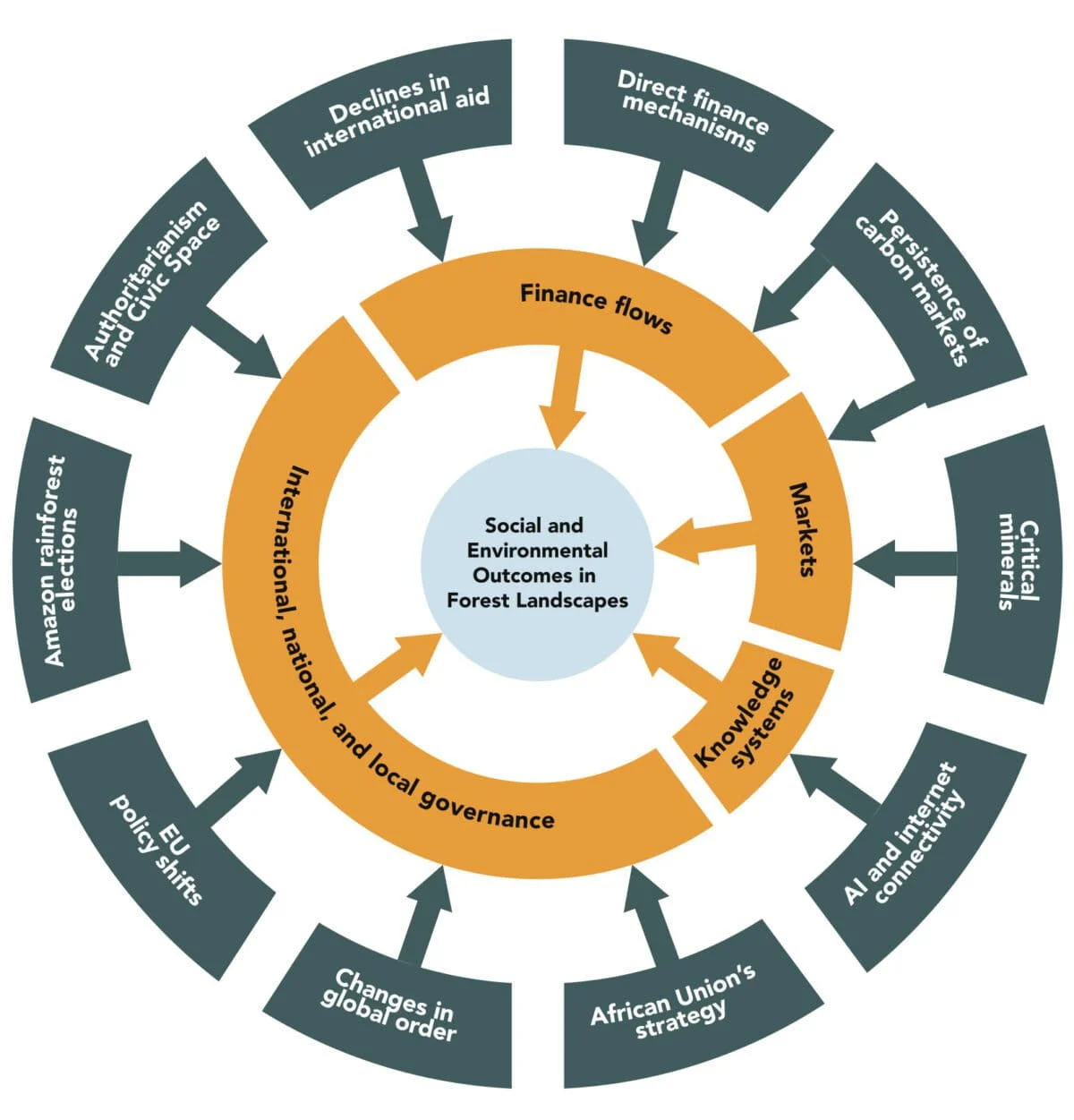
The global landscape of forest conservation is undergoing a profound transformation as a convergence of political, financial, and technological shifts redefines the relationship between humanity and its most critical terrestrial ecosystems. A comprehensive horizon scan recently published in the journal Forest Policy and Economics, led by Matilda Kabutey-Ongor and a team of international researchers, identifies ten pivotal emerging issues that are expected to dominate the forest sector between the present day and the early 2030s. The study highlights a troubling reality: while the drivers of change are accelerating at an unprecedented pace, the institutions and regulatory frameworks designed to protect forests are struggling to remain relevant.
This horizon scan, which utilized structured consultations with a diverse array of researchers, practitioners, and policy experts, suggests that the coming decade will be characterized by heightened uncertainty. As traditional governance models face obsolescence, new actors—ranging from artificial intelligence developers to private philanthropic organizations—are stepping into the void. The resulting fragmentation of forest governance presents both novel opportunities for conservation and significant risks for the communities that depend on these ecosystems for their survival.
The Financial Transition: From Public Aid to Private Markets
For more than half a century, forest governance and conservation efforts in the Global South have been heavily reliant on Official Development Assistance (ODA) from wealthier nations. However, the study identifies the retreat of traditional aid as one of the most significant financial shifts of the decade. As donor nations pivot their budgets toward domestic concerns, geopolitical conflicts, and immediate humanitarian crises, the long-term funding required for forest monitoring and field projects is drying up.
While philanthropy is attempting to bridge this gap, experts warn that private giving is often less predictable and smaller in scale than state-led aid. This shift is occurring alongside the rapid evolution of forest carbon markets. Driven by corporate net-zero commitments and tightening international regulations, these markets are funneling billions into forest preservation. Yet, the study notes that the integrity of these markets remains under intense scrutiny. Issues surrounding the accurate calculation of carbon sequestration and the equitable distribution of profits continue to plague the sector.

A more promising financial development is the emergence of direct funding mechanisms for Indigenous peoples and local communities (IPLCs). Historically, conservation funds have been filtered through national governments or large international non-governmental organizations, often losing a significant portion to administrative overhead. The new trend involves bypassing these traditional intermediaries to place resources directly in the hands of frontline forest defenders. While this empowers local autonomy, it also challenges state sovereignty and requires robust new systems for transparency and accountability.
Technological Disruption: The Double-Edged Sword of Connectivity
The role of technology in forest management has shifted from passive observation to active, real-time intervention. The horizon scan emphasizes the spread of artificial intelligence (AI) and advanced remote sensing as primary drivers of change. These tools now allow for the detection of individual tree felling from space, providing conservationists with the data needed to intercept illegal logging operations as they happen.
However, the study highlights a darker side to this technological revolution. In regions like the Amazon, the expansion of satellite internet—most notably through services like Starlink—has provided connectivity to the most remote corners of the rainforest. While this helps local communities access education and emergency services, it has also been co-opted by illegal actors. Sophisticated criminal syndicates now use high-speed internet to coordinate large-scale illegal mining, poaching, and logging operations, often staying one step ahead of law enforcement agencies that lack similar technological integration.
The Green Transition and the Mineral Frontier
One of the most complex challenges identified in the report is the tension between global decarbonization efforts and forest preservation. The transition to renewable energy and the growth of the digital economy have sparked a global surge in demand for critical minerals such as lithium, cobalt, nickel, and copper. Much of the remaining untapped reserves of these minerals are located beneath primary forests.
This renewed push for mineral extraction is driving industrial activity deeper into previously pristine regions, particularly in the Congo Basin and Southeast Asia. The study points out that this extraction often occurs in jurisdictions where environmental safeguards are weak and land rights are poorly defined. Consequently, the global effort to mitigate climate change through electric vehicles and green technology may inadvertently accelerate deforestation and biodiversity loss, reinforcing old patterns of colonial-style resource extraction under a new "green" mantle.

Geopolitical Shifts and the Erosion of Multilateralism
The political context of forest conservation is becoming increasingly volatile. The researchers observe a global trend toward more centralized and less accountable governance. In many forest-rich nations, governments are imposing tighter restrictions on civil society organizations and limiting foreign funding for environmental advocacy. This "shrinking space" for oversight makes it increasingly dangerous for environmental defenders, who already face record levels of violence globally.
Simultaneously, the multilateral system that has underpinned global environmental cooperation since the 1945 post-war era is under severe strain. International agreements, such as the United Nations Framework Convention on Climate Change (UNFCCC), have historically provided the norms and standards for sustainable forest management. As nationalism rises and international cooperation falters, the ability to enforce these norms diminishes. This leads to a fragmented landscape where forest policy is dictated by national interests or market demands rather than global ecological priorities.
Regional Case Studies: The Amazon and Congo Basin
The horizon scan pays particular attention to the world’s largest rainforests, where these ten trends are converging with explosive potential. The Amazon Basin is entering a period of extreme political uncertainty. With several Andean and Amazonian countries approaching pivotal elections, the region’s environmental trajectory hangs in the balance. A shift in leadership could mean the difference between a renewed commitment to "zero deforestation" or a return to aggressive infrastructure expansion and agribusiness development.
In the Congo Basin, the pressures are more focused on the intersection of poverty and mineral wealth. As the world’s second-largest rainforest, it is increasingly seen as a "carbon frontier." However, the lack of robust monitoring systems and the retreat of traditional aid make it difficult to implement the high-tech conservation strategies seen elsewhere. The report suggests that without significant international intervention, the Congo Basin may become the next major theater of forest loss as global mineral demand intensifies.
Trade Policy and the Smallholder Dilemma
Trade regulations are also reshaping the global timber and commodity markets. The European Union Deforestation Regulation (EUDR) is a landmark piece of legislation that requires companies to prove that products like coffee, cocoa, soy, and timber are not linked to deforestation. While the intent is to leverage market power for environmental good, the study warns of unintended consequences.

The rigorous data and mapping requirements of the EUDR may prove too costly for small-scale producers. There is a significant risk that these producers will be excluded from lucrative European markets, potentially driving them toward less regulated markets or forcing them to clear more land to compensate for lost income. The reshaping of global supply chains to meet these new standards will be a defining feature of the forest economy through 2030.
Chronology of Forest Governance: 1992–2030
To understand the gravity of these emerging issues, it is necessary to view them within the historical timeline of global forest policy:
- 1992: The Rio Earth Summit establishes the "Forest Principles," the first global consensus on the management, conservation, and sustainable development of forests.
- 2007: The COP13 in Bali introduces REDD+ (Reducing Emissions from Deforestation and Forest Degradation), linking forest preservation to international carbon markets.
- 2015: The Paris Agreement and the Sustainable Development Goals (SDGs) set ambitious targets for halting forest loss by 2030.
- 2021: At COP26 in Glasgow, over 140 countries sign the Glasgow Leaders’ Declaration on Forests and Land Use, pledging to end deforestation by the end of the decade.
- 2023-2024: The implementation of the EUDR and the publication of the Kabutey-Ongor horizon scan signal a shift from high-level pledges to complex, technology-driven enforcement and market-based pressures.
- 2030: The target year for many international forest and climate goals, serving as the "horizon" for current policy planning.
Implications and Fact-Based Analysis
The synthesis of these ten trends suggests that the "command and control" era of forest conservation—where central governments and international bodies set the rules—is ending. In its place is a more chaotic, polycentric system where power is distributed among state actors, private tech firms, carbon traders, and local communities.
The primary risk of this new era is the "transparency paradox." While we have more data than ever before regarding where trees are falling, the political and financial will to act on that data is fragmenting. Furthermore, the reliance on market-based solutions like carbon credits assumes a level of stability in global markets that may not exist in a decade defined by geopolitical volatility.
For policymakers, the message of the horizon scan is clear: the systems built to protect forests in the 20th century are no longer fit for purpose in the 21st. Success in the coming decade will depend on the ability of institutions to adapt to the speed of technological change, integrate the needs of smallholder farmers into global trade rules, and secure land rights for Indigenous communities who remain the most effective guardians of the forest. As the 2030 deadline approaches, the window for managing these overlapping changes is rapidly closing.