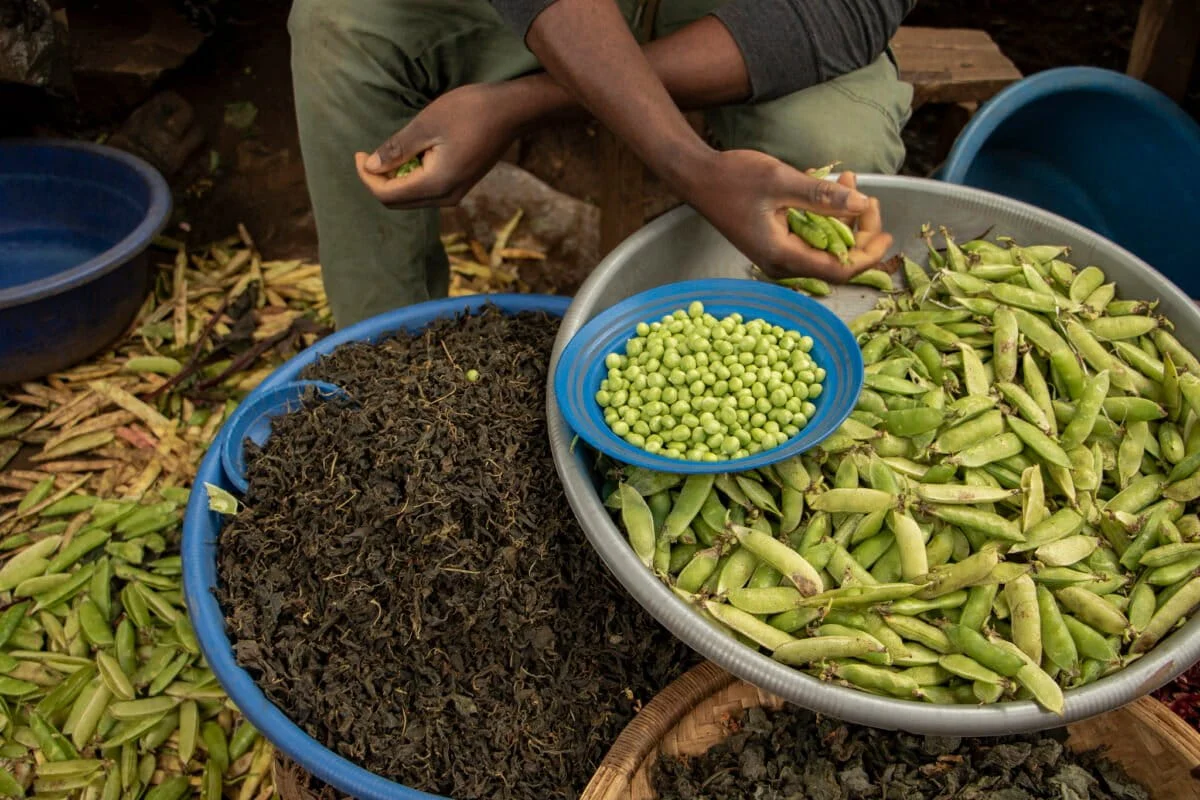
In the early morning mist of rural Kenya, as the anticipation of the long rains hangs heavy in the air, the rhythm of the planting season has begun. Farmers are already in their fields, clearing land and sorting through seed stocks with a practiced precision. However, beneath the traditional preparations lies a modern, sharpening anxiety. This year, the usual concerns regarding soil moisture and pest control have been eclipsed by a more volatile variable: the availability and affordability of synthetic fertilizer. Across the continent, the success of the harvest is increasingly tied to geopolitical tremors thousands of miles away, forcing a radical rethinking of how Africa feeds itself.
The vulnerability of the African agricultural sector has been brought into sharp focus by escalating tensions in the Middle East. As regional instabilities threaten to disrupt the Strait of Hormuz—a narrow but vital maritime artery through which a significant portion of the world’s petroleum and liquefied natural gas (LNG) flows—the ripple effects are felt directly in African granaries. Fertilizer production is an energy-intensive process, heavily reliant on natural gas for the synthesis of ammonia. For many African nations, between 20% and 50% of their total fertilizer supply originates from Persian Gulf nations. Any disruption in this corridor does not just raise the price of fuel; it threatens the very chemistry of African soil productivity.
A Chronology of Dependency and Global Shocks
To understand the current urgency, one must look at the sequence of global events that have battered African food systems over the last four years. The COVID-19 pandemic first exposed the fragility of "just-in-time" global supply chains, leading to logistical bottlenecks that saw shipping costs skyrocket. This was followed by the Russian invasion of Ukraine in 2022, a watershed moment for global agriculture. Russia and Belarus, major exporters of potash and nitrogenous fertilizers, were suddenly largely sequestered from global markets, causing fertilizer prices to triple in some parts of Sub-Saharan Africa.
By 2023 and into 2024, the focus shifted to the Middle East. With the Strait of Hormuz acting as a chokepoint for Iranian and Gulf exports, African policymakers realized that relying on a handful of volatile regions for essential agricultural inputs was no longer a viable long-term strategy. This realization has catalyzed a shift from emergency response to structural transformation.
In May 2024, the African Union (AU) convened the Africa Fertilizer and Soil Health Summit in Nairobi. The resulting "Africa Fertilizer and Soil Health Action Plan 2024-2034" serves as a ten-year blueprint to triple the use of both organic and inorganic fertilizers. The document marks a pivot toward continental self-reliance, acknowledging that while synthetic inputs are necessary for immediate yield increases, the long-term health of African landscapes requires a more nuanced, localized approach.

The Industrial Response: Scaling Domestic Production
Africa is no longer content to be a mere consumer in the global chemical market. Significant capital is being deployed to build a domestic industrial base. Leading this charge is the Dangote Group in Nigeria. Currently operating the continent’s largest chemical fertilizer manufacturing complex, the group has announced ambitious plans to triple its production capacity to 9 million metric tons per annum.
Furthermore, the group is expanding its footprint into East Africa with the construction of a $2 billion fertilizer plant in Ethiopia. Scheduled for completion by 2029, this facility is expected to produce 3 million tons annually, leveraging Ethiopia’s natural resources and regional demand. These investments are projected to create tens of thousands of jobs for African youth, providing an industrial backbone to a sector that has historically been dominated by small-scale, subsistence activities.
However, industrial scaling is only half of the equation. Large-scale chemical plants take years, if not decades, to reach full operational capacity and distribution efficiency. For the smallholder farmers who produce up to 70% of Africa’s food, these multi-billion-dollar projects offer little relief for the current planting season. Moreover, the environmental cost of exclusive reliance on synthetic nitrogen is becoming impossible to ignore.
The Science of Soil Health and the "Bio" Revolution
Agricultural scientists warn that African soils are among the most fragile in the world. Decades of continuous use of synthetic fertilizers without adequate organic supplementation have led to increasing soil acidity and the depletion of essential micronutrients. This "nutrient mining" leaves the soil less resilient to the droughts and floods associated with climate change.
The emerging consensus among agronomists is that a "balanced diet" for soil is required. This involves complementing chemical fertilizers with biological nitrogen fixation—primarily through leguminous crops and trees—and the application of biomass such as compost, biochar, and bio-fertilizers. These organic inputs do more than just provide NPK (nitrogen, phosphorus, and potassium); they rebuild the soil microbiome, improve water retention, and enhance the soil’s physical structure.
In this context, a new wave of African "agri-preneurs" is stepping into the gap, utilizing innovative technologies to turn waste into wealth. This sector represents a critical intersection of food security, waste management, and climate mitigation.

Innovative Solutions: From Insects to AI
One of the most promising avenues for local fertilizer production involves the Black Soldier Fly (BSF). Companies like Insectipro and Chanzi are pioneering the use of these flies to process organic waste. The larvae of the BSF consume massive amounts of food waste, converting it into high-protein animal feed, while their excrement, known as "frass," serves as a potent, nutrient-rich bio-fertilizer. This process can convert organic waste into usable fertilizer in a matter of days, compared to the months required for traditional composting.
Another technological frontier is biochar—a charcoal-like substance produced by burning organic waste in a low-oxygen environment (pyrolysis). Enterprises such as Safi Organics and Regenorganics are working with smallholders to produce biochar from crop residues. Biochar is particularly effective at sequestering carbon in the soil for centuries and reducing soil acidity, making it an ideal amendment for the weathered soils of East and Central Africa.
Furthermore, the integration of Artificial Intelligence (AI) and solar power is accelerating the pace of production. The Kenyan startup EcoRich has developed an AI-driven waste-to-fertilizer system that can convert household and market waste into organic fertilizer in just 24 hours. By decentralizing production, these technologies allow fertilizer to be produced exactly where it is needed, bypassing the logistical hurdles and costs of the global shipping industry.
Economic Implications and the Circular Economy
The shift toward bio-fertilizers and localized production carries profound economic implications. As global development aid is increasingly diverted toward defense and security in Europe and the Middle East, Africa must find internal mechanisms for growth. The bio-fertilizer sector offers a "circular economy" model that keeps capital within local communities.
By investing in small and medium enterprises (SMEs) that produce organic inputs, African nations can address the "youth bulge" by creating specialized green jobs. These roles range from waste collection and processing to technical maintenance of solar-powered composters and AI systems. Additionally, linking fertilizer production with bioenergy systems—where agricultural waste is used to produce biogas—provides rural areas with clean energy, further reducing the reliance on imported fossil fuels.
Policy Analysis: Challenges to Implementation
Despite the clear benefits, the transition to a more resilient, locally-sourced agricultural system faces significant hurdles. Current policy frameworks in many African nations are still heavily weighted toward subsidizing imported synthetic fertilizers. Shifting these subsidies toward domestic bio-fertilizer producers and soil restoration programs requires political courage and a long-term vision.

Furthermore, there is a need for standardized regulation. For bio-fertilizers to gain widespread trust among farmers, there must be rigorous quality control and certification processes to ensure nutrient consistency. Financial institutions also remain hesitant to fund SMEs in the bio-organic space, viewing them as higher risk compared to established chemical importers. Bridging this "financing gap" through blended finance and government guarantees will be essential for scaling these innovations.
A New Dawn for African Agriculture
As the sun rises over the fields of Malawi, Kenya, and Nigeria, the farmer standing with her hoe is at the center of a global geopolitical and environmental transition. The question of whether she will have the inputs she needs to plant is no longer just a local concern; it is a question of national security and continental stability.
The path forward for Africa lies in a hybrid model: leveraging large-scale domestic chemical production to meet immediate caloric needs while aggressively scaling the bio-organic sector to ensure long-term soil viability. By turning toward its own soils, its own waste, and its own innovative youth, Africa is beginning to insulate itself from the shocks of a volatile world. The goal is a food system that is not only productive but also sovereign—rooted in the strength of African innovation and the health of African earth.