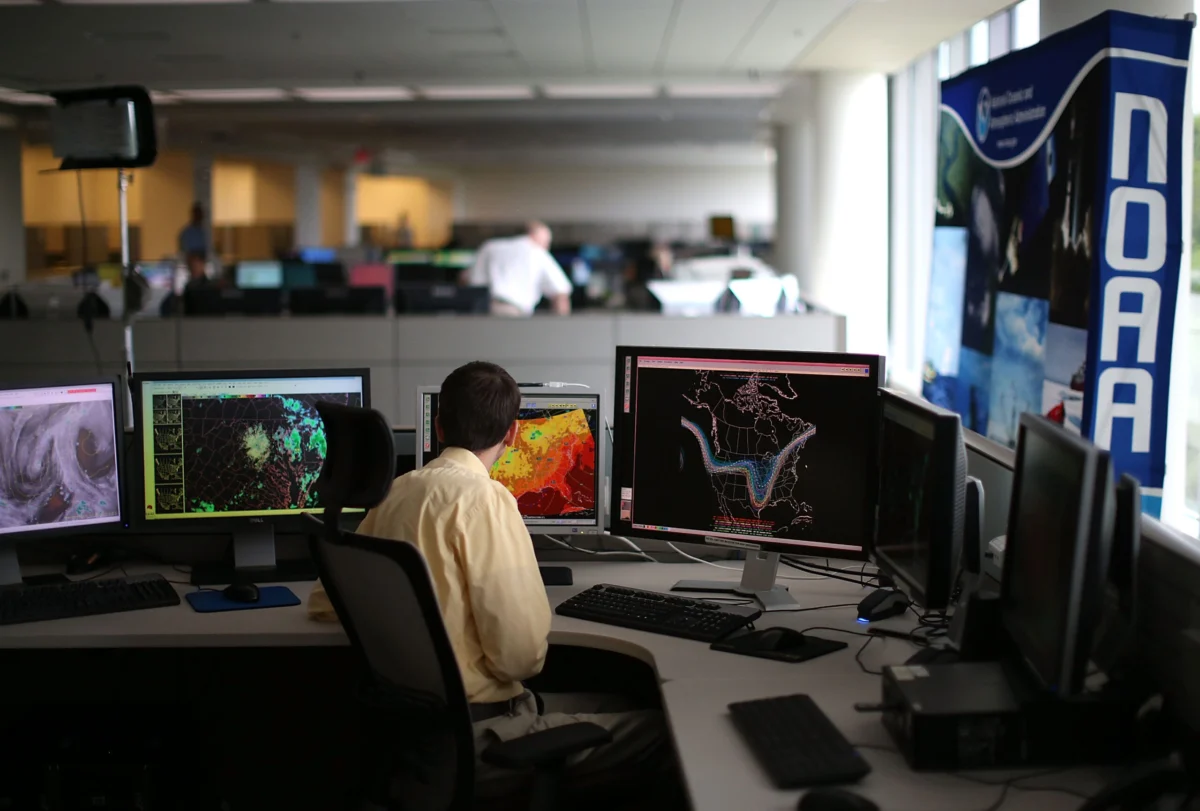
Deep inside a five-story concrete and steel building in the heart of Hamburg, Germany, technicians work meticulously amidst the low, mechanical hum of supercomputers. They are installing gray metal server racks—dense casings packed with high-performance computing hardware—alongside dozens of identical units lining the dimly lit corridors of the German Climate Computing Center, known locally as DKRZ. As one of the premier repositories for climate simulation data on the planet, the facility is preparing to absorb an unprecedented digital influx. These new arrays will add approximately 5 petabytes of storage capacity to an already staggering archive of 254 petabytes. To contextualize the scale, a single petabyte of data equals roughly 200 million high-resolution images, representing decades of complex, empirical observation of Earth’s systems.
Ordinarily, the DKRZ operates as an essential domestic engine, providing elite computing power and archival storage to Germany’s robust climate science community. Today, however, these incoming hardware racks are designated for a far more sensitive, geopolitical mission. They will serve as secure, offshore subterranean vaults for backup climate simulations originating from the United States. This multinational operation is designed to ensure that critical research being conducted by American scientists for the upcoming United Nations major climate assessment—scheduled for publication in 2029—remains uncompromised, accessible, and safe from political interference, deletion, or ideological manipulation by the administration of U.S. President Donald Trump.
Anatomy of an Administrative Purge
The impetus for this unprecedented transatlantic data rescue mission stems from a coordinated series of actions taken by the Trump administration against federal scientific infrastructure. Since taking office, the administration has systematically targeted climate and environmental research. Reports indicate that more than 100 individual climate studies have been abruptly halted or defunded. Government scientists have watched as official research reports were buried, public websites were scrubbed of references to human-caused climate change, and federal directives sought to restrict satellites from collecting fundamental atmospheric and oceanic measurements.
Leaders of European scientific institutions have broken diplomatic norms to publicly cite these U.S. policy actions as the primary catalyst for establishing aggressive data preservation measures. Kathrin Winkler, a program manager at the German Research Foundation (DFG)—Germany’s premier science funding organization—highlighted the severe anxieties gripping the international research community. "The deletion of data has also become a possibility," Winkler warned, pointing to a tangible risk that historical datasets could be manipulated or permanently altered to skew scientific findings in a politically desirable direction.
Trust in the integrity of U.S. federal science policy has plummeted to historic lows across Europe. The erosion of confidence accelerated sharply in January when the U.S. government officially withdrew from both the United Nations Framework Convention on Climate Change (UNFCCC) and the Intergovernmental Panel on Climate Change (IPCC). Despite this diplomatic exit, thousands of American researchers continue to quietly contribute to global climate science, often operating under severe constraints. To protect their labor, the German Research Foundation launched a specialized $35 million funding initiative in late 2025 designed to establish safe havens for permanent, open-access copies of endangered U.S. public domain data.

Digital Lifeboats and the Mechanics of Preservation
The DKRZ project, formally titled CMIP7-ark, functions as a high-tech lifeboat specifically built to protect the U.S. contribution to the seventh IPCC assessment cycle. It is not alone. Six other distinct funding pipelines have been established to rescue vulnerable American scientific datasets under descriptive acronyms such as SHIELD and SEND (Secure Endangered Earth Data). Christopher Kadow, head of the data analysis division at DKRZ, articulated the moral imperative driving the initiative: "Chúng tôi không thể đơn giản chấp nhận rằng những đóng góp quan trọng có thể bị mất đi vì lý do kỹ thuật hoặc chính trị," or translated broadly, the global community cannot simply stand by while foundational science vanishes due to political expediency.
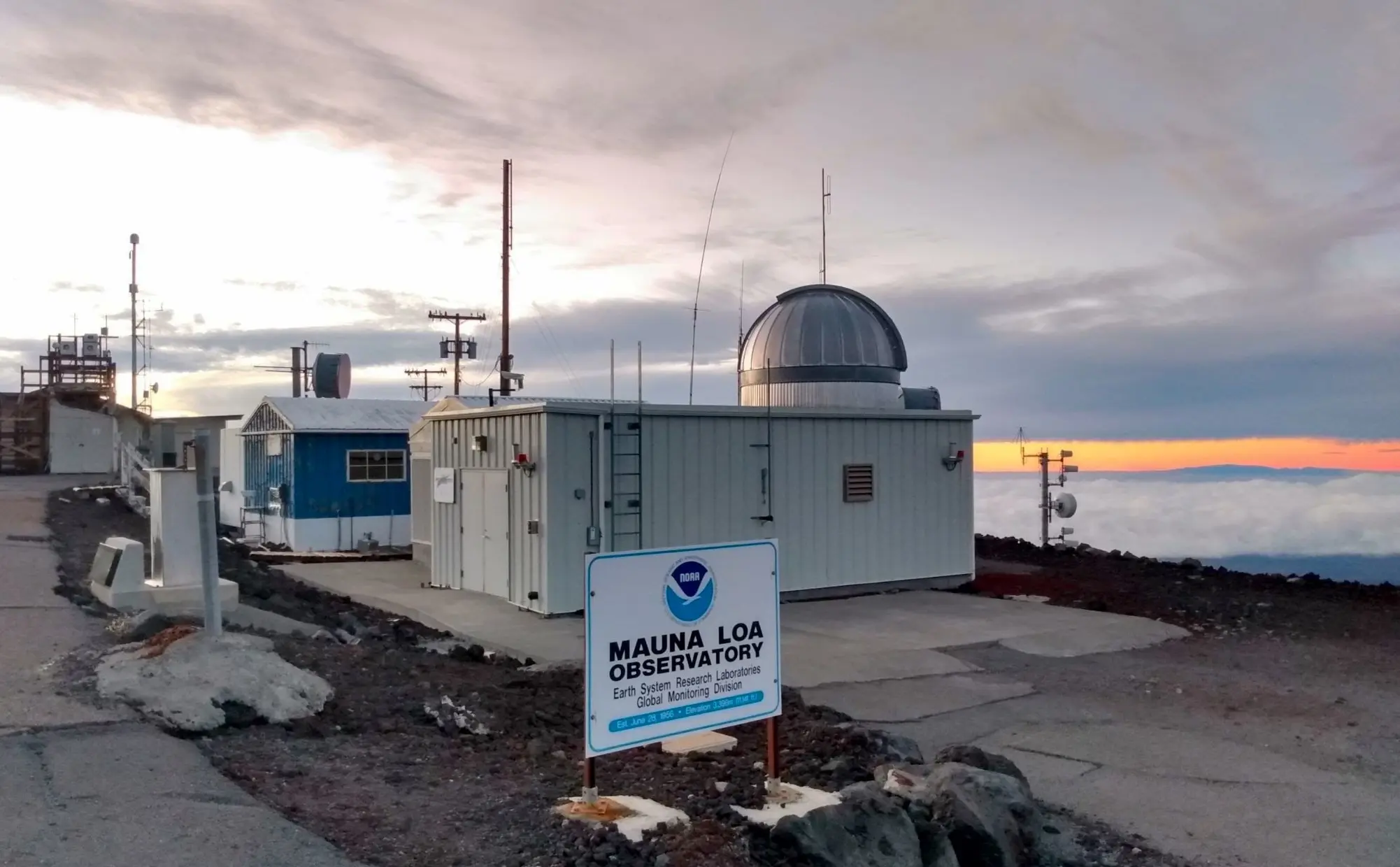
Scientific datasets form the bedrock of empirical human knowledge. Climate, environmental, and biodiversity disciplines rely entirely on unbroken, continuous chains of historical and contemporary measurements. Collections such as the iconic Keeling Curve—the continuous record of atmospheric carbon dioxide concentrations measured at the Mauna Loa Observatory in Hawaiʻi—have been meticulously maintained for decades. These time-series records are indispensable for tracking the velocity of environmental transformation. The vulnerability of such facilities was laid bare in 2025 when the Trump administration attempted to defund and shutter the Mauna Loa Observatory entirely, a closure averted only after congressional pushback.
Historically, the logistics of backing up massive scientific datasets made off-site redundancies rare. Most datasets reside physically on local hard drives or magnetic tape reels housed within the universities or government laboratories where they were originally generated. Until recently, the geopolitical and infrastructural landscape was viewed as stable enough that remote backups were deemed unnecessary luxuries.
Furthermore, moving petabytes of data is a monumental logistical hurdle. Streaming multi-petabyte archives over standard internet connections can take months, while leasing dedicated, high-speed fiber-optic lines is prohibitively expensive. Consequently, the most economically viable method for transferring massive data volumes remains the low-tech reality of the "sneakernet"—physically packing high-capacity hard drives or cheap magnetic tapes into secure luggage and transporting them across oceans via commercial aircraft or shipping containers.
Vulnerability Beyond Politics: Cyberattacks and Armed Conflict
While political interference in the United States has accelerated the push for global data resilience, the threats facing scientific infrastructure are universal and multifaceted. Geopolitical instability, rising authoritarianism, sophisticated cybercrime, and kinetic warfare pose continuous dangers to humanity’s collective knowledge base.
In recent years, research institutions across the globe have increasingly become targets of elaborate ransomware and hacking campaigns. Intruders have successfully infiltrated networks at a multidisciplinary research center in Croatia and an industrial engineering institute in Germany, locking down critical files and demanding exorbitant ransoms. While victims rarely disclose the exact nature of the compromised files due to security protocols, cybersecurity experts confirm that scientific repositories are frequently targeted.
More devastating still is the physical destruction wrought by armed conflict. The ongoing war in Ukraine has inflicted catastrophic casualties while systematically devastating the nation’s scientific capacity. Anastasiia Lutsenko, a Ukrainian researcher at the Max Planck Institute for Innovation and Competition in Munich who studies the wartime resilience of Ukraine’s research infrastructure, noted the deliberate nature of these attacks. "Universities and research institutes have been targeted by Russian bombardments, and in some cases they were completely destroyed," Lutsenko said, adding that invading forces recognize the lasting, generational harm they inflict by destroying a nation’s scientific archives.
Proactive international collaborations have averted total data annihilation in several notable instances. Prior to Russia’s full-scale invasion in 2022, a joint German-Polish-Ukrainian initiative successfully digitized historical meteorological records—consisting of daily weather observations conducted between 1808 and 1880 across eight Ukrainian weather stations—and securely transferred them to servers at the University of Giessen in Germany. A similar emergency migration of biological data occurred when missile strikes landed dangerously close to servers holding Ukraine’s national contributions to the Global Biodiversity Information Facility in Kharkiv.
The Global Response: Reimagining Scientific Infrastructure
The urgent need for systemic resilience—the capacity of a system to absorb severe shocks and fully recover—took center stage in March during a major gathering of the American Geophysical Union (AGU) in Berlin. The conference convened nearly 100 leading Earth and space scientists from the United States and Europe to formulate a unified response to the ongoing political attacks on scientific institutions.
Representing over 60,000 Earth and space scientists worldwide, the AGU has positioned itself at the forefront of global defense for open science. When the U.S. government refused to accredit or fund official American delegations to IPCC meetings in 2025, the AGU bypassed state channels by forming the U.S. Academic Alliance for the IPCC, successfully nominating nearly 300 independent American scientists as authors for the upcoming assessment. Building on this momentum, the organization launched its comprehensive Data Resilience Project in the summer of 2025.
Ben Zaitchik, president-elect of the AGU, stressed that the global scientific enterprise has reached a critical historical turning point. Addressing the Berlin convening, Zaitchik noted that while initial efforts have focused heavily on emergency triage to keep endangered data accessible, the community must now fundamentally rethink how digital infrastructure is organized, funded, and protected for the long term.
As a direct outcome of the Berlin summit, a broad coalition of German national research centers formalized a permanent framework to offer secure, decentralized storage for public-domain scientific information originating from the U.S. and other high-risk regions. Similar institutional safety nets are emerging across specialized fields. The Senckenberg Natural History Museum in Frankfurt has begun archiving wildlife trail-camera datasets from Ukraine alongside fragile biodiversity metrics harvested from conflict zones in Yemen.

Ensuring Long-Term Usability and Futureproofing
Data preservation experts emphasize that backing up raw files is insufficient on its own. To maintain scientific integrity, repositories must also preserve the proprietary or specialized software environments, metadata, and analytical protocols required to read, decode, and interpret the data decades into the future.
"We’re developing protocols and procedures for exchanging data, distributing multiple copies globally, and ensuring that the data remains analyzable indefinitely," explained Frank Oliver Glöckner, a professor of Earth systems data science at the University of Bremen and head of Pangaea, a long-term data repository operated jointly with the Alfred Wegener Institute for Polar and Marine Research. Both institutions are currently preparing to ingest and integrate massive datasets from an endangered U.S. climate research center slated for closure.
Reflecting on the turbulent political climate, Glöckner suggested that the hostile environment created by the Trump administration has paradoxically galvanized the global scientific community. "He has, to a certain extent, done science a favor by making it clear how important it is to not just hoard data in one place but to truly share it with the global scientific community," Glöckner observed.
Ultimately, international data architects envision a fully integrated, decentralized global digital grid for Earth sciences. "It would be ideal if, in the future, all climate data worldwide were connected via digital pipelines," said Kadow of the DKRZ. "That way, in the event of a threat, we could simply flip a switch to secure it elsewhere."
Kadow offered a sobering final observation, noting that the vulnerabilities exposed in the United States are not uniquely American. With the rise of far-right political parties—such as the Alternative for Germany (AfD), which rejects mainstream climate consensus, winning regional elections within Germany—domestic political shifts threaten European scientific institutions as well. "We don’t know what political shifts may occur in Germany," Kadow concluded. "We aren’t completely protected from risks or developments like those in the U.S. either."