Hadrian’s Wall Path: A Two-Day Expedition Through Roman History and Northumberland’s Wild Heart
The Hadrian’s Wall Path offers an immersive, two-day journey tracing the monumental Roman frontier, weaving through the rugged beauty of Northumberland. This ancient defensive structure, a UNESCO World Heritage Site, stands as a testament to Roman engineering and ambition, and walking its path provides an unparalleled opportunity to connect with centuries of history and experience the untamed landscapes of northern England. While the entire 84-mile National Trail can be explored over several days, a well-planned two-day expedition allows for a significant immersion into the most evocative sections, focusing on key forts, dramatic terrain, and the enduring spirit of the Wall itself. This itinerary is designed to maximize historical engagement and scenic impact, ideal for those seeking a concentrated dose of Roman legacy and Northumberland’s wild heart.
Day one of this two-day expedition begins at Housesteads Roman Fort, widely considered one of the best-preserved and most iconic sections of Hadrian’s Wall. Reaching Housesteads is straightforward, with parking available and visitor facilities to prepare for the day’s trek. The initial segment of the path from Housesteads eastwards towards Steel Rigg offers a visceral introduction to the Wall’s sheer scale and strategic placement. Here, the Wall is at its most dramatic, clinging to the edge of the Whin Sill, a dramatic escarpment of volcanic rock that provided a natural defensive advantage for the Romans. The undulating terrain, characterized by steep ascents and descents, mirrors the challenges faced by Roman legionaries patrolling this frontier.
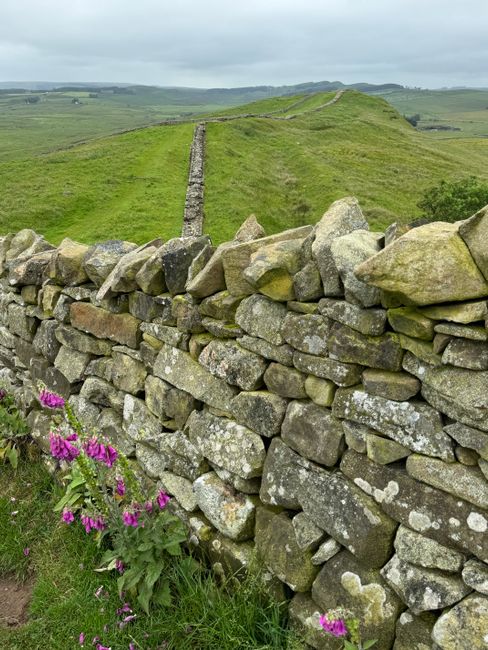
The walk from Housesteads to Steel Rigg, approximately 2-3 miles, is punctuated by numerous opportunities to examine the Wall’s construction. Sections of the original stonework are remarkably intact, allowing visitors to appreciate the precision of Roman masonry. The sheer drop from the Whin Sill offers breathtaking panoramic views across the Northumberland countryside, a landscape that has changed little in appearance since Roman times, albeit with less dense woodland and more open pasture. Steel Rigg itself is a photographic marvel, with the Wall snaking along the crags, a stark and powerful image of Roman dominance over the wild north. Signs and information boards at Housesteads and along the route provide crucial context, explaining the purpose of the Wall, the lives of the soldiers stationed here, and the significance of various archaeological features.
Continuing east from Steel Rigg, the path leads towards Crag Lough, a picturesque glacial lake. The Wall here runs parallel to the lough, offering a gentler, though no less visually striking, walking experience. The proximity of the water adds a serene counterpoint to the rugged fortifications. Further along, Vindolanda Roman Fort, another major highlight, awaits. This sprawling archaeological site offers a deeper dive into Roman daily life. Unlike Housesteads, which focuses on the defensive structure, Vindolanda provides a more intimate glimpse into the community that supported the Wall. Excavations here have yielded an astonishing array of artifacts, most notably the Vindolanda tablets – thin wooden postcards bearing handwritten messages, offering unparalleled insight into the personal lives, administrative dealings, and even the social gossip of those who lived and worked on the frontier.
A dedicated visit to Vindolanda is essential. The museum houses many of the artifacts unearthed on site, from leather shoes and writing implements to personal letters and military equipment. Walking through the excavated remains of the barracks, granaries, and bathhouses allows for a tangible connection to the past. The sheer volume of ongoing excavation at Vindolanda means that new discoveries are frequently made, adding a dynamic element to the visitor experience. Spending at least two to three hours at Vindolanda is recommended to fully appreciate its historical significance and the wealth of information it offers.
The first day’s trek concludes around the Vindolanda area, with accommodation options available in nearby villages like Bardon Mill or Haltwhistle. These settlements offer a range of B&Bs, guesthouses, and small hotels, providing a comfortable respite after a day of walking and historical exploration. The evening is an opportunity to reflect on the scale of Roman achievement and the raw beauty of the Northumberland landscape encountered, perhaps enjoying local ales and hearty pub fare, a tradition that has endured for centuries, much like the Wall itself.
Day two of the expedition shifts focus to the western sectors of the Wall, offering a different perspective on its construction and the surrounding terrain. Beginning at Cawfields Milecastle, the path continues westward. Milecastles were small forts built at intervals of one Roman mile along the Wall, serving as garrison posts and gateways. Cawfields itself offers a well-preserved example of these smaller defensive structures, giving a sense of the density of Roman presence along the frontier.
The terrain in this section is generally less dramatic than the Whin Sill, but no less engaging. The path often follows the crest of low ridges, offering expansive views of rolling hills and farmland. The Wall here is characterized by broader, more consolidated sections of stonework, showcasing the different phases of construction and repair undertaken by the Romans. The sense of open space is palpable, emphasizing the vastness of the territory the Wall was intended to control.
A key historical stop on day two is the Roman Army Museum at Walltown, near the town of Gilsland. While Vindolanda provides a broad overview of life on the frontier, the Roman Army Museum at Walltown offers a more focused perspective on the Roman military itself. It delves into the organization, equipment, and daily routines of the soldiers who served on Hadrian’s Wall. Through detailed exhibits and engaging displays, visitors gain a deeper understanding of the military machine that built and defended this impressive frontier. The museum also features a panoramic reconstruction of life at the Wall, providing an immersive visual experience.
From Walltown, the path continues westwards towards Birdoswald Roman Fort. Birdoswald is exceptional as it contains the longest continuous remaining stretch of Hadrian’s Wall. This section, standing up to 10 feet high in places, is a powerful visual representation of the Wall’s original grandeur. Birdoswald fort itself is a significant site, offering insights into the fort’s layout, defensive capabilities, and the lives of the soldiers stationed there. The proximity of the River Irthing also highlights the strategic importance of natural features in the Wall’s design. The remains of the bridge that once spanned the Irthing at this point are also visible, adding another layer of historical intrigue.
The walk between Walltown and Birdoswald is typically around 4-5 miles, offering a good balance of walking and historical exploration for the second day. The route is well-marked and offers opportunities to encounter other less well-known but equally fascinating features of the Wall, such as turrets and sections of the Vallum, the linear earthwork that ran south of the Wall, likely serving as a further defensive measure or to control movement.
The two-day expedition can conclude at Birdoswald, with onward travel options available from nearby towns. Alternatively, for those with more time or a desire for a more challenging expedition, the path can be extended, but this two-day itinerary provides a concentrated and deeply rewarding experience. The beauty of this shorter expedition lies in its ability to offer a profound understanding of Hadrian’s Wall and its historical context without requiring extensive planning or multiple days off.
The Hadrian’s Wall Path is more than just a walk; it is a journey through time. The sheer scale of the Wall, the ingenuity of its construction, and the stories of the people who lived and died along its length resonate deeply. Northumberland’s wild heart, with its vast skies, rolling hills, and dramatic crags, provides a breathtaking backdrop to this historical narrative. The two-day expedition offers a perfect balance, allowing for in-depth exploration of key sites like Housesteads, Vindolanda, and Birdoswald, while also experiencing the rugged, untamed beauty of the landscape that has witnessed nearly two millennia of history. It is an experience that connects visitors not only to Roman Britain but also to the enduring spirit of the northern frontier, a place where history and nature converge in a spectacular and unforgettable way. The accessibility of the route, coupled with the wealth of historical information available at each site, makes this a highly achievable yet profoundly impactful adventure for history enthusiasts and outdoor adventurers alike, offering a concentrated immersion into one of Britain’s most significant historical landmarks.
