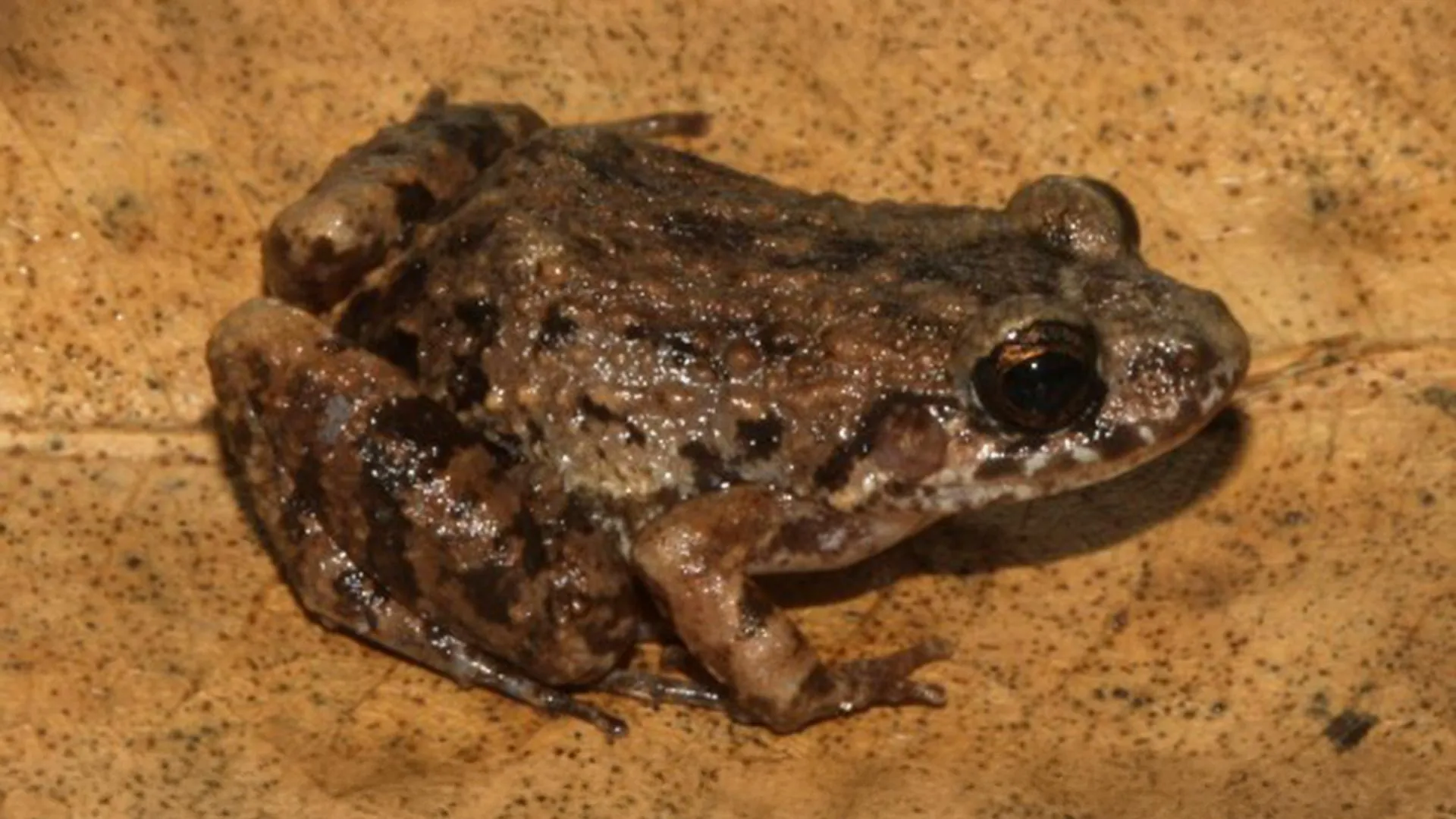
Deep within the seasonally inundated forests of the western Amazon, a small, unassuming frog has emerged as a symbol of the vast, undocumented complexity of life in one of the world’s most critical biomes. Scientists have formally identified and described Adenomera varcena, a new species of frog that has long hidden in plain sight, mistaken for its close relatives. This discovery, published in the journal Ichthyology & Herpetology, serves as a poignant reminder that the Amazonian rainforest remains a frontier of scientific discovery, even as the pressure of environmental change threatens to erase species before they are ever documented.
The research team, led by distinguished herpetologists Célio F. B. Haddad of São Paulo State University (UNESP) and Thiago R. Carvalho of the Federal University of Minas Gerais (UFMG), conducted their work under the auspices of the Center for Research on Biodiversity Dynamics and Climate Change (CBioClima). Their findings were the result of extensive field expeditions in the Upper Juruá River region of western Acre, Brazil, specifically targeting forest fragments near the Moa and Crôa rivers.
The Science of Cryptic Diversity
The identification of Adenomera varcena is a masterclass in modern taxonomic rigor. In the world of biology, "cryptic diversity" refers to the phenomenon where two or more distinct species are classified as a single entity due to their nearly identical outward appearance. For the Adenomera genus, which contains numerous species that look superficially alike, separating them requires a multidisciplinary approach.
The team employed an integrative taxonomic framework to distinguish A. varcena. This involved a comprehensive analysis of DNA sequencing, which highlighted genetic divergence from known species; a detailed examination of morphological characteristics, such as the notably absent dark spot on the underside of the frog’s forearm; and, perhaps most crucially, the acoustic analysis of its mating call. The frog’s call is distinct—a short, slow-rhythm sound that serves as a reproductive barrier between it and its genetic cousins. By combining these lines of evidence, the researchers provided an irrefutable case for the existence of a new species that had remained unrecognized by science for decades.
The name varcena is derived from the Portuguese term for Amazonian floodplain forests, known as várzea. This nomenclature is geographically and ecologically significant, as it highlights the frog’s specialization. While most Adenomera species are famously associated with dryland, or terra firme, forests, A. varcena thrives in areas that are submerged during the peak of the rainy season. This unique habitat association marks a significant departure from the known ecological norms of the genus, suggesting that the lineage may have evolved specialized survival mechanisms to cope with the volatile flood cycles of the western Amazon.
A Chronology of Discovery
The path to describing A. varcena was not a singular event but the culmination of years of scientific inquiry. The project involved a collaborative effort between major Brazilian institutions, including the University of São Paulo (USP) and the Federal University of Uberlândia (UFU), as well as international input from the University of Ecuador (PUCE-Quito).
The initial collection of specimens occurred during surveys in the Upper Juruá River region near the city of Cruzeiro do Sul. For years, these specimens sat in scientific collections, often categorized under broader, well-known taxonomic groups. It was only through the systematic, multi-year comparison of call recordings, DNA barcodes, and morphometric data that the specific variations of the varcena lineage became clear. Following the verification process, the formal description was prepared, peer-reviewed, and eventually published, solidifying its place in the biological record.
Implications of Climate Change on Specialized Ecosystems
The discovery of a species so intricately linked to floodplain dynamics raises immediate concerns regarding the impact of a changing climate. According to Thiago R. Carvalho, the ecological requirements of A. varcena are still largely a mystery, which complicates conservation efforts.
"Since we don’t yet know in detail the species’ ecological requirements and its natural history—such as its reproductive period and mode—it’s difficult to predict the impacts of climate change, which may alter the seasonal flooding patterns of the floodplain forest ecosystem," Carvalho explained.
Floodplains are highly sensitive to shifts in precipitation and the timing of riverine pulses. If climate change alters these flood dynamics, the very mechanism that dictates the life cycle of A. varcena could be disrupted. This is particularly concerning given that the species is restricted to this specific niche. If the seasonal flooding is either prolonged or severely curtailed, the reproductive success of the population could plummet. The risk is compounded by the fact that the species is currently unassessed on global red lists; without a formal description, it remains invisible to environmental policies that might otherwise protect its habitat from degradation.
The Race Against Habitat Loss
The discovery of A. varcena is not merely an academic triumph; it is a call to action. Professor Célio F. B. Haddad emphasizes that the rate of biological discovery is currently losing the race against the rate of environmental destruction.
"Currently, the pace of ecosystem destruction outpaces the capacity of taxonomic studies to keep up," Haddad noted. "Consequently, species that haven’t yet been described are omitted from lists of threatened fauna and remain legally and environmentally vulnerable."
This "taxonomic deficit" has real-world consequences for conservation. When a species is not formally recognized, it cannot be included in environmental impact assessments, nor can it be prioritized in land-use planning. Consequently, large swaths of the Amazon that are earmarked for development or that fall victim to illegal logging may be destroying unique, uncatalogued species before they are even identified.
From a broader perspective, the formal identification of A. varcena reinforces the necessity of "pure" science in the service of conservation. By documenting the true breadth of Amazonian biodiversity, scientists are establishing the foundation for effective biodiversity management. Understanding how these amphibians have diversified allows researchers to better map the evolutionary history of the Amazon, providing critical insights into how the region’s fauna might adapt—or fail to adapt—to the stresses of the 21st century.
Future Research and Conservation Strategies
The collaborative nature of the study, involving institutions from Brazil and Ecuador, underscores the transboundary approach required to manage the Amazon. Moving forward, the team expects that the description of A. varcena will lead to further investigations into the Adenomera genus. Preliminary evidence suggests that several other lineages within the genus have yet to be formally described, indicating that the true diversity of Amazonian amphibians is significantly higher than current estimates.
For the conservation community, the challenge is clear: the identification of new species must be accelerated. This requires not only funding for field expeditions and molecular laboratories but also the protection of the vast, understudied regions of the Amazon where such cryptic diversity thrives.
The story of Adenomera varcena is a testament to the persistence of nature and the vigilance of the scientists who document it. As the world continues to grapple with the dual crises of biodiversity loss and climate change, the small, specific, and often overlooked creatures of the Amazon serve as the most vital indicators of our planet’s health. Their discovery, and their subsequent protection, remains one of the most pressing scientific and ethical mandates of our time. By providing the tools to recognize and name these organisms, researchers like Haddad and Carvalho are providing the first, essential step toward ensuring that they do not disappear into the pages of history before they are even fully understood.