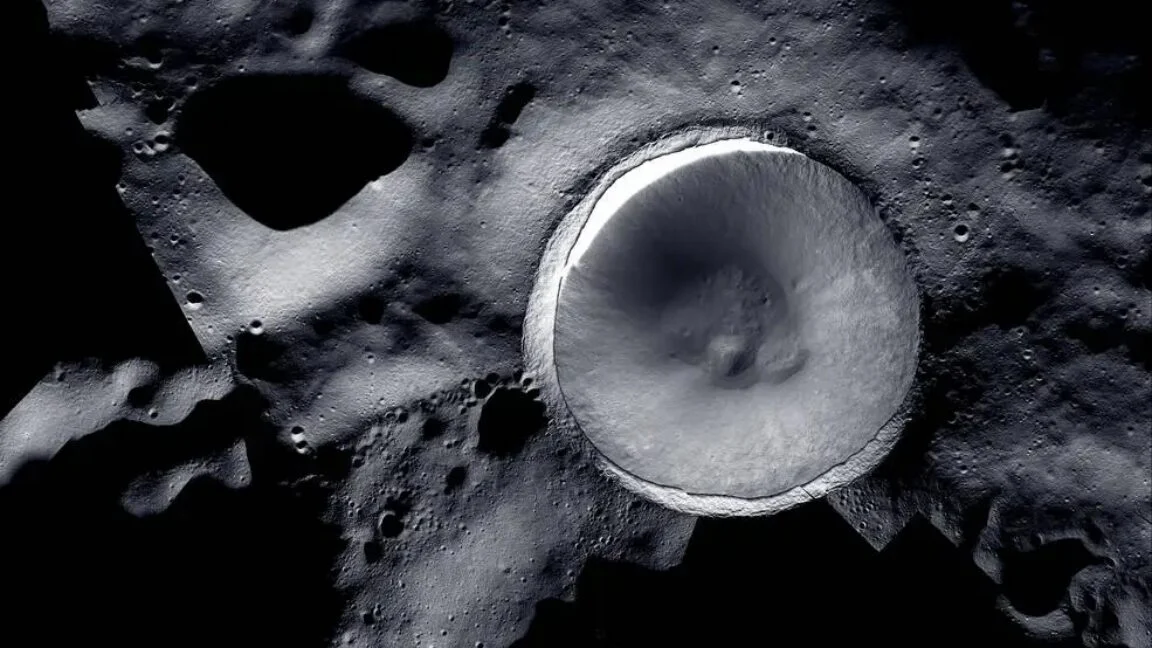
Later this year, the Moon’s Shackleton Crater, an immense impact basin near the lunar south pole believed to harbor significant reservoirs of water ice, is set to become the focal point of an unprecedented space race. Two ambitious robotic missions, Blue Origin’s Endurance lander from the United States and China’s multi-component Chang’e 7 mission, are scheduled to launch, aiming for landing sites in close proximity near the crater’s rim. This simultaneous push by rival space powers underscores a burgeoning geopolitical competition for access to vital lunar resources and strategic footholds on Earth’s closest celestial neighbor.
These missions represent a new chapter in lunar exploration, pushing technological boundaries and raising complex questions about international cooperation and potential territorial claims in space. The Endurance spacecraft, developed by Jeff Bezos’s Blue Origin, is poised to become the largest lunar lander in history, surpassing even the iconic Apollo Lunar Module that transported astronauts to and from the lunar surface over five decades ago. Meanwhile, China’s Chang’e 7 mission is equally formidable, comprising a smaller lander, an orbiting satellite, a sophisticated rover, and an innovative hopper drone specifically designed to scout for hidden ice deposits within the Moon’s permanently shadowed regions.
Recent Preparations and Launch Timelines
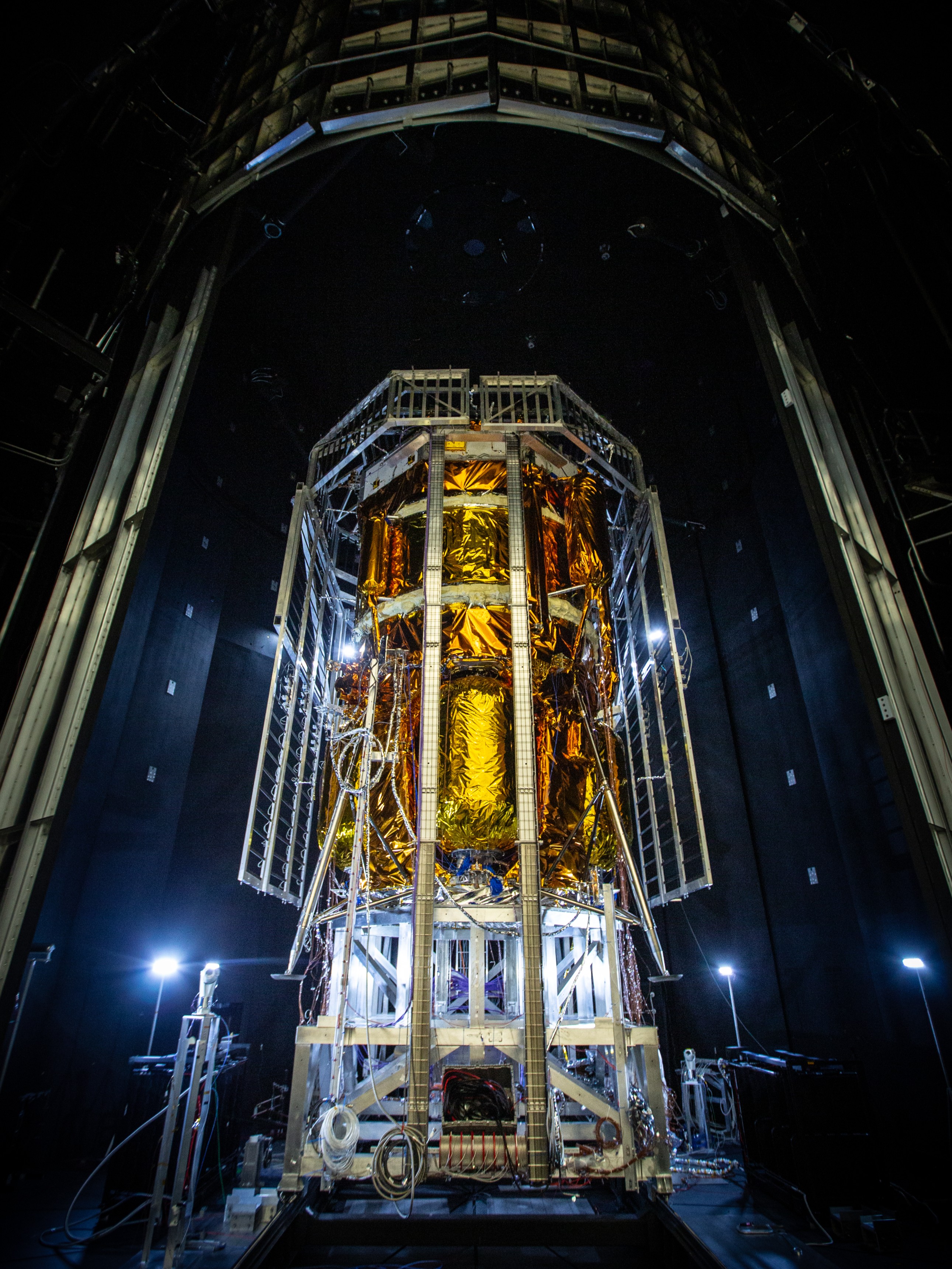
The advanced stages of preparation for both missions highlight their imminent launch. Blue Origin’s Endurance lander recently completed a rigorous testing phase at NASA’s Johnson Space Center in Houston, designed to validate its ability to withstand the extreme temperatures and vacuum of the airless lunar environment. Following these crucial tests, the colossal lander embarked on a journey by barge back to Cape Canaveral, Florida, where it will undergo final integration and preparations for its launch atop Blue Origin’s heavy-lift New Glenn rocket. This launch vehicle, still in development, represents a significant leap in private space capabilities, promising to deliver substantial payloads to lunar destinations.
Concurrently, across the globe, China’s Chang’e 7 mission components arrived at a dedicated spaceport on Hainan Island in the South China Sea. Here, the various elements – the lander, orbiter, rover, and hopper drone – are being meticulously integrated with China’s own powerful heavy-lifter, the Long March 5 rocket. Both launches are tentatively slated for later this year, potentially as early as late summer. While the exact timing remains fluid and subject to various technical and logistical factors, the prospect of two major powers sending advanced robotic explorers to the same critical lunar region simultaneously signals a new intensity in the global space race. The more intriguing aspect than who lands first is the distinct possibility of these two technologically advanced vehicles operating in relative close proximity on a piece of prime lunar real estate.
The Strategic Allure of Shackleton Crater
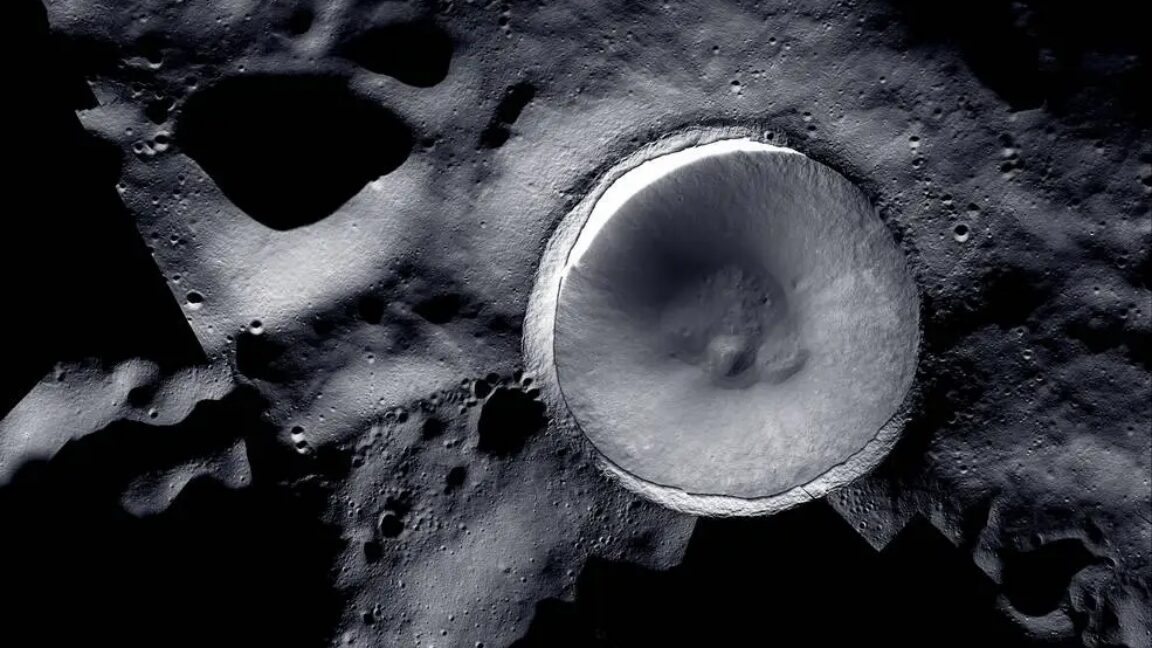
Shackleton Crater, approximately 13 miles (21 kilometers) in diameter and a staggering 14,000 feet (4.2 kilometers) deep, presents a surface area comparable to major cities like Philadelphia, Las Vegas, or Detroit. Its unique topography and location at the Moon’s south pole make it an unparalleled target for lunar exploration. If both Endurance and Chang’e 7 successfully execute their planned landings on or near the crater rim, it would mark a historic first: landers from different nations operating simultaneously and in such close proximity on another planetary body.
The primary draw of Shackleton, and indeed the entire lunar south pole region, is the abundant presence of water ice. This ice is trapped within permanently shadowed regions (PSRs) – areas that have not seen sunlight for billions of years due to the Moon’s axial tilt and the crater’s deep, steep walls. Temperatures in these PSRs can plummet to an astonishing -240 degrees Celsius (-400 degrees Fahrenheit), cold enough to preserve volatile compounds like water ice indefinitely.
Conversely, the highest crests of Shackleton’s rim offer another critical advantage: near-continuous sunlight. These "peaks of eternal light" (PELs) provide an ideal location for a lunar lander or a future human base to establish a stable and consistent source of solar power, situated just a stone’s throw away from the perpetually dark, ice-rich crater floor. This juxtaposition of constant solar energy and readily available water ice makes Shackleton Crater an exceptionally attractive target for future exploration and potential resource utilization.
A History of Lunar Water Discovery
The idea of water on the Moon has evolved significantly over the past few decades. For a long time, the Moon was believed to be utterly dry. However, early hints emerged in the 1990s with NASA’s Clementine mission, which provided radar data suggesting the presence of ice at the lunar poles. This was followed by the Lunar Prospector mission in 1998, which detected enhanced hydrogen signatures, strongly indicative of water ice.
The definitive proof arrived in 2008 with India’s Chandrayaan-1 mission, which carried NASA’s Moon Mineralogy Mapper (M3) instrument. M3 directly detected spectroscopic evidence of water molecules and hydroxyl groups on the lunar surface. A year later, NASA’s Lunar Crater Observation and Sensing Satellite (LCROSS) mission deliberately crashed a spent rocket stage into a permanently shadowed crater near the south pole, kicking up a plume of debris that spectrometers confirmed contained significant amounts of water ice. Subsequent data from NASA’s Lunar Reconnaissance Orbiter (LRO) and more recently, South Korea’s Danuri orbiter (which collaborated with LRO to produce the detailed mosaic of Shackleton Crater referenced in the original article), have further mapped and characterized these icy deposits. These discoveries transformed the lunar south pole from a scientific curiosity into a strategic imperative for future space endeavors.
The ice at these polar cold traps, including Shackleton, is not merely a scientific curiosity. It represents a potential goldmine for future lunar outposts. This water could be harvested and processed to supply drinking water for astronauts, produce breathable oxygen, and, crucially, be broken down into hydrogen and oxygen to create rocket fuel. This concept, known as In-Situ Resource Utilization (ISRU), is vital for enabling long-duration human missions and establishing sustainable lunar bases, significantly reducing the cost and complexity of transporting all necessary supplies from Earth.
The New Space Race: Human Ambitions and Geopolitical Stakes
The simultaneous targeting of Shackleton Crater by the US and China is highly emblematic of the brewing competition between the two nations to establish a human presence on the Moon. Both countries have publicly declared ambitious timelines for landing astronauts on the lunar surface and constructing permanent lunar bases near the south pole by the end of this decade or early in the next.
The United States, through its Artemis program, aims to return astronauts to the Moon as early as 2028, with the long-term goal of building a sustainable lunar outpost. Blue Origin’s Blue Moon Mark 1 lander, represented by Endurance, is a critical stepping stone in this vision, designed to deliver cargo and experiments to the lunar surface. It also serves as a precursor to Blue Origin’s human-rated lunar lander, which is being developed to ferry Artemis crews. NASA has already contracted Astrobotic and Intuitive Machines to deliver scientific payloads to the lunar south pole under its Commercial Lunar Payload Services (CLPS) program, with several missions already launched or planned. Notably, NASA’s VIPER rover, designed to extensively map and characterize water ice, is slated to land near the south pole aboard Blue Origin’s second Blue Moon Mark 1 lander in 2027.
China, on the other hand, is developing its own ambitious International Lunar Research Station (ILRS) program, envisioning a permanent human presence on the Moon by the 2030s, potentially in collaboration with Russia and other partners. The Chang’e 7 mission, with its diverse suite of instruments including a rover and a "mini-flying probe," is explicitly tasked with directly confirming the existence and source of water ice in the south pole region, a crucial step for site selection for the ILRS. This parallel development of lunar exploration capabilities underscores a broader geopolitical rivalry, reminiscent of the Cold War-era space race between the US and the Soviet Union, but now with a heightened focus on resource access and long-term strategic advantage.
For fans of Apple TV’s alternate-history series For All Mankind, the scenario playing out at Shackleton Crater might feel eerily familiar. The show depicts prospectors from the United States and a fictionalized Soviet Union fiercely competing for water resources within the very same crater, illustrating a fictionalized but prescient vision of potential future lunar conflicts over resources.
Navigating the Legal Landscape: "Due Regard" and Safety Zones
The potential for multiple nations to operate in close proximity on the Moon raises significant questions about international space law and norms. Both the United States and China are signatories to the 1967 Outer Space Treaty, a foundational document of space law. This treaty prohibits any nation from claiming territorial sovereignty over the Moon or other celestial bodies. However, it does allow for the establishment of bases and requires signatory parties to conduct their activities with "due regard" to the corresponding interests of other nations.

The concept of "due regard" is broad and open to interpretation, particularly when applied to crowded lunar environments. Michelle Hanlon, a professor of air and space law at the University of Mississippi, has highlighted the advantages of being a "first-mover" in establishing norms for lunar activities. As she noted in a recent article, the first country to successfully place a nuclear reactor on the Moon, for example, could "shape the norms for expectations, behaviors, and legal interpretations." These first-mover advantages could extend to various activities, including the establishment of lunar bases, mining operations, and other resource extraction endeavors.
To address the potential for interference and ensure safe operations, NASA has proposed the concept of "safety zones" around lunar landing sites and operational areas. This idea is enshrined within the Artemis Accords, a set of bilateral agreements drafted by the US government that outline principles for peaceful and sustainable lunar exploration. To date, 61 nations have signed the Artemis Accords, committing to principles such as peaceful purposes, transparency, interoperability, emergency assistance, and the registration of space objects. However, notably, China and Russia are not signatories to this agreement, creating a bifurcated legal framework for lunar activities. This divergence means that while Artemis Accords signatories would adhere to "safety zones," China’s operations would be governed solely by the broader and less prescriptive Outer Space Treaty.
Broader Implications and the Future of Lunar Exploration
The upcoming missions of Endurance and Chang’e 7 are not isolated events but rather precursors to a much larger wave of robotic and human lunar exploration. As robotic landers become more frequent, and with NASA aiming to land astronauts by 2028 and China by 2030, a significant portion of this activity will be concentrated within a relatively small area, specifically within 100 miles of the lunar south pole.
Should a "eureka-like" discovery of exceptionally vast deposits of water ice or another valuable resource occur, it could further concentrate future missions and potential lunar bases into an even smaller, more contested area. Such a scenario would inevitably test the legal definition and practical application of "due regard" under the Outer Space Treaty. As Professor Hanlon eloquently put it, "These sought-after regions are scientifically vital and geopolitically sensitive, as multiple countries want to build bases or conduct research there." She added, "Building infrastructure in these areas would cement a country’s ability to access the resources there and potentially exclude others from doing the same."
The race to Shackleton Crater represents a pivotal moment in humanity’s return to the Moon. It encapsulates the scientific ambition to unlock the secrets of lunar water, the technological prowess to land and operate complex systems in an extreme environment, and the geopolitical complexities of a new era of space exploration. The outcomes of these missions, whether in terms of scientific discovery, operational success, or the precedents they set for international conduct, will undoubtedly shape the future trajectory of human presence beyond Earth for decades to come.