WASHINGTON — In a decisive procedural vote on Tuesday, the United States House of Representatives successfully blocked an effort spearheaded by outgoing Republican Representative Thomas Massie of Kentucky to impeach Defense Secretary Pete Hegseth. The legislative maneuver, which centered primarily on the Pentagon’s ongoing military engagement with Iran and various controversial tactical directives, was halted by a vote of 211 to 204. By voting to refer the resolution directly to the House Judiciary Committee, a maneuver historically utilized to shelf or effectively kill contentious legislation, the chamber thwarted what would have been an extraordinarily rare constitutional reckoning for a sitting cabinet official.
The vote laid bare deep fractures within the Republican caucus, while simultaneously highlighting the precarious political balancing act facing the administration as the protracted war in the Middle East stretches into its ninth month. While many rank-and-file GOP lawmakers have privately and publicly expressed mounting frustration with the Department of Defense’s strategic execution and oversight of the conflict, the vast majority concluded that the grievances did not rise to the constitutionally mandated threshold of "high crimes and misdemeanors." Ultimately, Representative Massie stood alone as the sole Republican to cross party lines, voting alongside a unified bloc of Democrats who sought to keep the impeachment articles alive.
The Anatomy of the Impeachment Resolution
The articles of impeachment brought forward by Massie outlined a sweeping array of accusations against the Defense Secretary, touching upon multiple fronts of foreign policy, domestic political friction, and military operations. Chief among the allegations was the claim that Hegseth had systematically abused the powers of his office by initiating and executing military strikes against Iran without receiving explicit prior authorization from Congress, a move critics argued violated constitutional separation of powers regarding the declaration of war.
Furthermore, the resolution took direct aim at the Pentagon’s rules of engagement, accusing leadership of deliberately ignoring established legal frameworks and international norms designed to minimize civilian casualties in active combat zones. The text of the impeachment articles also cited several controversial operational decisions, including the direction of extrajudicial killings resulting from controversial Pentagon boat strikes in the Caribbean Sea, as well as the orchestration of the high-profile, extra-jurisdictional kidnapping of Venezuelan President Nicolas Maduro.
Beyond foreign military interventions, the resolution broadened its scope to domestic governance, alleging that Hegseth engaged in political retaliation against a sitting lawmaker—specifically pointing to a targeted feud with Democratic Senator Mark Kelly of Arizona. For Massie and a fringe group of anti-interventionist lawmakers, the accumulation of these actions represented an unconstitutional overreach of executive and military authority that warranted the ultimate legislative sanction.
Defense Secretary Hegseth Fights Back
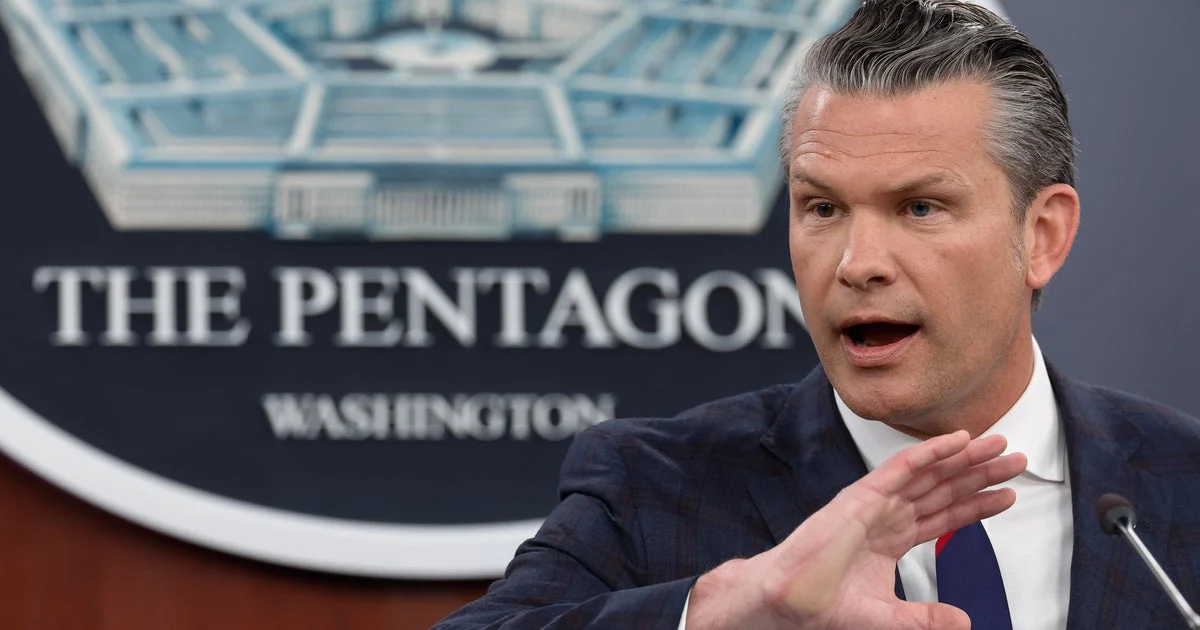
Hours before the floor vote commenced on Tuesday, Defense Secretary Pete Hegseth convened a high-stakes press conference at the Pentagon to aggressively push back against the legislative onslaught, denouncing the impeachment effort in unequivocal terms. Speaking before a phalanx of reporters and military officials, Hegseth dismissed the proceedings as a politically motivated "farce" and an empty "political spectacle" engineered by opponents of the administration’s national security agenda.
"None of these are high crimes or misdemeanors," Hegseth argued forcefully during the briefing. "They are partisan policy disagreements from people who want to politicize our military and tie the hands of the men and women who defend this nation."
The Pentagon chief defended the administration’s posture in the Middle East and elsewhere, framing the ongoing conflict with Iran as a necessary defensive imperative dictated by evolving geopolitical threats. He maintained that military commanders have operated strictly within the bounds of lawful executive authority and asserted that attempts to criminalize routine national security decisions through the impeachment process set a dangerous precedent for future civilian leadership of the armed forces.
Historical Context and Precedent
The attempt to remove a cabinet-level official via impeachment is an exceptionally rare occurrence in the annals of American political history. Prior to the proceedings involving Hegseth, only two cabinet secretaries had ever been impeached by the House of Representatives, underscoring the gravity and unusual nature of Massie’s push.
The first instance occurred in 1876, during the reconstruction era, when Secretary of War William Belknap was impeached by the House amidst a sweeping corruption scandal involving kickbacks tied to military trading posts. Belknap ultimately resigned hours before the Senate vote, and while a majority of senators voted to convict him on multiple articles, the prosecution fell short of the constitutionally mandated two-thirds supermajority, resulting in an acquittal.
More than a century later, the tool was brandished again in February 2024, when the Republican-controlled House voted to impeach Homeland Security Secretary Alejandro Mayorkas over his handling of security protocols along the U.S. southern border. However, that effort stalled significantly when it reached the upper chamber, where the Senate voted to dismiss the charges outright without holding a full trial, deeming the accusations to be policy disagreements rather than constitutional offenses. The failed effort against Hegseth marks the first time a defense chief has faced formal articles of impeachment in modern history.
Chronology of a Mounting Crisis
The defeat of the impeachment resolution represents the culmination of months of simmering legislative tension surrounding the executive branch’s military strategy. The timeline of events leading up to Tuesday’s vote highlights the rapid escalation of friction between Capitol Hill and the defense establishment:
- Early Spring: The U.S. military initiates a series of targeted strikes against Iranian infrastructure and proxy networks, escalating into a full-scale conventional and asymmetric conflict that quickly surpasses initial administration projections.
- Mid-Year: As mounting casualties and economic ripples from the war disrupt global markets, bipartisan concern grows over the lack of a formal Congressional Authorization for Use of Military Force (AUMF) specifically tailored to the expanded Iran campaign.
- Late Summer: Reports emerge regarding contentious Caribbean maritime operations and intelligence-led operations in South America, drawing sharp inquiries from both House and Senate oversight committees.
- September: Representative Thomas Massie, operating independently of the formal Democratic leadership, signals his intention to draft articles of impeachment against Secretary Hegseth, citing constitutional violations regarding war powers.
- October: Internal divisions within the Republican caucus widen as moderate members express discomfort with the administration’s military trajectory, though leadership works behind the scenes to contain dissent.
- November (Monday): Massie announces he will formally introduce the resolution on the House floor, though he simultaneously acknowledges that he will not bring up subsequent iterations due to his impending retirement.
- November (Tuesday): The House votes 211 to 204 to refer the resolution to the Judiciary Committee, effectively terminating the immediate legislative threat while setting the stage for future battles.
Political Fallout and Future Implications
Although the procedural vote successfully shielded Secretary Hegseth from an immediate trial in the Senate, the political ramifications of Tuesday’s proceedings are expected to reverberate well into the coming year. Representative Thomas Massie, a longtime libertarian-leaning conservative known for frequently breaking with his party on foreign intervention and executive power, is set to retire from Congress in early January after suffering a defeat in his primary earlier this year. Because of his impending departure, Massie confirmed on Monday that he would not spearhead another resolution to impeach Hegseth before the current session of Congress adjourns.
However, the defeat of the resolution does not entirely insulate the Defense Department from future congressional scrutiny. Control of both chambers of Congress is slated to shift following the recent election cycle, with Democrats poised to assume legislative majorities in January. Political analysts note that incoming Democratic leadership could choose to revive investigations into the Iran conflict, the legality of the Caribbean boat strikes, and executive war powers, utilizing subpoena power to launch extensive oversight hearings.
Furthermore, the vote exposed deep ideological fissures within the Republican Party itself. While the party apparatus ultimately rallied to protect a cabinet official from a turbulent executive branch, the presence of growing anti-interventionist sentiment on the right—exemplified by Massie’s lone GOP vote—suggests that future debates over military funding, executive overreach, and endless foreign engagements will remain contentious flashpoints.
As the war with Iran enters its tenth month with no definitive end in sight, the administration faces the ongoing challenge of maintaining legislative cohesion while managing a complex, multi-theater military strategy. For Pete Hegseth, Tuesday’s vote provides temporary legislative breathing room, but the underlying policy debates and constitutional questions surrounding the conflict ensure that the Defense Secretary will remain at the center of a volatile political storm.