For more than a year, Nvidia CEO Jensen Huang has maintained a consistent public posture regarding the global distribution of the company’s high-performance artificial intelligence chips: the firm remains in full compliance with U.S. export controls, and there is no substantiated evidence that its sophisticated hardware is being diverted to restricted entities in China. However, a series of compounding scandals—ranging from high-stakes corporate smuggling allegations to a personal espionage investigation—has fundamentally eroded that narrative, casting a shadow over the world’s most valuable chipmaker.
The convergence of two massive, parallel smuggling investigations, coupled with a startling admission of personal misconduct by the CEO, has created a regulatory and reputational firestorm. Nvidia is now bracing for intense scrutiny from federal investigators, the Securities and Exchange Commission (SEC), and the U.S. Congress, as the company struggles to maintain investor confidence while navigating a complex web of alleged foreign intelligence operations and illicit trade routes.
A Chronology of Escalating Tensions
The current crisis did not emerge in a vacuum. It is the culmination of months of regulatory pressure and investigative journalism that has slowly dismantled Nvidia’s claims of ironclad oversight.
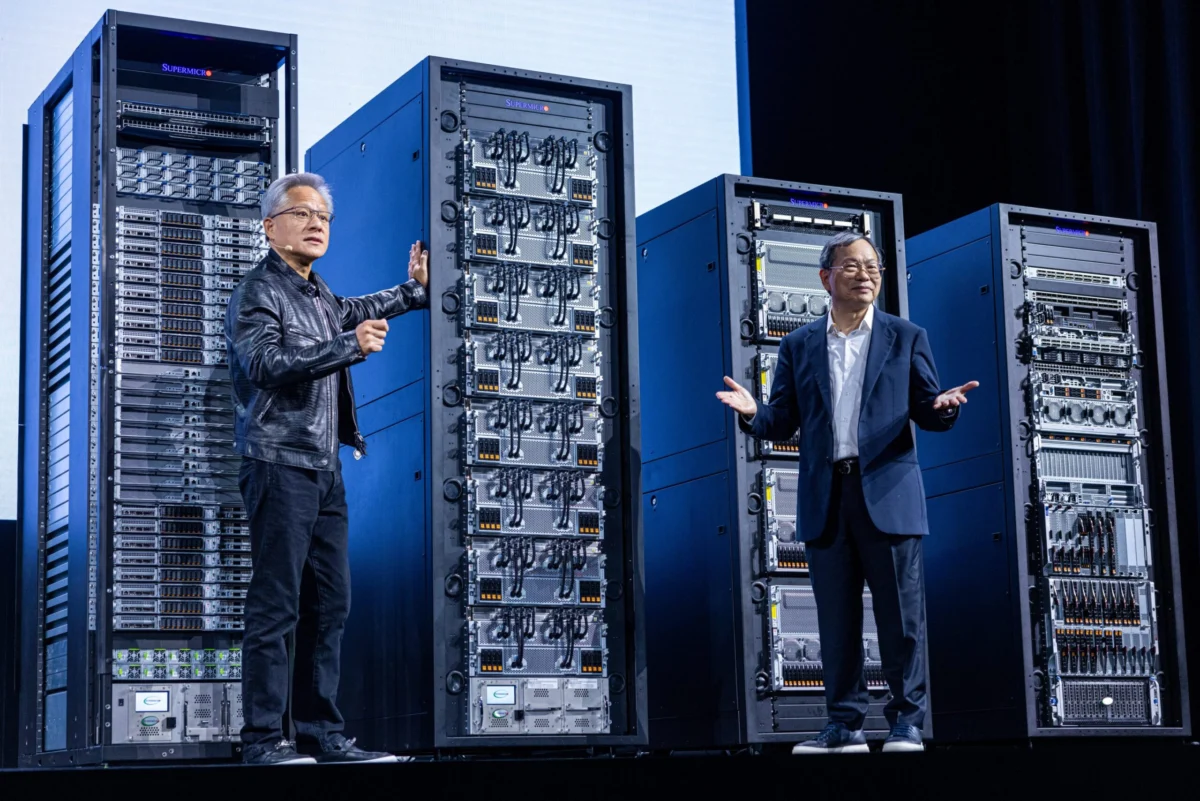
- Early 2024: Jensen Huang and Supermicro CEO Charles Liang maintain a highly visible public partnership, frequently appearing together at industry events like Computex in Taiwan to showcase their collaborative AI infrastructure.
- March 2026: Federal prosecutors unseal an indictment against Supermicro co-founder Yih-Shyan “Wally” Liaw, alleging a sophisticated scheme to route $2.5 billion in servers equipped with Nvidia H200 and B200 GPUs to China via a Southeast Asian front company.
- May 2026: Culper Research releases a report alleging systemic weaknesses in Nvidia’s supply chain, suggesting that the Supermicro route is merely one of many channels facilitating the unauthorized flow of chips to China.
- June 2026: Senator Elizabeth Warren (D-Mass.) issues a formal letter to Nvidia’s leadership, demanding transparency regarding its compliance programs and its continued reliance on Supermicro as a primary distribution partner.
- October 2026: A co-defendant in the Supermicro case enters a guilty plea, significantly raising the stakes for the ongoing federal investigation.
- November 2026: Nvidia announces an independent board-led investigation into potential foreign intelligence infiltration, following reports of an extramarital affair between CEO Jensen Huang and a former executive at Megaspeed International, a major Southeast Asian buyer of Nvidia hardware.
The Supermicro Connection and the Mechanics of Smuggling
At the heart of the first major scandal is Supermicro, long considered an indispensable partner in the AI hardware ecosystem. The federal indictment of Yih-Shyan “Wally” Liaw provides a rare, granular look at how sophisticated actors bypass U.S. export restrictions. Prosecutors allege that the network utilized “dummy” servers—non-functional hardware used to satisfy internal audits—to mask the true destination of high-end GPUs.
The level of detail in the alleged scheme is striking. Contractors reportedly used hair dryers to carefully heat and remove adhesive serial-number labels, replacing them to obscure the trail of the hardware. This methodology echoes the tactics used in a 2006 case where Supermicro pleaded guilty to exporting equipment to Iran. For Nvidia, the implications are severe; while the company has not been charged, the indictment suggests that Nvidia’s own chip allocation processes were manipulated by the very front companies now under investigation. By providing monthly forecasts to secure chip allocations, the actors involved were essentially using Nvidia’s own supply-demand metrics against its compliance framework.
The Megaspeed Allegations: A Strategic Breach
If the Supermicro scandal represents a breakdown in distribution logistics, the Megaspeed case represents a potential failure in counter-intelligence. Megaspeed International, a Singapore-based firm, emerged as a top-tier customer for Nvidia in Southeast Asia. Reports from the New York Times and subsequent investigations have suggested that nearly $2 billion worth of chips sold to Megaspeed were ultimately utilized in data centers that provided remote computing power to restricted Chinese entities.
The situation took a geopolitical turn with the revelation that Alice Huang, a former executive at Megaspeed, was involved in an extramarital relationship with Jensen Huang. Intelligence officials are currently investigating whether she acted as a conduit for China’s Ministry of State Security. The intersection of a personal relationship and a massive, multi-billion-dollar corporate account has placed the Nvidia board in a precarious position. The company has since retained Joon H. Kim, a former acting U.S. Attorney for the Southern District of New York, to conduct an independent review to determine if any proprietary secrets or national security assets were compromised.
Official Responses and Governance Challenges
Nvidia’s board has attempted to project stability, issuing a statement that they maintain “confidence” in the CEO. However, the appointment of Wachtell, Lipton, Rosen & Katz to oversee the internal probe suggests a high level of concern regarding potential legal exposure.
“If I were an independent director or general counsel, I would be looking at whether the company has a ‘honeytrap’ problem—and not just at the CEO level,” noted one anonymous expert in export control compliance. The expert pointed out that the tactic of compromising executives through leisure, entertainment, and personal relationships is a classic intelligence methodology that remains highly effective in an industry where physical inspections of data centers are often outsourced or performed by local contractors.
Nvidia’s previous assertions—specifically that the Megaspeed allegations had been “thoroughly investigated and debunked”—are now being viewed by regulators as a potential misrepresentation. As the company prepares to report its third-quarter financial results on November 17, analysts expect the discussion to be dominated by these ethical and legal questions rather than purely fiscal performance.
Broader Impact: The Regulatory Future
The political landscape in Washington is shifting in a way that suggests these investigations will move beyond the boardroom. With the Democratic party regaining control of the Senate, Senator Elizabeth Warren is poised to assume the chair of the Senate Banking Committee in January. Her prior interest in Nvidia’s compliance, combined with the new revelations regarding the Megaspeed espionage probe, makes a congressional subpoena nearly inevitable.
Furthermore, three House committee chairs have requested a closed-door briefing with Jensen Huang on November 18. The bipartisan nature of these inquiries underscores the growing concern that the U.S. government’s most potent technological advantage—the AI chip—is being actively undermined by a combination of corporate negligence and foreign intelligence operations.
Analysis: Can Nvidia Recover?
The core issue for Nvidia is no longer just about meeting quarterly growth targets; it is about the structural integrity of its global compliance regime. The company’s growth has been predicated on the rapid, high-volume sale of GPUs to data center operators worldwide. If the U.S. government determines that Nvidia’s "know-your-customer" (KYC) protocols were intentionally bypassed or willfully ignored, the company could face catastrophic penalties, including the revocation of export licenses and heavy fines.
Moreover, the "human factor" of the current scandal—the alleged compromise of the CEO—adds a layer of complexity that standard corporate compliance programs are ill-equipped to handle. The "honeytrap" element shifts the narrative from a dry, administrative export issue to a matter of national security, which historically invites much more aggressive federal oversight.
As the industry looks toward November 17, the focus is not merely on whether Nvidia will beat revenue expectations. Instead, investors and regulators are waiting to see if Jensen Huang can offer a credible path forward that separates the company’s technical success from the web of illicit trade and espionage that has seemingly enveloped its most critical distribution channels. For a company that has spent years as the face of the AI revolution, the coming months will be a test of whether its internal governance can keep pace with its external growth.