Human Rights Groups Challenge Hungary’s Anti-Pride Law in Court
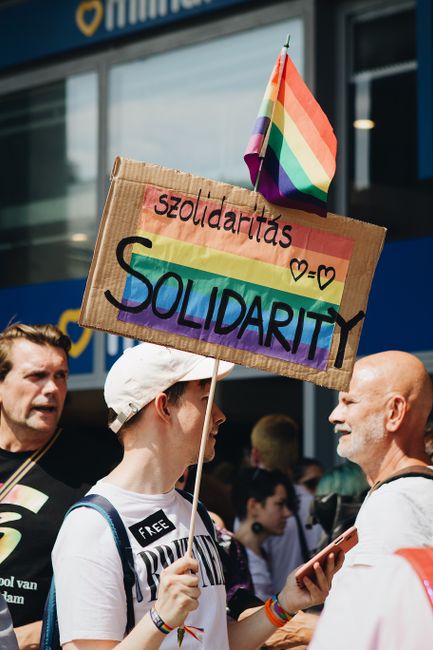
A coalition of Hungarian and international human rights organizations has initiated legal proceedings to challenge a controversial law passed by the Hungarian parliament that effectively bans LGBTQ+ content from being displayed or disseminated to minors. Dubbed by critics as an "anti-Pride law," the legislation, enacted in June 2021, broadens an existing 2010 law concerning the protection of children. The primary thrust of the new statute is to prohibit any content deemed to promote or depict "gender deviation" or the "changing of sex" from being made available to individuals under the age of 18. This includes material in schools, on television, in films, and in books. The human rights groups argue that this law infringes upon fundamental rights, including freedom of expression, the right to non-discrimination, and the right of children to access information, and they are now presenting their case before the Hungarian courts in a bid to have the law overturned.
The legal challenge is multifaceted, targeting the law on several constitutional and human rights grounds. At its core, the argument is that the law constitutes a form of discrimination against the LGBTQ+ community. By singling out content related to sexual orientation and gender identity for restriction, while similar content depicting other forms of family structures or personal identities is not subject to the same scrutiny, the law creates a discriminatory framework. Human rights advocates contend that this not only stigmatizes LGBTQ+ individuals but also sends a message that their existence and experiences are somehow harmful or inappropriate for young people, fostering prejudice and intolerance. The definition of "gender deviation" itself is vague and broad, allowing for subjective interpretation and potentially encompassing a wide range of LGBTQ+ related expression, from educational materials about diversity to fictional portrayals of LGBTQ+ characters.
Freedom of expression is another critical pillar of the legal challenge. The law’s restrictions on what can be shown or read by minors are seen as an unwarranted infringement on the right to communicate and receive information. This right is enshrined in the Hungarian Constitution and various international human rights treaties to which Hungary is a signatory, such as the European Convention on Human Rights. Critics argue that the law chills expression, leading to self-censorship by publishers, filmmakers, and educators who fear penalties for inadvertently violating its broad and ambiguous provisions. The impact on artistic and cultural output is significant, as creators may be hesitant to engage with themes of LGBTQ+ identity for fear of being labeled as promoting "harmful" content to children. This stifles artistic exploration and the ability to represent diverse human experiences.
Furthermore, the law is challenged on the grounds of violating the rights of children. While the stated intention is to protect minors, human rights groups argue that the law actually harms them by denying them access to information and by creating an environment where LGBTQ+ identities are marginalized and demonized. Children who are questioning their gender identity or sexual orientation, or who have LGBTQ+ family members, are denied access to age-appropriate, accurate information that could help them understand themselves and their communities. This can lead to isolation, confusion, and a lack of support. The right of children to seek, receive, and impart information and ideas of all kinds, regardless of frontiers, either orally, in writing or in print, in the form of art, or any other media of their choice, is a cornerstone of the UN Convention on the Rights of the Child, and this law is seen as a direct contravention.
The legal strategy involves bringing together a robust body of evidence and legal arguments. Organizations are gathering testimonials from LGBTQ+ individuals and families who feel directly impacted by the law. They are also commissioning legal analyses of the statute’s compatibility with both Hungarian constitutional law and international human rights standards. The Hungarian Civil Liberties Union (TASZ), one of the leading organizations involved, has been instrumental in coordinating legal efforts. They argue that the law is not only discriminatory but also a violation of the fundamental right to education, as it restricts the ability of schools to provide comprehensive and inclusive education. The fear is that this law will create a chilling effect, leading to the removal of LGBTQ+ inclusive books from school libraries and the avoidance of discussions about diversity in classrooms, thus hindering the development of a tolerant and accepting society.
The broader context of the law’s passage is crucial to understanding the legal challenge. The legislation was enacted by the ruling Fidesz party, led by Prime Minister Viktor Orbán, and has been widely condemned by international bodies and governments as a step backward for LGBTQ+ rights and democratic values in Hungary. Critics point to a pattern of increasingly authoritarian policies and rhetoric that target minority groups, including LGBTQ+ individuals, immigrants, and independent media. The anti-LGBTQ+ legislation is seen as part of a broader political agenda aimed at appealing to a conservative base and asserting national sovereignty against perceived liberal European influences. This political backdrop fuels the human rights groups’ determination, as they view the legal battle as not just about this specific law but also about defending the broader principles of equality and human rights in Hungary.
The legal process in Hungary can be protracted, and the initial stages of challenging a law passed by parliament are often complex. The human rights groups have initiated their proceedings with the Hungarian Constitutional Court and potentially other domestic judicial bodies. The Constitutional Court has the power to review legislation for its compliance with the constitution. The legal teams are meticulously preparing their submissions, outlining the specific constitutional articles that they believe the law violates, such as provisions guaranteeing equality, human dignity, freedom of expression, and the rights of the child. They are also citing relevant case law from the European Court of Human Rights, which has consistently affirmed the importance of protecting LGBTQ+ rights and combating discrimination.
The international dimension of this challenge is also significant. While the legal battle is primarily domestic, the human rights organizations are working with international advocacy groups and legal experts to amplify their concerns and put pressure on the Hungarian government. The European Union has already initiated infringement procedures against Hungary for violating EU values, including the rule of law and fundamental rights, with this law being a key point of contention. The legal challenge in Hungarian courts is seen as a vital component of a broader strategy to hold the government accountable for its actions. It demonstrates that civil society is actively defending its rights and challenging what it perceives as an unjust and discriminatory legal framework.
The argument that the law is a form of "grooming" or "pedophilia" – rhetoric that has been used by proponents of the law in Hungary and elsewhere – is strongly refuted by the human rights groups. They argue that this is a deliberate smear tactic designed to demonize LGBTQ+ people and to justify discriminatory policies. Research consistently shows that sexual orientation and gender identity are not indicative of predatory behavior. The law’s proponents have framed it as a measure to protect children from perceived "propaganda," a term that human rights advocates argue is used to silence and stigmatize LGBTQ+ issues. The legal challenge aims to expose the fallacious nature of these arguments and to reframe the debate around the law as one of discrimination and the denial of fundamental rights.
The immediate impact of the law has already been felt. Bookstores have reported having to remove or relocate books with LGBTQ+ themes from children’s sections. Film distributors have expressed concerns about being able to screen films with LGBTQ+ characters or storylines. Schools are grappling with how to navigate the law’s restrictions, with many educators feeling a sense of uncertainty and fear about what they can and cannot teach. This creates a climate of fear and self-censorship, which is detrimental to open discourse and the fostering of an inclusive society. The legal challenge seeks to dismantle this climate of fear and to restore the ability for open and honest dialogue about diversity and human rights.
Looking ahead, the legal proceedings are expected to be challenging. The Hungarian judiciary has faced criticism in recent years regarding its independence. However, the human rights groups are committed to pursuing all available legal avenues to overturn the law. They believe that a strong and well-reasoned legal case, supported by both domestic and international pressure, can ultimately lead to a positive outcome. The challenge represents a crucial stand for LGBTQ+ rights, freedom of expression, and the fundamental principles of human dignity in Hungary and serves as an important example for other countries facing similar legislative trends. The ultimate success of this legal challenge will have far-reaching implications for the protection of human rights in Hungary and beyond. The meticulous preparation and unwavering dedication of the human rights organizations underscore the gravity of the situation and their commitment to ensuring that the law is brought into conformity with democratic and human rights standards.
