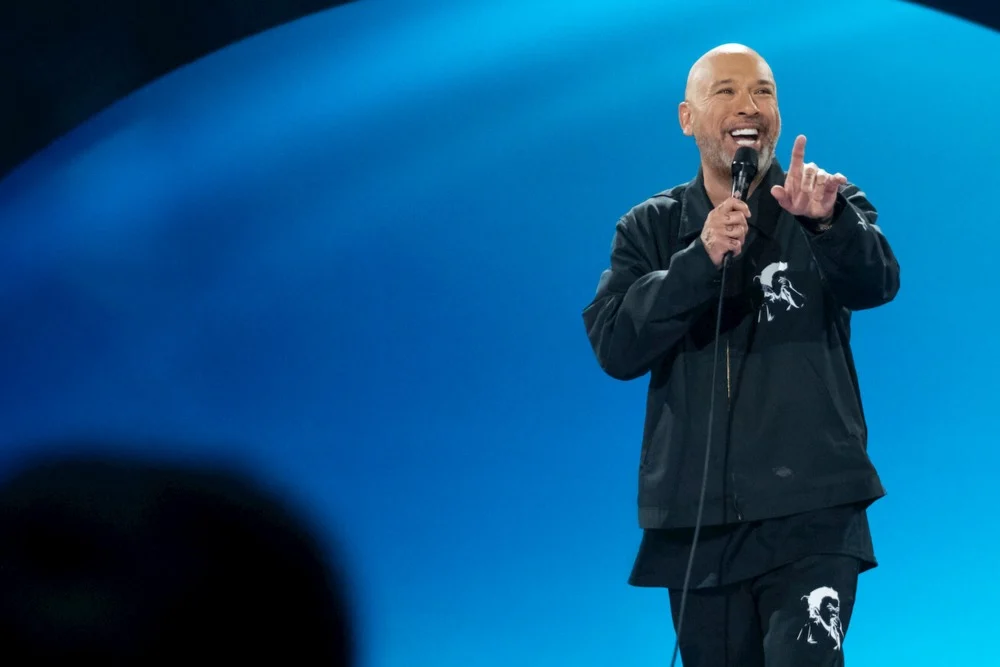
Comedian Jo Koy has established a distinctive space in contemporary stand-up comedy, bridging personal cultural history with mainstream commercial success. Following the release of his Netflix special, Blue in the Face, the comic sat down for an extensive interview to discuss the meticulous production of the project, his deep-rooted connections to Filipino-American history, and the serendipitous encounters that shaped his trajectory in Hollywood.
From his unexpected decision to alter his opening monologue in Stockton, California, to receiving career-validating phone calls from music royalty, Koy’s journey highlights the intersection of personal identity and global entertainment.
Choosing Stockton: Uncovering History and Onstage Pivots
When preparing to film his latest Netflix special, Koy selected Stockton, California, for his two sold-out arena performances. While major comedy specials are traditionally filmed in entertainment hubs such as New York, Los Angeles, or the San Francisco Bay Area, Koy sought to engage a secondary market with a rich, albeit painful, historical background.
Before taking the stage, Koy researched the Central Valley city’s early Filipino immigrant population. His findings revealed stark reminders of systemic discrimination, including historical "No Filipinos allowed" signs on local establishments, segregated water fountains, and the displacement of the historic Little Manila neighborhood, which was split apart by urban freeway development.
Koy initially planned to address these historical injustices directly during the opening moments of the show. However, the immediate response from the live audience shifted his creative direction in real time. As he walked out to a spontaneous standing ovation, Koy observed a diverse crowd of white, Black, Latino, and Filipino attendees celebrating collectively. Recognizing the unity in the room, he made an impromptu decision to pivot away from a heavy historical preamble.
Instead, he addressed the progress represented by the diverse gathering, framing the evening as a celebration of how far the community has traveled through generations of adversity.
The Anatomy of Blue in the Face
Blue in the Face marks the conclusion of a two-special agreement Koy signed with Netflix in 2023, following the release of Live From Brooklyn. Rather than relying on a standard shooting format, Koy personally oversees the editing of his specials. For this project, he condensed more than four hours of footage gathered across two consecutive nights of performance into a tightly paced 55-minute narrative.
Koy notes that the second night of filming typically yields the strongest material, allowing him the freedom to improvise and refine spontaneous jokes after ironing out primary concepts on the first night. The overarching theme of Blue in the Face centers on interpersonal loyalty, community support, and the rejection of negativity—a thematic bookend designed to resonate emotionally with viewers.
The special has entered awards consideration conversations, positioning itself as a contender in the Golden Globes category for best performance in stand-up comedy on television, as well as entering the Primetime Emmy Award race for outstanding variety special (pre-recorded).

Milestones in Music and Film: From The Notorious B.I.G. to Spielberg
Koy’s career has been punctuated by unexpected crossovers with legendary figures in music and cinema. Following the release of Live From Brooklyn, Koy faced clearance hurdles after performing an uncleared routine referencing The Notorious B.I.G. Despite the financial implications of utilizing the artist’s music without prior approval, the bit led to a direct phone call from the late rapper’s mother, Voletta Wallace.
Mrs. Wallace expressed gratitude to Koy for honoring her son’s legacy and ensuring that future generations would engage with his cultural footprint via the global platform of Netflix. Furthermore, the interaction resulted in an agreement granting Koy perpetual rights to utilize iconic imagery of The Notorious B.I.G., with associated merchandise proceeds contributing to the Wallace Foundation.
On the cinematic front, Koy’s pathway to his semi-autobiographical film Easter Sunday began through an unexpected endorsement. After filmmaker Steven Spielberg viewed Koy’s Hawaii-based comedy special, Comin’ in Hot, Amblin Entertainment reached out, leading to a development deal with DreamWorks.
Despite facing challenging theatrical distribution conditions during the post-pandemic box office reopening—competing alongside major franchise releases like Top Gun: Maverick, Jurassic World Dominion, and Thor: Love and Thunder—Easter Sunday established a foothold in theaters, reflecting a growing appetite for authentic cultural storytelling within mainstream studio systems.
Koy has continued exploring representation in media, including voice work in the animated project Forgotten Island, which incorporates traditional Filipino folklore he encountered during his youth.
A Mother’s Resilience and the Origin of "Jo Koy"
A central pillar of Koy’s comedic repertoire involves his mother, whose experiences as a single immigrant parent navigating life in the United States heavily influenced his worldview. Koy’s impersonations draw directly from real-life anecdotes, ranging from standing up to retail employees who mocked her accent in 1984 to her proactive efforts to build a community by approaching strangers at local churches. These grassroots community gatherings eventually evolved into potlucks at the Knights of Columbus hall, fostering an early appreciation for Filipino cuisine and cultural preservation long before mainstream culinary prominence.
Koy’s stage name itself stems from a familial misunderstanding. Born Joseph Herbert, the comedian adopted the moniker after mishearing his Auntie Evelyn. While sharing a meal at a Long John Silver’s restaurant years later, Koy learned that his aunt was actually calling him "Jo ko"—a Tagalog phrase translating to "my Jo." The realization underscored the deep familial bonds that continue to ground his comedic output.
Industry Impact and Broader Implications
As the comedy industry increasingly embraces diverse cultural perspectives, creators like Jo Koy demonstrate the commercial viability of niche storytelling on global streaming networks. By utilizing platforms like Netflix to reach international audiences while maintaining creative control over editing and narrative structure, Koy has redefined the parameters of modern stand-up specials.
Whether examining the historical resilience of agricultural workers in Stockton or translating familial dynamics into universal cinematic humor, Koy’s work illustrates the growing demand for authentic representation within the entertainment landscape. As he evaluates his next professional chapter following the completion of his current Netflix agreement, his career remains a testament to the enduring impact of personal storytelling, community advocacy, and artistic autonomy.